Friday, June 27, 2014

On Buffer Zones, Free Speech, and Women’s Safety

An anti-abortion protester confronts a clergy escort/monitor protecting a Planned Parenthood Clinic.


It’s the time of year that the Supreme Court—which now usually goes by the alias SCOTUS in the avalanche of words by Court watcher pundits of every stripe—dumps a bunch of high profile, potentially controversial cases and then heads for the hills of summer vacation.  See ya in October…And it is an emotional roller-coaster for progressives who generally fear the worst from the Right wing dominated court.
Lately, the court has sometimes handed surprising victories to the left like last year’s Marriage Equality ruling that opened the floodgates that now seems to add a new state to the rainbow column every week.  This year on the Court unanimously ruled that police will need a warrant to search to search cell phones when citizens are stopped or arrested by the police, a huge and unexpected victory for privacy and civil liberties.  By a split decision they upheld the Environmental Protection Agency (EPA) right to regulate greenhouse gasses despite a well funded full court press by allegedly libertarian fossil fuel industry fat cats, but also put new limits on the administration’s main program to control power plant emissions. 
On the other hand the court agreed to allow sectarian prayer to open the meetings of government bodies, and struck down cumulative limits on total campaign contributions by individuals and PACs, a ruling that will send tsunamis of new money crashing against the battered beaches of democracy.
The Supreme Court giveth, and the Supreme Court taketh away.
Angst rose to new levels Thursday when the court released a unanimous decision in the case McCullen v. Coakley, striking down a Massachusetts law requiring protesters to stay at least 35 feet from abortion clinics entrances and walkways.  And perhaps by implication  statues on the books of 12 other states and the District of Columbia that offer protection to patients and staff from harassment by anti-abortion protestors.  Or maybe it does not threaten all of them.  Defenders of a woman’s right to choose including NARWAL Pro-Choice America and Planned Parenthood, whose clinics have  been the targets of anti-abortion protests that often amount to near riotous sieges were shocked, not so much that they lost—that was expected—but by the unanimity of the Court, including its liberal wing and known supporter of choice.  So were many Unitarian Universalists, a denomination that has long been committed to choice and safe, easy access to abortion services.
All of these organizations reacted with predictable outrage.  But a closer examination of the ruling seems to indicate it is far less sweeping than it seems at first. Only three other states, Colorado, Montana and New Hampshire, have buffer zone laws on the books, but the Massachusetts zone was the largest. In 2000, the Supreme Court upheld Colorado’s 8-foot floating buffer zones around individuals as they walk into and exit an abortion clinic.  It is unclear if the new decision reverses Colorado’s more modest and defensible bubble protecting individuals from direct confrontation and harm.  All of the other states with clinic protection laws rely on other enforcement mechanisms and are unaffected by the ruling.
The news arrived as thousands gathered in Providence, Rhode Island for the annual General Assembly (GA) of the Unitarian Universalist Association.  The UUA had joined with other religious groups in filing an amicus curiae brief in support of buffer zones.  President Peter Morales was quick to issue a statement:
…This is a major defeat in the fight for reproductive rights and may put clinic workers and individuals seeking pregnancy-related care at great risk. I am disappointed and deeply troubled by the potential repercussions of such a decision… Just as citizens have the right to vote or attend religious events of their choosing, they should have the right to access legal medical services, including abortions and reproductive counseling, without harassment or violence. These acts have been effectively protected by buffer zones in the past. They help law enforcement officers to minimize intimidation and abuse in these public spaces which are all too often scenes of violence.
I pray that the harassment and violence endured by the employees and clients of these healthcare facilities will end. Unitarian Universalists believe that women possess the dignity and conscience to make their own decisions about pregnancy-related healthcare in consultation with their family, doctor, and faith. The government must play a role in helping all people access their fundamental rights.”
Hard to disagree with most of that, particularly in light of a frightening history of intimidation and harassment orchestrated by anti-choice leaders at the highest levels.  That has included the mass actions of Randall Terry, founder of Operation Rescue,  Joseph Scheidler’s Pro-Life Action League which resulted in a decade long court case brought by the National Organization for Women (NOW).  In some cases hundreds of protestors were mobilized at targeted clinics for months on end, angrily confronting and harassing staff, and especially frightened patients and their families.  Intimidation including waving gruesome signs, screaming, physical altercations, and ostentatious displays of surveillance including recording license plates and taking photos and videos that were posted on line.  Some women were injured.  Many more were traumatized.  And no one can ever know how many women were essentially denied their reproductive rights by fear of these howling mobs.
Violence was sometimes lethal.  UU’s even have our martyr.  Retired Air Force Lt. Col. James Barrett, an active and committed member of the Pensacola Unitarian Universalist Fellowship was a volunteer escort at the Ninth Avenue Ladies Center abortion clinic, the site of an earlier bombing and numerous confrontational protests.  On July 29, 1994 he drove to the clinic with Dr. John Bayard Britton by his side in the passenger seat and his wife, June, in the back seat.  As he stepped out of his pick-up truck, Rev. Paul Hill, a regular protester at the site known to Barrett, opened fire with a shotgun. Barrett and Dr. Britton were killed instantly and June was wounded and left for dead.
U.U.s around the country distinguished themselves as escorts, clinic volunteers, and visible supporters, often at great risk.
I know all of that.  I understand it with my head, carry it in my heart, and feel it in my gut.  Yet when the news of the Supreme Court ruling came in, I found my lips moving silently.  “They got it right.”
At this point you might be as angry with me as with the court.  What right have I, who am not a woman whose life and choice are now endangered have, to dismiss the concerns of those who are?  And perhaps I have no standing.  I have, however, shared private moments of family and friends, even at the gates of a clinic, that have given me some small, bitter taste of that reality.
In a similar situation, when I voiced opposition to a proposed state law to ban protests from the gates of cemeteries, a knee jerk reaction to the disgusting shenanigans of the Westboro Baptist Church at the funerals of Iraq and Afghanistan war dead and any one remotely sympathetic to Gays and Lesbians  an instantly former friend and close associate in justice work hissed at me with loathing and contempt. “Oh, so you are a First Amendment Absolutist,”
Yes, I guess I am.
The State makes a poor  choice as a defender of rights for some at the expense of others.  It often fails to distinguish between peaceful dissent and riot or near insurrection.  This is particularly true with the increased militarization of police.  Moreover, if it protects your particular ox from being gored over here, it is likely the gorer over there.  The State tend to reflexively come to the defense of property and power so that the arguments for “zones of special protection” extend to labor disputes, civil protest—think the Occupy Movement—and peaceful civil disobedience.
To protect our own rights of dissent, we must unfortunately defend some one else’s right to be an asshole.
That does not mean we have to step back and let wolves lose upon the sheep.  It means we have to take action to confront the wolves ourselves, to offer our bodies, if necessary, in their protection.  It demands a lot from us.  Giving up comfort, giving up safety.  It means, as the theme of this year’s GA says Reaching Out in Love.
The battle over abortion rights, once thought won, has been long and exhausting.  Many activists have turned to other urgent issues, putting that old commitment on the back burner.  There is always so much that demands our attention.  Perhaps the muscles for the old struggle have atrophied a bit.  But if the removal of safety zones around clinics causes the mobs to reassemble, we will have to get back in the game.
The response to all of those funeral protests may show us the way.  No protest ban stopped even one.  But time after time angels—sometimes with literal wings—appeared to screen the bereaved from the haters.  They were church people, school children, bad ass looking bikers, grannies with walkers who stood for Love.
I know that some of the anti-abortion crowd is much more dangerous than the pathetic Kansas cult.  Extremism swathed in righteousness has festered and grown, seldom denounced or even isolated from the “respectable” Right to Life people who are, on the whole non-violent themselves.  Now another set of righteous extremists have arisen—the open carry crowd who have taken to swaggering around intimidatingly with military style fire arms.  Some of them, as recent events in Las Vegas have shown, have moved to insurrectionary violence.  There is undoubtedly some overlap between these two far right movements.  How much is anyone’s guess.  But it doesn’t take a vivid imagination to consider armed thugs joining abortion clinic blockades.
The arc of the universe may indeed bend long toward justice, but no one ever said it bent without your back to the bow….

Thursday, June 26, 2014

Big Bill’s Blues

Big Bill Broonzy, early Chicago years.


In legend the blues arose from the morning mists of the Mississippi Delta and the sweat steaming from mules and field hands.  Mix ancestral African rhythms, call and response field chants, and snatches of fiddle tunes.  Ask a musicologist and he will explain it all to you in numbing technical detail.  And about how from the cotton docks at New Orleans, Natchez, and Memphis it was turned over and over by whore house piano players, horn  playing funeral bands, and juke joint warblers and out popped rag time and jazz.
What we think of as the blues today—guitar driven and raw was undoubtedly played on front porches and at Saturday night dances all along even as its cousins came to dominate popular music.  But scant evidence of it exists.  Even the companies that specialized in recording race music seldom ventured into the back country where it was being played.  A handful of records from the 1920’s. 
But in the 1930’s performers like the legendary Robert Johnson and the ex-con from Texas Huddie Ledbetter a/k/a Leadbelly rose to fame, selling country blues sides to the folks back home, and being adopted by certain white urban audiences.  Few performers were more influential,  or more versatile in the rapidly evolving form than Big Bill Broonzy.
Lee Conley Bradley was one of a 17 child brood of sharecroppers Frank Broonzy (Bradley) and Mittie Belcher.  He celebrated his birthday on June 26, but that might have been as early as 1893 or as late as 1903.  He thought he came to light in Scott, Mississippi but it may actually have been in Lake Dick, Arkansas.  The confusion arose from fuzzy memories and the fact that in the Jim Crow South, now that Blacks were no longer valuable property, nobody much bothered to keep track of their breeding, birthing, and dieing.
He grew up mostly in Pine Bluff, Arkansas where he took a shine to music at an early age.  At ten years old he was playing a cigar box fiddle learning spirituals and folk songs from his uncle Jerry Belcher.  Before long he and a guitar playing pal, Louis Carter were playing at local picnics, dances, and church socials.
By 1915 he was a man of some responsibilities.  He was married and sharecropping on his own.  He determined to rise in the world by giving up music and becoming a preacher.  He sold his old fiddle.  But according to one story a man came to his home while he was away and offered his wife $50 and a new fiddle if Broonzy would play a four day camp meeting.  That kind of hard cash was hard to come by.  She took the cash and spent it before her husband could say no.   Then in 1916 a drought wiped out his crop and Broonzy had to go back to playing to make a living.
Then, before he could get his feet on the ground, Broonzy was drafted in 1917.  Before he knew what was happening he was a Doughboy in France.  Stepping off the train in Pine Bluff after his discharge in 1919 Broonzy was not greeted by a victory parade, but by an angry White man who warned him menacingly to “get his soldier uniform off and put on some overalls.”  Former Black soldiers made the local whites nervous—they knew how to shoot.  It was a dangerous situation.  Men were lynched on slender excuses to “send a message to uppity niggers.”
Broonzy decided it was time to get out.  He and his wife moved first to Little Rock and then in 1920 joined the Great Migration to Chicago.
In the big city he did find work.  During the decade he was by turns a Pullman Porter, cook, foundry man, and janitor.  But he quickly saw the promise of making a living a musician.   But to do that, he had to abandon his fiddle, an instrument that carried the stigma of hardscrabble South blacks had fled.  He had to take up an instrument he had never played—the guitar. 
Broonzy found a mentor, Papa Charlie Jackson, a veteran of the old minstrel and medicine show circuits who taught him his way around a six-string.  He was a fast learner and the two were soon playing rent parities  and clubs on weekends.
He was fortunate to be in Chicago, a city where record companies set up hotel room studios to record for their race record divisions.  In 1924 Jackson began to record for Paramount, bringing Broonzy along as a side-man.  In 1927 Paramount executive Jay Mayo “Ink” Williams, who had also come from Pine Bluff and had played football in the infant NFL before becoming the most successful producer of race records of his era. 
Broonzy’s first release was Big Bill’s Blues on one side and House Rent Stomp on the other, both original compositions.  The record was moderately successful and followed by several more.  The early recordings were released under the name Big Bill and Thomp for sideman and singer John Thomas.  It was not until 1930 that a record was released under his own name, although it was misspelled  Big Bill Broomsley. 
A mid-list artist, Broonzy was dropped by Paramount in Depression era belt tightening.  He was working in a grocery store when and may still have been under contract to his first label when he recorded sides for the Perfect label as The Famous Hockum Boys and Sammy Sampson later in 1930.   Lester Melrose released more sides in 1931 under the name Big Bill Johnson.  Both his guitar work and his singing had improved and these records sold better than his Paramount sides.  Even under the aliases they helped him get more work around the city.
They also led to sessions in New York City in 1932 on the race record labels of the American Record Company (ARC).  These sold even better and led to gigs at nightclubs, theaters, and dancehalls in the Windy City—a big step up from rent parties and blind pig speakeasies.   He was soon established enough to tour with a genuine star—Memphis Minnie.
All of this time he had been writing, playing, and recording essentially country blues, albeit with urbanized lyrics.  But when he was signed to the flagship label of race music, Bluebird, Broonzy began to stretch out.  Partnering first with piano player Bob “Black Bob” Call he began to develop what would become known as a rhythm and blues—R&B—style with sides recorded in 1934.  In 1937 he was fronting a small combo with pianist Joshua Altheimer, drums, double bass, harmonica  and occasionally even horns for sessions.  He was inventing the prototype for the modern blues band. Also recording for ARC’s Melotone label and Brunswick’s Vocalion labels records released in this period included such classics as C.C. Rider and The Midnight Special.
In 1938 he made the first ever commercial recordings with an electric guitar, played by George Barnes on two sides for Vocalion, New Shake ‘em Down and Night Time is the Right Time No.2.
The same year Broonzy was first introduced to white audiences when he was called to replace Delta bluesman Robert Johnson who had suddenly died at age 27 in John Hammond’s From Spirituals to Swing concert at Carnegie Hall.  He was invited back for a second instalment in 1939.  These appearances introduced him to folk music figures who would later figure prominently in his career.
Broonzy was now a star, one of the biggest names in the blues.  That helped him get a part in the 1939 Broadway production of , Gilbert Seldess jazz adaptation of A Midsummer Night’s Dream, set in 1890 New Orleans and featuring Louis Armstrong as Bottom,  Maxine Sullivan as Titania, and the Benny Goodman Sextet.
Now partnering regularly with his half-brother Washboard Sam (Robert Brown) one of the best blues singers working, Broonzy was also busy back in Chicago.  He wrote songs for Washboard Sam’s recordings as well as for Jazz Gillum, and Tampa Red, and others.  He usually sat in as a guitarist but was uncredited as a musician due to conflicts with his own label.
In his long career Broonzy copyrighted  more than 300 songs, many of them blues standards.
During the ‘40s Broonzy continued to record successfully and play regularly in Chicago with occasional forays to the East Coast.  Increasingly confident he stretched out stylistically recording and performing over a broader range than almost any other artist.  He was comfortable in ragtime, hokum blues, country blues, city blues, jazz tinged songs, folk songs and spirituals.  He continued to evolve an urban sound on sides like Where the Blues Began with Big Maceo on piano and Buster Bennett on sax, Martha Blues with Memphis Slim on piano, Key to the Highway.
In 1948 he was signed to a major label, Mercury, finally leaving the fading race labels behind.
But in Chicago a new generation of electric bluesmen was rising.  Despite his willingness to adapt, he was losing his core audience.
Just as it looked like his career might be going into decline, he joined Chicago folk musician Win Strake, Lawrence Lane, and storytelling raconteur Studs Terkel in the touring Come For To Sing Review.  Terkle recalled that Broonzy was “the glue that kept us together.  The successful tour re-introduced Broonzy to the white audience of the folk revival.  Adapting quickly, he returned to earlier country style solo blues and began introducing adaptations of American folk songs into his act.
That led to a tour of Europe and even greater adulation.  Back home he began to tour with Pete Seeger, Sonny Terry and Brownie McGhee.  For the first time he was recording albums, not singles and his recordings on Folkways are classics.  For the first time in his life, Broonzy was actually making a comfortable living as a musician.
Through the early and mid-50’s he returned often to Britain where his appearances at clubs in London and Edinburgh were influential in the nascent British folk revival and in rising interest in the blues.  While on tour in 1953 he fell in love with a Dutch girl, Pim van Isveldt who bore him a son, Michael who still lives in Amsterdam.
Despite his success he enjoyed working summer for three years as a cook and informal mentor at the radical Circle Pines Center, a cooperative year-round camp in Hastings, Michigan.  In 1956 he and Pete Seeger recorded a joint concert there which was later broadcast on Chicago’s fine arts FM station WFMT.
In 1955 with the assistance of Belgian ghost writer Yannick Bruynoghe, he published his autobiography, Big Bill’s Blues.  The same year he undertook a world tour to Africa, South America, Pacific, across Europe, stopping as he always did to spend some time with Pim and his son.
With his pals Win Strake, and Studs Terkel, Broonzy became a founding faculty member of the Old Town School of Folk Music in 1957.  Sadly he died of throat cancer on August 14, 1958.  He is buried in Lincoln Cemetery in Blue Island. At the Old Town School his portrait and guitar are displayed as precious relics.
Broonzy’s influence on generations of musicians, Black and White is nearly incalculable.

Wednesday, June 25, 2014

Alfred Noyes—The Popular Poet Who Never Quite Fit

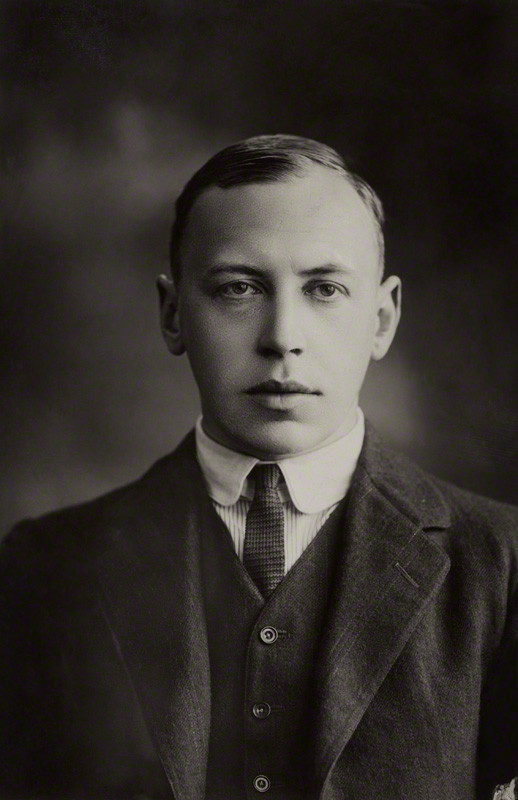
In his early 20's Alfred Noyes wrote The Highwayman, the beloved ballad for which he is best remembered.


What can you make of a major 20th Century Poet so old fashioned that some of his most ardent admirers think of him as contemporary of Wordsworth and all those old Romantics?  Who was reviled in is life by some as an unpatriotic pacifist and by others as militarist and jingoist—sometimes in the very same years?  Who moved from skeptical free thought to ardent Catholic apologist?  Who as a science fiction novelist invented the idea of a doomsday weapon and inspired George Orwell? Who penned beloved children’s novels and whose last book was an apology for not having come to the defense of an Irish patriot hung by his country decades earlier?
All of that describes Alfred Noyes, who died on June 25, 1958 on the Isle of Wright.

Noyes was born on November 16, 1880 in Wolverhampton in the English West Midlands.  His father operated a grocery and tutored Latin and Greek.  When the boy was four years old the family moved to Aberystwyt, Wales where his father taught school.  Growing up on the wild, beautiful Welsh coast, the boy absorbed romantic folk tales, and the locals love of language.


Enrolling at Exner College, Oxford in 1898, Noyes excelled at rowing and spent much of his time writing starry-eyed poetry.  Although a fine student he failed to earn his degree because he skipped his final examinations in 1902 to meet with the publisher of his first collection of verse, The Loom of Years.


Noyes quickly established himself as both a popular poet and a critically respected one.  He issued five more collections before he turned 33 years old in 1913.  These included some of the poems for which he is best remembered today like The Barrel Organ from the 1904 volume Poems with its refrain:

                    Go down to Kew in lilac-time, in lilac-time, in lilac-time;

                           Go down to Kew in lilac-time (it isn’t far from London!)

                     And you shall wander hand in hand with love in summer's wonderland;

                           Go down to Kew in lilac-time (it isn't far from London!)


Two years later his great ballad The Highwayman was published in Blackwood’s Magazine and included in his collection Forty Singing Seamen and Other Poems.  The rhythmic ballad with its evocative images and story of doomed sacrificial love quickly made it an enduring favorite.  In 1995 it was voted Britain’s 15th favorite poem of all time in a BBC poll.  It remains a favorite recital piece and has been set to music several times, most notably by Phil Ochs in 1975:

And still of a winter’s night, they say, when the wind is in the trees, When the moon is a ghostly galleon tossed upon cloudy seas,
When the road is a ribbon of moonlight over the purple moor,   

A highwayman comes riding—
         Riding—riding—
A highwayman comes riding, up to the old inn-door.

Over the cobbles he clatters and clangs in the dark inn-yard.
He taps with his whip on the shutters, but all is locked and barred.   
He whistles a tune to the window, and who should be waiting there   
But the landlord’s black-eyed daughter,
         Bess, the landlord’s daughter,
Plaiting a dark red love-knot into her long black hair.
As a young poet Noyes was unabashedly looking backward and drawing inspiration from English history and lore.  A major project of these early years was a 200 page epic poem Drake about the Elizabethan explorer, pirate, and naval commander Sir Francis Drake.  The blank verse opus was issued in two volumes in 1906 and ’08.
It was possible in those early years of the 20th Century for a popular poet to make a good living in Britain.  And so Noyes did.  He never needed to take up a profession or trade.  He was a literary man.  As such he was able to woo Garnett Daniels, youngest daughter of the U.S. Consul at Hull, Colonel Byron G. Daniels who was an Army veteran of the Civil War veteran who was for some years.  The couple wed in 1907 while the second volume of Drake was in preparation.  It was by all accounts a blissfully happy union.
Noyes continued to mine English lore for inspiration.  In 1911 he published a full length play in verse Sherwood.  Although not overtly political and far from a socialist the play invited comparisons between the oppressive capitalists and their protectors in government in his day and rapacious Prince John and his minions.  His fascination with Robin Hood was also displayed in one of his most popular poems published the same year A Song of Sherwood:

Softly over Sherwood the south wind blows.
All the heart of England his in every rose
Hears across the greenwood the sunny whisper leap,
Sherwood in the red dawn, is Robin Hood asleep?

Hark, the voice of England wakes him as of old
And, shattering the silence with a cry of brighter gold
Bugles in the greenwood echo from the steep,
Sherwood in the red dawn, is Robin Hood asleep?
As tensions in Europe rose and war seemed to be closing in, Noyes turned his attention to the threat.  He considered himself a pacifist.  In 1913 he published a long anti-war poem called The Wine Press that got wide spread admiration and attention on both sides of the Atlantic.  He began lecturing on peace.  His American wife convinced him that he should take her home for a visit and take advantage of invitations to speak on the subject in the U.S.
The couple spent six weeks in the States making it as far west a Chicago in February and March.  The tour was so successful and Noyes so enjoyed the adulation and attention that they returned in October for a second tour.  On that round an appearance at Princeton so impressed school authorities that he was invited to join the faculty.  Beginning in 1914 Noyes lectured in poetry in the spring semester every year until 1923, returning to England for the balance of the year.  He was a popular teacher and his students included F. Scott Fitzgerald, Edmund Wilson and John Peale Bishop.
Noyes kept up this commitment even through World War I when u-boats sometimes made the crossings dangerous.  The war also challenged Noyes’s pacifism.  He had never been an absolute no-war-ever type.  He had opposed the Boer War because it was offensive and to him manifestly unjust.  But, he asserted, that when threatened by an aggressive and unreasoning enemy, a nation could not but fight.  Thus he fell in line with many pre-war anti-militarists, anti-imperialists, pacifists, and socialists who abandoned their opposition to war to line up enthusiastically behind their country’s arms.
Kept from enlisting due to his poor eye sight, Noyes did war duty with the Foreign Office in a propaganda assignment.  He also churned out morale-boosting stories and poems for the home press.  This material, though popular, was well below his usual standards as if his heart was not all the way in it.  Few of these pieces are now remembered except for two ghost stories that occupy a niche among horror story fans--The Lusitania Waits and The Log of the Evening Star.
After the war, with much of his generation brutally wiped out, Noyes quickly returned to his pacifism as if a veil had been raised from his eyes.  The Victory Ball inspired by his revulsion an official gala he attended in which he imagined the ghosts of the dead and the broken hearted young women left behind mingling with the high and mighty and mighty who had sent them to their doom, appeared in the American Saturday Evening Post in 1920.  It was later set to music as a symphonic poem by Ernest Schelling and a ballet by Benjamin Zemach. 

The symbols crash,
And the dancers walk,
With long silk stockings
And arms of chalk,
Butterfly skirts,
And white breasts bare,
And shadows of dead men
Watching them there.
Shadows of dead mean
Stand by the wall,
Watching the fun
Of the Victory Ball’

Other writers and poets were stirred by the horror of the war and by winds of change in culture and literature.  The post-war years saw the spectacular rise of the imagists and modernists.  Whatever moral and ethical concerns he might have shared with the likes of Ezra Pound and T.S. Eliot, they were moving stylistically in directions he did not wish to follow.  He continued to produce the highest quality, but quite old fashion verse.  More over his inner prude was deeply offended by the excesses of some, especially James Joyce, who he despised.  He traded critical barbs with the new literary types, dimming somewhat his reputation among later scholars.
Noyes’s principle project during the twenties was an epic three volume trilogy The Torch-Bearers comprised of Watchers of the Sky, 1922; The Book of Earth, 1925; and The Last Voyage in 1930) which dealt with the history of science.  The books included poetic profiles of major figures in the history of science.  The final book took a new direction with his new found faith and discusses how all of the great advances of modern technology cannot unite to save a dying girl and of the “flame of solace” only religion can bring.
Although otherwise productive, the 1920’s brought heartbreak, a religious awakening, and finally a new relationship.  Noyes’s beloved wife Garnett died in 1926 at Saint-Jean-de-Luz, France, while the couple was visiting a friend.  Heartbroken Noyes, a firm pre-war skeptic, turned to religion for solace, particularly to the mysteries of Roman Catholicism. 
This process was undoubtedly influenced by Mary Angela Mayne, the war widow of Lieutenant Richard Shireburn Weld-Blundell, a member of the old recusant Catholic family.  The two were married in 1927 and he officially converted a year later.  He described his intellectual conversion process in The Unknown God, published in 1934 and one of the most widely read and admired Catholic apologetics of its time.
The couple settled in the near idyllic Lisle Combe, a 19th Century country house on the Undercliff near Ventnor, Isle of Wight.
In 1939 Britain and Europe were once again plunged into war and Noyes had to face his old dilemma again.  Faced with what looked like an even more evident evil in the world, he again threw his support to the allied war effort.  But this time in addition to rah-rah stuff for the press, there was much more nuance in his writing.
In 1940, as bombs fell on London, Noyes published his science fiction novel The Last Man, published in the U.S. as The Only Man.  After a super weapon—a death ray—falls into the hands of all of the powers, each one pledging to use it only as a “last resort”—each of them in turn deploys it virtually wiping out life on Earth.  An accidental survivor, who was trapped on a sunken submarine at the time of the attack, escapes to find himself alone.  He journeys across Europe to find others like him before arriving in Italy where he discovers a beautiful young girl and her scientist employer who had survived in a diving bell while photographing the sea bed.  It turns out that the professor is he inventor of the ray which he leaked to the governments knowing what would happen.  His plan was to survive with his assistant and repopulate the world with her as Eve to his new Adam.  The hero and girl discover the horrible truth. 
The book was one of the first dystopian novels and the Death Ray was the very first use of a doomsday weapon that became a staple of science fiction after the Atomic and Hydrogen bombs made the concept all too real.  The book was widely praised.  George Orwell wrote one major review and later cited the book as one of the inspirations for Nineteen Eighty-Four.
In still neutral America the book was also popular and a new round of speaking invitations brought Noyes and his wife across he dangerous Atlantic in 1940.  He lectured widely and advocated for Britain with a nuanced damnation of war itself.  A series of lectures he gave in 1941 at Mount Allison University, New Brunswick, Canada called The Edge of the Abyss was published the next year pondered the future of the world, attacking totalitarianism, bureaucracy, the pervasive power of the state, and the collapse of moral standards. 
Noyes remained in America through the war and afterwards settling in California.  Besides his popular press, pro-allies pieces, he also wrote If Judgment Comes, a long poem in which Hitler stands accused before the tribunal of history.  He also wrote the first of two children’s books, the whimsical The Secret of Pooduck Island, set off the coast of Maine featuring a family of squirrels threatened by their natural enemies, skunks, weasels, and humans, and the ghost of a Native American man who suffered a terrible sorrow.
Noyes remained in the United States until failing health and eyesight drove him home to the Isle of Wright in 1949.  Now virtually blind he dictated his remaining works which included another book for children, Daddy Fell into the Pond and Other Poems in 1952.  He returned to science fiction and fantasy with The Devil Takes A Holiday in which the title character vacations in Santa Barbara only to discover that human on their own were supplying enough evil to render him superfluous.  His last book of poetry, A Letter to Lucian and Other Poems, came out in 1956.
Now suffering not only from blindness, but crippled with polio, Noyes’s last book was an effort to correct an old personal wrong.  When the internationally recognized human rights crusader and Irish Patriot Sir Roger Casement was scheduled to be hung for this involvement with the 1916 Easter Uprising, Noyes was a leader of a raft of respected English intellectuals who planned to launch a public campaign on his behalf.  British authorities showed public figures and known sympathizers purported selected pages from some of Casement’s diaries that portrayed him as a promiscuous homosexual.  The dirty trick release of what came to be known as the Black Diaries revolted the prudish poet and, as expected neither he nor almost any other public figure dare expose themselves to danger by defending a “pervert.” 
Years later at a public appearance Casement’s sister came up to him and accused him of being a murderer and moral coward for not speaking up.  Heartbroken, Noyes revisited the case and in The Accusing Ghost, or Justice for Casement concluded that he argued that Casement had been the victim of a British Intelligence plot.  He did not, however, confront his own revulsion at homosexuality.  The book was widely praised at the time and the argument that Casement had been “framed” for his sexuality took hold.  However in 2000 independent analysis of the original documents showed they were authentic.
Noyes died on June 25, 1958 of complications from polio at his Isle of Wright home and was buried in Catholic cemetery at Freshwater.