|
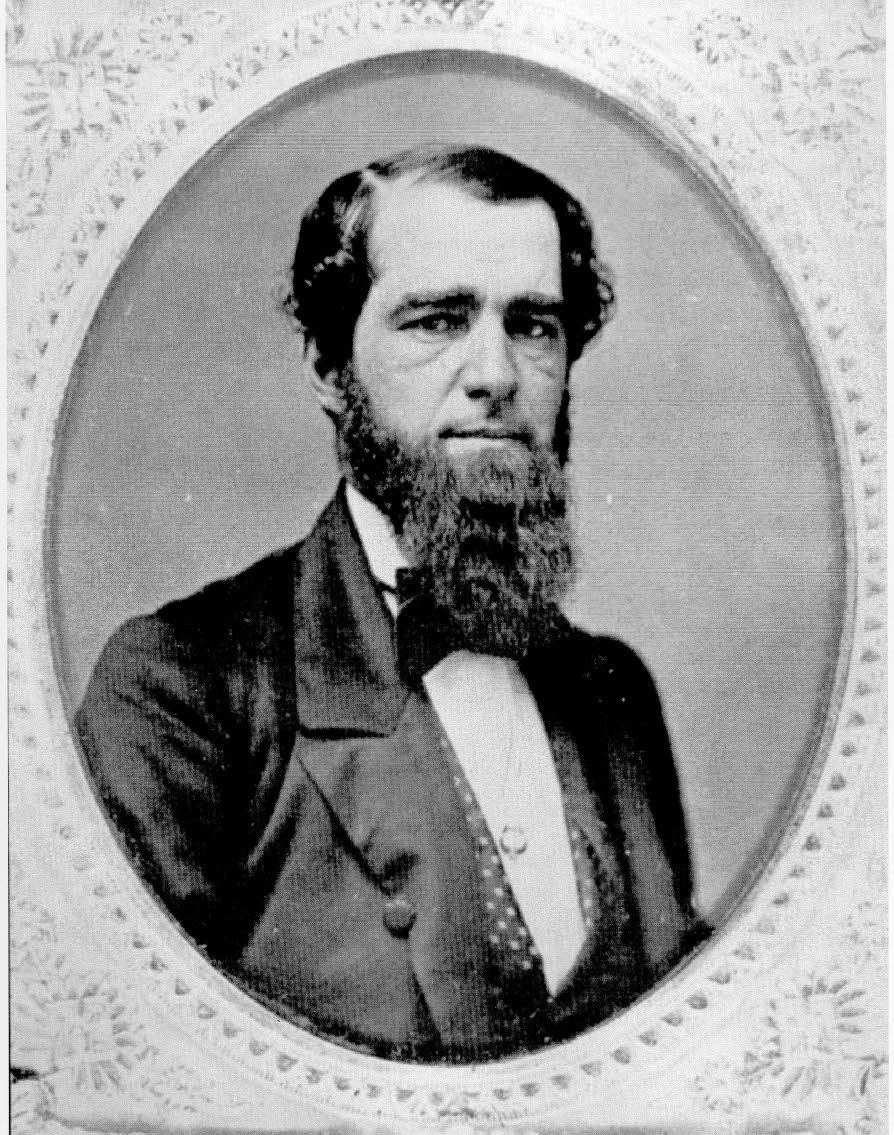
Frank Leslie's Illustrated published a series of engravings detailing every step of the Confederate raid on St. Albans based on
photo graphs of the town and sketches of actual townsmen. The teller at
the St. Albans bank was told, “Not a word. We are Confederate
Soldiers detailed from General Early’s
Army to come North and to rob and plunder as your soldiers were doing in
the Shenandoah Valley.”
|
Compared
to the industrial scale horror of
many of the battle fields of the Civil War, it was a trifle.
Hardly even a skirmish—one dead on each side, a handful of injuries,
one shed burned, and a few locals thrown into a panic.
Indeed outside of the Green
Mountain state where it is something of a big deal, it has been relegated to a mere footnote in the central epic
of American history.
But
I guess the actual invasion of Vermont by Confederate cavalry on October 18, 1864 merits a few spilled electrons here.
By
October of 1864 things looked grim for the Rebels.
Robert E. Lee’s increasingly bedraggled Army of Northern Virginia was losing a war of attrition but was putting up a desperate resistance behind the earthen work defenses of Petersburg, gateway to Richmond itself. William
Tecumseh Sherman was cutting loose from recently fallen Atlanta and making his March to the Sea. The West
had been cut off for more than a
year since the fall of Vicksburg and
total Union control of the Mississippi. Most important Confederate ports had either already fallen were effectively blockaded. The
Southern economy was in shambles,
its limited industrial capacity
largely smashed, and her people exhausted. Yet they fought on, desperate for a miracle.
In
such a situation President Jefferson
Davis was eager to try anything, no matter how outlandish and desperate. His attention turned to Canada where Confederate agents
swarmed concocting fantastic plots the
main aim of which was to exploit Northern
war weariness and somehow defeat Abraham
Lincoln in the November election
and replace him with a peace Democrat who would negotiate an end to the war.
To
that end they had been advising and arming a small number of radical Copperheads, nominally led by Ohio Congressman Clement Vallandigham
and his political organization The Sons
of Liberty. Most of the Sons were
simply anti-war, but I minority did hatch some plots with the aid those
Canadian agents—attempts to stir an
uprising in Chicago coincidental
to the Democratic Party Convention there. The plot had been exposed, and Republican propagandists
made a field day of exaggerating the threat and denouncing Copperhead
treason. Vallandigham himself was deported to
Canada.
Meanwhile
other plots included a plan to seize the only Navy Gunboat on Lake Eerie,
the U.S.S
Michigan which was guarding
a sizable prisoner of war camp on Johnson’s Island. Armed agents seized a steamboat and
planned to intercept the Michigan whose officers were supposed to be drugged
by saboteurs. That plot also was exposed and the rebels had
to high tail it to Canadian shores on their commandeered boat.
 |
Lt. Bennett Young planned and led the raid.
|
So
it was not surprising that Davis eagerly accepted a plan laid out to him by a
young cavalryman. Bennett H. Young was the teen age son of a Kentucky aristocrat when he had enlisted in the 8th Kentucky Cavalry. He was only 20 when he was captured in Ohio
during General John Hunt Morgan’s raid deep
into Yankee territory. After a short time as a prisoner of war, he escaped and made his way to
Canada. From there he went all the way
to Halifax, Nova Scotia where he
booked passage to Bermuda and from
there back south on a blockade runner. After the daring do of these adventures,
he eventually laid out his plans to
President Davis.
He
proposed to return to Canada and once there recruit a force from the large numbers of escaped POW’s there, then
stage a raid on a fat and under-protected U.S. border town. The immediate
objective would be to rob banks
and secure desperately needed specie—hard currency in the form of gold.
The raid would also perhaps force the Union government to divert troops from the southern fronts
to protect the exposed northern frontier. It might be enough of a blow to Northern moral to help tip the November
election to George McClelland and
the Democrats.
Perhaps
the wildest hope was that the raid
would provoke an over-reaction and a hot
pursuit of the raiders across the border causing an international incident. With
luck it might even blow up into something that would finally bring British intervention into the Civil War either on the side of the South or as a neutral peace keeper which would separate the forces and recognize
the South—a long cherished Confederate dream.
Davis
was sold. He commissioned Young a lieutenant, provided a small purse to help finance his plan
and sent him back to Canada with order to meet up with Confederate agents
there. Returning north by the same
perilous route, Young was soon enough busy recruiting his force.
Eventually
he gathered 21 other young adventurers, most of them, like himself, cavalrymen,
the others expert horsemen. After a brief period of training, they began to slip across the porous and undefended border by ones and twos, most by train.
 |
The S.t Alban's Bank, right, was one of three that were robbed during the raid.
|
Their
objective was the prosperous rail
junction town of St. Albans fifteen
miles from the border. It major
attraction was three fat banks
clustered near the center of
town.
On
October 10, Young and one companion checked into a local hotel explaining their long guns by claiming to be on a hunting trip from St. John’s. Over the next
few days the others arrived with similar stories. Although it is a mystery to me how so many armed young men, many of whom had to have
obviously Southern accents could
come into a small town without arising at least some suspicion. But then St.
Albans was far from the war, and perhaps only its sons and husbands in the
Union service had ever heard a Southerner speak.
As
his troops assembled, Young spent
time scouting the surrounding area
and all possible roads in and out of
town in all directions under the cover of hunting trips. The handsome and charming young man also
found time to dally with the affections of a local belle and was even welcomed into the home of Governor J. Gregory Smith and given a
tour by his wife, Anna
Finally,
all was in place. About 3 pm October 19,
Young strode the steps of the American
Hotel, drew his pistol and
announced the astonished men gathered there “I take possession of this town in
the name of the Confederate States of America. Anyone resisting will be shot.” By coincidence he had the good fortune of
picking a day when the local Sherriff
and as many as 50 other leading local
citizens were attending court at
the county seat and Gov. Smith was
attending state business in Montpelier. The men most likely to organize an effective resistance were gone.
Young
and a handful of cohorts began to round
up citizens on the streets and herd them onto the village green. When the
local church bells sounded 3 pm
teams of two or three burst simultaneously into the town’s three banks—the St. Albans Bank, Franklin County Bank, and First
National Bank of St. Albans—clustered together conveniently enough on Bank Street. In each case employees were pistol
whipped or threatened and chaotic searches were conducted for
cash. In each case substantial amounts were not found, left behind or, and lost in
the excitement.
The
robbers found little hard currency
and in one case decided that a bag of
silver Dollars was too heavy to
carry. Very little gold was taken, but they loaded up on bank notes, green backs,
and government bonds.
Meanwhile
as Young held the terrified locals at gun point, other men rounded up and saddled
horses from the local livery stable
and from the streets.
Several
shots were fired in the bank
robberies and as Young and his men menaced the town. There were several tussles and a few locals managed to get a hold of weapons and fire,
mostly ineffectively, at the
raiders. One local man was killed, and another wounded by gunfire. Two raiders were shot, one of whom later died of his wounds.
Meanwhile,
despite the best efforts isolate the
center of town, word was getting out that a raid was taking place and men
started to arm themselves and prepare to attack the raiders.
Young
planned to set fire to the town,
reportedly as revenge for General Philip
Sheridan’s devastating raid in the Shenandoah
Valley and as a diversion to
keep townspeople too busy putting out the flames to pursue them. To this end the raiders had equipped
themselves with four inch glass vials of
Greek Fire that were supposed to burst
into flames when broken and exposed to the air. Vials were thrown at the American House and
several other businesses, but only a shed ignited
and it was quickly extinguished.
Young
was overheard to order one of his
men to go to Governor Smith’s home and burn it.
A boy slipped away from the crowd and ran to inform Mrs. Smith that the
raiders were coming. She quickly rummaged
through the house and found an old horse
pistol. Unfortunately it was
unloaded and she did not find any ammunition. Gamely she hauled the heavy weapon out and
took a position in her doorway awaiting the arrival of the Rebels. Her heart was beating when she heard hoof
beats.
 |
With the Sherriff, Governor Smith, and many of the leading citizens away from town, working men like these formed the local resistance and joined two hastily assembled posses.
|
Fortunately
the horse was ridden by Captain George
Conger, a recently discharged Union cavalryman who was organizing a posse. He left some men behind to guard the
governor’s home and then headed to town.
Eventually he gathered a posse of 50 men and F. Stewart Stranahan and John
W. Newton gathered another 50. Both groups
began to close in on the village center.
Realizing
that he was pressed and outnumbered, Young had to abandon plans
to proceed to two other nearby towns to rob their banks. He and his men hightailed it out of town not
too much in advance of the posses. In
the confusion more bank loot spilled from the raiders’ bags.
Here
his planning and knowledge of the roads paid off the men split up and then split again.
All gained the Canadian border safely, including the two wounded men,
one of who would soon die.
Once
in Canada it did not take long for local
authorities, warned by telegraph
to find and round up raiders. All who
actually went on the raid were in custody
within 24 hours, although co-conspirators
and Confederate agents in Canada were not nabbed.
Canadian
authorities were in a quandary about
what to do with the men. At the State Department William S. Seward issued
blustery demands for their return,
calling the men common criminals. Young and his men demanded to be treated as combatants of war and thus beyond extradition and criminal punishment. As predicted the incident did blow up into an
incident that threatened US-British relations.
Canadian authorities finally decided that their neutrality prevented them from turning the men over. They did however return all of the money they
recovered—about $88,000 of the estimated $200,000 stolen. Some of the rest of the money was recovered
in St. Albans and along the trail of the fleeing raiders.
 |
Five
of the raiders, including Lt. Young in cavalry boots, were photographed in Canada while
awaiting their fate. They had pieced together some semblance of uniforms to
emphasize that they were soldiers on a mission approved by the President
to the Confederacy and not common criminals. But in the raid they had
been in mufti and if the Americans could get them extradited they would
be tried and spies and most likely hung.
|
While
in custody the raiders were treated as celebrities. They posed
for photographs in and out of
their jail cells. Papers both North and South were filled with breathless accounts of their escapades. Illustrated
stories splashed across the pages of weeklies like Harper’s and Frank
Leslie’s.
But
the publicity failed to dishearten the public, who were beginning to get used
to Union victories in the field. A few
troops were indeed dispatched to protect the border, but the Union had plenty
to spare. Another Canadian based plot to
stage an election day uprising in
New York City was revealed and
squelched when General Benjamin Butler arrived
in the city with several thousand troops.
The election went off without a hitch.
Lincoln, of course, was re-elected.
The
South, however, was cheered by the
heroics. President Davis promoted Young
to Brigadier General as he sat in
his jail cell.
 |
Promoted to Brigadier General while in custody in Canada, Young eventually became a leading citizen and wealthy man. Seen here in his uniform as National Commander of the United Confederate Veterans--the Southern equivalent of the Union's Grand Army of the Republic.
|
Eventually
all the men were released. After the war
Young was specifically excluded from
the General Amnesty offered
Confederate troops. He could not go
safely home again until 1868. He studied law while in exile and back
home opened up a prosperous law practice. He was widely celebrated as a hero and gained
both wealth and prestige. He became noted
for his philanthropy including founding
the first orphanage for Black children in Louisville, a school for the
blind, and much pro bono work for the poor. He became President of the Louisville Southern Railroad, a memoirist, and National Commander of the United Confederate Veterans. He died in 1919 at the age of 66.
Only
one of the three robbed banks still
stands. And it is still a bank
building. But after many mergers and
changes of hands it is, somewhat ironically, a branch of a major Canadian
bank.
Tailored
made as an adventure yarn, the St. Alban’s raid has been the subject of novels and of the 1954 film The
Raid starring Van Heflin,
Richard Boone, Anne Bancroft, and Lee
Marvin. As you might suspect, the
film was only loosely tethered to
the facts.
 |
St. Albans has become a magnate for New England Civil War buffs and a boon to Vermont tourism. This marker stands near the site of the three banks targeted by the raiders.
|
The
state of Vermont has heavily promoted
the story of the St. Albans Raid. The
state has found that Civil War buffs
nicely supplement the annual pilgrimages of leaf peepers to the state.