Showing posts with label Diwali. Show all posts

Tuesday, October 21, 2025

Dusting Off My Starry Pointed Hat--Omen Reading New Murfin Verse

A tall pointed wizard hat midnight blue with silver stars | Premium  AI-generated image 

Back on September 12, 2007 I noted the serendipitous coming together of Ramadan and Rosh Hashanah on the day after the anniversary of the 9/11 attacks.  Today I have to dust off my Starry  Wizard hat.  Tonight, October 21 with a dark  New Moon two comets, R2 SWAN and AC Lemmon, will streak across they sky as the annual Orionid Meteor shower reaches its peak.  And other stuff is going on as well.

The Earth - 🌠 DON'T SLEEP TONIGHT 🌠 The sky is putting on a double  spectacle tonight! ✨ From Midnight to Dawn — The Orionid meteor shower  reaches its peak, sending up 


Dusting Off My Starry Pointed Hat

Calendar Coincidences October 21, 2025  

Four Days after new order of things

    was disturbed the rousing of the Folk

    two comets, one expected, one detected,

    one green and one silvery blue 

    will streak through the Moon dark sky

    as Old Orion's belt showers its shooting stars, 

    each vanishing spark once shed by 

    Haley's regular visitor 

    and on puny Earth  diyas of Diwali 

    are lit to greet them all. 


Dusting off my starry pointed hat

    I recognize an omen or two

    when I see one.

    King and would be Kings should tremble

    and empty their bowls.


But Earth itself and we scurrying creatures

    upon it should feel a chill as well 

    if a resistance doesn't carry on 

    and lamps of every sort 

    flicker and fail.


Make of this what you will.

--Patrick Murfin 


Monday, October 20, 2025

The Hindu Festival Diwali Celebrates the Triumph of Light Over Darkness


There are many Festivals of Light celebrated by religions and cultures around the world including Christmas, Chanukah, and Winter Solstice observances familiar in the West.  But none are more colorful or enjoyed with such gleeful abandon a Diwali, the Hindu festival of the victory of light over darkness, good over evil, and knowledge over ignorance.  In most of the Northern Hemisphere the five day holiday begins this year today, October 20, and reaches its peak on Wednesday, the third day of the celebration. 

The large Indian diaspora in the United Kingdom, South Africa, the Caribbean, Canada, Fiji, the United States and elsewhere has spread observances across the globe.

Typically, during the celebration, temples, homes, shops, and workplaces are brightly illuminated.  In most of India the climax of the festival occurs on the third day coinciding with the darkest night of the Hindu solar month Kartika. In the Gregorian calendar, it generally falls between mid-October and mid-November.  


Shopping in preparation for Diwali.

During the climax, revelers adorn themselves in their finest clothes, illuminate the interior and exterior of their homes with diyas (oil lamps or candles), offer puja (worship) to Lakshmi, the goddess of prosperity and wealth, light fireworks, and enjoy family feasts, where mithai (sweets), and gifts are shared.

Details of the celebration vary across regions and even the names of each feast day change with local dialects and languages.  In much of southern India and in Sri Lanka Tamils celebrate the first day of Diwali as most significant.  Diwali is also a major cultural event for Jains and other religious minorities on the Indian Subcontinent.   The Sikhs celebrate Bandi Chhor Divas to mark the release of Guru Hargobind from a Mughal Empire prison.  Newar Buddhists, unlike other Buddhists, celebrate Diwali by worshipping Lakshmi, while the Bengali Hindus generally celebrate Diwali, by worshipping Goddess Kali.  Except for Muslims and the small minority of Indian Christians, pretty much the whole country takes off to party.  


                                        Young women of the Hindu diaspora light diyas. 

The Diwali festival is likely a fusion of harvest festivals in ancient India.  It is mentioned in Sanskrit texts such as the Padma Purana and the Skanda Purana both of which were completed in the second half of the 1st Millennium CE. The diyas are mentioned in Skanda Kishore Purana as symbolizing parts of the Sun, describing it as the cosmic giver of light and energy to all life and which seasonally transitions in the Hindu calendar month of Kartika. 


William Simpson labelled his chromolithograph of 1867 as Dewali, feast of lamps. It showed streets lit up at dusk, with a girl and her mother lighting a street corner lamp.

Most British, Commonwealth, and North American Hindu communities have their roots in the north of India and commonly celebrate these five days:

Day OneDhanteras marks the beginning when people traditionally purchase some gold or silver or at least one or two new cooking utensils for good luck.


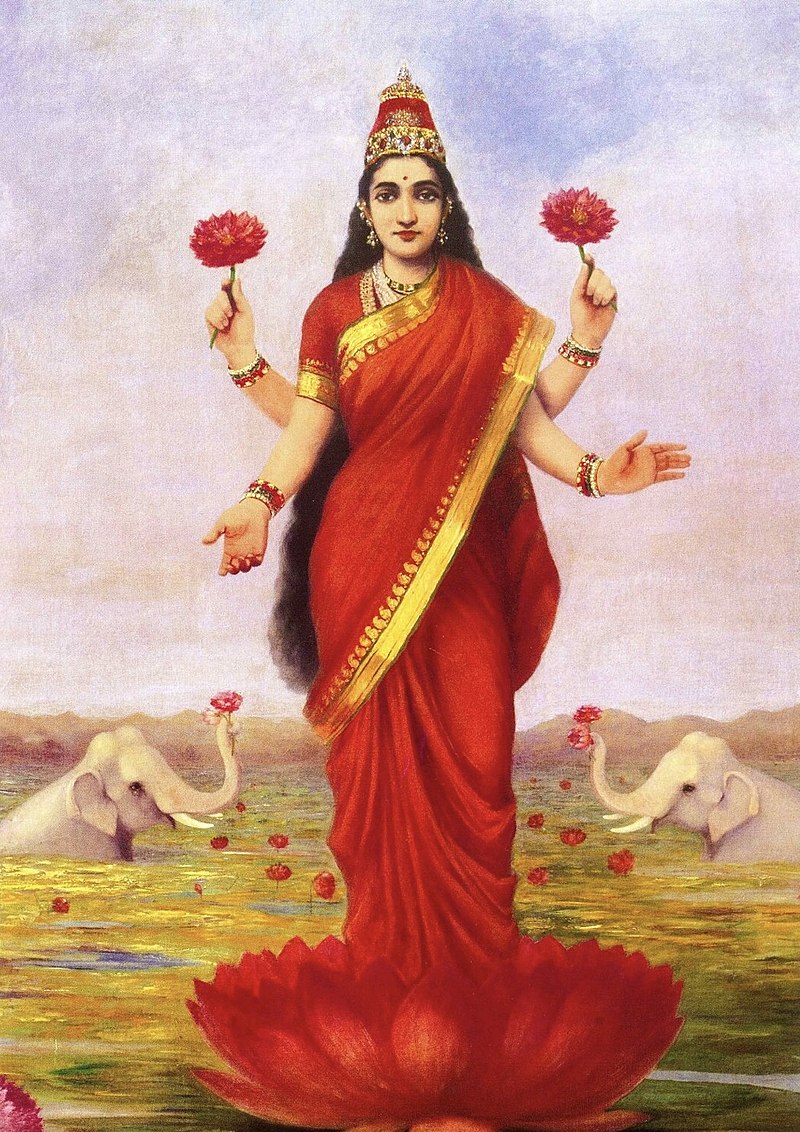
                                            The goddess Lakshmi. 

Day TwoNarak Chaturdasi is also called Choti Diwali when people take oil baths before sunrise with ubtan, a homemade paste of herbs that can be used as a soap, and a face or body mask.


A family celebrates with sparklers and new clothes. 

Day ThreeLakshmi Puja is the main and most festive day of the festival when people keep the house spotlessly clean and pure to welcome goddess Lakshmi. After a day of fasting sweets and gifts are shared.  Lamps are lit in the evening, and Lakshmi puja, a home religious observance celebrating the goddess with chants, mantras, and honoring ancestors.  Celebrations spill from homes and businesses into the streets with more lamp lighting, singing and dancing and public fireworks.

Day FourGovardhan Puja or Padwa celebrates the love between husband and wife in commemoration of Parvati and her husband Shiva as well as the lifting the Govardhan mountain by Krishna to save a cowherd and farming communities from incessant rains and floods triggered by Indras anger.  It is thus also a harvest fest and day of thanksgiving marked by Annakut, the mountain of food. Communities prepare a meal of over one hundred dishes from a variety of ingredients, which is dedicated to Krishna before shared communally. Hindu temples on this day prepare and present mountains of sweets to the faithful who have gathered for darshan, a visit. In Gujarat, the day is also called Annakut is the first day of the new year and is celebrated through the purchase of sabras, the good things in life, such as salt, offering prayers to Krishna and visiting temples.


A sister feeds her brother by hand.  Many modern Hindus now celebrate Bhai Duj as an equal celebration of sibling love.

Day FiveBhai Duj celebrates the bond between brother and sister.  Women of the family gather, perform a puja with prayers for the well being of their brothers, then return to a ritual of feeding their brothers with their hands and receiving gifts. In some Hindu traditions the women recite tales where sisters protect their brothers from enemies that seek to cause him either bodily or spiritual harm. Often brothers travel to meet their sisters or invite their sister’s family to their village to celebrate their sister-brother bond with the bounty of seasonal harvests.


Variations on these are almost infinite in the complex world of Hinduism and customs can even vary from village to village in the same regions.  But the joy of the season is celebrated by more than 800 million people worldwide making it one of the largest religious festivals on the planet.


Thursday, October 31, 2024

Halloween and Diwali—A Calendar Coincidence Palooza


Today is both Halloween and the first night of Diwali, two very different observances each with murky origins in dim pre-literate times.  It is also the night of a New Moon, the Catholic All Saints Day and the eve of All Souls Day and the Indio/Mexican Día de los Muertos.  On top of that, a fateful U.S. Presidential Election with its bagful of possible horrors is just five days away.  Ordinarily, that would inspire one of my serendipitous date poems.  But I am having a hard time wrapping my head around this one or finding a creative hook to tie a verse together.

Others, apparently, do not have the same problem.  The Web is afire with memes and notices on Tik-TokYouTube, X, and other social media except Truth Social which does not want to offend Evangelicals or take notice of grubby brown skinned people.  The world press has also chimed in with articles in newspapers and magazines, especially in India where Western Halloween has made cultural inroads in recent years. 

Playful memes combine the celebrations like the skeletons lighting diya lamps. 

My problem is that Halloween and Diwali have little in common.  Both celebrations incorporate  small lamps, but they have different meaningsHindus light profusions of diyas, small oil lamps inside and outside of their homes to offer puja (worship) to Lakshmi, the goddess of prosperity and wealth.  In the mystery lore of Halloween a lost soul was condemned to wander for eternity between the gates of Heaven and Hell carrying a hollowed turnip with a candle as a lantern to illuminate his way.  In the U.S. the turnips became pumpkin Jack oLanterns.  Both also share treatsmithai sweets shared with small gifts to family and guests in India and candy as the swag of ritual begging for Halloween.  Finally, both celebrations have pre-historic origins that seem animistic or pantheistic with only fuzzy connections to modern practice.

Diwali seems to stretch back much earlier by millennia to proto-Hindu tribes and clans in the Indus headwaters and valley likely a fusion of harvest festivals in ancient India where each village adored their own local spirits and crypto-gods.  Eventually those spirits were melded and became figures in the Hindu pantheon.  It was mentioned in Sanskrit texts such as the Padma Purana and the Skanda Purana both of which were completed in the second half of the 1st Millennium CE from older texts and oral traditions. The diyas are mentioned in Skanda Kishore Purana as symbolizing parts of the Sun, the cosmic giver of light and energy to all life.  That makes it (usually) the earliest of the Festivals of Life observed by cultures across the Northern Hemisphere.  

William Simpson labelled his chromolithograph of 1867 as Dewali, feast of lamps. It showed streets lit up at dusk, with a girl and her mother lighting a street corner lamp

Halloween arose from the vigorous Celts or Gaels who spread from somewhere in central Asia across much of Europe and  into the British Isles over centuriesCustoms are also attributed to the English Druids who may have been Celtic and/or partly Romanized Briton priests supposedly representing a Quarter festival between the Autumnal Equinox and the Winter SolsticeSamhain was particularly important because it was the gate in time to the death and starvation season of winter, as well a time to celebrate the recent harvest. The association with the death of winter also extended to the spirit world, which was considered to be closer to the mortal plane than at any other time of the year.  Druids—marked the occasion with the lighting of bonfires and with gifts of food and drink for the spirits of the dead.

Or so modern Wiccans tell us.  But beginning in the late 19th Century they began confabulating scraps of lore and occasional fancy into a wholly new religion centered around the covens of self-proclaimed witches, warlocks, and wizards who have kept the ancient wisdom alive through persecution by Christians and the disdain of agnostics and humanists.  It never included any form of Satanic Worship—although both Catholics and Puritans would make those charges to justify the orgies of witch burnings in Europe and North AmericaEvangelicals still campaign against Halloween in schools and in public.

Details of actual Druid practices are practically unknown but widely imagined as in this illustration of a supposed ritual being confronted and damned by Catholic priests..

On this side of the Pond Halloween slowly took root and morphed into juvenile celebration featuring masquerade and ritual begging similar to Twelfth Night and Mardi Gras.  It did not become pervasive and nearly universal until the post-World War II era and spread like Santa Claus to other cultures across the globe.  

Horror and ultra-violent fantasy became a growing part of Halloween thanks to the influence of both classic Hollywood monsters of the 1930s-‘40s and the slasher blood fests since the ‘70s.  That coincided with the day becoming an adult party excuse second only to New Years Eve and is  an economic powerhouse, generating sales second only to Christmas.

Diwali remains a family observation spread out over five days and is so widely celebrated it seems all India is partying.  The diyas drive away any darkness.  It is a festive occasion.

Perhaps a Bollywood musical might be just the ticket for figuring out how to connect the festivals. 

Certainly this poor poet cannot.


Sunday, November 12, 2023

We Stand Corrected—Diwali Really Starts Today


A month ago, I glanced at the Dollar Store wall calendar tacked next to my desk.  It showed the beginning of the Hindu Festival of Diwali as October 12.  I leaped into action and dusted off a semi regular post about the celebration and put it up on Heretic, Rebel, a Thing to Flout.  Unfortunately, the esteemed Chinese publisher of discount calendars failed to update Diwali for 2023.  There are deep lessons of research and confirmations for the crow-eating Old Man.

Other than the date screwup the original post is still a reasonable presentation of the joyous festival.  If you missed it the first time visit  Celebrating the Victory of Light Over Darkness Diwali is a Festival of Light

Tuesday, October 25, 2022

Diwali Celebrates The Victory of Light Over Darkness—A Festival of Light

There are many Festivals of Light celebrated by religions and cultures around the world including Christmas, Chanukah, and Winter Solstice observances familiar in the West.  But none are more colorful or enjoyed with such gleeful abandon a Diwali, the Hindu festival of the victory of light over darkness, good over evil, and knowledge over ignorance.  In most of the Northern Hemisphere the five day holiday began this year on October 23, and reaches its peak on Wednesday, the third day of the celebration. 

The large Indian diaspora in the United Kingdom, South Africa, the Caribbean, Canada, Fiji, the United States and elsewhere has spread observances across the globe.

Typically, during the celebration, temples, homes, shops, and workplaces are brightly illuminated.  In most of India the climax of the festival occurs on the third day coinciding with the darkest night of the Hindu solar month Kartika. In the Gregorian calendar, it generally falls between mid-October and mid-November.  

In 2020 even one of the worst Coronavirus outbreaks in the world could not stop Hindus in India from shopping to prepare for Diwali.

During the climax, revelers adorn themselves in their finest clothes, illuminate the interior and exterior of their homes with diyas (oil lamps or candles), offer puja (worship) to Lakshmi, the goddess of prosperity and wealth, light fireworks, and enjoy family feasts, where mithai (sweets), and gifts are shared.

Details of the celebration vary across regions and even the names of each feast day change with local dialects and languages.  In much of southern India and in Sri Lanka Tamils celebrate the first day of Diwali as most significant.  Diwali is also a major cultural event for Jains and other religious minorities on the Indian Subcontinent.   The Sikhs celebrate Bandi Chhor Divas to mark the release of Guru Hargobind from a Mughal Empire prison.  Newar Buddhists, unlike other Buddhists, celebrate Diwali by worshipping Lakshmi, while the Bengali Hindus generally celebrate Diwali, by worshipping Goddess Kali.  Except for Muslims and the small minority of Indian Christians, pretty much the whole country takes off to party. 

Young women of the Hindu diaspora light diyas.

The Diwali festival is likely a fusion of harvest festivals in ancient India.  It is mentioned in Sanskrit texts such as the Padma Purana and the Skanda Purana both of which were completed in the second half of the 1st Millennium CE. The diyas are mentioned in Skanda Kishore Purana as symbolizing parts of the Sun, describing it as the cosmic giver of light and energy to all life and which seasonally transitions in the Hindu calendar month of Kartika. 

William Simpson labelled his chromolithograph of 1867 as Dewali, feast of lamps. It showed streets lit up at dusk, with a girl and her mother lighting a street corner lamp.

Most British, Commonwealth, and North American Hindu communities have their roots in the north of India and commonly celebrate these five days:

Day OneDhanteras marks the beginning when people traditionally purchase some gold or silver or at least one or two new cooking utensils for good luck.

                                       The goddess Lakshmi.

Day TwoNarak Chaturdasi is also called Choti Diwali when people take oil baths before sunrise with ubtan, a homemade paste of herbs that can be used as a soap, and a face or body mask.

A family celebrates with sparklers and new clothes.

Day ThreeLakshmi Puja is the main and most festive day of the festival when people keep the house spotlessly clean and pure to welcome goddess Lakshmi. After a day of fasting sweets and gifts are shared.  Lamps are lit in the evening, and Lakshmi puja, a home religious observance celebrating the goddess with chants, mantras, and honoring of ancestors.  Celebrations spill from homes and businesses into the streets with more lamp lighting, singing and dancing and public fireworks.

Day FourGovardhan Puja or Padwa celebrates the love between husband and wife in commemoration of Parvati and her husband Shiva as well as the lifting the Govardhan mountain by Krishna to save a cowherd and farming communities from incessant rains and floods triggered by Indra’s anger.  It is thus also a harvest fest and day of thanksgiving marked by Annakut, the mountain of food. Communities prepare a meal over one hundred dishes from a variety of ingredients, which is dedicated to Krishna before shared communally. Hindu temples on this day prepare and present mountains of sweets to the faithful who have gathered for darshan, a visit. In Gujarat, the day is also called Annakut is the first day of the new year and celebrated through the purchase of sabras, the good things in life, such as salt, offering prayers to Krishna and visiting temples.

A sister feeds her brother by hand.  Many modern Hindus now celebrate Bhai Duj as an equal celebration of sibling love.

Day FiveBhai Duj celebrates the bond between brother and sister.  Women of the family gather, perform a puja with prayers for the wellbeing of their brothers, then return to a ritual of feeding their brothers with their hands and receiving gifts. In some Hindu traditions the women recite tales where sisters protect their brothers from enemies that seek to cause him either bodily or spiritual harm. Often brothers travel to meet their sisters or invite their sister’s family to their village to celebrate their sister-brother bond with the bounty of seasonal harvests.

Family prayers before the Mountain of Sweets in a North American temple.

Variations on these are almost infinite in the complex world of Hinduism and customs can even vary from village to village in the same regions.  But the joy of the season is celebrated by more than 800 million people worldwide making it one of the largest religious festivals on the planet.