Showing posts with label Eugene O'Neill. Show all posts

Sunday, April 26, 2015

National Poetry Month—The Self-inventing Harry Kemp

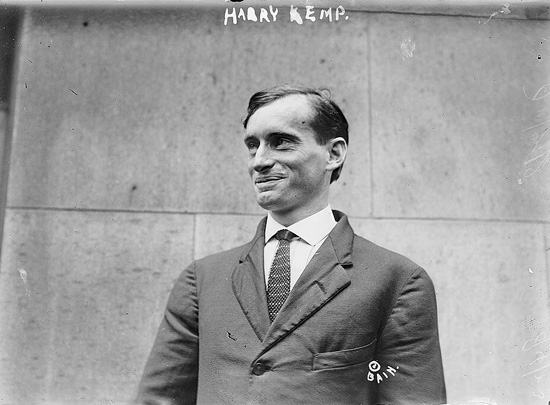
Harry Kemp circa 1920 in a suit two sizes too small....


In the visual arts stuff variously labeled folk art, outsider art, and primitive art has become a hot commodity, as any addict of Antiques Road Show can tell you.  Collectors pay big prices, galleries and museums host  hot shows, and serious critics and academics  review and analyze. 
Alas it is very different in the literary world, especially with poetry.  There are at any time hundreds of thousands of folks in this country committing poetry who have no academic training, no association with established schools of poetry, no publication in highly regarded literary journals or little magazines.  Yet they write any way and seek public attention any way they can get it.  In the old days they deluged the columns of local newspapers that were grateful for free space fillers and maybe hopeful of a few extra copies sold to be given to the writer’s friends or relatives.  Some self-published collections, which despite the success of Walt Whitman and others, were generally dismissed and vanity projects.  Once in a great while some of these books would catch on with the public and the poets would go on to some success—think of the Hoosier poet James Whitcomb Riley or Vachel Lindsay’s Poems to be Traded for Bread—but their reputation with the literary establishment would be tainted by their origin.
In more modern times, they pay entrance fees for mostly bogus poetry contests and pay through the nose for copies of anthologies including their work and made up of submissions by anyone who could lick a stamp and seal an envelope.  These days they post to any of dozens of poetry web pages, or in their own blogs and web pages.  That would include the proprietor of this pop stand.
Admittedly the vast majority of all of this feverish work is not very good.  In fact, much is downright painful.  But the law of averages tells us that there must be native genius among the dross.  In fact, exceptional poets and poetry can be found.  But they will seldom get recognized unless they also follow more traditional academic and literary paths. C’est la vie.
All of this yammering  prologue is by way of introducing Harry Kemp, a poet who with great self-promotion went out of his way to portray himself as an outsider and naïve scribbler.  In that guise he defied expectations and became quite popular with the public.  His books sold briskly and like Robert Service—although very different from him—became a favorite of the demographic usually most averse to verse—adolescent boys.
Before his death, Kemp had faded back into obscurity and is virtually forgotten today.  That obscurity is largely due to that self-created image.  But Kemp was in fact a polished and accomplished poet who was associated with many of the leading figures of the avant garde over a long period of time and thus a member of a “school” and even got his necessary academic ticket punched albeit at a Midwestern university and not an Ivy League bastion.  If he hadn’t tried so hard to obscure all of that, he might be better remembered today.
Kemp was born December 15, 1883 in Youngstown, Ohio, the only son of a candy maker.  He was raised mostly by a grandmother and was evidently restless.  At age 17 he left home and made his way to the east coast where he shipped out as a merchant seaman in 1900 after a few short years at sea he took off across America, riding the rails as a hobo.  Thus he came by the experience on which he built a persona honestly. 
He ceased his travels long enough to attend the University of Kansas.  Although he did not graduate, he stayed long enough to pick up an interest in poetry and refine his skills.  While still in Lawrence, he began to have success in selling poems to newspaper and national magazines.  His early poems were formal and traditional, but showed great technical master and a willingness to undertake unusual subject matter. 
After leaving school, he came to Greenwich Village in New York City, even then the epicenter of avant garde artists, intellectuals, and radicals, all of whom were soon his companions, comrades, mentors, and peers.  Supporting himself at odd jobs and by sales of verse to magazines, he was able to publish his first collection, The Cry of Youth and a long poem The Farmer’s Wife in 1914.  Kemp would still strike out on rambles, but returned to the village.
If the West Coast writer and Socialist Jack London had been an inspiration for his early adventures at sea and  on rail, in the village he fell under the spell of Eugene O’Neill, who had also gone to see.  Both were associated with the Provincetown  Players and Kemp was cast as one of the seamen in O’Neill’s first play, Bound East for Cardiff.  He began to spend summers with the troop at Provincetown on  Cape Cod which would eventually become his year round home.
Amongst the places Kemp visited on his rambles, and sometimes stayed at for a while, were various utopian communities he came across beginning with Upton Sinclair’s Helicon Home Colony in Englewood, New Jersey in 1906 or ’07, when it burned down.  The two would remain close until Kemp, a strapping six-footer with blonde hair and a notorious ladies man, had an affair with Sinclair’s first wife Mett Fuller resulting in their divorce in 1911, and lending a touch to titillating scandal to Kemp’s name.
In 1920 Kemp published the collection that made his reputation, Chanteys and Ballads: Sea-Chanteys, Tramp-Ballads and Other Ballads and Poems.  His style was fresh and conversational and he had colorful stories to tell.  Taking to the lecture platform like Vachel Lindsay, Kemp began to promote himself as the Vagabond Poet, the Villon of America, the Hobo Poet, and the Tramp Poet.
This reputation was cemented two years later when Tramping on Life: An Autobiographical Narrative —thought to be “enhanced”—was published.  There were a slew of hobo memoirs published in the years after World War I and well into the Depression years—think of Boxcar Bertha and Woody Guthrie’s Bound for Glory, a late entry in the genre—but Kemp’s entertaining book was among the most popular, as was his 1926 follow-up More Miles: An Autobiographical Novel. 
Tramping on Life was successful enough to finance Kemp’s early ‘20’s sojourn to Paris to hobnob with the expatriate crowd there.
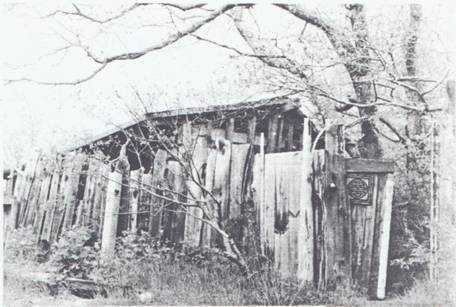
Harry Kemp's shack in the Provincetown dunes.


By the late ‘20’s Kemp made Provincetown his home base permanently, although he continued to travel.  He built a little shack out in the dunes of Cape Cod.  Hardly a hermit, he encouraged visits by the summer people who flocked to the Cape in season, regaled them with stories, and was always willing to sell them volumes of his verse.
Over the years he published several more volumes of poetry, although none ever had the success of Chanteys and Ballads, as well as a collection of short plays and a novel, Mabel Tarner, An American Primitive in 1936.
During the World War II years Kemp abandoned his radicalism and self-proclaim anarchism and turned much more conservative.  He adopted Christianity, a path followed almost simultaneously with the IWW poet, artist, and editor Ralph Chaplain.  In 1946 he published The Poet’s Life of Christ in which he described Jesus as a divine hobo and the super tramp.  All of this alienated Kemp from most of his former circle of writers and artists.
He published two more books of poetry, Provincetown Tideways in 1948 and Poet of the Dunes in 1952. which he mostly peddled in Provincetown in his adopted role of local color character.
He died in obscurity on August 15, 1960 in Provincetown at the age 76.  He is locally recalled there by a street, Harry Kemp Way.  Tourists can still purchase copies of his books about the Cape and the Dunes at local souvenir shops.

Portrait of Harry Kemp in middle age by S. Edmund Oppenheim.

A Poet’s Room (Greenwich Village 1912)
I have a table, cot and chair
And nothing more. The walls are bare
Yet I confess that in my room
Lie Syrian rugs rich from the loom,
Stand statues poised on flying toe,
Hang tapestries with folk a-flow
As the wind takes them to and fro,
And workman fancy has inlaid
My walls with ivory and jade.

Though opening on a New York street
Full of cries and hurrying feet
My window is a faery space
That gives on each imagined place;
Old ruins lost in a desert peace;
The broken fanes and shrines of Greece;
Aegean islands fringed with foam;
The everlasting tops of Rome;
Troy flowing red with skyward flame,
And every spot of hallowed fame.

Outside my window I can see
The sweet blue lake of Galilee,
And Carmel’s purple-regioned height
And Sinai clothed with stars and night.
But this is told in confidence,
So not a word when you go hence,
For if my landlord once but knew
My attic fetched so large a view,
The churl would never rest content
Till he had raised the monthly rent.

—Harry  Kemp
I’ve Decked the Tops

I’ve decked the tops of flying cars
That leaped across the night;

The long and level coaches skimmed
Low, like a swallow's flight.

Close to the sleet-bit blinds I’ve clung
Rocking on and on;

All night I’ve crouched in empty cars
That rode into the dawn,

Seeing the ravelled edge of life
In jails, on rolling freights

And learning rough and ready ways
From rough and ready mates.

—Harry  Kemp

At Sea I Learned The Weather

At sea I learned the weather,
At sea I learned to know
That waves raged not forever,
Winds did not ever blow.

I learned that, ‘mid the thunder,
Was nothing might avail
But lying to and riding
The storm with scanted sail,
Knowing that calm would follow
Filled full of golden light
Though hail and thunder deafened
The watches of the night.

And, now today I’m sailing
The changing seas no more,
But tied up to a woman
And snug and safe ashore,
With pipe and ‘baccy handy
And Sal still loving me -
I tell you that I’m thankful
For things I learned at sea!

—Harry  Kemp


Tuesday, October 16, 2012

The Sailor Who Became “America’s Shakespere”


Eugene O’Neill was born in a trunk, or pretty close to one, in a cheap theatrical hotel right on Times Square in New York City on October 16, 1888.  His father was James O’Neill, an Irish born actor who had early success as a matinee idol leading man, but settled into staring in an adaptation of the Count of Monte Cristo in more the 6000 performances on stages great and small.  He was constantly on tour, except for an annual summer hiatus at Monte Cristo House, a comfortable summer cottage he built in New London, Connecticut.  Young Eugene toured with his family until he was old enough to be sent to Catholic boarding school.  He hated the experience and soured on the Church, but found solace in reading.
At his father’s insistence, O’Neill enrolled at Princeton but was suspended for drunkenness and rowdyism before completing this first year.  To escape his father’s ire, he headed to Honduras to try his hand as gold prospector.  That ended with a bout of malaria.  After recovering O’Neill signed on the first of several tramp steamers. 
He spent a few years as a merchant seaman, a brutally arduous job—especially in the hellish boiler rooms where men spend hour upon hour hand stoking coal into the burners.  As evidence from the plays he set in this milieu suggest, O’Neill joined the Marine Transport Workers Union of the Industrial Workers of the World (IWW), which was fighting kind of a guerilla war for livable conditions with quick on the job direct action. 
During his down time on board these ships he battled depression, read, and began to write.  He also fell into the sailor’s life style of periodic, intense, binge drinking in port, going broke and having to return to sea to eat.  He did find enough time “on the beach” to marry Kathleen Jenkins in 1909 and father a son, Eugene O’Neill, Jr.
A few years of this broke O’Neill’s health.  He spent several months in 1911 and ’12 in a sanitarium recovering from consumptiontuberculosis.  While hospitalized, he invented his own regime of reading the Greeks, Shakespeare and other classic drama and then the daring new European realists—Ibsen, Strindberg, and Chekhov.  He began writing furiously; crafting one act plays based on his experiences at sea.  Within a few years he would have “a trunk load” of scripts.
After leaving the hospital, O’Neill soon shed his wife and settled in the fertile, bohemian environment of Greenwich Village, where he mingled freely with other writers, artists of all sorts, and passionate radicals.  Among his closest friends was the young Oregon born journalist Jack Reed.  In 1913 Reed produced the Patterson Pageant which brought hundreds of actual strikers from the great IWW silk workers’ strike in Patterson, New Jersey to the stage of Madison Square Garden to re-enact dramatic episodes of their on-going struggle.  O’Neill was involved and is believed to have written unaccredited dialogue. 
He also had a brief affair with Reed’s lover and future wife, the radical writer Louise Bryant.  Despite the proclaimed commitment of all three to the free love promoted anarchist Emma Goldman and her lover Alexander Berkman—who was also Louise’s editor as a regular contributor to The Blast—the triangle was emotionally draining for all of them.  O’Neill’s dalliance ended when Bryant married in Reed in 1917 and the couple went to Russia to cover the Revolution.
But before Reed left, he invited O’Neill to join him and Bryant in Provincetown, Massachusetts in the summer of 1916.  It was to be the second season of the Provincetown Players, an ambitious, avante guarde theater project meant to bring new work to the stage.  Several other Greenwich Village writers and artists also made the trip including painter Marsden Hartley, artists William and Marguerite Zorach, the Hobo Poet Harry Kemp, editor of The Masses Max Eastman, and critic and novelist Floyd Dell.  They joined George Cram Cook, Susan Glaspell, and others who had begun producing plays on a ramshackle pier the year before.
The group had already rejected plays that O’Neill had published privately with the help of his father.  But he had plenty more stashed in that famous trunk.  One evening in Cook and Glaspell’s home, O’Neill pulled out Bound East to Cardiff, a one act play about a dying sailor.   One of the group read the play aloud in the front room as O’Neill paced nervously in another.  The group was stunned by the simple power of the play.  It was produced on the pier that summer, begging O’Neill’s long relationship with the Provincetown Players. 
That fall, the Players launched a New York City venue on a makeshift stage in a Greenwich Village brownstone at 139 MacDougal Street.  Bound East to Cardiff was among the first plays produced.  Over the next two years O’Neill had six one-act plays presented: Before Breakfast, Fog, The Sniper, Ile, The Long Voyage Home, and The Rope.
The Provincetown Players, although a great nursery for new ideas and playwrights, was limited in its early years by amateur acting.  After Reed left for Russia and other founding members drifted away, however, new attention paid to performance and acting improved the quality of productions and began to get the attention of Broadway producers. 
In 1920 his first full length play Beyond the Horizon opened on Broadway.  It was a domestic tragedy of two very different but devoted brothers in love with the same woman.  The play was not only a success, it won the first of four Pulitzer Prizes for Drama awarded for his work.
He was now engaged in intense, non-stop writing and would produce an astounding body of work over the next few years.  At his side in the early ears were his second wife, writer Agnes Boulton who he married on April 12, 1918 and their two children Shane and Oona.  Oona grew up to marry Charlie Chaplain.  The marriage was troubled by O’Neill’s heavy drinking and obsession with his work.  In 1929 O’Neill abandoned the family and married actress Carlotta Monterey who had appeared as the object of obsession in his play The Hairy Ape.
Meanwhile, O’Neill’s plays triumphed.  His first big commercial success was The Emperor Jones about the rise and tragedy of a sleeping car porter to dictator of a Caribbean Island that was obviously Haiti opened in 1922.  His devastating retelling of the prostitute with a heart of gold cliché, Anna Christie, won a second Pulitzer in 1922 despite O’Neill’s dissatisfaction with it as “too easy.” 1924 brought Desire Under the Elms, in which he used the conventions of Greek drama for the first time. 
O’Neill’s most experimental play yet, Strange Interlude opened in 1928 starring Lynn Fontanne.  The four hour play was produced with a dinner break and Greek masks and featured the inner dialogues of a woman playing out all of the roles of her life—daughter, lover, wife, friend, mother.  Its heavy use of Freudian symbolism and frankness about sex shocked audiences, but it won yet another Pulitzer.
Mourning Becomes Electra in 1931 returned to the Greek drama for form.  It is really a cycle of three plays based on the Oresteia trilogy by Aeschylus but set in the Civil War era in a small New England town with the Townspeople acting as a Chorus.  The plays were performed in one very long night of theater.
The next year, O’Neill set out to prove that he could also write comedy.  Ah, Wilderness! was almost a fantasy of what his own youth might have been—if his father was sober and wise.  The play landed an unexpected star—George M. Cohan in one of his last parts and one of his few appearances as a dramatic actor in a play he did not write.  Young Elijah Cook, Jr., now best remembered as the gunsel in the film The Maltese Falcon, was the stand-in for the youthful O’Neill.
O’Neill and Carlotta lived, fought, separated and reunited in various retreats where he tried to stay sober and write.  First was a chateau in the Loire Valley of France, then a home at Sea Island, Georgia called Casa Genotta.  In 1937 they moved to Tao House in Danville, California using the prize money from his 1936 Nobel Prize in Literature.
A Tao House, O’Neill began work on his most ambitious project—an 11 play cycle chronicling an American family since the 1800s. Only two of these, A Touch of the Poet and More Stately Mansions were ever completed.  Other plays exist only in fragments, outlines and notes.  As he worked, O’Neill’s health deteriorated badly.  Not only did he continue to suffer from depression and alcoholism, his lungs had been damaged by tuberculosis.  Most devastating of all, he was developing a Parkinson’s like tremor that was making it hard to hold the pencil he used to compose in longhand.  In despair he abandoned the play cycle and turned to introspective pieces, all of them plainly autobiographical.
He completed and published The Iceman Cometh in 1940, but it was not produced for seven years.  Set in a desperately rundown Greenwich Village saloon in 1912, the play is famous for the long, confessional soliloquy of Hickey, the charismatic salesman.  Many consider it to be O’Neill’s masterpiece.  It has competition for that honor with O’Neill’s next play.
Long Day's Journey Into Night was not produced until 1956, when it created a sensation.  It is the reality flip side to the comedy Ah, Wilderness! and is transparently autobiographical.  Set in the summer retreat of an actor—obviously O’Neill’s father—and his family in 1912, the period just before O’Neil entered the sanitarium for treatment of his tuberculosis.  The father and the two competitive sons are all alcoholics.  The mother is addicted to morphine.  In one long night the family disintegrates amid mutual recriminations, self-denial, and occasional flashes of anguished affection.  The play earned O’Neill a last, posthumous, Pulitzer.
O’Neill never finished a final draft of  Moon for the Misbegotten, a sort of sequel to Long Day’s Journey focusing on the character based on his older brother.  Despite O’Neill’s instruction that the manuscript be destroyed, the play was produced on Broadway in 1957, and like the other last plays, has often been revived.
In 1943, O’Neill’s palsy had progressed so far that he could no longer hold a pencil.  To his despair, he discovered that he could not compose by dictation.  He left Tao House and began living in isolation in San Francisco hotel rooms.  The last ten years of his life, one of his children dead and estranged from the other two and in an evermore tenuous relationship with his often absent third wife, were literal horrors. 
O'Neill died in the Sheraton Hotel in Boston, on November 27, 1953, at the age of 65. As he was dying, he reportedly murmured, “I knew it. I knew it. Born in a hotel room, and God damn it, died in a hotel room.”