The episode named Bacon’s Rebellion is a mere footnote in American Colonial history, yet some historians have claimed to divine the early stirrings of the spirit of liberty. More
have placed the blame on the ego clash between a stubborn and out of touch Royal Governor and a reckless
upstart schemer. While the latter
is more likely, the fact was that despite
the manifest defects of the rebellion’s leader, his cause united the genuinely discontented from all parts and levels of Virginia society from a disgruntled
planter elite to the vulnerable
and exposed small farmers on the
frontier and included bonded and indentured servants both Black and White as well
as the small class of tradesmen and artisans.
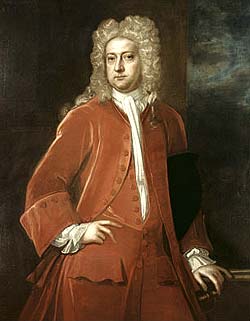
Sir William Berkely, Royal Governor of Virginia and a loyal Cavalier.
Sir
William Berkeley, 70 years of age, was the Royal Governor of Virginia in 1676. He was in the second of two long terms,
interrupted by the accession of Cromwell and the Roundheads to power in the Mother
Country. He was a devoted royalist and Cavalier who had
gained his first appointment in 1740 for loyal service to Charles I in
peace and war.
With the governorship came a generous
grant and he built his plantation Green Spring near the capital of Jamestown. Colonial
administration was not then an onerous
duty, so Berkeley had plenty of time to dedicate to his plantation, on
which he was determined to find and grow suitable
crops to diversify the colony’s near total economic dependence on tobacco. As governor he was popular and respected.
When deposed by a Roundhead fleet in 1652, Berkeley was allowed to remain free on his
plantation. With the Restoration, Charles II was quick to restore him to power in 1660. At first his second administration seemed
destined to match the success of the first.
At least he had the full and enthusiastic support of the planter class who governed
the colony hand-in-hand with him
through their absolute control of
the Council and of House of Burgesses. A cornerstone of the Governor’s administration was
his policy toward the native tribes. He cultivated the loyalty of several tribes still inhabiting parts
of the Tidewater country and their related tribes further inland as allies against other, more aggressive tribes who harassed settlers on the exposed frontier. It was actually a sensible policy and prevented a disastrous general explosion
like the Powhatan Uprising of 1622 which almost drove the colony back into the sea.
But after several years in office,
there was trouble in paradise. The colony was coming up against pile-up of problems and disasters. Despite Berkeley’s patient efforts, his
fellow planters resisted all his efforts to
induce them to diversify their crops.
Now the oldest of the plantations were beginning to lose their fertility—tobacco
leached nutrients out of the soil like nobody’s business—and with new competition from Maryland and North Carolina the price in England
was falling. The English
economy was wracked by taxation in support of a series of mostly losing naval
wars with the Dutch. Prices of imported manufactured goods on which the planter lifestyle relied were skyrocketing. And the Crown’s
increasingly mercantile policy barred
trade with other potential
customers and suppliers. The Virginia economy was in a shambles. Meanwhile, on the frontier there were more
frequent clashes with hostile tribes and friendly tribes were being alienated by deceitful trading practices
and sometimes the outright theft of valuable fur pelts. Then in the
span of a single year the colony was ravaged
by hurricanes, floods, hail, and tobacco blight.
Under the circumstances discontent grew
at all levels of society. Berkeley hardly seemed to notice. Enter just
the man to
stir the pot and take advantage of all that malaise. Nathaniel Bacon was a very wealthy young man of 28 years when he
landed in Virginia in 1675. Although he
arrived with a handsome fortune
of £1800, the gift of his father, he had essentially been shipped to the colonies in
disgrace for reckless
shenanigans at home. He had wed the daughter of a wealthy Peer, Sir Edward Duke, without permission and in
some way fleeced an acquaintance out of his inheritance. It seems his
father got him out of the country one step ahead of the Sheriff.

Nathaniel Bacon, planter,adventurer, would-be General, rabble rouser, and Rebel.
It turned out the Governor
Berkeley’s wife, Frances Culpeper,
was Bacon’s first cousin by marriage. Berkeley warmly welcomed the young man to the
colony’s elite, helped him secure two fine plantations, and
appointed him to the Governor’s Council.
That was a rapid ascent
to the highest levels of society in record time.
Bacon had no interest in running his plantations. He left their management overseers and settled in Jamestown to
best advance his cause and a career. Almost immediately he pressed for an appointment to a Militia command.
The spark that set off what became
a rebellion was a raid on the plantation of Thomas Mathews located
in the Northern Neck section of
Virginia near the Potomac River by
members of the Doeg tribe in July of
1675. Two of Mathew’s men and several
tribesmen were killed. Outraged locals raised a force and pursued the Indians
across the river into Maryland and attacked the wrong tribe—the peaceful Susquehanaugs. That led to reprisal raids and then a joint
attack by Virginia and Maryland Militia on a main Susqueanaug fortified village. When five
chiefs were invited to a peace parley they were murdered by the Militiamen.
That set off a general frontier war with several
tribes or elements of tribes joining the Doge and Susquehanaugs in raids on
both sides of the Potomac. Within a
month 60 whites were dead in Maryland and 35 in Virginia. Raiding spread as far as the James and York Rivers well into the Tidewater country. Panic spread across the frontier along
with demands for action from Berkeley, who up to this point had refused to commit troops under his
authority to the war.
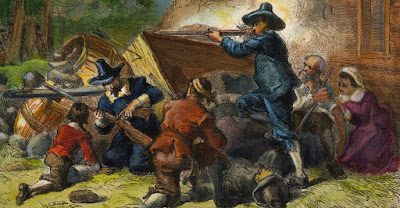
Settlers
defending their farms on the western frontier were Governor Berkley's
harshest critics and the core of Bacons early support,
With his peace policy now in a shambles, Berkeley desperately tried to salvage it. His pleas for restraint fell on deaf ears as self-organized militia units rampaged
indiscriminately against any Indians they could find. Young Bacon was making a name for himself as a self-appointed captain on some of these raids. When he fell on a band of long friendly Appomattox for supposedly stealing corn, he took several hostages and threatened to execute them. Berkeley demanded their release. Bacon refused. Instead, he demanded a regular commission in the official Militia and a carte
blanch to conduct
unrestricted war on all of the tribes to drive them out of Virginia.
The Governor refused that
demand.
In March of 1676 the
Governor convened the so-called Long Assembly to deal with the
and assuage his critics on the frontier who were siding with the rebellious
Bacon. The Assembly declared war on the “outlaw” tribes but offered
protection to loyal tribes who would prove their trustworthiness by surrendering their weapons. To deal with the war crisis, the Assembly leveled unpopular taxes to raise an army and to build a
string of frontier forts to which
he urged isolated settlers to retreat. He hoped the
forts would create a strong defensive
zone around the core of the
colony defended by a disciplined armed force accountable to the Governor and
Assembly.
Since an investigation
of the initial incident at Miller’s plantation revealed that the Doge had
attacked after Miller had stolen pelts
from them and shorted them on
promised trade goods, Berkeley also ordered that all trade with the tribes be
conducted by licensed traders under strictly regulated conditions.
This gored the oxen of many
frontier planters who doubled as traders, and of Bacon who had his plantation
overseers conducting trade. Frontiersmen found the measures inadequate and did not want to abandon their farms. The Tidewater aristocrats, as always, were
outraged by the heavy taxes necessary to raise the army and build the
forts. Bacon began playing the resentments of all like a fiddle.
Bacon began to move in the direction of rebellion. When western settlers convened a meeting to discuss what to do about
the governor’s fortress plan, Bacon, a stranger to most of them, showed up with a few dozen of his own men and
several hogsheads of brandy. He convinced the settlers to elect him General for operations against the natives in defiance of the Governor’s
policy.
Gathering a force of a few hundred men, Bacon struck first against a fat, easy target—the undefended villages of the peaceful Pamunkeys, longtime allies who possessed valuable lands in the Tidewater.
Berkeley reacted with unexpected firmness. He personally took command of 300
well-armed gentlemen and rode on
Bacon’s camp at Henrico sending the
rebellious general fleeing into the forests with a couple of hundred
loyalists, some of whom promptly abandoned him. The governor
issued proclamations formally branding Bacon a Rebel but offering amnesty to any of his followers
who would surrender. Bacon was formally removed from the Council but
promised transportation to England for a fair trial.
Bacon’s answer was another attack
on a peaceful tribe, this time against the Occaneecheee
along the Roanoke River, the border
between Virginia and North Carolina. His
prize was a large and valuable cache of beaver pelts.
Up to this point the
issue of the rebellion centered on demands for a vigorous campaign to expel the
tribes from the colony. But the taxes
levied to support the Governor’s new armed force and build his chain of forts
not only pinched the Tidewater planters, but they also hit tradesmen—and by
extension their apprentices and
bond servants. A
hue and cry went up accusing the governor of
being a ruthless tyrant, of playing favorites with his appointments—for instance refusing to give Bacon a commission—and
of corruption for appointing cronies as tax collectors
and approved traders. Agitation for a broader extension of the franchise by reducing property
qualifications and to include
most free holding yeomen farmers and tradesmen of property and for a new election added to the general turmoil in the colony.
For his part, the tyrant
Berkeley was willing to compromise. With his support the Long Assembly did broaden the franchise—perhaps not as
much as all had hoped—and called new elections for the Burgesses. Despite his official outlaw status Bacon was elected and although an aristocrat
with no interest in
reform for the common mob, the General became the leader of a broader social movement that he could not really control. More flocked to his banner, including workers, apprentices, and even bond servants
that hoped a general reform
would somehow benefit them as well.
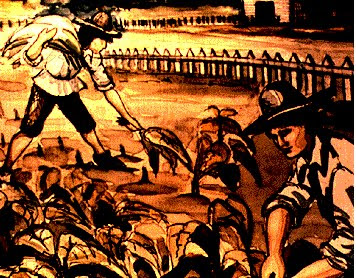
Chattel
slavery had not yet been introduced in Virginia. The plantation
economy relied on English and Irish as well as growing numbers of
African indentured bond servants as well a Native captives for life in
dwindling numbers. All mingled freely, intermarried, and would be freed
at the end of their indenture, or in the case of Native slaves their
children were free.
At this point a word on the status of servitude in colonial
Virginia of this era is important. At the time there was no lifelong, generationally transmittable chattel slavery. Early in the colony’s history natives captured in war were enslaved, but they proved to be highly unsatisfactory, especially as laborers on tobacco
plantations—they tended to run off quickly or die. Those who did survive, including many in domestic
service, were held for their lifetimes only. Neither their mates nor children were automatically
enslaved. By this time relatively few remained as slaves,
although the current war was rounding
up new candidates.
To meet the labor needs
the planters turned to indentured
servitude. Labor was recruited in
England from the impoverished classes
and even among the younger sons and daughters of the middle
class who had no hope of
an inheritance or a career. In exchange for passage to the New World and a chance to start over there, they pledged their labor for a period of years—usually seven.
During that time in addition to labor for a master, they could farm a small plot for their own subsistence and
profit and even earn wages for work when not required by their masters. At the end of their service, the former
bondsman or woman was free, hopefully
having saved enough money to establish himself. Some did
succeed in earning enough money and were among
those who dared establish farms on the exposed
edges of settlement. Many, however, were reduced to becoming day laborers, thieves, and in cases
of many women, prostitutes.
The first Blacks arrived in Jamestown as early as 1619. But they and those who followed from Africa and the Caribbean were also
indentured and could achieve
their freedom. By 1650 a little
more than 1% of the colony’s population was Black, about half of those having already achieved their
freedom. The pace of new arrivals had picked up
since then and larger but still minority portions of bondsman were of African origin by the time of the
uprising.
White, Black, and Indian bondsmen worked side by side, lived side by side, and mixed freely—including intermarriage. Having more in
common with each other than with their masters, or even with the free yeomanry this class and those who
had emerged from it to gain their freedom, flocked to the Rebels although none of the reform proposals seemed to be of direct benefit to them. Their growing presence in the un-official
militias alarmed the rebels more patrician supporters, but some
thought, like Bacon, that they could be safely
employed.
Emboldened by his election to the House of Burgesses, Bacon came to the
capital in June of 1676 to claim his seat during deliberations on several reforms, including
additional expansion of the franchise for free holders and term limits for
office holders. He also hoped to force his commission as general in
charge of the Indian war. Berkeley had
him arrested, hauled before the House, and forced
him to make a humiliating confession. Then, in a grand gesture meant to be conciliatory,
Berkeley pardoned Bacon for his
offenses, allowed him to take his seat, and even promised to consider his commission if
he remained on good behavior.
Bacon would not have it. He abruptly left the House in the midst of a heated debate on Indian policy.
Short days later he returned at
the head of 500 armed men who surrounded
the Statehouse. Berkeley personally emerged to confront him. Bacon stepped
forward and leveled a pistol at the Governor demanding that
he be made General. The governor then defiantly bared his breast and demanded “Here shoot me before God, fair mark shoot.”
The bluff had been called. Bacon could not shoot down a Royal Governor in cold blood and hope to avoid the relentless wrath of the Crown and the headsman’s
axe as a traitor.
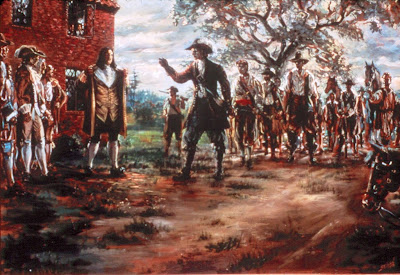
Governor Berklee defiantly bares his breast to Bacon's threats outside the Statehouse at Jamestown.
Bacon lowered his pistol
but ordered his men to turn their arms on the members of the House who had spilled out of the building behind the governor, who
quickly gave in to his demands for a
wider war and for Generalship. Berkeley,
his authority in taters, retreated inside.
While his army was
threatening the legislature, it left
the frontier exposed and eight colonists were
killed on in Henrico County. Rather than rush to the defense Bacon kept
most of his forces close to the capital.
On July 30 he issued a
proclamation, the Declaration of the People of Virginia which
criticized Berkeley’s administration in detail. It accused him of levying unfair taxes, appointing
friends to high positions, and failing to protect frontier settlers from Indian
attack.
Berkeley, however, was allowed to leave Jamestown
and once again retire to Green Spring where he plotted his own counter moves. He briefly attempted a counter coup against Bacon but failed and was forced to flee to Accomack
County on the Eastern Shore
where he found allies among the
alarmed planters and especially among the merchants who possessed
armed merchantmen and large crews.
Bacon was forced to attend to attacks on the
Frontier or lose his support. He attacked
the Pamunkey, a tribe had remained allies of the English throughout other
Native American raids and had been supplying warriors to aid the English when
Bacon took power.
While he was gone,
Berkeley’s merchant allies infiltrated the crews of Bacon’s small fleet and captured the men and ships. The
governor then re-occupied the capital and fortified
it with new palisades. Knowing that Bacon was returning to
Jamestown with a large force, Berkeley arrested
the wives and family members of leading rebels,
including Bacon’s mother, and
forced them to stand on the ramparts as the Rebels approached on
September 19, 1676,

Bacon ordered Jamestown and its palisades burned to the ground, a fatal mistake.
Outraged, Bacon ordered the fortress and the city burned to the ground. Berkeley and his followers managed to escape. The rebels pursued him and burned Green
Spring, but the governor slipped away.
It probably did not take Bacon long to realize
that he had over played his hand. Burning a capital was as bad as executing a
governor. Not long after he left the smoldering ruins and his troops for his estate. He met
an end lacking in any grace or dignity. On October 26th,
1676, Bacon abruptly died of the
Bloodie Flux—dysentery—and Lousey Disease—body lice. It is possible his soldiers burned his contaminated body
because it was never found. Of course this gave rise to the usual legends of the return of a great hero when his people need him. But fewer
and fewer were regarded him as a hero.
John Ingram
assumed leadership of the Rebellion
but found many of his supporters and forces drifting away. By the time reinforcements arrived from England
resistance was isolated in a few pockets which Berkeley’s forces soon crushed. Scores were
arrested and the property and estates of leaders were seized. Berkeley hanged 23 men including
William Drummond, the former governor of the Albemarle Sound colony.
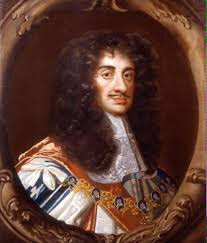
King Charles II was unamused by the harsh suppression of the Rebellion by one of his most loyal officials.
Back in England, Charles
II was appalled by the vendetta. Berkeley was recalled and replaced by
Richard Bennett. The King by totally unconfirmed legend supposedly quipped, “That old fool has
put to death more people in that naked country than I did here for the murder
of my father.” Berkeley died in disgrace on July 9,
1677.
Back in Virginia the new
governor secured a peace with the
warring tribes, but sustained
Berkeley defensive plan, including the frontier forts and the establishment of a Virginal Regiment. Nearly a century later a young officer named George Washington would become Colonel of the Virginia Blues
and conduct campaigns against hostile tribes from
similar forts, now pushed further west.
The new administration
undertook more reforms to assuage unhappiness, but the Royal Governor also now
asserted far more authority than was ever the case under Berkeley. Despite claims, diligent historians have
found no direct links between Bacon’s Rebellion and the Revolutionary generation a century
later.
On the other hand, the
Tidewater elite was terrified by the
united participation of the Black and White bondsmen. Eventually, to break up social equality and collusion among this class, real chattel slavery was introduced, driving a wedge between White laborers, and the
“cheap competition” of Black
slaves. There were the codification of slave codes and the introduction of a plantation system on a grander scale than ever. By1776 the Virginia economy and way of life was utterly dependent on slavery.
The rebellion was just
the first of a long series of
uprisings on the frontiers from New
England south to Georgia that
would periodically erupt. Failure to protect settlers from Native
harassment was a frequent cause, but so was the sense that the colonial and
later state and Federal governments did not understand
their needs or were actively
oppressing them. Examples include
the Green Mountain Boys’
long paramilitary campaign to break what became Vermont away from claims by New
York, Shay’s
Rebellion in Massachusetts,
the Whiskey Rebellion in Pennsylvania, and attempts by settlers in the trans-Appalachian West to establish a breakaway country or align with the Spanish in New Orleans in the early years of the 19th Century.
But Nathaniel Bacon as
the great hero of a popular democratic uprising? Well, that
fat just won’t fry…


