Soldier Monks from Mt. Heie burned rival temples in 1536 by the Western calendar.
My
trusty Wikipedia historical calendar, the secret weapon of a blog that
most frequently offers almanac style
history posts, informs me that, Buddhist monks from Kyoto, Japan’s
Enryaku-ji Temple in what is known as the Tenbun
Hokke Disturbance burned the temples of rivals. The event is traditionally ascribed to this date in
1536. Now I know next to nothing about either Buddhist
history or medieval Japan, but that grabbed my attention. After all, isn’t Buddhism supposed to be
about peace and harmony? At least that’s
what my friends who spend their time squatting
cross-legged on mats chanting and/or
meditating tell me. So, the idea of rampaging monks wreaking
havoc on rivals is a source of cognitive dissonance.
The details I could quickly discover in English without being sent scurrying to
thick and dense tome of Japanese history are sketchy but go like this.
The Enryaku-ji
Temple, which grew to be the largest, most influential, and powerful temple complex in Japan, was founded
about 788 at the height of the Heian
Period, the last epoch of classical
Japanese history in the Imperial
capitol of Heian-kyō, modern day
Kyoto. It was an era of great Chinese influence on the court and broader culture, particularly the flourishing of Taoism and Buddhism in a country long dominated by ancestor worshipping Shintoism.
The
monk Saichō, given the posthumous honorific Dengyō Daishi,
studied in China and introduced the Tendai
tradition of Mahayana Buddhism to his native country
with the support of the Emperor Kammu. Tendai differed sharply with already well
established schools of Buddhism in the Hinayana. He was granted permission to establish a teaching monastery on Mount Hiei. The monetary at first was instructed to
train devotees in two distinct and rival traditions—a ploy by the Emperor to bring peace between contentious
sects. But Saichō wanted to train and
ordain his monks in the Tendai traditions instead of at the Tōdai-ji Temple
under the ancient Vinaya Code. This request was finally granted only
after the master’s death in 822.
Tendai
Buddhism was based in the teachings of the Bodhisattva
Precepts. I
am informed also that it emphasized Esoteric
Buddhism which aimed at achieving enlightenment
through disciplined meditation and study in one lifetime rather than over eons
of death and rebirth, the Exoteric Tradition. All of this is fuzzy to me, but I am sure
is clear to my many Buddhist readers.
Under
Saichō, his disciples, and successors training at the Enryaku-ji
Temple was extremely rigorous and
based on the principles of his personal
vows composed when he was only 20:
So long as I have
not attained the stage where my six faculties are pure, I will not venture out
into the world.
So long as I have
not realized the absolute, I will not acquire any special skills or arts [medicine,
divination, calligraphy, etc.]
So long as I have
not kept all the precepts purely, I will not participate in any lay donors
Buddhist meetings.
So long as I have
not attained wisdom, I will not participate in worldly affairs unless it be to
benefit others.
May any merit from
my practice in the past, present and future be given not to me, but to all
sentient beings so that they may attain supreme enlightenment.
Saichō, Founder of the Temple.Monks
lived in seclusion from the world
for 12 years on remote Mt. Hiei where they undertook a rigorous program of study and meditation. More
than half of the students left in their first year. After completing their studies, only the best and most promising students were accepted for ordination and sent to the 3000 sub-temples that were eventually established throughout Japan. The remaining students were also highly
valued and most entered the Imperial
Service as civil servants and soldiers.
Things
continued in this way for almost 300 years when a split occurred and competing schools of Tendai monks were
established by the followers of Ennin and Enchin.
Both had been first generations disciples of Saichō and the
teaching of their respective lines did not differ in many essentials. Enchin was said to have promoted the worship
of native Japanese Gods—essentially
Shinto—as consistent with Confucian
wisdom in addition to Buddhist spiritual practice. Over the centuries the followers of the two
schools with Ennins followers still based at the Enryaku-ji Temple known as the
Mountain Order and Enchins at Mii-dera which was at
the foot of Mt. Hiei, down slope from the mountain top
temple. Enchis’s followers became known
as the Jimon sect or Temple School.
The conflict was more
than anything about influence at court, prestige, and territorial conflicts. Periodic conflicts between monks escalated and each group assembled armies
of soldier monks that often clashed and which also became entangled
in court intrigue and dynastic disputes. Sometimes the monk armies were supplemented
with paid mercenaries including samurai and ronin warriors.
But these disputes
were only a prelude to a more deadly rivalry that began with the rise of
Nichiren Buddhism in the 13
Century. Founded by the monk Nichiren in
1253 who had studied at Tōdai-ji and other teaching centers, the new
sect revolved heavily around the Lotus
Sutra, which was also honored by Tendai monks. But the Nichiren were highly sectarian to the point of being what we would now call fundamentalist. They denied
the legitimacy of all other Buddhist Schools and accused them of heresy to the original teaching of the Buddha. They engaged in polemical wars with rivals, but also physical confrontations.
Their targets not only included both the Mountain Order and Temple
School, but newer developing sects including emerging Zen, Nembutsu, Shingon, and Ritsu.
In
other words, the Nichiren were sanctimonious,
self-righteous, and a pain in the neck to just about everyone who did not agree with them. That included the monks of Enryaku-ji Temple. It is probably wise not to piss off a
powerful and established sect with its own army. Things came to a head in 1536 with Tenbun
Hokke Disturbance, the burning of all those temples, and attendant violence.
The
conflict came amid the chaotic period of Japanese history known as Warring States when feudal lords clashed for supremacy and
Japan lay disunited. A powerful, would-be
uniter arose in the person of the War
Lord Oda Nobunaga.
Warring temples and armies of monks
represented the social chaos he strove to squelch as well a potential rival centers of power. Oda attacked several
contentious Temple centers, but Enryaku-ji was the most powerful. In 1571 he attacked the Temple complex slaughtering
all of the monks he could find and leveled the ancient buildings. Only one
small shrine, the Ruri-dō
or Lapis Lazuli Hall, isolated
up a narrow and obscure path from the rest of the complex survived.
One of the many buildings the UNESCO World Heritage site, Enryaku-ji Temple complex which were rebuilt after the arson fires.
After Japan was ultimately unified and the Tokugawa
Shogunate was established in 1601,
the monks returned to Mt. Hiei and rebuilt the Enryaku-ji Temple
complexes. Those are the buildings that
have been declared a United Nations
International Cultural Site.
All
of this sounds more like the familiar religious
wars of Europe than what we expect of peace loving Buddhists. The Japanese Buddhist wars were mostly
confined to clashes between monks and armies, sparing the widespread civilian slaughter as punishment for inappropriate
worship that characterized the West. Still, it was brutal enough.
And
it was not entirely isolated in history.
Just a few years ago rival Korean
Buddhists made world-wide headlines
for pitched battles with clubs, knives, and swords over the possession of holy
temples. The brutal military masters of Miramar—Burma—were always said to be passionately observant Buddhists with great reverence for the tens
of thousands of Temple monks, yet they not only turned their guns on their
restive populations, but they raided the temples, beat, murdered and imprisoned
hundred of monks.
I
personally know Sri Lankan Buddhist
monks who have converted our old Unitarian
church in Woodstock,
Illinois to the Blue Lotus Temple and
I have never met such gentle spirits.
But the orders of monks from which they sprang back in Sri Lanka are
militant in their opposition to and hatred of the dark-skinned Hindu Tamil minority and have resisted
all attempts to find peace and reconciliation between the communities. They can’t let go of the decades of tit-for-tat violence, terrorism, and military atrocities that still grip the country.
Ethnic Rakine Buddhist monks in Myanmar demonstrate against minority
Rohingra Muslims and have led ethnic cleansing and massacres according
to the United Nations.
Sri
Lankan Buddhists have also attacked minority Muslims and in Myanmar—former
Burma—Rakine monks are engaged in
what the United Nations has charged
is brutal ethnic cleansing of Rohingya Muslims including several
documented massacres of minority
villages.
The
point is not to bash Buddhism. Rather it
is to point out that no philosophy, religion, or faith traditions, whatever the teachings of their founders
and the continuing good will of
their most spiritual leaders, are immune from falling into mere
sectarianism and resorting to violence against those who can be seen somehow as
others.
Despite
the spasms or Buddhist violence, these episodes are aberrations, not the norm.
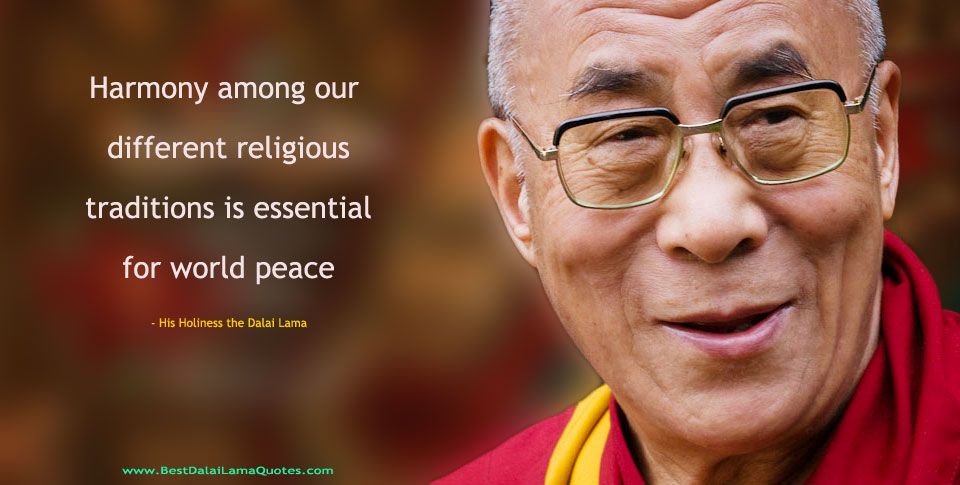
The teachings of Buddhism are rooted in peace and tranquility and modern
Buddhists like the Dalai Lama and Titch Nhat Hahn have been world
leaders for inter-faith peace and respect.
I
don’t believe that religion itself is only that murderous spirit of some or that it is defined by its worst members and moments. As a teenager who discovered the horrors of
the Inquisition, European religious
wars, and the fresh evidence of the Holocaust
I fell into that easy, juvenile trap. I screamed “a pox on all your houses”, avowed my atheism, and literally went out of my way to piss on churches for the next decade. Foolish
me.
There
was nothing in the teachings of Jesus
or the Buddha that was war-like. Quite the contrary, both taught and sought peace and reconciliation. The problem seems to come later, when prayers and incantations become empty
words of ritual, when personal
identification with the form of religion takes center stage, when holy institutions vie for power and wealth, and when those who do not share your prayer book are dehumanized into the monstrous other, that the problems arise.
Militant atheism as opposed to rationalism, free thought,
true skepticism,
humanism, or agnosticism easily
becomes its own certain faith too
eager to tell others that they should
not/can not/will not have their heretical faith. These types of atheists scream protest when horrors of Stalin,
Mao, Pol Pot et. al. are laid at their doorsteps, even as they are eager to
hold every pew sitting Christian to task
for every murderous fanatic who ever
carried a cross.
We
are not much different than either those who have made peace or waged war. We could go
either way, given the circumstances.
If we want to choose peace,
we must be on guard against our own certainties
and our own eagerness to cast those with whom we differ as innately evil and undeserving
of either compassion or consideration.
It’s
a lot harder than it looks.