Showing posts with label John Hammond. Show all posts

Friday, October 13, 2023

When The Bard of a Generation Pulled Down a Nobel


On October 13, 2016 a lot of us woke up to the startling news from Stockholm that Bob Dylan won the Nobel Prize for Literature which in recent years has been noted for mostly honoring writers from the Third World and emerging voices.  The last American to win the most prestigious award in the world was novelist Toni Morrison in 1993.  Although Dylan’s name had been publicly proposed it was a stunning surprise when the Swedish Academy made the announcement—the first ever to an artist whose principal body of work was song lyrics.

The citation for the award declared that Dylan earned the prize “for having created new poetic expressions within the great American song tradition,” One member of the selection panel compared his work to Homer and Sapphoclassic poets whose work was meant to be performed rather than read off the page.

The news put a smile on my face and a spring in my step.  It was a tonic for a week befouled by Donald Trump.  I even felt validated personally and for my generation for having recognized this genius long ago.

To celebrate, I am recycling this post from March of 2015 about Dylan’s breakthrough first LP.

Bob Dylan--Minnesota urchin on the streets of Greenwich Village.

On March 19, 1962 Bob Dylan, the self-titled first album of 21 year old former Robert Zimmerman hit the stores.  Outside of the immediate precincts around Greenwich Village the Columbia Records LP landed with a thud.  Only 2,800 copies were sold nationwide in the first year.  Recording industry wise asses were deriding it as Hammonds Folly and predicting the fall from grace at the label by producer John Hammond.  Luckily for him, despite the dismal sales the record actually turned a tiny profit thanks to its incredibly low cost to produce in just two, two hour sessions with no side musicians.

That the record was made at all, and on the biggest, most important label in the country managed under the steely eye of Columbia A&R Director Mitch Miller was a minor miracle.

Dylan—the name was brand new and stolen from poet Dylan Thomas—blew into the Greenwich Village folk scene at the age of 19 in January, 1961 shortly after dropping out of his freshman year and the University of Minnesota.  He had already reinvented himself personally and musically at least once.  In high school had idolized Little Richard and Elvis Presley, slicked his hair back in a greasers DA, and played electric guitar in garage bands.  But he had spent most of his time during his aborted college career mining the extensive folk music collection of a friend—he may have actually stolen much of it—especially the Folkways field recording of blues and hillbilly artists.  Then he discovered Woody Guthrie.

The trip to New York was supposed to be a pilgrimage to meet Woody, then in a sanitarium in the advanced stages of the Huntingtons chorea that would kill him.  His hair now an unruly curly mop topped with a little corduroy cap, Bob went to the hospital on several occasions playing music for the man who on some days could barely acknowledge his presence.

Dylan fell easily and quickly into the Village’s lively folk music scene.  The legend that he would later carefully cultivate was that he was something of an outsider and loner, a rebel like Marlon Brando in the Wild Ones against “what ya got.”  In point of fact, local denizens seem to have warmly adopted the young ragamuffin.  Guthrie’s disciple Ramblin Jack Eliot was the first to take him under his wing.  Soon he was playing basket houses and hobnobbing with Dave Van Ronk, Fred Neil, Odetta, the New Lost City Ramblers, and the Clancy Brothers and Tommy Makem.  They would invite him to join them for on stage jams and take him home with them at night and spend hours sharing songs and teaching him the fine points of guitar and harmonica.

Soon Dylan had a pretty girlfriend, Suze Rotolo whose sister Carla was an assistant to famed folklorist Alan Lomax and who made her large record collection available to him to mine for more material.  Dylan was a sponge.  He soaked it all up.  “I only had to hear a song once or twice to learn it,” he said.

Dylan became especially close friends with a young poet and writer, Richard Fariña who introduced him to his then wife, Carolyn Hester, one of the reigning queens of the folk scene.  On September 14, 1961 they gathered in Hester’s apartment to rehearse for an album she was preparing.  Dylan was blowing mouth harp.  Producer Hammond turned up to check on progress and was impressed with Dylan.  He hired him on the spot to play on Hester’s album.  

After sitting in on the recording session on September 29, Dylan opened a two week stint at Gerdes Folk City, billed behind The Greenbriar Boys.  That engagement got his first rave reviews in the New York Times.  Impressed, Hammond called Dylan into his office and offered him the standard Columbia five year recording contract.  Dylan couldn’t sign on the dotted line fast enough.  His dream was coming true.

Hammond first had to get the contract approved by Mitch Miller, not a fan of folk music that wasn’t Burl Ives.  Miller was skeptical but deferred to the judgment of one of his most successful producers.  Studio time for the first album was booked for late November.

Dylan spent the next weeks frantically searching Carla Rotolo’s and other’s record collections and going over songs he had picked up in those late night sessions.  His set list in the clubs was still short and he did not yet have a lot of original material.  Besides, he wanted to cast himself as an authentic folk musician preserving the best of traditional American music in the tradition of those Folkways records he loved.

Recording with John Hammond at Columbia.

The recording sessions were held on November 20 and 21.  Dylan cut 17 tracks accompanying himself on guitar and harmonica.  Despite this simple set up, Hammond reported that Dylan was “the most undisciplined artist” he had ever worked with and hard to record because he “popped every p, hissed every s, and habitually wandered off mike...Even more frustrating, he refused to learn from his mistakes.”  And he generally refused to do more than one take.  Singing the same song twice bored him.  Hammond was left to perform what limited technical wizardry was available in those days of monaural recording.

In the end, 11 songs made it to the album, only two of the Song for Woody and Talkin New York Blues, which was inspired by Guthie’s Talkin Dustbowl Blues, were originals.  The rest were an eclectic mix of blues, country, and folk.  Dylan claimed arrangement credit for In My Time of Dyin, The Man of Constant Sorrows (a Carter Family staple), Pretty Peggy-O (picked up from Liam Clancy), Gospel Plow, and Freight Train Blues by John Lair.

The inclusion of the two songs caused some hard feelings between Dylan and those who had graciously accepted him although he gave arrangement credits in both cases.  He learned the version of Please Let Me File You Down from Boston Folkie Eric Von Schmidt for whom it was a signature song.  And Dylan lifted Van Ronk’s version of The House of the Rising Sun before the Mayor of McDougal Street could record it himself.

The album was rounded out with Jesse Fullers Your No Good, Highway 51 by Curtis James, Bukka Whites Fixin to Die, and Blind Lemon Jeffersons See That My Grave is Kept Clean.

Although disappointed by poor sales, Bob Dylan was exactly the recording  the singer set out to make.

The cover of the album featured Dylan in his cap and in a fleece-lined jacket holding his guitar. The image was flipped so the guitar head would not obscure the Columbia logo.

After release when sales lagged, both Dylan and Hammond professed to be disappointed in the album.  But it must be said that it was exactly the record Dylan set out to make.

Despite the setback, Dylan was growing fast as an artist.  He was moving up to top billing at Village coffee houses and clubs.  He was expanding his repertoire and improving his skills, particularly in bottleneck style guitar playing. 

Under the influence of Suze Rotolo, an activist with SNCC and the anti-nuclear group SANE, Dylan began writing more political songs.  Peter, Paul & Mary and other top folk acts began to cover his songs in concert and on LPs including the iconic Blowin in the Wind. Joan Baez famously brought him on stage with her at the Newport Folk Festival and brought him along on her tours, boosting his career, and then replaced Rotolo in his bed.  Pete Seeger took an interest in him and encouraged his move to protests songs.  Still under contract to Columbia, he recorded material for the Broadside Magazine record label under the cover name Blind Boy Grunt.

Dylan's personal and professional relationship with Joan Baez enhanced his image early in his career.

Dylan was emerging as a real star and Columbia gave him another shot.  Dylan and Hammond had fallen out over the failure of the first album so the young Black jazz producer Tom Wilson was brought in.  The result was FreewheelinBob Dylan with the iconic photo of the singer with Rotolo in the streets of the Village on the cover.  Released in May of 1963 it included the classic protests songs that defined Dylan’s early career. 

He had re-invented himself not just as a folk singer, but as poet/bard voice of his generation.  Over his amazingly long and still thriving career, Dylan, ever the chameleon, would reinvent himself a dozen or more times.

As for that first album, well, with rising fame came respectability.  It sold steadily, if unspectacularly, to hard core Dylan fans for years.  Issued in Britain in 1965, it rose to #13 on the album charts there in the midst of the era of Beatlemania. Critics who ignored or panned it first time out, revisited it and found much merit in it.  It was re-issued as part of a box set of Dylan’s nine mono records in 2010 and in 2013 as a stand-alone CD Hoodoo Records with an additional 12 tracks taken from the B side of a single and radio performances contemporary to the original record.

One more thing.  Thousands more Dylan fans claim to have run out and bought that first album than actually did.

Monday, September 26, 2022

Bessie Smith and the Last Road to Clarksdale

                                Bessie Smith, Empress of the Blues.

On September 26, 1937 Bessie Smith, the Empress of the Blues, was critically injured in an auto accident on a dark highway between Memphis, Tennessee and Clarksdale, Mississippi.  She died of her injuries hours later at a segregated hospital in Clarksdale for Blacks only.

Most people take as gospel the story that she died because she was refused admission to a hospital for Whites only.  But it turns out not to be true, at least in the exact form that has assumed the status of legend.

The story seems to have originated with John Hammond, the legendary record producer, critic, and talent scout who was instrumental in promoting careers of luminaries from Benny Goodman and Billie Holiday, through Pete Seeger and Bob Dylan to Lenard Cohn, and Bruce Springsteen. Hammond’s career was undoubtedly impressive, in no small measure because Hammond promoted himself as diligently as he did his protégés.  In doing so absolute truth was sometimes a casualty.

Record producer John Hammond with one of his later protegees Aretha Franklin whose style owed a debt to Bessie Smith as well as her gospel music background, 

Hammond had recorded Bessie’s last secessions in 1933 for Columbia Records Okeh label.  At this point Smith’s career was struggling.  The Depression and the explosion of radio had nearly wiped out record sales.  Despite recording hit after hit in the ‘20’s for Columbia’s A label, her contract had lapsed, and she had not recorded in some years.  The dawning of the Swing Era also signaled a shift in public taste in both the Black and White communities away from her raw Barrel House style to a jazzier soundTalking pictures were also killing vaudeville, where Smith had made a good living appearing with an elaborate act.

Smith was always shrewd about her business.  She insisted that instead of a stripped down Blues combo, a small jazz band back her on these sessions.  In the band were notables trombonist Jack Teagarden, trumpeter Frankie Newton, and tenor saxophonist Chu BerryBenny Goodman even sat it for at least one number. It was a more contemporary sound for Smith.  The records were a moderate success, but did not match the sales for classic blues from the ‘20’s.

Hammond, who was a traditionalist and had hoped to capture that earlier sound, was disappointed and did not sign Smith for more sessions.  She never recorded again.

After Smith died Hammond wrote about her.  He claimed that he had rescued her from obscurity and life as a hostess in a speakeasy.  Not true.  Smith was still touring at the time and still had dedicated audience, particularly in the South.  As the Depression deepened and venues closed, Smith later was forced to take work as a hostess, but that was not until the months before she died.  And then she abandoned that after a short while when new opportunities to play the Southern circuit arose.  In fact, Hammond had not seen Smith since the 1933 sessions.

Whether because he was confused about accounts of the accident or just to embellish a good story, Hammond wrote in a 1937 article in Downbeat magazine that an ambulance had delivered Smith to the White hospital only to be turned away.

Edward Albee's short play, based on Hammond's account, often was mounted in tandem with The American Dream or The Sandbox.

Soon the story became part of music legend and culture.  In 1959 Edward Albee made it the basis of his play The Death of Bessie Smith.

Here is what really happened.

Shortly after midnight Smith was in the front passenger seat and her longtime lover/partner Richard Morgan was driving her Packard.  Morgan evidently drowsed and woke up to find himself in the wrong lane with a car approaching.  He tried to steer left, but the car sideswiped the Packard, nearly severing the arm that Smith had resting in the window.

Shortly afterwards a Memphis surgeon Dr. Hugh Smith and his fishing buddy came upon the accident and offered assistance.  He found Smith lying in the road semi-conscious.  She had a minor wound to her head but was bleeding badly from the nearly severed arm.  He worked on stopping the blood flow with his handkerchief.  He later said that neither apparent wound would have been fatal, but that Smith had probably suffered massive internal injuries and bleeding from the collision.  Meanwhile Dr. Smith’s friend went to a nearby house and phoned for an ambulance.

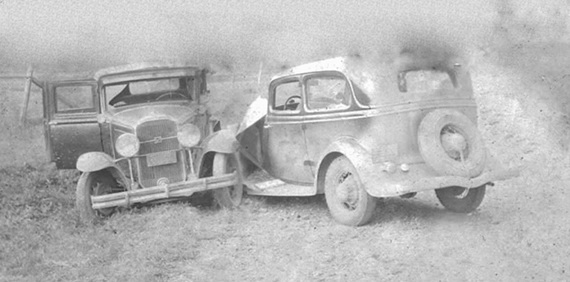
After more than half an hour, as Bessie slipped into shock and the ambulance had still not arrived Dr. Smith decided to try to take her to the hospital in his own car.  As he was clearing the back seat, another car approached at high speed.  Dr. Smith flashed his lights in warning, but the car plowed into his car, caromed into the Packard, and narrowly missed Bessie still lying on the shoulder of the road. 

A passing motorist, seeing this accident but not the first, called for another ambulance.  Two ambulances—one from the Black hospital called by Dr. Smith, and one from the White hospital called by the passing motorist—responded to the scene.  The Black ambulance took Bessie and the White ambulance took the two lightly injured occupants of the second car.  There was no thought of delivering Bessie to a White hospital.  Not in the South.  Not in Mississippi.  Certainly not in 1937.

Bessie Smith's Packard, left, and the second car to hit it while she lay injured in the road.

Bessie was taken to Clarksdale’s Afro-American Hospital. It is undoubtedly true that the two facilities were not “separate but equal.”  Black hospitals struggled and often did not have the most up-to-date equipment.  It might be possible that Bessie could have gotten better care in a White hospital.  And in that sense she was certainly the victim of racism and segregation.

But as Dr. Smith observed, she was bleeding internally.  Given the state of medicine at the time, it is doubtful that even the most ultra modern hospital staffed by the greatest surgeons could have saved her.  Her Black doctors did everything they could.  They amputated her arm, controlled the bleeding they could see, and made her as comfortable as possible.  Still, she was dead within hours.

Bessie’s body was taken to Philadelphia where she and Richard Morgan had made a home.  As word spread through the Black community, the wake had to be moved from a small local funeral home to an Elks Lodge where more than 10,000 admirers came to pay their last respects and view the body.  She was laid to rest in Mount Lawn Cemetery.

More than 30 years after her death, Bessie Smith finally got a headstone courtesy of her admirer Janis Joplin.

Twice money was raised for a suitable monument for Bessie’s grave and twice her long estranged husband Jack Gee made off with the money.  Her grave remained unmarked until 1970 when another blues singer, Janis Joplin, paid for a tombstone which was installed on August 7, just three months before Joplin’s own death.

The former Afro-American Hospital is now the Riverside Hotel.  It has a marker honoring Smith’s death there and is a stop on the Mississippi Blues Trail.


Sunday, September 27, 2020

Bessie Smith on the Last Road to Clarksdale


                        Bessie Smith, Empress of the Blues.

On September 26, 1937 Bessie Smith, the Empress of the Blues, was critically injured in an auto accident on a dark highway between Memphis, Tennessee and Clarksdale, Mississippi.  She died of her injuries hours later at a segregated hospital in Clarksdale for Blacks only.

Most people take as gospel the story that she died because she was refused admission to a hospital for Whites only.  But it turns out not to be true, at least in the form that has assumed the status of legend.

The story seems to have originated with John Hammond, the legendary record producer, critic, and talent scout who was instrumental in promoting careers of luminaries from Benny Goodman and Billie Holiday, through Pete Seeger and Bob Dylan to Lenard Cohn, and Bruce Springsteen. Hammond’s career was undoubtedly impressive, in no small measure because Hammond promoted himself as diligently as he did his protégés.  In doing so absolute truth was sometimes a casualty.

Record producer John Hammond with one of his later protegees Aretha Fraaklin whose style owed a debt to Bessie Smith as well as her gospel music background, 

Hammond had recorded Bessie’s last secessions in 1933 for Columbia Records’ Okeh label.  At this point Smith’s career was struggling.  The Depression and the explosion of radio had nearly wiped out record sales.  Despite recording hit after hit in the ‘20’s for Columbia’s A label, her contract had lapsed and she had not recorded in some years.  The dawning of the Swing Era also signaled a shift in public taste in both the Black and White communities away from her raw barrel house style to a jazzier sound.  Talking pictures were also killing vaudeville, where Smith had made a good living appearing with an elaborate act.

Smith was always shrewd about her business.  She insisted that instead of a stripped down Blues combo, a small jazz band back her on these sessions.  In the band were notables trombonist Jack Teagarden, trumpeter Frankie Newton, and tenor saxophonist Chu Berry.  Benny Goodman even sat it for at least one number. It was a more contemporary sound for Smith.  The records were a moderate success, but did not match the sales for classic blues from the ‘20’s.

Hammond, who was a traditionalist and had hoped to capture that earlier sound, was disappointed and did not sign Smith for more sessions.  She never recorded again.

After Smith died Hammond wrote about her.  He claimed that he had rescued her from obscurity and life as a hostess in a speakeasy.  Not true.  Smith was still touring at the time and still had a dedicated audience, particularly in the South.  As the Depression deepened and venues closed, Smith later was forced to take work as a hostess, but that was not until the months before she died.  And then she abandoned that after a short while when new opportunities to play the Southern circuit arose.  In fact Hammond had not seen Smith since the 1933 sessions.

Whether because he was confused about accounts of the accident or just to embellish a good story, Hammond wrote in a 1937 article in Downbeat magazine that an ambulance had delivered Smith to the White hospital only to be turned away.

Edward Albee's short play, based on Hammond's account, often was mounted in tandem with The American Dream or The Sandbox.

Soon the story became part of music legend and culture.  In 1959 Edward Albee made it the basis of his play The Death of Bessie Smith.

Here is what really happened.

Shortly after midnight Smith was in the front passenger seat and her longtime lover/partner Richard Morgan was driving her Packard.  Morgan evidently drowsed and woke up to find himself in the wrong lane with a car approaching.  He tried to steer left, but the car sideswiped the Packard, nearly severing the arm that Smith had resting in the window.

Shortly afterwards a Memphis surgeon Dr. Hugh Smith and his fishing buddy came upon the accident and offered assistance.  He found Smith lying in the road semi-conscious.  She had a minor wound to her head, but was bleeding badly from the nearly severed arm.  He worked on stopping the blood flow with his handkerchief.  He later said that neither apparent wound would have been fatal, but that Smith had probably suffered massive internal injuries and bleeding from the collision.  Meanwhile Dr. Smith’s friend went to a nearby house and phoned for an ambulance.

After more than half an hour, as Bessie slipped into shock and the ambulance had still not arrived Dr. Smith decided to try to take her to the hospital in his own car.  As he was clearing the back seat, another car approached at high speed.  Dr. Smith flashed his lights in warning, but the car plowed into his car, caromed into the Packard, and narrowly missed Bessie still lying on the shoulder of the road. 

A passing motorist, seeing this accident but not the first, called for another ambulance.  Two ambulances—one from the Black hospital called by Dr. Smith, and one from the White hospital called by the passing motorist—responded to the scene.  The Black ambulance took Bessie and the White ambulance took the two lightly injured occupants of the second car.  There was no thought of delivering Bessie to a White hospital.  Not in the South.  Not in Mississippi.  Certainly not in 1937.

Bessie Smith's Packard, left, and the second car to hit it while she lay injured in the road.

Bessie was taken to Clarksdale’s Afro-American Hospital. It is undoubtedly true that the two facilities were not “separate but equal.”  Black hospitals struggled and often did not have the most up-to-date equipment.  It might be possible that Bessie could have gotten better care in a White hospital.  And in that sense she was certainly the victim of racism and segregation.

But as Dr. Smith observed, she was bleeding internally.  Given the state of medicine at the time, it is doubtful that even the most ultra-modern hospital staffed by the greatest surgeons could have saved her.  Her Black doctors did everything they could.  They amputated her arm, controlled the bleeding they could see, and made her as comfortable as possible.  Still she was dead within hours.

Bessie’s body was taken to Philadelphia where she and Richard Morgan had made a home.  As word spread through the Black community, the wake had to be moved from a small local funeral home to an Elks Lodge where more than 10,000 admirers came to pay their last respects and view the body.  She was laid to rest in Mount Lawn Cemetery.

More than 30 years after her death, Bessie Smith finally got a headstone courtesy of her admirer Janis Joplin.

Twice money was raised for a suitable monument for Bessie’s grave and twice her long estranged husband Jack Gee made off with the money.  Her grave remained unmarked until 1970 when another blues singer Janis Joplin paid for a tombstone which was installed on August 7, just three months before Joplin’s own death.

The former Afro-American Hospital is now the Riverside Hotel.  It has a marker honoring Smith’s death there and is a stop on the Mississippi Blues Trail.