Showing posts with label Rabbi. Show all posts

Friday, March 6, 2026

Purim Passed but Not Forgotten Nor is Queen Esther With Murfin Verse


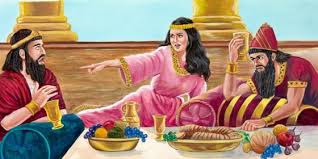
                                    Queen Esther and the King.

Note--Oops! Somehow, I let the joyous Jewish festival of Purim slip by un-noticed earlier this week.  But it is not too late to admire the resourceful Queen Esther and her inspiration for modern feminists.  Thanks to the wandering Jewish calendar in 2012 Purim coincided with International Women's Day.

Purim is one of my favorites of all religious celebrations.  As a Rabbi who spoke at the Peace and Unity Prayer Vigil at Islamic Foundation North in Waukegan a few years ago said. “Purim is a holy day when we are commanded to have fun.” 

To familiarize folks with her story and the joyous festival which commemorates how a Jewish concubine in a royal court saved her people—I’m talking to my fellow Goyim—we review just what the hell went on.

A young girl, Esther, was picked by a drunken Persian king to be his new bride.  She kept her Jewish identity a secret.  Meanwhile her protector and cousin Mordecai discovered a plot to kill the king and by informing saved his life. 

A Purim greeting card.

The King appointed the vain and treacherous Haman as his new Vizier.  Haman was offended when Mordecai was insufficiently obsequious to him in public.  Miffed, he plotted to have not just Mordecai, but all the Jews of kingdom killed.  He got the king, who had been participating in public drinking festivals for six months and was perhaps a tad addled, to sign such a decree.

After sending words to the Jews of the kingdom to join in three days fast and prayer Esther got the king drunk yet again at a royal drinking festival that she hosted with Haman among the guests.  After the first night of debauchery Esther read to the King the annals of Mordecai’s lifesaving service.

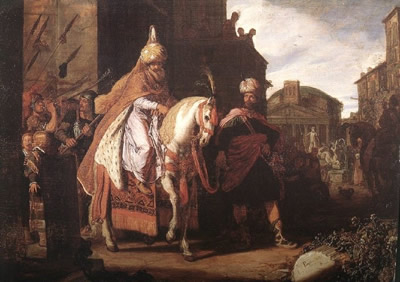
She then asked Haman what boon the King should give to a man who has done him great service.  Vainly thinking she means him, Haman said the honoree should be dressed in the royal robes and paraded before the people on the king’s own horse.


Mordecai is glorified.

The king astounded Haman by bestowing the boon on Mordecai and ordered him to see that the command was carried out.

On the second night of the Festival Esther revealed that she is Jewish as was her cousin and that by the edict the king himself had signed all of her people, and she herself were marked for death.  Outraged, the king ordered Haman hung on the gallows built for Mordecai and named the Jew as his new Vizier.


Esther denounce Haman to the drunken King.

But he could not revoke his own edict.  Instead, he issued another which allowed Jews to arm themselves and slay their attackers.  On the 13th Day of Adar, the planned attacks were launched but the Jews slaid their attackers by the hundreds and thousands, including all seven sons of Haman.

The Jewish people were saved and flourished for a while as never before in exile. 

Purim celebrates the deliverance exuberantly with costumed recreations of the story, noise makers meant to drown out Haman’s name whenever it is read in the telling of the story, special foods, and of course plenty of drinking and merrymaking. 


Children have fun celebrating Purim at a Boston Synagogue.

Fourteen years ago, in 2012 the celebration coincided with International Women’s Day on March 8.  

Back then I was intrigued because at the center of Purim is one of the few women of the Hebrew Bible or Old Testament to take a leading role in the story.  The lovely Queen Esther always struck me as wonderfully subversive and feminist.  The story of Esther, heroine and savior of her People, resonates with women whether Jewish or Gentile.

So, I wrote her a poem imagining her sitting down with some contemporary sisters. 


Queen Esther Revealing Her Identity from a stunning series of contemporary mosaics of the Purim story by Lilian Borca. 

Purim/International Women’s Day

14th day of Adar 5772/March 8, 2012


Queen Esther tossed her head,

            gleaming black hair

            tumbling to those lovely shoulders

            that had enticed a lecher King.

                        She laughed.


Her people, the Women of another age,

            leaned toward her

            waiting her word.


She cast her blazing eyes upon them,

            laughed again

            and spoke at last.


“So many Hamans.  Where shall we begin?”


—Patrick Murfin

Tuesday, March 7, 2023

Purim and Queen Esther—A Joyous Celebration With Murfin Verse


Last night at sundown the Jewish holiday Purim began and continues until tonight’s sunset.  It is one of my favorites of all religious celebrations.  As a Rabbi who spoke at the Peace and Unity Prayer Vigil at the Islamic Foundation North in Waukegan a few years ago said. “Purim is a holy day when we are commanded to have fun.”

To familiarize folks with her story and the joyous festival which commemorates it—I’m talking to my fellow Goyim—we review just what the hell went on.

A young girl, Esther, is picked by a drunken Persian king to be his new bride.  She keeps her Jewish identity a secret.  Meanwhile her protector and cousin Mordecai discovers a plot to kill the king and by informing saves his life. 

                    Queen Esther and the King.

The King appoints the vain and treacherous Haman as his new Vizier.  Haman is offended when Mordecai is insufficiently obsequious to him in public.  Miffed, he plots to have not just Mordecai, but all of the Jews of kingdom killed.  He gets the king, who has been participating in public drinking festivals for six months and is perhaps a tad addled, to sign such a decree.

After sending words to the Jews of the kingdom to join in three days fast and prayer Esther gets the king drunk yet again at a royal drinking festival that she hosts with Haman among the guests.  After the first night of debauchery Esther reads to the King the annals of Mordecai’s life saving service.

She then asks Haman what boon the King should give to a man who has done him great service.  Vainly thinking she means him, Haman says the honoree should be dressed in the royal robes and paraded before the people on the king’s own horse.

Mordecai is glorified.

The king astounds Haman by bestowing the boon on Mordecai and orders him to see that the command is carried out.

On the second night of the Festival Esther reveals that she is Jewish as is her cousin and that by the edict the king himself had signed all of her people, and she herself were marked for death.  Outraged, the king orders Haman hung on the gallows built for Mordecai and names the Jew as his new Vizier. 

Esther denounces Haman to the drunken King.

But he cannot revoke his own edict.  Instead, he issues another which allows Jews to arm themselves and slay their attackers.  On the 13th Day of Adar the planned attacks are launched but the Jews slay their attackers by the hundreds and thousands, including all seven sons of Haman.

The Jewish people are saved and flourish for a while as never before in exile. 

Purim celebrates the deliverance exuberantly with costumed recreations of the story, noise makers meant to drown out Haman’s name whenever it is read in the telling of the story, special foods, and, of course plenty of drinking and merrymaking.

Children have fun celebrating Purim at a Boston Synagogue.

Back in 2012 the celebration coincided with International Women’s Day on March 8.  This year the slippery Jewish lunar calendar missed that mark by just a day. 

Back then I was intrigued because at the center of Purim is one of the few women of the Hebrew Bible or Old Testament to take a leading role in the story.  The lovely Queen Esther always struck me as wonderfully subversive and feminist.  The story of Esther, heroine and savior of her People, resonates with women whether Jewish or Gentile.

So I wrote her a poem imagining her sitting down with some contemporary sisters. 


Purim/International Women’s Day

14th day of Adar 5772/March 8, 2012


Queen Esther tossed her head,

            gleaming black hair

            tumbling to those lovely shoulders

            that had enticed a lecher King.

                        She laughed.


Her people, the Women of another age,

            leaned toward her

            waiting her word.


She cast her blazing eyes upon them,

            laughed again

            and spoke at last.


“So many Hamans.  Where shall we begin?”


—Patrick Murfin


Thursday, March 17, 2022

Purim and Queen Esther—With Murfin Verse

                Queen Esther and the King.

Note—It is a special two-fer Thursday.  This year the Jewish festival of Purim and Saint Patrick’s Day coincide to say nothing of my 73rd orbital anniversary.  Usually such convergences would inspire poetry, but nothing new oozed out this time.  Instead we will feature versions of two chestnuts for the occasion.

Jewish holiday Purim is observed today.  It is one of my favorites of all religious celebrations.  As a Rabbi who spoke at the Peace and Unity Prayer Vigil at Islamic Foundation North in Waukegan a few years ago said. “Purim is a holy day when we are commanded to have fun.” 

To familiarize folks with her story and the joyous festival which commemorates how a Jewish concubine in a royal court saved her people—I’m talking to my fellow Goyim—we review just what the hell went on.

A young girl, Esther, was picked by a drunken Persian king to be his new bride.  She kept her Jewish identity a secret.  Meanwhile her protector and cousin Mordecai discovered a plot to kill the king and by informing saved his life. 

A Purim greeting card.

The King appointed the vain and treacherous Haman as his new Vizier.  Haman was offended when Mordecai was insufficiently obsequious to him in public.  Miffed, he plotted to have not just Mordecai, but all the Jews of kingdom killed.  He got the king, who had been participating in public drinking festivals for six months and was perhaps a tad addled, to sign such a decree.

After sending words to the Jews of the kingdom to join in three days fast and prayer Esther got the king drunk yet again at a royal drinking festival that she hosted with Haman among the guests.  After the first night of debauchery Esther read to the King the annals of Mordecai’s life saving service.

She then asked Haman what boon the King should give to a man who has done him great service.  Vainly thinking she means him, Haman said the honoree should be dressed in the royal robes and paraded before the people on the king’s own horse.

Mordecai is glorified.

The king astounded Haman by bestowing the boon on Mordecai and ordered him to see that the command was carried out.

On the second night of the Festival Esther revealed that she is Jewish as was her cousin and that by the edict the king himself had signed all of her people, and she herself were marked for death.  Outraged, the king ordered Haman hung on the gallows built for Mordecai and named the Jew as his new Vizier. 

Esther denounce Haman to the drunken King.

But he could not revoke his own edict.  Instead he issued another which allowed Jews to arm themselves and slay their attackers.  On the 13th Day of Adar, the planned attacks were launched but the Jews slaid their attackers by the hundreds and thousands, including all seven sons of Haman.

The Jewish people were saved and flourished for a while as never before in exile. 

Purim celebrates the deliverance exuberantly with costumed recreations of the story, noise makers meant to drown out Haman’s name whenever it is read in the telling of the story, special foods, and of course plenty of drinking and merrymaking.

Children have fun celebrating Purim at a Boston Synagogue.

Ten years ago, in 2012 the celebration coincided with International Women’s Day on March 8.  This year the slippery Jewish lunar calendar missed that by more than a week. 

Back then I was intrigued because at the center of Purim is one of the few women of the Hebrew Bible or Old Testament to take a leading role in the story.  The lovely Queen Esther always struck me as wonderfully subversive and feminist.  The story of Esther, heroine and savior of her People, resonates with women whether Jewish or Gentile.

So, I wrote her a poem imagining her sitting down with some contemporary sisters. 

Queen Esther Revealing Her Identity from a stunning series of contemporary mosaics of the Purim story by Lilian Borca. 

Purim/International Women’s Day

14th day of Adar 5772/March 8, 2012


Queen Esther tossed her head,

            gleaming black hair

            tumbling to those lovely shoulders

            that had enticed a lecher King.

                        She laughed.


Her people, the Women of another age,

            leaned toward her

            waiting her word.


She cast her blazing eyes upon them,

            laughed again

            and spoke at last.


“So many Hamans.  Where shall we begin?”


—Patrick Murfin

Thursday, March 21, 2019

Purim and Queen Esther—A Commandment to Have Fun With Murfin Verse


Last night at sundown the Jewish holiday Purim began and continues until tonight's sunset.  It is one of my favorite of all religious celebrations.  As a Rabbi who spoke last night at the Peace and Unity Prayer Vigil at Islamic Foundation North in Waukegan said. “Purim is a holy day when we are commanded to have fun.”  In the face of unspeakable tragedy born of hatred and bigotry at mosques in New Zealand his congregation was happy to forgo their own joyous celebration to join their Islamic brothers and sisters in solidarity and love.  But to that somber occasion, he and many members of his congregation brought the spirit of defiant joy with them.  After all the Muslim community had stood with them in the fearful dark aftermath of the Tree of Life Synagogue slaughter and the story of Purim is a tale of a people saved from destruction.

To familiarize folks with her story and the joyous festival which commemorates it—I’m talking to my fellow Goyim—we review just what the hell went on.

A young girl, Esther, is picked by a drunken Persian king to be his new bride.  She keeps her Jewish identity a secret.  Meanwhile her protector and cousin Mordecai discovers a plot to kill the king and by informing saves his life. 

Queen Esther and the King.
The King appoints the vain and treacherous Haman as his new Vizier.  Haman is offended when Mordecai is insufficiently obsequious to him in public.  Miffed, he plots to have not just Mordecai, but all of the Jews of kingdom killed.  He gets the king, who has been participating in public drinking festivals for six months and is perhaps a tad addled, to sign such a decree.

After sending words to the Jews of the kingdom to join in three days fast and prayer Esther gets the king drunk yet again at a royal drinking festival that she hosts with Haman among the guests.  After the first night of debauchery Esther reads to the King the annals of Mordecai’s life saving service.

She then asks Haman what boon the King should give to a man who has done him great service.  Vainly thinking she means him, Haman says the honoree should be dressed in the royal robes and paraded before the people on the king’s own horse.
Mordecai is glorified.
The king astounds Haman by bestowing the boon on Mordecai and orders him to see that the command is carried out.

On the second night of the Festival Esther reveals that she is Jewish as is her cousin and that by the edict the king himself had signed all of her people, and she herself were marked for death.  Outraged, the king orders Haman hung on the gallows built for Mordecai and names the Jew as his new Vizier.  
Esther denounce Haman to the drunken King.
But he cannot revoke his own edict.  Instead he issues another which allows Jews to arm themselves and slay their attackers.  On the 13th Day of Adar the planned attacks are launched but the Jews slay their attackers by the hundreds and thousands, including all seven sons of Haman.

The Jewish people are saved and flourish for a while as never before in exile. 

Purim celebrates the deliverance exuberantly with costumed recreations of the story, noise makers meant to drown out Haman’s name whenever it is read in the telling of the story, special foods, and, of course plenty of drinking and merrymaking. 
Children have fun celebrating Purim at a Boston Synagogue.
Back in 2012 the celebration coincided with International Women’s Day on March 8.  This year the slippery Jewish lunar calendar missed that by nearly two weeks. 

Back then I was intrigued because at the center of Purim is one of the few women of the Hebrew Bible or Old Testament to take a leading role in the story.  The lovely Queen Esther always struck me as wonderfully subversive and feminist.  The story of Esther, heroine and savior of her People, resonates with women whether Jewish or Gentile.

So I wrote her a poem imagining her sitting down with some contemporary sisters.  
Queen Esther Revealing Her Identity from a stunning series of contemporary mosaics of the Purim story by Lilian Borca. 


Purim/International Women’s Day

14th day of Adar 5772/March 8, 2012


Queen Esther tossed her head,

            gleaming black hair

            tumbling to those lovely shoulders

            that had enticed a lecher King.

                        She laughed.


Her people, the Women of another age,

            leaned toward her

            waiting her word.


She cast her blazing eyes upon them,

            laughed again

            and spoke at last.


“So many Hamans.  Where shall we begin?”


—Patrick Murfin