Showing posts with label Richard Nixon. Show all posts

Monday, July 20, 2026

1969--Man Oh Man on the Moon


The world was transfixed by the grainy video from a camera attached to the Lunar Module as Neil Armstrong set foot on the Moon.

As Americans and countless others around the world stayed glued to their televisions, Astronaut Neil Armstrong became the first man to set foot on the face of the Moon on July 20, 1969, 57 years ago today. Armstrong, the commander of the Apollo 11 mission climbed down a ladder from the Lunar Module Eagle to the surface in the Sea of Tranquility at 10:56 p.m. Eastern Day Light Time. 

As he climbed down, he repeated a carefully constructed statement on what he knew would be a historic occasion.  Viewers at home heard him say, “That’s one small step for man, one giant step for mankind.”  Armstrong would later insist that he said, “one small step for a man” and that the article had simply not been picked up by the microphone.  It is indicative of Armstrong’s notoriously detailed mind and insistence on precision that this misquote bothered him for years. 

The mission famously made good on President John F. Kennedys 1963 pledge, made at the height of the Space Race with the Soviet Union that the U.S. would go to the Moon within a decade.  


The crew of Apollo 11--Neil Armstrong, Michael Collins, and Buzz Aldrin in their NASA publicity photo.

Like Armstrong, the other two members of the Apollo 11 crew were already veteran astronauts.  Pilot Michael Collins stayed in the main Command Module, Columbia still in orbit while Armstrong and Lunar Module pilot Edwin Buzz Aldrin descended to the surface, a tense trip marked by an alarming shortage of fuel for the rockets that adjusted the attitude of the craft and brought it to a landing.  Less than 11 seconds of fuel were left on touchdown

The business-like Armstrong had been calling off markers on the way down to Mission Control in Houston.  Finally, he radioed, “Houston, Tranquility Base here. The Eagle has landed.”  It took two hours to prepare to depart the lunar module.  Armstrong was soon joined on the surface by Aldrin. The men were on the surface for a little over two and a half hours. 

They shot still photographs, made a panoramic video of the surroundings then set up the camera on a tripod to observe their activities.  They tested various means of moving about on the surface and settled on kind of a lope. The two planted an American Flag stiffened with wire to stay unfurled in the Moon’s windless zero gravity.  They collected rock and soil samples, but everything was taking longer than expected and Aldrin tried to speed up the pace of his assignments before being warned that his pulse rate was climbing.  The pair was given a 15-minute extension of planned EVA (Extra Vehicular Activity) to complete their tasks.  


On the Moon with the Eagle Lunar Module and the American flag of conquest.

Aldrin re-boarded Eagle first and had some difficulty getting a bulky box of mineral samples up the ladder.  After a night’s sleep, the Eagle lifted off to return to Columbia.  Aldrin and Armstrong were on the Moon for just over 21 hours.  They left behind the flag, the landing craft stairs with a special plaque commemorating the event, and discarded items from their EVA including their backpacks, lunar overshoes, and a Hasselblad camera.  There was also a small bag of mementos carried by Aldrin in a suit pocket. 

After Columbia splashed down in the Pacific near Wake Island the capsule and astronauts were carried by helicopter to the deck of the USS Hornet, a famous aircraft carrier from World War II, where they were personally greeted by President Richard Nixon.  


President Richard Nixon with the Apollo 11 crew in isolation on the USS Hornet.

With the war in Vietnam still raging, dissent rife at home, and urban riots exploding in Black communities, Nixon—and the nation—craved some good news. 

The occasion of the landing has become beyond iconic.  Many historians now regard it as the pinnacle of the American Century.  Unsuspected by most people at the time, the county was on the verge of a long, slow slide. 

Crisis after crisis from the OPEC oil embargo of the ‘70s, terrorism, through endless wars, rapid de-industrialization, competition from rising economies, climate change-fueled natural disasters, a global pandemic, to today’s crisis of democracy and a starkly divided population have hammered the country. 

After the last Space Shuttle retired, NASA no longer had the capacity to launch astronauts into space and had to hitch rides from the Russians and other nations to the International Space Station and its successors.  The hardware part of space exploration was handed willy-nilly over to private corporations and billionaire vanity projects who squandered their investments in space tourism schemes.  Their rockets to launch satellites have proved unreliable.  Troubled Boing stranded two astronauts in orbit on a test run of its newest spaceship, Starliner.  Instead, a series of leaks and malfunctions have caused NASA to delay the duo’s return for months.  

The image of Armstrong on the Moon is a melancholy reminder that once we were a nation that could do things, big things.

In his first term Resident Trump aiming to cast himself in the image of JFK ordered NASA to return men to the Moon within five years but gave the gutted agency scant resources to complete the mission.  In celebration of capitalism and scorn for government accomplishments, hope is pinned on two competing privately owned corporations to build re-usable rocket systems to first transport astronauts and equipment to the International Space Station from which a new mission to the Moon might be launched.


Buzz Aldrin's, (second from the right) skeptical, shocked mugging during Donald Trump's unintelligible blathering about space became a social media sensation.

Neil Armstrong died in 2012 and Michael Collins in 2021. But 96-year-old Buzz Aldrin is still with us.  Aldrin enjoys his celebrity status and makes frequent public appearances including a memorable stint on Dancing With the Stars.  He is a strong proponent of the space program and an advocate for manned space exploration and a return to the Moon.  In 2017 he accepted an invitation from the Grifter-in-chief to attend a White House speech on the space program.  He became a viral social media sensation for the contorted faces he made as his host spouted literal gibberish.  Way to go, Buzz!

Despite, or perhaps because of all this, Americans commemorated the golden anniversary of the nation’s crowning achievement in 2019 with enthusiasm tempered by nostalgia.  The film First Man focused on Neil Armstrong played by Ryan Gosling.  The documentary Apollo 11 enjoyed a well-reviewed theatrical release.  PBS aired multiple documentaries and less prestigious cable outlets like The History Channel and The Sci-Fi Channel had offerings of their own.  Broadcast TV networks all had special programing.  Apollo Mission Control at the Johnson Space Center in Houston was meticulously restored and opened to the public.


The movie Fly Me to the Moon starting Scarlet Johansson and Channing Tatum was more about the orchestrated hype of manned space flight by NASA and a conspiracy theory fake than either scientific achievement or astronaut heroism.

Five years later there was far less ballyhoo.  Commemoration of the event was swamped by the attempted Trump assassination, President Joe Bidens political free fall, and a breathtakingly divisive election in November.  The biggest cultural acknowledgement that year was Fly Me to the Moon.  The flick stared Scarlett Johansson as a savvy flack hired by the government to help swing public opinion back in favor of space exploration.  Included in her arsenal was a faked first man walk on the Moon “just in case something goes wrong up there.”  That played to a popular conspiracy theory that the whole mission was faked by Stanley Kubrick.

The bloom was off the rose. 


Artemis II, a high-flying step to the return to the Moon.

This year NASA visited the neighborhood of the Moon in the U.S. manned missions flight beyond low Earth orbit since Apollo 17 in 1972.  Artemis II with a crew of five blasted on Artemis II Space Launch System (SLS) rocket and the Orion spacecraft Integrity on a mission to fly by the Moon and enter Moon orbit.  In the process the capsule and crew reached the furthest from the Earth by a manned mission, broadcast and recorded detailed images of the so-called Dark Side of the Moon, and oohed and awed Earthrise over the Lunar horizon.  The crew landed safely and cleared the way for the  Artemis IV mission to actually return to the Moon's surface scheduled for 2028.  That is if the technical difficulties the private built launch system that plagued development before don't return.

Trump, course, took credit for the whole thing even if it will take more than twice as long as his original goal due in no small part to starving NASA with slashed personnel, arbitrary slashes to research and development and actual productions, and anti-science hectoring.  It was made possible by Joe Biden's recommitment to the program during the window of his four years in office.

Most folks paid little attention to all of that background noise.  They were excited and there was a feverish run for the five plucky astronauts to shake hands, wave to crowds, and make stirring mini-speeches.  Then the Aremiss II bloom was off the rose again as the next big thing--the FIFA World Cup, grabbed all the attention.  

Sunday, July 5, 2026

To Placate Youth Rebellion the 26th Amendment Promised Old Enough to Fight—Old Enough to Vote


The struggle to win youth voting rights was rooted in Vietnam War protests.

Note--Eliminating the youth vote is bubbling on the back burner of the regime's voter suppression efforts alongside revoking Women's Suffrage--tasks requiring a daunting Connotational challenges but are stated aims of the most extreme Christian Nationalist wing of the MAGA movement.  Which is to say not far at all from Primus himself.

On July 5, 1971, the 26th Amendment which guaranteed 18- to 21-year-old citizens the right to vote in all elections was officially added to the U.S. Constitution.  A Joint Congressional Resolution proposing the amendment had cleared both houses by March 23.  On July 1 North Carolina became the 38th state to ratify the amendment—the necessary three quarters of the states.  No other Constitutional amendment has come close to the speed at which the 26th Amendment was ratified—just 69 days.  On July 5 President Richard Nixon signed official certification of the amendment.

The idea of reducing the voting age had been kicked around since West Virginia Democratic Senator Harley Kilgore proposed it 1941 with the vocal support of First Lady Eleanor Roosevelt while the Draft was beefing up the Army on the eve of America’s entry into World War II.  After the war began, the proposal was lost in the shuffle.  The Cold War and the very hot war in Korea revived interest, but most states signaled their opposition.  In his 1954 State of the Union address Dwight D. Eisenhower, became the first president to publicly support prohibiting age-based denials of suffrage for those 18 and older.  By 1955 just two states—Georgia and Kentucky had taken action to lower the voting age, mostly due to internal political issues.


Students march for the vote circa 1968.

But the Vietnam war, for which reluctant youth were being drafted in large numbers as cannon fodder because the government feared the political consequences of wide-spread mobilization of the National Guard and the Reserves, brought the issue to a head once more.  Promoted by a wave of student and anti-war activism demonstrations “Old Enough to Fight, Old Enough to Vote” became a powerful slogan.  The student uprisings, urban rioting, and the violent confrontations at the 1968 Democratic National Convention caused many political leaders of both parties to seek some way of mollifying the street rage.

In 1970, Senator Ted Kennedy proposed amending the Voting Rights Act of 1965 to lower the voting age nationally.  On June 22, 1970, President but expressed his reservations in his signing statement. 

Despite my misgivings about the constitutionality of this one provision, I have signed the bill. I have directed the Attorney General to cooperate fully in expediting a swift court test of the constitutionality of the 18-year-old provision.

Oregon and Texas challenged the law in court, and the case came before the Supreme Court in 1970 as Oregon v. Mitchell.  The Court struck down the provisions that established 18 as the voting age in state and local elections while upholding the extension of voting rights in Federal elections.  The decision resulted in states being able to maintain 21 as the voting age in state and local elections but being required to establish separate voter rolls so that voters between 18 and 20 years old could vote in federal elections—a bureaucratic nightmare that threatened to cause chaos in the up-coming 1972 elections.


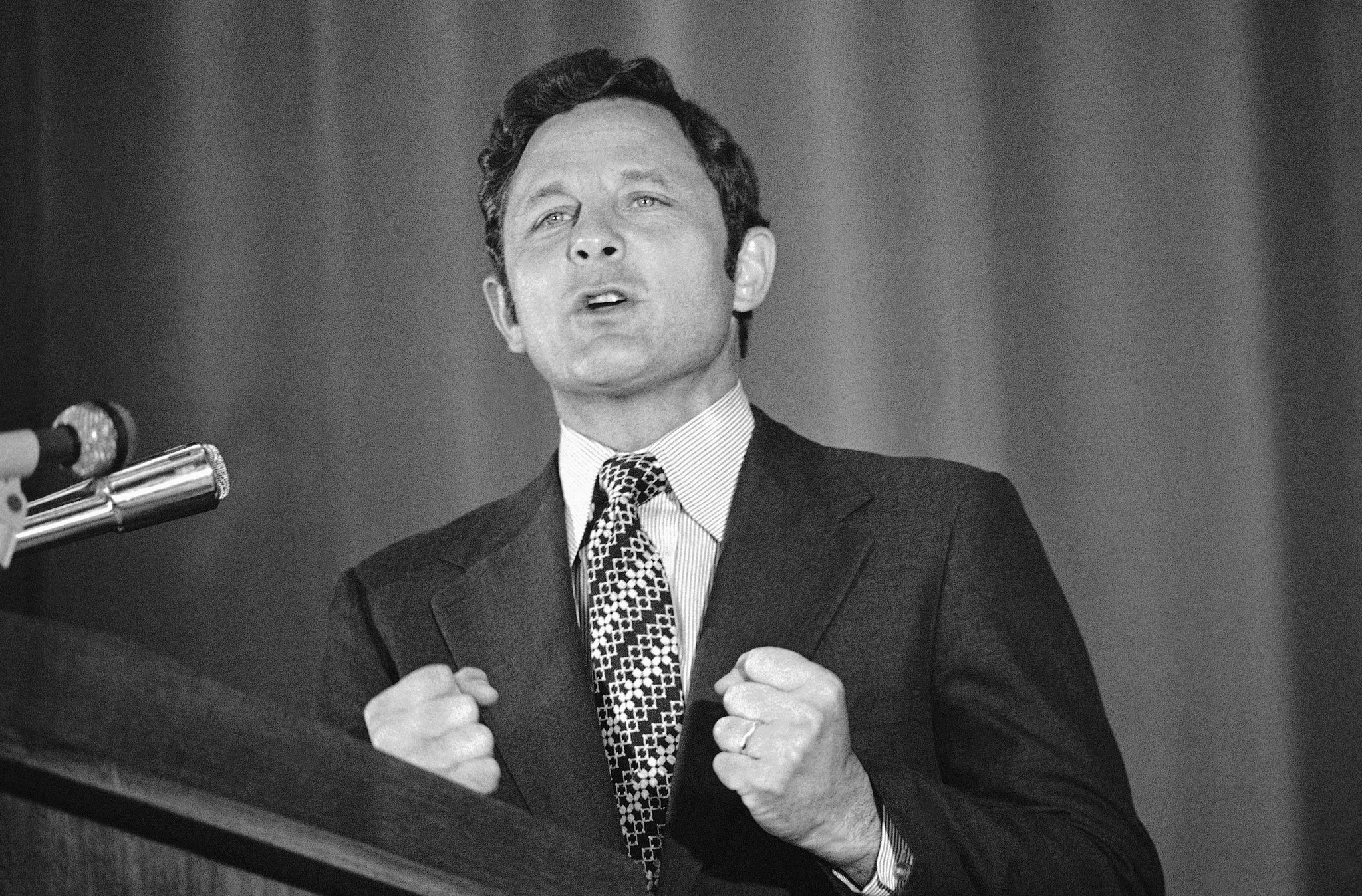
Indiana Senator Birch Bayh rushed a proposed Constitutional amendment through his sub-committee an on to adoption by the Senate

Indiana Democratic Senator Birch Bayh, the Chair of the Subcommittee on Constitutional Amendments had been holding hearings on an amendment to lower the voting age since 1968. After Oregon v. Mitchell, Bayh surveyed election officials in 47 states and found that registering an estimated 10 million young people in a separate system for federal elections would cost approximately $20 million and concluded that most states could not change their state constitutions in time for the 1972 election, mandating national action to avoid “chaos and confusion” at the polls.  On March 2, 1971, Bayh's subcommittee and the House Judiciary Committee approved the proposed constitutional amendment. 

                                   
                                                 The official Joint Resolution of Congress submitting the 26th Amendment to the states for ratification.

On March 10, 1971, the Senate voted 94–0 in favor of proposing the amendment and the House followed on March 23 by a vote of 401–19 in favor.

The proposed amendment read:

Section 1. The right of citizens of the United States, who are eighteen years of age or older, to vote shall not be denied or abridged by the United States or by any State on account of age.

Section 2. The Congress shall have the power to enforce this article by appropriate legislation.

On the very day the amendment was submitted by Congress Connecticut, Delaware, Minnesota, Tennessee, and Washington ratified it followed by Hawaii and Massachusetts the next day.  After that it was a scramble by the states to get on board, although some did so reluctantly feeling that they were being fiscally blackmailed into taking action.  Four additional states ratified it later in 1971 and South Dakota finally passed it in 2014. Seven states—Florida, Kentucky, Mississippi, Nevada, New Mexico, North Dakota, and Utah—have still not taken any action on the amendment.


Richard Nixon signed the Amendment as a witness surrounded by Congressional pages.

After signing as a witness to the certification of the amendment by the Administrator of General Services Robert Kunzig President Nixon said:

As I meet with this group today, I sense that we can have confidence that America’s new voters, America’s young generation, will provide what America needs as we approach our 200th birthday, not just strength and not just wealth but the “Spirit of ‘76” a spirit of moral courage, a spirit of high idealism in which we believe in the American dream, but in which we realize that the American dream can never be fulfilled until every American has an equal chance to fulfill it in their own life.

But in fact, Nixon feared that young voters would reject his re-election.  Democrats we hopeful that they would.  Neither was correct.  Many of the youth activists were disillusioned by electoral politics after the assassination of Robert Kennedy and the ’68 Democratic Convention debacle.  They failed for the most part to rally to Senator George McGovern’s candidacy the way many had for Kennedy or had “come clean for GeneMcCarthy.  McGovern accepted the nomination of a badly fractured and demoralized party and was star-crossed by disaster after disaster.  Nixon romped to reelection in an Electoral College landslide carrying all states but Massachusetts and claiming 60.7% of the popular vote.

In subsequent elections voters 21 and under consistently registered and voted in far lower numbers than older voters.  And polling showed that when they did vote, they were far from radical.  Most consistently reflected the political parties and choices of their parents.

The youth vote did occasionally affect local elections, especially in college towns like Madison, Wisconsin where they helped former student activist and avowed Socialist Paul R. Soglin get elected and re-elected as Mayor.  They also influenced hyper-local contests, especially in favor of school referendums.


A screen save from MTV's first Rock the Vote campaign in 1990.

Many attempts at mobilizing youth voting have been made, most significantly MTVs Rock the Vote Campaign that began in 1990.  But young voters did not have a significant influence until Barack Obama for whom they turned out strongly in 2008 and 2012.  But they largely failed to show up for Congressional off-year elections contributing Democrats losing the House of Representatives.

Bernie Sanders’ 2016 primary campaign did mobilize many youths.  The failure of significant numbers of them to support Hillary Clinton in November has been blamed for her narrow loss to Donald Trump but in the end, it was probably not the decisive cause of her defeat.  In 2020 beyond a hard core of support, Sanders did not do so well among younger voters, many of whom spread their support among his rivals especially Elizabeth Warren.  They initially showed little enthusiasm for Joe Biden.  But he got enough of their votes to push him to victory in key states because young voters especially regarded another four years as an existential threat.  


Youth leaders of the March for Our Lives extended their activism to Vote for Our Lives.

The survivors of the 2018 Margery Stoneman Douglas High School shooting in Parkland, Florida organized the March for Our Lives movement and subsequent drive for youth voter registration.  Many climate change activists and women’s groups have also backed action as did many Black Lives Matter marchers in the wake of the police murder of George Floyd and others.  Voter registration drives ramped up across the nation and many hoped that the wide-spread adoption of vote-by-mail during the Coronavirus pandemic would also increase the youth vote.

That’s what Trump and his Republican enablers feared, which is why they poured millions of dollars into backing wide-spread voter suppression ever since.


Wednesday, June 17, 2026

Just Doing His Job a Working Stiff Brought Down a President


Watergate Security guard Frank Wills got 15 minutes of fame for discovering and reporting he break-in at Democratic National Committee offices.

Here’s to a working stiff just doing his job.  This one made/changed history.  In the early morning of June 17, 1972 Frank Wills, a $2 an hour rent-a-cop security guard at the Washington D.C. Watergate office building saw that something was amiss.  While making his rounds Wills noticed tape on a door between a basement stairwell and the parking garage. He removed the tape and went on his way. 

One of five men inside the building discovered that the tape, which was used to hold back the latch bolt so the door could be opened, was missing.  He replaced the tape. On his next round, around 1:55 AM, Wills saw that the tape had been replaced.  He immediately called D.C. Police who arrested five men wearing surgical gloves and in possession of electronic monitoring equipment in the offices of the Democratic National Committee (DNC)

The five were James W. McCord, a former FBI and CIA agent and a security coordinator for the Republican National Committee (RNC) and the Committee for the Re-election of the President (CREEP); Bernard L. Barker a veteran of the CIA Bay of Pigs invasion of Cuba and a Miami real estate broker; Frank A. Sturgis, a Miami associate of Barker with connections to the CIA and Cuban exile community; Eugenio R. Martinez, an employee of Baker’s real estate firm and an anti-Castro exile; and another Cuban, locksmith Virgilio R. Gonzales.  

Mug shots of the Watergate burglars.

The men were charged with attempted burglary and attempted interception of telephone and other communications.  The incident merited a brief mention on network news programs that evening and short articles buried deep in the pages of most newspapers outside of Washington. 

Despite the short notice of the press, the police investigation began unwinding a wider conspiracy quickly. A search of the suspects’ rooms turned up thousands of dollars in cash.  A background check quickly tied McCord to Attorney General John Mitchell, Chairman of President Richard Nixons re-election committee. 

Mitchell denied involvement and McCord was fired from his RNC and CREEP positions.  On August 1 a $25,000 check made out to CREEP was found to have been deposited in one of the burglars’ personal account.  Shortly after that another $89,000 in individual donations were found to have been moved through an account of a company controlled by Barker. 

CREEP Treasurer Hugh Sloan told authorities that he was directed by Committee Deputy Director Jeb Magruder and Finance Director Maurice Stans to turn the checks over to G. Gordon Liddy, a former FBI agent, prosecutor, and White House aide who had been selected by Mitchell to run the operational end of the Plumbers Unit—a secret White House operation to control leaks, conduct intelligence operations, surveillance of political enemies, and play “dirty tricks” on opponents. 


Nixon's Plumbers Unit spooks E. Howard Hunt and G. Gordon Libby head into court.

Liddy was soon tied to H. Howard Hunt, the former author of pot-boilers and thrillers who was a high level undercover agent and “super spook” for the CIA before retiring.  Hunt had deep connections with the Cuban exile community and recruited the Cubans to Liddy’s operations. 

The first black bag job of the Plumbers was the botched break-in of Daniel Ellsberg’s psychiatrist in search of dirt on the man who leaked the Pentagon Papers.

On September 15th a Federal Grand Jury indicted Liddy, Hunt, and the five burglars.

On December 8, 1972 Hunt’s wife Dorothy was among those killed in the crash of a United Air Lines jetliner near Chicago’s Midway Airport.  $10,000 in cash was found in her purse.  

All were convicted on January 30, 1973 and sentenced to prison. 

Meanwhile, investigations by Congress and by the press slowly connected the event to a wider conspiracy that led ultimately to Richard Nixon’s doorstep.   That Byzantine tale is too complex to summarize here, but you know how it ended—lots of suits in prison and a disgraced President waving farewell to power from the door of a helicopter. 


The ultimate fruit of Frank Wills's diligence.

As for Wills, he had his 15 minutes fame.  He soon resigned from the security company unhappy that his service was not rewarded with a raise or vacation time.  Unable to find steady work, he returned to his hometown in South Carolina to care for his ailing mother.  They lived in poverty.  In 1983 he was convicted of shoplifting a pair of sneakers and sentenced to a year in prison. 

He died penniless of a brain tumor in 2000 at the age of 52.  Bob Woodward, one of the investigative reporters who doggedly followed the story looked back at Wills and said, “He’s the only one in Watergate who did his job perfectly.”


Tuesday, July 30, 2024

A Warm Bucket of Spit—The Tale of the American Vice Presidency— Part III Since World War II


Harry S. Truman did not get many moments with FDR before he died and was completely out of the policy loop.

Note—As World War II wound down ailing Franklin D. Roosevelt dumped his liberal Vice President for a relatively little known Missourian

When the ailing Franklin D. Roosevelt ran for a fourth and final time he replaced Henry Wallace with Missouri Senator Harry S. Truman who had made a name for himselfas well as becoming something of a nuisance to the administration, as the tough minded Chair of the Senate Special Committee on Waste and Abuse in military contracts.  Bringing him on board made things quieter in the Senate while boldly staking out credentials for the administration as its own watch dog.  After taking office in January 1942 Truman, despite Roosevelt’s alarming physical deterioration, was not brought into the inner circle at the White House and was kept in the dark about many military matters and about increasing tensions over post war arrangements with Russia.  Famously, he did not know anything about the Atomic bomb program until he was briefed shortly after Roosevelt’s death on April 12, 1942.  No wonder he felt like “the moon and the stars have fallen on me.”

Many people, not the least of which was Eleanor Roosevelt, thought that Truman was a light weight and unfit for the Presidency.  Instead, he would quickly prove to be both tough minded and sharp in the way that many widely read self-educated men are.  Anyone who took Truman for a fool or pushover was in for a rude awakening.  In 1948 with Congress in Republican hands, the Cold War getting under way in earnest, and his own party shattered left and right with the defection of the Dixiecrats over his civil rights policies and his VP predecessor Henry Wallace leading a challenge from the left calling for accommodation with war-time ally the USSR, Truman fought back with his famous whistle stop Give em Hell Harry tour and upset Republican Thomas Dewy to win a term on his own.

Perhaps it was the unexpected success of Truman, but in his wake the Vice Presidency began to be seen differently.  Instead of a throw away office to be filled with any politically useful hack it became the grooming ground for future Presidential candidates.  Almost every subsequent VP starting with Dwight Eisenhowers uneasy relationship with anti-Communist star Richard Nixon, came to be viewed as the natural successor.  

1952 GOP nominee Dwight D, Eisenhower, nearly dumped his anti-communist running mate Richard Nixon over a campaign fund scamming scandal until Nixon's televised Checkers Speech.

During the 1952 campaign Eisenhower had to come to the defense of Nixon amid charges that he used a political slush fund as personal income.  Eisenhower came close to dumping him until his famous televised self-defense, the Checkers Speech.  Especially in his second term Eisenhower used Nixon to represent the country abroad.  He faced Yankee Go Home rioters in Latin America and engaged Nikita Khrushchev in a kitchen debate in an exposition in Moscow.  After the President’s heart attack, Nixon was included more regularly in high level security briefings.   Nixon ran in 1960 and narrowly lost to John F. Kennedy.

Kennedy picked powerful Senate Majority Leader Lyndon B. Johnson as his running mate and then assigned him high level administration duties—a break from the past—including overseeing the nations space program.  Other presidents would follow suit giving their VPs more to do, including them in Cabinet and high level policy discussions while they spent less and less time presiding over the Senate except for ceremonial occasions and for a dramatic tie vote breaker if an important issue came up.  The Vice Presidency for the first time was becoming fully integrated in the Executive Branch.

On November 22, 1963 Lyndon Johnson took the oath of office on Air Force One on the tarmac in Dallas with a stunned Jacqueline Kennedy still in her blood soaked suit next to him.

Johnson, of course, became President when Kennedy was assassinated in Dallas.  He would surprise many as a first Southerner in the White House excepting border state Truman and Woodrow Wilson whose mother was a Virginian, since before the Civil War when he completed Kennedy’s legacy and twisted arms to get two landmark Civil Right Acts passed.  He also launched his War on Poverty, an echo of the New Deal. 

On the other hand, he let himself be talked into ever deeper involvement in the Vietnam War that he had inherited from Kennedy.  By 1968 he found himself abandoned by White Southerners who flocked to Alabama segregationist Governor George Wallace on one hand and rising anti-war protests on the other.  After a disappointing showing against Senator Eugene McCarthy in the New Hampshire primary Johnson went on television to proclaim, “I will not seek, nor will I accept the nomination of the Democratic Party for President.”

Hubert Humphrey accepted the nomination for Vice President before a bitterly divided Democratic  convention while police still rioted in the streets.

His VP, liberal icon Hubert H. Humphrey of Minnesota, was able to win nomination only after a Democratic National Convention in Chicago in 1968 which was marked by demonstrations and a police riot in the streets and chaos on the floor.  Humphrey lost that fall to Richard Nixon on the comeback trail.  Nixon ran as a law and order candidate with a secret plan to end the war.  He won in an Electoral College landslide. 

He balanced the ticket with Maryland Governor Sprio T. Agnew who had a reputation as a relative party liberal and as a Greek-American was the first Vice President not of British Isles or Northern Europe decent.  Agnew became the administration’s designated attack dog going after liberals and the critical press with famous alliterative sound bites—i.e. “nattering nabobs of negativism.”  But while Nixon was slowly being dragged down by the Watergate scandal, Agnew was indicted for amazingly cheap and penny ante corruption as Baltimore County Executive and Governor even continuing to take cash as Vice President.  He was forced to resign on October 10, 1973 and became the first and only Vice President convicted of felony charges when he accepted a deal to plead guilty to a single count of tax evasion and money laundering on $29,000 in bribes as Governor.

Nixon and Ford.  As Nixon's presidency unraveled Ford became careful to not be photographed with the president.  Later he would pardon Nixon for any crimes he might have committed and deflected criticism for that by also extending amnesty to Vietnam Draft offenders. 

Nixon then chose House Minority Leader Gerald R. Ford of Michigan—the first Vice President chosen under the terms of the 25th Amendment which allowed vacancies to be filled by appointment with the advice and consent of the Senate.  By this time Nixon himself was in deep trouble and facing possible impeachment.  Legend had it that he chose the affable but supposedly low wattage Ford because he believed that no one would drive him from office if the Congressman was in line to take the job.  In fact, Democratic Speaker of the House Carl Albert recalled that Congressional leaders from both houses and both parties, “gave him no choice” but to pick Ford.  When Nixon resigned seven months later in August of 1972 Ford became the first President to ascend to office without ever having run on a national ticket. 

The Accidental President got to appoint his own Vice President and shocked conservatives by naming liberal Republican icon former New York Governor Nelson Rockefeller.  Rocky became the first VP to occupy the new official residence in Washington’s in the former Naval Observatory building.   In January 1979, two years after leaving office, Rockefeller died during a tryst with a 27 year old aide.

Although the pleasant Ford was a welcome change from the scowling and brooding Nixon, the weight of Watergate was too great to overcome.  He was defeated by Democratic Georgia Governor Jimmy Carter and his running mate, Senator Walter Mondale of Minnesota.  The Carter administration was burned with the OPEC oil Boycott, stagflation, crumbling rustbelt cities, that famous malaise, and finally the disastrous attempt to rescue American hostages in Iran.  

Ronald Reagan and George H. W. Bush at the 1984 Republican National Convention.  Bush was considered the most widely experienced Vice Presidential candidate since John Quincy Adams. 

Ex-movie star and conservative Governor of California Ronald Reagan swept the Carter Mondale team aside in 1980.  Transplanted New Englander cum Texas oilman George H.W. Bush, a former Congressman and CIA Director, was Regan’s pick for Vice President.  When Reagan was wounded by would-be assassin   John Hinckley, Jr.  Bush rushed back to Washington from Texas but never assumed official duties.   Subsequently he and Regan began an unusually close relationship having weekly lunches together he also accepted a number of high profile assignments from the President in the national security area as well as heading a waste in government taskforce that began to shore up his shaky relationship with party conservatives.  

New York Congresswoman Geraldine Ferraro made a big splash as the first woman and the first ethnic major party nominee for Vice President but it was not enough to overcome Ronald Reagan's astonishing popularity.

In 1984 Reagan and Bush faced former Vice President Walter Mondale and his running mate New York Congresswoman Geraldine Ferraro, the first woman and first Italian candidate.  Although the earthy Ferraro bested the patrician Bush in their sole Vice Presidential debate, Reagan’s popularity coasted the ticket to an easy victory.

On July 13, 1985, Reagan underwent surgery to remove polyps from his colon which required him to undergo general anesthesia.  Bush became the first Vice President to temporarily assume the duties of President.  He was acting President for about eight hours during which time nothing much important happened.    

Almost as soon as the second Reagan term began, Bush started planning his own run for the presidency.  He raised money and courted party leaders.  He spent a lot of time trying to placate conservatives who were convinced he was a liberal in Texas clothing. In his convention acceptance speech in addition to his famous 1000 Points of Light, he touched on and endorsed most conservative hot button issues and uttered his equally famous “read my lips, no new taxes!” pledge.

When Dan Quayle misspelled potato on a classroom visit he was widely and probably unfairly mocked as stupid.

For his running mate he chose youthful and obscure Indiana Senator Dan Quayle, who quickly turned out to be a pretty boy light weight.  Many thought that Bush was nervous about being overshadowed by a better known or more accomplished choice.  He said he thought Quayle’s good looks would help him with women.  No matter, the pair had no trouble trouncing the inept campaign of Massachusetts Governor Michael Dukakis and Texas Senator Lloyd Bensten.  Bush thus became the first Vice President elevated directly to the Presidency by election since Martin Van Buren.

Unfortunately for him, like Van Buren, he was destined to be a one termer.   

Arkansas Governor Bill Clinton burst onto the national scene with high energy enthusiasm, boyish charm, a reputation as a policy wonk, and a wife so politically talented herself that they were advertised as getting “two for the price of one.”  Despite bimbo eruptions and Hillary’s seeming derision of moms who stayed home and baked cookies, Clinton bested rivals including California Governor Jerry Brown to win the nomination.

He defied conventional wisdom in picking a running mate.  He did not balance the ticket but opted for another young moderate liberal Southerner, Senator Al Gore of Tennessee.  Clinton said that he resonated with Gore and felt comfortable.  Even their high power wives, Hillary and Tipper Gore seemed bonded.  Instead of sending his VP candidate separately out on the road as an attack dog saying things it was not polite for the Presidential nominee say, both couples hit the road together in a campaign coach road tour.   

Happy warriors, the Clintons and Gores on their campaign bus.

The close relationship continued in office which was cemented by an unusual two page written agreement outlining Gore’s role as a chief advisor to the president with weekly scheduled meetings and daily access as needed.  Gore was given several important assignments including work on streamlining government and cutting waste, encouraging technological innovation including the use of robotics in industry, and fostering the new information superhighway—the emerging internet.   He also became an expert on the environment and the administration’s point man on that internationally including being chief U.S. negotiator and then promoter of the Kyoto Accords.  He also loyally stood by Clinton through the Monica Lewinski scandal.

It was always clear that Gore was the anointed successor to Clinton.  In 2000 he easily swept aside a challenge from New Jersey Senator Bill Bradley and sailed to the nomination after winning every primary.  His Vice Presidential choice was Connecticut Senator Joe Lieberman, the first Jew on the national ticket of a major party, an ardent supporter of Israel, and a bridge to more conservative business and finance oriented Democrats.   

He faced the Governor of Texas George W. Bush, the feckless and lazy son of the former president.  The younger Bush had a hard time convincing red meat conservatives that he was not a secret liberal one-worlder like his father but eventually won over the religious right as a born again believer.  He wooed foreign policy hard liners by relying on former Wyoming Congressman and his father’s Secretary of Defense Dick Cheney as his top advisor.  When he had the nomination sewed up he appointed Cheney to lead a search for a running mate.  Cheney reported back that after looking under every rock in America the very most excellent and only choice was….Dick Cheney!   But first Cheney had to scramble to move back to Wyoming from Texas where he was a registered voter while serving as the CEO of the oil industry conglomerate Halliburton to comply with the Constitutional prohibition on the President and Vice President coming from the same state.

                            Dick Cheney, the Darth Vader of American politics. 

It was a notoriously hard fought election and polled dead even in Electoral College projections down to the wire.  On a long election night it all came down to slow reporting Florida where numerous problems and irregularities were reported.  Early in the morning the networks and wire services called Florida for Gore, only to walk that back.  Next, Bush was reported to have a narrow lead.  Problems with mysterious hanging chads on the ballot punch cards were reported in heavily Democratic areas.  There were days and weeks of drama before the Supreme Court stopped an ongoing Florida recount and effectively anointed Bush president.     Bush lost the popular vote to Gore but took the Electoral College 271 to 266.

Far from being cautious due to the narrow and questionable circumstances of his election, from day one Bush behaved like a President with an enormous popular mandate.  He was all public swagger.  He relied heavily on Cheney with whom he conferred daily and to whom he left many of the details of running the government while he reserved himself for “the big picture and worked 4 hour days with afternoon naps.   Cheney viewed himself as a kind of Grand Vizier to an indolent Sultan.  After 9/11 Cheney, the hero of the neo-con movement, boldly pushed for and attack on Iraq and helped manufacture evidence of and hysteria over weapons of mass destruction.

Cheney’s seeming domination over the President continued well into the second term until Bush began to assert himself and ignored some of the Vice President’s advice.  Their relationship began to cool and became more strained when Cheney didn’t think the President was being aggressive enough in the ongoing war.  As President of the Senate, he even signed on to a lawsuit against the Department of Justice over gun regulation in the District of Columbia.  Still, he retained influence on the President to the end.

His reputation as the Darth Vader of American politics however, made it politically impossible for him to seek the Presidency himself.  Even his attempts to influence the 2008 Republican selection process against Arizona Senator John McCain were unsuccessful.  He spent much of his time after leaving office being a go-to voice for discredited aggressive neo-con policies and a reflexive critic of the Obama administration.

Tomorrow—Bringing the Vice Presidency up to date.