Showing posts with label Somalia. Show all posts

Sunday, April 5, 2020

Shari Wagner—National Poetry Month 2020

Hoosier poet Shari Wagner with two of her books.
I first heard of Shari Wagner last year when Sue Rekenthaler used her poem The Farm Wife Turns Off the TV Evangelist as an opening chalice lighting for a Tree of Life U.U. Congregation Social Justice Team meeting.  It was an apt pick for Sue who is a hard working vegetable farmer with her husband as well as an accomplished poet herself.  I was impressed by the choice and determined to find out more about the author.
It turns out that Wagner was Indiana’s fifth Poet Laureate from 2016 to 2017 and is the author of three books of poems: The Harmonist at Nightfall: Poems of Indiana, Evening Chore and The Farm Wife’s Almanac.  She lived the life she writes about and embraces not only memoir pieces of farm life, but work inspired by Indiana history, and her love of nature and rural life.  But she is not the reflexive conservative you might suspect from a writer with official approbation in a deeply red state.  She has a social justice view point nurtured by her education at Goshen College, a Mennonite school and cross cultural  experiences in Somalia, Kenya, Haiti, and Honduras as well as domestically with the with the Clifton-Choctaw of Louisiana.
Downtown Markle, Indiana in the 1950's.  In the '60's Wagner's doctor father had an office on the street.
She was born in the Mennonite community of Goshen, Indiana and grew up near Markle, a small town along the Wabash River, in Wells and Huntington Counties.  Her father, Dr. Gerald Miller, was a family practitioner and her mother, Mary Mishler Miller,  contributed her leadership skills to  many community projects such as editing the town’s monthly newspaper and planning the annual town festival.   Later she and her father co-wrote Making the Rounds:  Memoirs of a Small-Town Doctor about the healthful advantages of living in a place where people feel connected.  
At age 13 her family moved to the Horn of Africa where her father served Mennonite mission hospital in Somalia where she first started writing  poems to describe the guban—the desert area that surrounded the village.  She would later write another memoir with her father, A Hundred Camels: A Mission Doctor’s Sojourn and Murder Trial in Somalia detailing his story of being tried for murder after a patient died on his operating table.   
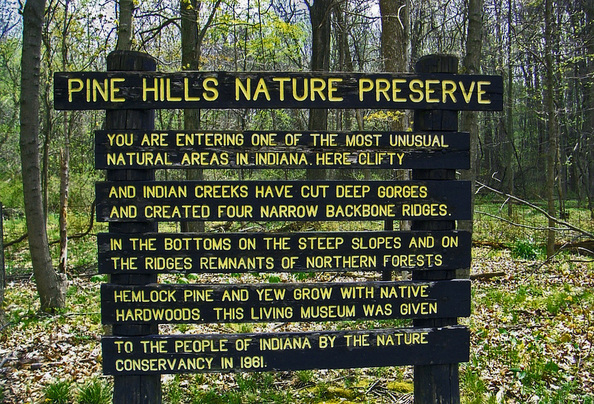
The woods near Wagner's childhood home inspired some of her earliest poetry and is now a nature preserve,
Back in Indiana, the ten-acre woods where Shari had grown up seemed more mysterious than she remembered and she started searching for similes and metaphors to describe what she saw and felt. English teachers at Norwell High School encouraged her and a Poet-in-the-Schools gave her a valuable introduction to the elements of poetry writing.  
At home town Goshen College she studied with Nicholas Lindsay, the son of Illinois poet Vachel Lindsay and  a poet and carpenter who emphasized poetry’s connections to song, place, and people.  While in school she published two Pinchpenny Press volumes, When the Walls Crumble which included a one-act play, poetry, and a short story, and Feathers in My Hat, an anthology of poetry by residents at Fountainview Place, a senior facility in Elkhart, Indiana. She was editor of The Record, the Goshen student newspaper
After graduation and doing ethnographical work with the Clifton-Choctaw which sparked an interest in Native American life, Wagner earned a Master of Fine Arts Degree (MFA) in creative writing from Indiana University at Bloomington.
Wagner’s poems have been featured by Garrison Keillor on The Writer's Almanac and by former  U.S. Poet Lauriat Ted Kooser in his column, American Life in Poetry. Her poems have also appeared in North American Review, Shenandoah, Black Warrior Review, Indiana Review, The Christian Century, Poetry East, Valparaiso Poetry Review, and many other journals. Her work has been selected for the anthologies Best American Nonrequired Reading, And Know This Place: Poetry of Indiana, and A Cappella: Mennonite Voices in Poetry..
She has been nominated four times for Pushcart Prizes, and she has been awarded two Creative Renewal Fellowships from the Arts Counsel of Indianapolis, as well as twelve grants from the Indiana Arts Commission. In 2009, her essay, Camels, Cowries & a Poem for Aisha, was co-winner of Shenandoah’s Carter Prize for the Essay.
Wagner has taught creative writing and memoir writing to people of all ages and backgrounds, in grade schools, colleges, libraries, community centers, and nursing homes. She is the editor of Returning: Stories from the Indianapolis Senior Center and co-editor of I Remember: Creative Writing by Indianapolis Youth, 2012.  She teaches with the Indiana Writers Center, where she has been a faculty member since 2008.  She is also on the faculty for  the Religion, Spirituality, and the Arts: A Program of Indiana University-Purdue University's Humanities Institute, taught at Bethany Seminary’s theopoetics and writing program.
She lives north of Indianapolis in Hamilton County with her husband Chuck Wagner, a poet and English teacher at Brebeuf Jesuit Preparatory School. They are the parents of two adult daughters.


The poems from The Farm Wife’s Almanac feature a fictional speaker of who Wagner says “many of her stories harken back to stories from my family tree. I peeled, sliced, and simmered these accounts, adding this and that, till they turned into something new, like the fruit preserves in the farm wife’s larder.”
The Farm Wife Turns Off the TV Evangelist
The Jesus I grew up with
likes to be outside.
If he’s not fishing, he’s picking figs
or showing us his mustard crop.

He prefers dusty roads, the common sparrow,
and lilies of the field.
When he knocks on your door
holding a lantern, you know it’s time
to buckle on overshoes
and go with him to feed the sheep.

But this preacher, who looks straight
into the camera and claims he knows
Jesus, says what he wants
is for me to believe in him
so he can come inside.

That sounds shifty to me.
Like a wolf with his paws dipped in flour.

Jesus who heals the blind
said we will know a tree by its fruit.

—Shari Wagner


Saturday, April 2, 2016

Poet Warsan Shire—The New Voice of the Refugee Crisis

The refugee crisis we are blind to.


The refugee crisis that was dominating headlines just a few months ago seems to be slipping out of the short attention span of the American media and public.  About all we hear now is about Donald Trump’s plan to keep ‘em all out, and semi-hysterical reports from Europe linking them with terrorism.  But the humanitarian catastrophe continues.  Thousands still flee war torn Iraq and Syria—tangled multi-sided conflicts which can trace their origins to American meddling and bombs.  Most end up in wretched camps in Turkey, Lebanon, and Jordan.  Others are caught hopelessly in the ever constricting pipe line to the safety of Western Europe, starving on beaches, freezing in desolate muddy fields, held back by razor wire, and beaten by border police.  
News turns up in the unconventional media.  Just yesterday I discovered that Milana Vayntrub, the perky AT&T phone girl from all of those commercials and once a child refugee herself from Uzbekistan—who knew?—has shot a documentary on Syrian refugees in Greece on her cell phone and has founded #CantDoNothing, an organization dedicated to helping people find ways to become personally involved in helping refugees.  Good for her.  But we need more voices like her’s to wake us from our stupor.

Portrait of the artist as a young woman--Warsan Shire.
In Britain one of those voices has come from the combination of a young woman poet and Twitter.  Like Vayntrub, Warsan Shire was a child refugee.  She was born in Kenya in 1988 to Somali parents who fled that violence torn failed state.  He parents brought her to London when she was just a year old.  Despite the odds against her, she earned a bachelor’s degree in creative writing and was soon one of the most admired and widely read young poets in the United Kingdom, due in no small measure to her savvy use of the social media including Twitter and Tumbler.  Many of her poems seem to go instantly viral because as Alexis Okeowo wrote in the New Yorker, her poetry “will surface in one of your social media feeds and often be exactly what you needed to read, or what you didn’t know that you needed to read, at that moment.”

Shire has written clear eyed about the immigrant experience in her 2011 chapbook Teaching My Mother How to Give Birth. Her work has been printed in numerous literary magazines like Poetry Review, Magma, and Wasafiri and has been included in book length anthologies.  She has also done readings not only in Britain but in Germany, Italy, Latin America, and this country.  Her work is translated into several languages.  Her first book of poetry is scheduled for release later this year.

Shire has already reaped important awards and recognition including being named as the first Young Poet Laureate for London in 2013 and won Brunel University’s inaugural African Poetry Prize the same year.  The next she was in Queensland, Australia where she was the state’s official poet in residence. While there she reached out to and worked with the marginalized aboriginal people.   

That’s quite a heady resume for a poet just 28 years of age.  But it is her haunting refugee poetry spread by the social media that has made her a literary superstar.
Home
no one leaves home unless
home is the mouth of a shark
you only run for the border
when you see the whole city running as well

your neighbours running faster than you
breath bloody in their throats
the boy you went to school with
who kissed you dizzy behind the old tin factory
is holding a gun bigger than his body
you only leave home
when home won’t let you stay.

no one leaves home unless home chases you
fire under feet
hot blood in your belly
it’s not something you ever thought of doing
until the blade burnt threats into
your neck
and even then you carried the anthem under
your breath
only tearing up your passport in an airport toilets
sobbing as each mouthful of paper
made it clear that you wouldn't be going back.

you have to understand,
that no one puts their children in a boat
unless the water is safer than the land
no one burns their palms
under trains
beneath carriages
no one spends days and nights in the stomach of a truck
feeding on newspaper unless the miles travelled
means something more than journey.
no one crawls under fences
no one wants to be beaten
pitied

no one chooses refugee camps
or strip searches where your
body is left aching
or prison,
because prison is safer
than a city of fire
and one prison guard
in the night
is better than a truckload
of men who look like your father
no one could take it
no one could stomach it
no one skin would be tough enough

the
go home blacks
refugees
dirty immigrants
asylum seekers
sucking our country dry
niggers with their hands out
they smell strange
savage
messed up their country and now they want
to mess ours up
how do the words
the dirty looks
roll off your backs
maybe because the blow is softer
than a limb torn off

or the words are more tender
than fourteen men between
your legs
or the insults are easier
to swallow
than rubble
than bone
than your child body
in pieces.
i want to go home,
but home is the mouth of a shark
home is the barrel of the gun
and no one would leave home
unless home chased you to the shore
unless home told you
to quicken your legs
leave your clothes behind
crawl through the desert
wade through the oceans
drown
save
be hunger
beg
forget pride
your survival is more important

no one leaves home until home is a sweaty voice in your ear
saying-
leave,
run away from me now
i don’t know what I’ve become
but i know that anywhere
is safer than here.

—Warsan Shire

what they did yesterday afternoon

They set my aunt’s house on fire
I cried the way women on tv do
folding in the middle
like a five pound note.
I called the boy who use to love me
tried “okay” my voice
I said hullo
he said warsan, what’s wrong, what happened?

I’ve been praying,
and those are what my prayers look like;
dear god
I come from two countries
one is thirsty
the other is on fire
both need water.

later that night
I held an atlas in my lap
ran my fingers across the whole world
and whispered
where does it hurt?

It answered
everywhere
everywhere
everywhere.

—Warsan Shire