When
A.J.
Muste died at the age of 82 February 11, 1967 most of the young Civil Rights activists in the South, student protestors on campuses
nationwide, and the anti-Vietnam War
demonstrators crowding the streets had no
idea who he was. But the frail old man spent the last two years of his life standing a lonely silent vigil in front of the White
House holding a flickering candle almost
every day in all kinds of weather and in his spare time building a
coalition of anti-war groups, the Spring
Mobilization Committee to End the War in Vietnam, that was organizing
massive marches against the war in Washington, New York,
Chicago, and San Francisco. He had been an icon of the American Left,
pacifism, Socialism, labor movement, and civil rights for over 50 years.
A
long, unlikely journey had taken him from an impoverished childhood in the
Netherlands, to one of the most theologically
and political liberal arts colleges in
the U.S.,
to playing a key role in dozens
of dramatic causes and movements that represented resistance to oppression and injustice.
The Dutch port of Zierikzee, Muste's family home, by Max Clarenbach.
Abraham Johannes Muste was born January
8, 1885, in Zierikzee, a small port city of located in the Southwestern
province of Zeeland in the
Netherlands. His father was a coachman for a family of Zeeland’s hereditary nobility. But times were tough in Holland and opportunities for
the working class limited so the
family sailed for America where his wife already had relations in third class accommodations in 1891.
The
mother became seriously ill on the cramped and rugged voyage and was detained at Ellis Island for deportation
as unfit. She was kept in the dispensary for a month but finally made a full recovery and was released to join her family.
The
family settled in Grand Rapids,
Michigan, a magnate for Dutch immigrants. The mother’s four brothers were already there
and working in various small businesses.
Father got work and the family joined the local Dutch Reform congregation a dour
and strict bastion of Calvinism that was the anchoring center
of both the community and the family.
Even by the standards of American
Protestantism at the time when modern
Fundamentalism was in its infancy, it was one of the most conservative even reactionary denominations and congregations in the country.
The
mostly working class Dutch were treated as cheap
labor fodder for local industry including
furniture manufacture, wagon making, and foundries using the taconite
ore delivered from the Minnesota
Iron Range via Lake Michigan. But unlike other ethnic immigrant
workers, the Dutch were mostly docile,
loyal to their employers, and firm believers in the Protestant work ethic. In politics
they were staunch Republicans who
despised Democrats and radicals of any kind.
When
young A. J. turned 11 years old in 1896 he and the rest of his family became naturalized American citizens.
The Hope College campus as it looked around the time Muste attended.
The still highly conservative Calvinist college does not brag much about
it illustrious radical graduate.
The
family prospered moderately, enough
to send their bright son—the star pupil
of the church Sunday School to the
strict Calvinist bastion of Hope College in near-by Holland, Michigan. A.J. graduated early at the age of 20 in
1905 as class valedictorian after
taking a year to save money teaching
Latin and Greek at another mostly Dutch institution, Northwestern Classical Academy
in Orange City, Iowa,
he headed east to Dutch Reform’s most prestigious
institution for the training of ministers, New Brunswick Theological Seminary in New Jersey.
That
city, if not the institution he attended, was Muste’s first exposure to life
outside of the confining cocoon if
the Dutch community. For the first time
he was exposed to people of different
backgrounds and faiths. It was an eye-opening experience. Even
more so were the additional classes he took in New York City in philosophy
at New York University and Columbia University. There he attended lectures by William James
whose work on the varieties of
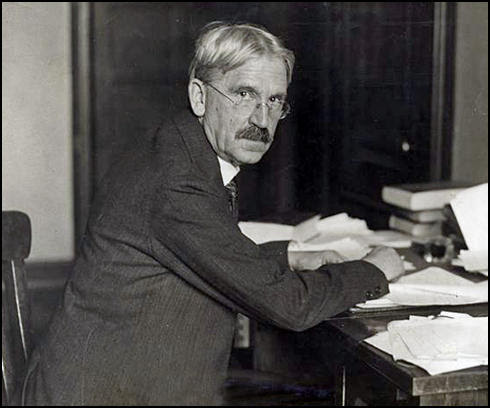
religious experience was revelatory and met John Dewey, who became a friend and important mentor.
He
was beginning to doubt the assured inerrancy of his Calvinist upbringing, but not his underlying Christian faith. Under the influence of the Social
Gospel movement, however, he began to see the teachings of Christ to be a call to service and support for the poor. None-the-less, Muste
thought that he must remain true
to his call to the ministry. Upon his graduation from New Brunswick, he married his old Hope College sweetheart and took up the offer of
the prestigious pulpit of Ft. Washington Collegiate
Church in the Washington Heights
neighborhood of Manhattan, perhaps
the most liberal congregation in the
very conservative Dutch Reform denomination.
While
enjoying his dream of being a pastor,
Muste continued his studies at the neighboring Union Theological Seminary, one of the most liberal theological
schools in the country and the center of the Social Gospel movement. Not only did Muste’s theology become more
liberal, but his exposure to broad reading
of radical books and commentary deeply affected him. So did his friendship with a young Presbyterian, Norman Thomas. Together they
moved to Socialism. Thomas graduated in 1911 and moved to a
Presbyterian pulpit in Harlem serving
mostly Italian immigrants. Both of the young ministers worked and
voted for Eugene V.
Debs in the election of 1912. Muste graduated
with a Bachelor of Divinity magna cum laude in 1913.
Muste as a young minister.
But
his old faith was shattered. No longer able to affirm the strict Calvinist Westminster
Confession of Faith, Muste resigned from
the Ft. Washington pulpit in 1914 and left Dutch Reform behind him. In 1915 he accepted a call as an independent Congregationalist to the Central Congregational Church of Newtonville, Massachusetts.
Curing
that stay the horrific industrial scale
bloodshed of the Great War in Europe
haunted him. He rapidly completed an
already begun journey to committed
pacifism. He
joined the new Fellowship of
Reconciliation shortly after its founding
in 1916 and was soon demonstrating
against America becoming involved in
the conflict. As the drumbeats of war intensified Muste participated in a major
anti-war march in the summer of 1916 and began to be a featured speaker at public
rallies. Some of the members of his
Newtonville congregation began to resign
in protest. While others stood
by their minister, America’s entrance into the War in April 16 was accompanied
by surge of jingoistic patriotism and churches were pressured by the Wilson
administration to restrain or silence pacifist preachers. Muste took a two month leave of absence
that summer to discern his future.
By December he knew that he had to leave and dedicate himself full
time to opposing the war.
He
volunteered at the Boston chapter of
the newly formed Civil Liberties Bureau,
the legal-aid organization which defended both political and pacifist war
resisters. Both he and the Bureau
were overwhelmed as the Wilson administration drove aggressively and extensively
against “draft dodgers,” those who
supported them, and anti-war dissenters.
Later
in 1918 he and his wife moved to Providence,
Rhode Island, a hot bed of dissent where he as accredited as a Quaker minister and served the Providence Meeting House. The Quakers were the primary movers of
the Fellowship of Reconciliation, so the move was easy for Muste. He turned the Meeting House into a center for
dissent maintaining a virtual radical library in the basement. Sunday sessions of the Meeting became a safe haven for pacifists, radicals, and
arty bohemians to and safely expound
their views.
When
the war ended, war time repression did not end—it intensified during the Red
Scare in the wake of the Bolshevik
Revolution in Russia and a wave of major strikes across the country.
On behalf of his continuing associations with the newly re-named American Civil Liberties Union and the
Fellowship of Reconciliation, Muste was a busy
activist and prolific contributor
to the radical press. The turbulent times also called Muste to a new field of
action—labor.
This newspaper article marks the beginning of the 1919 Lawrence Textile
Strike which was Muste's baptism by fire in the labor movement.
In
the massive textile mills of Lawrence, Massachusetts, site
of the long and legendary IWW led Bread and Roses strike of 1912, the AFL United Textile Workers (UTU) and Central Labor Union, negotiated
a shortened work week from 54
hours to 48 hours. The unions negotiated by agreeing to a concession of a corresponding cut in wages, which were
already below the cost of living. In response the workers, including many
veterans of the 1912 conflict, spontaneously
walked off the job on February 3, 1919.
Without the support of their union and with the local IWW presence
reduced to a tiny branch and the whole union under heavy persecution due to the
Red Scare, the workers called on three ministers, the Boston Comradeship, for assistance and
to be the public spokesmen for the multi-ethnic
strikers—Muste, Cedric Long, and Harold Rotzel.
These
men were described in the press and in many historical accounts as the leaders of the strike, which is not
quite accurate. From their experience in 1912 the strike
committee was effective in coordinating
picketing, setting up strike
kitchens, and running democratic
meetings. But the ministers,
especially Muste, presented an articulate
face to the press, much needed since the strikers spoke a cacophony of different languages. Muste
also brought his Fellowship of Reconciliation background to urge non-violence and train strikers to
avoid clashes with company thugs, police, and the National Guard which was mobilized in response to early battles at the mill gates.
In
fact, mill owners, Governor Calvin
Coolidge, and local officials
were eager to deploy deadly force to break the strike and teach
the workers an intimidating lesson
they would not soon forget. On February 21 a group of about 3000
strikers meeting in an open area near
a garbage dump, were attacked by two squads of police who beat and arrested
strikers and injured several
unaffiliated bystanders. Courts upheld the charges brought against the
unarmed strikers. Muste began serious training in non-violence to
prevent even more deadly confrontations.
In May the City received an anonymous donation of a machine gun which was deployed
ostentatiously loaded with live ammunition and set up to rake the mass picket lines. Muste
trained the strikers to pass by, ignore taunts, and even to
turn smiles on the gunners. While the use of mass deadly force was
averted, there were still regular attacks on picketers using truncheons, rifle butts and even bayonets.
Muste
himself, now singled out by the authorities as a key troublemaker, was seized
on a picket line and beaten
insensible. In
jail he was denied medical treatment for his serious injuries and held for a week before his disturbing the peace charges were dropped.
Public
sentiment began to swing toward the strikers, but both sides were near
exhaustion as the strike wore on into late spring.
The
UTU, which had completely abandoned the workers when they rejected their
deal, now re-entered the picture initiating secret negotiations with mill owners
without the strikers’ knowledge or consent. The union secured a 48-hour work week a 15%
wage increase, more than the 12.5% increase the strike demanded. The mill owners
accepted the terms since they were in needed to resume production but refused
to negotiate directly with the strikers.
The
workers were exhausted and
starving. Strike relief funds raised
earlier from Boston liberals were long gone.
Reluctantly, they were prepared to end the strike. Muste was about to make an announcement to
the press when Coolidge called him in an announced the UTU secret deal as fait
accompli. Muste then insisted
that the strikers would remain out unless there was a non-discrimination pledge added.
The bluff worked, the equally
desperate owners agreed to the additional
demand. An end to the strike was
announced on May 20 and the strikers returned to work.
It
was one of the very few victories for labor in a year when most major strikes
were crushed across the country including the Boston Police Strike, Steel Workers Strike, Chicago
Packing House Workers Strike, actions in the coal fields of West Virginia,
and IWW strikes in the Arizona copper
mines and logging camps of the Pacific Northwest. Muste was hailed as a labor hero and thrust into the national
spotlight for the first time.
Disgusted
with the UTU even during the strike Muste took time to travel to New York to
participate in a convention of radical textile industry trade unionists—most of them Jewish, to plan the creation of a new, militant union. The result was the Amalgamated Textile Workers of America (ATWA). Based on his triumph in Lawrence, Muste was
elected Secretary of the fledgling union shepherding it through
the growing pains of its first two
years.
That
required moving to New York City. When
he left that job in 1921 Muste became the first
Chairman of the faculty at Brookwood Labor College in Katonah,
New York, where he remained from
1921 to 1933. He had become an acknowledged
leader of the labor movement which he continued to influence by his
writing.
Muste broke with his old friend and mentor John Dewey over trying to
recruit Senator George Norris of Nebraska to head up a new labor
oriented political party.
He
also turned his attention to politics as the old Socialist Party split with many radicals joining
competing Communist parties and
local organization badly damaged by the suppression
of the Red Scare era including the imprisonment
of Eugene V. Debs for his outspoken opposition to the war. Muste wanted to find a working class independent political party as real
alternative to the binary Capitalist
parties—the Democrats and Republicans.
He collaborated with his old friend and mentor John Dewey in the League for Independent Political Action
(LIPA), which was groping toward
establishing a Labor party. But he withdrew his support in 1930 when
Dewey tried to recruit liberal
Republican Senator George W.
Norris of Nebraska to head up
the new party. Muste avowed that any
labor party must arise organically from the working class, not be imposed from the top down by a supposed savior. It was a bitter parting of the ways between the old friends.
But
his enthusiasm for a labor party brought him closer to the Trotskyists who had been driven from the Communist Party and for whom creation of a Labor Party was a critical step toward revolution. In 1933 he founded a new organization,
the American Workers Party (AWP) largely from supporters in the Conference for Progressive Labor Action
(CPLA) which he had founded back in
1929 to find an alternative to the
conservative leadership of William Green
and the AFL. Since both groups were dominated by
Muste, the Communist press took to calling the AWP Musteite. They did not mean that as a compliment.
In
1934 members of an AFL Federated Labor
Union (FLU)—William Green’s temporary
hybrid industrial union structure meant to be broken up into craft unions once recognition was
achieved—walked out on Auto-Lite in Toledo, Ohio. It was part of a broader effort in the auto
industry but the FLU structure was cumbersome
and ineffective. Toledo was also a stronghold of the AWP where
they had organized a strong Lucas County
Unemployed League (LCUL) mostly
to prevent the unemployed from being recruited
as strike breakers. Getting little effective support from either
the AFL or the local Central Labor
Council, strikers invited the AWP to assist them. National Executive
Secretary Louis F. Budenz arrived in Toledo and was consulting with
strikers in April. Increasingly the AWP
took a leadership role in the strike.
They
ringed the plant with thousands of their Unemployed organization members to
prevent access by scabs and delivery of supplies or shipment of products. Auto-Lite obtained an injunction against the mass picketing which the AWP announced
publicly that they would defy. Unemployed League leaders Ted Selander and Sam Pollock and other pickets were arrested on May 11 and dozens
more were arrested daily as Selander and Pollock were prosecuted in a well-publicized and lengthy trial.
Meanwhile
the company recruited 1,500 strike breakers and hired private gun thugs to
protect them. They also stockpiled $11,000
worth of tear and vomit gas and stored them in the plant. On
May 21 the AWP leaders responded with 1000 on the picket line and re-enforced
that to more than 4000 the next day 6000 on May 23. It was Muste’s mass-nonviolence in effective
action.
Frank
Hubay was shot and killed during the Battle of Toledo in the 1934
Auto-Lite strike led by Muste's Amercan Workers Party (AWP).
Budenz
and four picketers were arrested that day and an elderly picket severely
beaten. Infuriated the pickets broke
non-violent discipline and began to pelt police with rocks and bottles. They responded with fire hoses, which the
strikers seized and turned back on them.
The Battle of Toledo was on.
Deputies
and gun thugs began firing live ammunition from the roof of the plant and the
air was thick with the sickening gas attacks.
Strikers and pickets responded by pelting the plant with rocks and bricks, breaking most of the
windows and setting fire to cars in the parking lot. Fighting continued for hours and two
attempts to rush the plant were repelled.
The
next day hundreds of Ohio National Guard troops arrived, most of them frightened teenagers. That evening more than 6000 gathered at the
plant in defiance of a fresh injunction as President
Franklin Roosevelt dispatched Charles
Phelps Taft II, the son of William
Howard Taft, as an emergency mediator and William Green sent AFL organizer to try to
regain control of the strikers. Fighting
and gas attacks resumed. The Guard
launched an unsuccessful bayonet attack and then unleashed a volley on the crowd killing strike supporters
Frank Hubay and Steve Cyigon and wounding at least
15. Ten Guardsmen were wounded by
rocks. Fighting spread over a six block
area surrounding the plant.
Early
on the morning of the 25 Auto-Lite agreed not to try and reopen the plant
during the strike in an effort to stem the violence. It did not work. Later in the day company President Clement Miniger was arrested on charges reckless nuisance for allowing his
security guards to bomb the neighborhood with tear gas.
Even
the conservative Central Labor Union was so outraged that it threatened to call a General Strike. Meanwhile strikers refused to accept a
mediation deal worked out by Taft.
Troops made hundreds of arrests daily and controlled the streets at
night by more bombing the neighborhood with gas. Ted Selander was arrested by the National
Guard and held incommunicado. Taft ignored pleas from Muste to intervene to
locate and free him.
Violence
subsided but did not end while Taft’s mediation efforts floundered and the
company dug in on demands that the scabs it had hired, who had never even made
it into the plant, be kept on as permanent replacements for the
strikers. The courts began processing
the hundreds of contempt of
court cases for breaking the
injunctions and the ACLU’s General
Council Arthur Garfield Hays came to town to personally handle the
defense. Muste barnstormed the country
drumming up support for the strikers and made frequent trips to Toledo.
On
May 29 the Central Labor Council voted to continue preparations for a general
strike despite the panicked opposition
of William Green.
Taft
kept negotiators in 24 hour session as 20,000 workers marched through the
streets of Toledo peacefully supporting the strikers. Desperate to bring things to a close before a
strike the FLU local and Auto-Lite announced a settlement on June 2 calling
for 5 % wage hike, and a minimum wage of 35 cents an hour with
recognition of the FLU and arbitration of grievances and wage demands. Most controversially it called for a system
of re-hiring which prioritized scabs that had crossed the picket line over workers
who struck. That provision caused Muste
and Budenz to urge rejection of the contract.
Battle
weary strikers, however voted in favor on June 3. The Governor recalled the last of the Guard
two days later and on June 6 Auto-Lite, kicking and screaming all of the way,
re-hired the last of the strikers. On
June 9, the threatened General Strike date another 20,000 marched in triumphant
celebration. The FLU went on to
successfully organize other Toledo auto industry plants and in 1935 became United Auto Workers Local 12.
Although
as a pacifist Muste was appalled at the violence of the strike, he deeply
appreciated the wide-spread solidarity that
made it possible. It also gave an
enormous boost in prestige to his AWP.
Later
that year Muste cemented his ties with the Trotskyists when he merged the AWP
with their Communist League of America to
form the Workers Party of the United
States. He looked forward to a new era of Socialist
advancement and Labor progress.
But
it did not take long for him to become disillusioned by his alliance with the Trotskyists. As he was drawn into their inner-circle he was appalled by their authoritarianism and particular their bitter rivalry with the Communists
Party which repeatedly disrupted working
class solidary as each side did everything they could to sabotage the successful organizing
efforts of the other placing their narrow party interests over the
workers they supposedly represented.
In
1936 he broke with the Workers Party and
publicly rejected Marxian communism of
all stripes. He reclaimed a Christian socialist identity and his pacifist roots.
Muste
served as Director of the Presbyterian Labor Temple in New York
City from 1937 to 1940 and lectured a Union Theological School and Yale Divinity School.
Musty as Executive Director of the Fellowship of Reconciliation (FOR).
In
1940 Muste became Executive Director of
the Fellowship of Reconciliation and
pacifism became the center of his activism the rest of his life. It was hard and unpopular to be a pacifist
during World War II when he was
called on to support and defend draft resistors and it was emotionally draining for someone who
was also a committed anti-fascist. But Muste persisted.
During
the war years young Baynard Rustin became
his friend and protégée. As Rustin rose to behind the scenes leadership in the Civil Rights Movement as a top advisor
to Dr. Martin Luther King,
Jr., strategist of non-violent civil disobedience,
and organizer of the 1963 March on Washington
for Jobs and Justice, he said that he never made a difficult decision
without talking about it with Muste first.
In
the post-war era Muste spent a lot
of time opposing the spread of nuclear weapons. In 1951 he
organized a group of 49 FOR supporters to file
copies of Henry David Thoreau’s
essay On the Duty of Civil Disobedience instead of their IRS 1040 Forms to protest the use of tax dollars for arms.
Despite
his current opposition to Marxism, Muste came to the defense of accused
communists during the second red scare of
the McCarthy Era which drew charges
that he was a Communist himself. He
stood up to intrusive FBI investigations.
In
1956 he cofounded the important
left/pacifist journal the The Progressive to which he
contributed for the rest of his life. He
defied his right wing critics in 1957 by leading a delegation of pacifist and democratic
observers to the 16th National Convention
of the Communist Party. He issued a report critical of the CPUSA but in
support of its right to
free public expression and political
activity.
Muste and the Catholic Worker's Dorothy Day during their campaign against bomb shelters and Civil Defense preparations.
Muste
was on the National Committee of the
War Resistors League and accepted
their 1958 Peace award.
In the late 50’s and early ‘60’s he collaborated
with Dorothy Day of the Catholic Worker’s Movement in
opposition to bomb shelters and Civil Defense preparations in New York
City for giving a false sense of
security from nuclear annihilation.
The Vietnam War re-energized his aging
bones later in the decade. In addition
to his articles in The Progressive,
personal White House vigils, and work assembling the Mobe, Muste was part of a peace
delegation of the Committee for
Non-Violent Action to Saigon and
Hanoi in 1966. He was arrested, roughly handled, and deported
from South Vietnam but was
personally warmly greeted by Ho Chi Minh
in the North.
The veteran pacifist spoke out against the Vietnam War.
It
was one of his last public witnesses. At his memorial
service old friend and comrade Norman Thomas said that Muste had made a, “remarkable
effort to show that pacifism was by no means passivism and that there could be such a thing as a non-violent social revolution.”
That
about sums it up.




.jpg)