Showing posts with label Australia. Show all posts

Wednesday, March 18, 2026

The Tolpuddle Martyrs Sparked British and Australian Trade Unionism

Farm laborers from Dorset may have met under a tree to swear a secret oath to create a combination to raise wages and protect tenants.

The fate of six farm laborers in Dorset and the huge protest and movement that their brutal transportation to Australia stirred are touchstones to the British labor movement.  The Tolpuddle Martyrs are widely celebrated in England as well as in the former penal colony where they were sent and in far off Canada.  Most Americans have never heard of them.  We aim to rectify that.

In 1833 George Loveless, a Methodist lay preacher, and a respected leader among the farm laborers around the village of Tolpuddle in southern England, called a few of his mates together. Legend has it that six of them met under a sycamore tree.  Others say that they squeezed into the tiny hovel of Thomas Standfield.  They had serious business to attend to.

Landlords in the area were putting the arm on their laborers and tenants.  Unlike areas closer to London or the grimy cities of the rapidly industrializing north, farmers in Dorset did not have to keep up wages to compete with the lure of the cities and factory jobs.  In addition, modest changes to age old farming practices were reducing the number of laborers needed on the farms and estates.  Conditions were ripe for wage cutting. 

Local wages had been steady at 10 schillings a week—hardly a fortune, but enough to barely feed and clothe a family.  Landowners had already cut that to 7 and had announced a second cut to 6 was imminent.   No reductions in the rent demanded for their cottages were proposed.

Earlier, in 1830, farm workers had responded to such cuts and the new farm equipment that made them possible with the Swing Rebellion—a Luddite like uprising in which laborers rioted, attacking and burning equipment like threshing machines and menacing landlords.  Frightened farmers suspended their cuts, or sometimes even gave wage boosts, but waited for authorities to act. 

And act they did.  Militia and Army units swept the county rounding up hundreds of suspects.  At trial several were sentenced to hang, although in the end only a handful were swung in public as an object lesson, the rest were torn from their families and transported to Australia.  Conditions returned to what they were before the protests—or worse.

Loveless and his friends knew that violence and disorganized riot was not the answer.  They had to find new ways of organizing a protest.  They had some reasons for hope.  The Combination Acts, passed in 1799 at the height of panic about the possible spread of revolution from France to the English working and agrarian classes and which had outlawed combinations to obtain better wages and working conditions, had been repealed in 1824 and’25.  A modest trade union movement was developing, not without severe opposition, in among skilled tradesmen in cities and in the mines.

Moreover, the Reform Act, passed earlier in 1832, had finally extended the franchise to some without yet granting universal male suffrage.  It was not enough by half, but the Dorset men felt that it might foretell a more liberal age.

Despite these reasons for optimism, the fate of the Swing Rebellion left them no illusions about the dangers of their undertaking.  So that when they agreed to form the Friendly Society of Agricultural Labourers they did so swearing an oath of secrecy.

Local landlords began to hear certain rumors.  As planting season neared men were refusing to work for less than the old 10 schillings standard.

One landlord, James Frampton, petitioned to Lord Melbourne, the Whig Home Minister for relief.  It was fast in coming.  On February 24, 1834 Loveless and the other men were arrested as they left their homes.  Their families would not see them for a long time.

 Five of the six accused conspirators.

In no time at all they were hauled before an unsympathetic Judge Baron John Williams.  Loveless, Stanfield, James BrineJames Hammett, and James Loveless, George’s brother were charged under an obscure law also dating to the late 18th Century which made the swearing of secret oaths to each other illegal.  On March 18, subsequently celebrated as Tolpuddle Martyrs Day, they were found guilty and sentenced to 7 years transportation to Australia—a sentence few men ever returned from.

Despite rising protests from working people across England, all of the men were quickly bundled off to the ships that carried them away.

From his cell before being shipped out George Loveless had scribbled a note on a scrap of paper that was soon printed all over England:

God is our guide! from field, from wave,

From plough, from anvil, and from loom;

We come, our country’s rights to save,

And speak a tyrant faction’s doom:

We raise the watch-word liberty;

We will, we will, we will be free!


Tens of thousands rallied on Copenhagen Fields near King's Cross, London organized by the Central Committee of the Metropolitan Trade Unions and marched through London to Kennington Common with a wagon carrying a petition with over 200,000 signatures for the remission of the  Tolpuddle Martyrs's sentences.

Inspired by those words an unprecedented protest arose across the country.  More than 80,000 signed petitions to Lord Melbourne himself in April.  And in London more than 25 thousand assembled for the largest public demonstration of its kind ever held in protest to a government action.  In addition to the labor movement, the reform press took up the protest as did the liberal wing of Melbourne’s own Whig party.

In 1836 by then Prime Minister Melbourne’s new Home Secretary Lord John Russell commuted the sentences of all but Hammett who had a previous minor conviction.  Four of the men arrived back in England at Plymouth.  A plaque next to the Mayflower Steps commemorates their return.

Hammett was released a year later and returned to Tolpuddle, where he lived a long life in poverty and want.  He died in the Dorchester workhouse in 1891. 


Tolpuddle Martyrs Monument and cottages in London, Ontario.

The other men realized they could not support their families back home where no landlord would hire them.  They moved together for a time to Essex and then with the help of funds subscribed for their relief, immigrated together to London, OntarioCanada.  They were greeted in their new home as heroes and are still commemorated there today with a monument and an affordable housing co-op / trade union complex named after them.

Back home, the Tolpuddle Martyrs Museum preserves their story and their deep connection to the trade union movement.  A monument was erected to them in 1934 on the centennial of their sentence and a new statue installed before the museum in 2001.

There are also modest monuments in Australia.

The Tolpuddle Martyrs Festival is held annually in Tolpuddle, usually in the third week of July, organized by the National Union of Agricultural Workers (recently amalgamated with the Transport and General Workers Union) and the Trades Union Congress (TUC) featuring a parade of banners from many trade unions, a memorial service, speeches and music. Festivals have featured speakers such as Tony Benn and musicians such as Billy Bragg.   

Forgetting for a moment that as a Methodist, Loveless was likely a teetotaler, I propose all good working men and women raise a toast today to the lads from Tolpuddle.


Saturday, March 18, 2023

The Tolpuddle Martyrs Inspired British and Australian Labor

Farm laborers from Dorset may have met under a tree to swear a secret oath to create a combination to raise wages and protect tenants.

The fate of six farm laborers in Dorset and the huge protest and movement that their brutal transportation to Australia stirred are touchstones to the British labor movement.  The Tolpuddle Martyrs are widely celebrated in England as well as in the former penal colony where they were sent and in far off Canada.  Most Americans have never heard of them.  We aim to rectify that.

In 1833 George Loveless, a Methodist lay preacher, and a respected leader among the farm laborers around the village of Tolpuddle in southern England, called a few of his mates together. Legend has it that six of them met under a sycamore tree.  Others say that they squeezed into the tiny hovel of Thomas Standfield.  They had serious business to attend to.

Landlords in the area were putting the arm on their laborers and tenants.  Unlike areas closer to London or the grimy cities of the rapidly industrializing north, farmers in Dorset did not have to keep up wages to compete with the lure of the cities and factory jobs.  In addition, modest changes to age old farming practices were reducing the number of laborers needed on the farms and estates.  Conditions were ripe for wage cutting

Local wages had been steady at 10 schillings a week—hardly a fortune, but enough to barely feed and cloth a family.  Landowners had already cut that to 7 and had announced a second cut to 6 was imminent.   No reductions in the rent demanded for their cottages were proposed.

Earlier, in 1830, farm workers had responded to such cuts and the new farm equipment that made them possible with the Swing Rebellion—a Luddite like uprising in which laborers rioted, attacking and burning equipment like threshing machines and menacing landlords.  Frightened farmers suspended their cuts, or sometimes even gave wage boosts, but waited for authorities to act. 

And act they did.  Militia and Army units swept the county rounding up hundreds of suspects.  At trial several were sentenced to hang, although in the end only a handful were swung in public as an object lesson, the rest were torn from their families and transported to Australia.  Conditions returned to what they were before the protests—or worse.

Loveless and his friends knew that violence and disorganized riot was not the answer.  They had to find new ways of organizing a protest.  They had some reasons for hope.  The Combination Acts, passed in 1799 at the height of panic about the possible spread of revolution from France to the English working and agrarian classes and which had outlawed combinations to obtain better wages and working conditions, had been repealed in 1824 and’25.  A modest trade union movement was developing, not without severe opposition, in among skilled tradesmen in cities and in the mines.

Moreover, the Reform Act, passed earlier in 1832, had finally extended the franchise to some without yet granting universal male suffrage.  It was not enough by half, but the Dorset men felt that it might foretell a more liberal age.

Despite these reasons for optimism, the fate of the Swing Rebellion left them no illusions about the dangers of their undertaking.  So that when they agreed to form the Friendly Society of Agricultural Labourers they did so swearing an oath of secrecy.

Local landlords began to hear certain rumors.  As planting season neared men were refusing to work for less than the old 10 schillings standard.

One landlord, James Frampton, petitioned to Lord Melbourne, the Whig Home Minister for relief.  It was fast in coming.  On February 24, 1834 Loveless and the other men were arrested as they left their homes.  Their families would not see them for a long time.

 Five of the six accused conspirators.

In no time at all they were hauled before an unsympathetic Judge Baron John Williams.  Loveless, Stanfield, James Brine, James Hammett, and James Loveless, George’s brother were charged under an obscure law also dating to the late 18th Century which made the swearing of secret oaths to each other illegal.  On March 18, subsequently celebrated as Tolpuddle Martyrs Day, they were found guilty and sentenced to 7 years transportation to Australia—a sentence few men ever returned from.

Despite rising protests from working people across England, all of the men were quickly bundled off to the ships that carried them away.

From his cell before being shipped out George Loveless had scribbled a note on a scrap of paper that was soon printed all over England:

God is our guide! from field, from wave,

From plough, from anvil, and from loom;

We come, our country’s rights to save,

And speak a tyrant faction’s doom:

We raise the watch-word liberty;

We will, we will, we will be free!

Tens of thousands rallied on Copenhagen Fields near King's Cross, London organized by the Central Committee of the Metropolitan Trade Unions and marched through London to Kennington Common with a wagon carrying a petition with over 200,000 signatures for the remission of the  Tolpuddle Martyrs's sentences.

Inspired by those words an unprecedented protest arose across the country.  More than 80,000 signed petitions to Lord Melbourne himself in April.  And in London more than 25 thousand assembled for the largest public demonstration of its kind ever held in protest to a government action.  In addition to the labor movement, the reform press took up the protest as did the liberal wing of Melbourne’s own Whig party.

In 1836 by then Prime Minister Melbourne’s new Home Secretary Lord John Russell commuted the sentences of all but Hammett who had a previous minor conviction.  Four of the men arrived back in England at Plymouth.  A plaque next to the Mayflower Steps commemorates their return.

Hammett was released a year later and returned to Tolpuddle, where he lived a long life in poverty and want.  He died in the Dorchester workhouse in 1891. 

Tolpuddle Martyrs Monument and cottages in London, Ontario.

The other men realized they could not support their families back home where no landlord would hire them.  They moved together for a time to Essex and then with the help of funds subscribed for their relief, immigrated together to London, Ontario, Canada.  They were greeted in their new home as heroes and are still commemorated there today with a monument and an affordable housing co-op / trade union complex named after them.

Back home the Tolpuddle Martyrs Museum preserves their story and their deep connection to the trade union movement.  A monument was erected to them in 1934 on the centennial of their sentence and a new statue installed before the museum in 2001.

There are also modest monuments in Australia.

The Tolpuddle Martyrs Festival is held annually in Tolpuddle, usually in the third week of July, organized by the National Union of Agricultural Workers (recently amalgamated with the Transport and General Workers Union) and the Trades Union Congress (TUC) featuring a parade of banners from many trade unions, a memorial service, speeches and music. Recent festivals have featured speakers such as Tony Benn and musicians such as Billy Bragg.   

Forgetting for a moment that as a Methodist, Loveless was likely a teetotaler, I propose all good working men and women raise a toast today to the lads from Tolpuddle.


Thursday, October 22, 2020

Do the Same Old Holidays Bore You, Bucky? Try Wombat Day


Break out the Champaign and some tough roots, grass, and bark for the guest of honor!  It’s Wombat Day Down Under. It’s an ancient tradition stretching all the way back to 2005.  And so what if those asses in Canberra haven’t gotten around to making it a legal holiday with the Post Office closed, military parades, and bands playing Waltzing Mathilda, it’s good enough to raise a can of Foster’s and throw another shrimp on the barbie.

The occasion celebrates those cuddly short-legged, muscular marsupials native to Australia with pudgy snouts and short tails that resemble small, over-fed bears.  They are adaptable to Australia’s various often in hospitable environments from arid semi-desert to forests and mountain sides.  Not that anyone actually sees them much in the wild.  That’s because they are the world’s largest burrowing mammals—adults average about 40 inches long and can weigh between 35 and 70 pounds—and spend much of their lives in the their extensive burrow systems.  Being nocturnal they generally only come out to dine at night except for the rare darkly overcast, rainy day.

The late Steve Irwin showed off a wombat giving you an idea of their size.

The stout little beasts have powerful forelimbs with impressive claws for digging and large rodent-like incisors to gnaw through their tough diet choices.  Their natural predators were few—the dingo, now extinct Tasmanian devil, and, of course humans.  Over the last century feral dogs have heavily damaged the population.

Wombats are naturally both slow moving and shy, but can be aggressive when startled or threatened.  They have been known to charge humans who get near them and are large and heavy enough to knock down a grown man.  Their long, sharp claws can slash human flesh and bites can penetrate stout boots and thick socks.  On the other hand, humans, both Aborigines and early White settlers hunted them for food.  The settlers, with their fire arms and hunting dogs, quickly reduced the Wombat population and range over much of the southeastern part of the Continent.

Despite holding a day in their honor, Australians have a mighty ambivalent attitude toward the wombat.  The Aborigines did not seem to esteem them, despite relying on them as a protein source.  They did not imbue them with the spiritual powers and significance of other animals—kangaroos, snakes, crocodiles, sharks, etc.—in their Dreamtime mythologies and seldom depicted them in their rock art.  The origin story about them is hardly flattering—originating from a person named Warreen whose head had been flattened by a stone and tail amputated as punishment for selfishness.

When white settlers—most of them, you will recall, transported prisoners and their military guards—arrived, their opinion of the creatures was not much better.  At first because of the similarity of size and burrow habitations they were mistaken for a kind of badger, the large European weasel and omnivore totally unrelated the local marsupial.  Several Australian place names containing the name badger—Badger Creek, Victoria and Badger Corner, Tasmania  for instance—are really named for wombats. 

The English adopted the name from a corruption of the now extinct Darug Aboriginal language.  In 1798 John Price was exploring in what is now New South Wales with James Wilson who had lived with the Aborigines when he recorded in his diary:

We saw several sorts of dung of different animals, one of which Wilson called a Whom-batt, which is an animal about 20 inches high, with short legs and a thick body with a large head, round ears, and very small eyes; is very fat, and has much the appearance of a badger.

Those ain't bon bons--cubic wombat scat.  Now your day is complete.

That dung or scat is among the most tell-tale signs of the presence of wombats.   Because of their fibrous diet and highly efficient digestive process, wombats leave distinctive, compact cubical shaped pellets

It took much of the 19th Century to standardize the spelling of the animal.  Meanwhile they were being hunted for meat, sport, and because their burrowing was seen as a nuisance to farming and particularly sheep grazing.  The Europeans characterized the animals in their own folk stories as fat, lazy, and greedy.

By the early 20th Century all three species—the common wombat, Northern Hairy-nosed Wombat, and Southern Hairy-nosed Wombat—were all under pressure.  Wombats were classified as vermin in 1906, and a bounty was placed on them in 1925.  The results were entirely predictable.

The Northern Hairy-nosed Wombat is extremely endangered.  Only 138 were known to survive as of 2007 and their range confined to the Epping Forest National Park in Queensland where they are protected behind a predator proof fence.  Tenuous efforts have been made to re-establish another colony at the Richard Underwood Nature Refuge at Yarran Downs.  The species has become a symbol of Australian efforts to preserve endangered species.

But their Southern cousins and the now far-from Common Wombat are also under extreme pressure.  All species have been declared protected in all states but Victoria where the Department of Environment and Primary Industries still classifies them as a pest and allows both hunting and in some cases, poisoning.

Attempts by conservationists to manage a recovery of the population are hindered by the low fertility and reproductive rates of wombats.  Adult females produce only one offspring each breeding season after a gestation of 20-21 days.  They carry the joey in their well-developed pouches for seven months.  Alone among marsupials, the wombat pouch opens toward the animal’s rear.  This prevents the joey from being smothered by dirt as the mother expands her burrow during which her powerful front legs and claws toss dirt behind her.  The babies emerge as furry miniature adults.  They are weaned at 15 months and on their own and sexually active at a year and a half.

One of several wombat stamps issued by the Australian Post over recent decades.

The threatened and endangered status of wombats has evoked some degree of public sympathy and affection for the previously scorned critter.  They are sometimes used as a symbol for conservation efforts and have even appeared on Australian postage in recent years, something that their more glamorous cousins—Kangaroos, Koalas, Tasmanian Devils, and Platypuses achieved decades earlier.

Wombat prestige has also been boosted as they funny looking animals have become staples of Australian kiddy picture books, children’s literature, and children’s television.  One popular animated series features a wombat family.

This long running Aussie  children's program features a wombat puppet who has been paired with y several hosts and celebrity guests over the years.

Still the creatures lag behind those other iconic Aussie animals in public acceptance.  No Australian professional or college sports team has adopted the wombat as their mascot.

Perhaps that is why fans of the animal launched Wombat Day in 2005.  It seeks to honor the animal, but has more than a touch of tongue-in-cheek humor about it.  The only customs I could find associated with the celebration are viewing parties at zoos and animal preserves and baking and consuming homemade chocolate cakes or brownies made in the shape of a wombat.  Which leads me to suspect that the chocolate industry may be behind much of the annual promotion of the holiday.  Oh, they also consume a confection called Wine Gums.  Beats the hell out of me what they are.

A wombat Day cake.  Makes your mouth water, right?

October 22 was supposedly chosen because it is smack dab in the middle of the Southern Hemisphere spring planting season and there are said to be certain vague traditions linking wombats with fertility.  These claims are open to question.

Anyway, there you have it.  A new reason to celebrate.  And coming in the midst of the semi-lockdown of the Coronavirus pandemic leaves us all a bonkers this writer needs a cause to celebrate something.  Pass the Wombat Cake. 

Wednesday, January 13, 2016

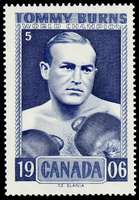
Tommy Burns—Forgotten Heavyweight Champ Was a Real Hero.

"Pugilist Tommy Burns 1906.  Location unknown. CHM."


My history posts have root in a daily a lot almanac feature I began here back in 2000, they have just gotten out of hand and grown from brief snippets to often articles that are way too long.  But they are usually still in some way tied to a specific date.  Not this one. 
This one was inspired by stumbling on to a post by Jeff Nichols on the interesting Facebook group CHICography of a picture from the collection of the Chicago Historical Museum.  A cracked and damaged photo shows a muscular young man standing arms folded and stripped from the waist up peering intently directly into the camera.  He stands in front of an industrial cityscapelooming dark buildings, belching smoke stacks, and even a slanting glass skylight suggesting that the picture had been taken on some rooftop.  The picture was captioned simply “Pugilist Tommy Burns, 1906. Location unknown.”

An IWW "Nuless Wonder"  in a framiliar pose.  He's got his shirt on.


I vaguely remembered the Burns was the Heavyweight Champion who Jack Johnson whipped to become the first Black man to win the Belt.  Beyond that I knew little about him.  What first struck me about the picture was not the subject’s identity but the striking resemblance to the figures we used to call the Nutless Wonders—the macho and muscular male workers shown heroically on the illustrated covers of Industrial Workers of the World (IWW) literature, Industrial Worker cartoons, and Silent Agitator stickers.  They were shown only from the waist up and were frequently shirtless.
When I posted the picture to an IWW group with a snarky comment it caused someone to ask if maybe Burns had been a Wobbly.  Some early 20th Century athletes including Jack Dempsey and a handful of baseball players had carried Red Cards at some time in their lives.  That set me off on quick research of Burns.  I uncovered no connection to the One Big Union, but I did discover that Burns was a real hero and not just for his battles in the ring.
Burns is largely a footnote in boxing history as an interim figure between the John L. Sullivan and Gentleman Jim Corbett era and Jack Johnson, arguably not only the first Black Champ but the first truly modern Heavyweight.  But there is much more to the story.
He was born as Noah Brusso on June 17,1881in Hanover, Ontario, Canada into a large and impoverished family which included deep French roots and more recent German immigrants.  Five of his siblings died in childhood.  But young Noah was not only healthy, became a gifted athlete and locally well known and sought after by ice hockey and lacrosse clubs.  He was tough, speedy, and resilient in the often brutal amateur and semi-pro leagues he played in.
He turned to boxing in 1900 while still participating in the team games.  Income potential in hockey and lacrosse was limited, but boxing was a ticket out of poverty for many tough young men.  He began with club fights around Detroit and Windsor.  Still fighting under his own name, he picked up experience touring the mining camps and towns of the Minnesota Iron Range, Michigan Upper Peninsula, and Ontario working smokers and socials of fraternal organizations and unions.  He barnstormed taking on all comers.  Not only did he hone his skills, but the idea of taking all challenges would be carried over as he moved up the ranks as a pro.
He was fighting as a lightweight when he began getting on the cards of more prestigious events.  He also began using the Scottish sounding moniker Tommy Burns for the same reason that American boxers of various nationalities fought as Irishmen—it sold more tickets, especially in his native Canada with a large Scotts population.  It was the kind of shrewd business moves that the young fighter was known for.  Unlike most boxers, he managed himself, including setting up matches, bookings, and publicity.  Without the usual sticky fingers of managers and handlers, he was able to actually keep and save money—a real rarity in the boxing world.  He was also able to steer clear of the gamblers and fixers who plagued the sport.
Burns began fighting in 1900 as a lightweight, but moved up divisions rapidly as he bulked up.  By 1902 he won the Michigan Middleweight championship as a middleweight.  In 1904, shortly after beginning to use the name Tommy Burns, he turned light heavyweight and was battling top contenders for the championship.  He lost in Philadelphia that year to Jack O’Brien but was undeterred.  He trained harder and put on more weight, determined to win the Heavyweight championship.
He made the division—barely.  He was smaller and lighter than all of his heavyweight opponents but had an exceptionally long reach for his size.  He was small and quick against lumbering opponents.  He liked to get close in and pummel them with body blows and a wicked left jab.  He could dodge many punches but also absorb punishment without going down.
Burns quickly got a big chance in his new division in 1905 when he knocked out contender Dave Barry in San Francisco.  Promoter Tom McCarey proposed a matchup with World Heavyweight Champion Marvin Hart.  Hart had won the vacant championship after Jim Jeffries retired in July 1905 in a fight with another top contender.  He was also one of the few men who had won a decision against Jack Johnson, the most dominant heavyweight of the time.  But Johnson was Black and neither Hart nor any other white fighter would give him a crack at the Championship.  So when Hart had to defend his title, he picked Burns instead, probably figuring on an easy victory.
The bout took place in Los Angeles in 1906 retired heavyweight champ Jeffries refereed.  Burns out boxed Hart in twenty rounds and took the championship and a purse of $15,000. 
In short order Burns knocked out Fireman Jim Flynn, won a grueling 20 round re-match decision against Barry, and scored a first round KO of Australian Bill Squires.  Burns was the shortest man ever to hold the Heavyweight crown standing just 5”7’ tall and second lightest weight coming in at just 175 lbs. 
Even though he was the beneficiary of racism just to get the title fight ahead of Johnson, he had already shown himself to be far less prejudiced than most White fighters.  He had employed at least two Black sparing partners and was either briefly married to or co-habituated with a Black woman.  He also had won a high profile fight with a Native American opponent.  

Burns with his Championship Belt.
The pressure was on from some for a match with Johnson in some circles, but most of the boxing establishment and press were against it.  Burns, ever the businessman, knew he would have to fight Johnson, but wanted to defend his title a few times first.  That was where the money was.  And he knew that the mighty Johnson would likely crush him in the rings.  So he became the first champ to tour the world defending his title 11, 13 times, depending on how the fights were counted.  In keeping with his announced take-on-all-challengers policy he once fought and won twice in one day.  Some critics and boxing historians consider those two fights as exhibitions because fighters were not top-flight contenders; others count them because they were billed as championship fights.
Burns brought Squires, who had become a close friend, with him on the tour as sparring partner but also defended his title against him in three cities where no worthy local opponent could be found. He fought in London, Dublin, and Paris.  In the French capital made history by defending his title against British boxer Joseph “Jewey” Smith.  During this run of title defenses he set records for the fastest knockout—one minute and 28 seconds—and the most consecutive wins by knockout—eight—by a heavyweight champion.
But after Paris it was on to Australia and a rendezvous with destiny.
Jack Johnson had famously crossed the Atlantic to chase Burns down in an attempt to get a shot at the title.  Burns had skillfully dodged him while raking in appearance fees and purses.  In Sydney he finally accepted the challenge but only after demanding and getting an unheard of $30,000 guarantee.  Johnson only got half that. 
Attacked in the American press for even considering the fight, Burns said, “I will defend my title against all comers, none barred. By this I mean white, black, Mexican, Indian, or any other nationality. I propose to be the champion of the world, not the white, or the Canadian, or the American. If I am not the best man in the heavyweight division, I don’t want the title.”

An Australian newspaper spread on the Great Boxing Day Championship fight.

When time for the fight came on Boxing Day, December 26, 1908 Burns had been ill, reportedly with dysentery but the heavily promoted fight could not be postponed.  He weighed in at only 168 lbs, a full 15 lbs. below his last title defense.  The much larger Johnson weighed 192 and odds makers had made him the heavy favorite.  Burns survived a beating for 14 rounds before police stepped in and stopped the fight to prevent serious injury. 
The lopsided nature of that fight and Burns’s string of defenses against second string fighters has made some boxing historians dismiss him.  But Johnson was grateful for the opportunity Burns finally gave him.  In 1909 Johnson told a Canadian audience in Vancouver “Let me say of Mr. Burns, a Canadian and one of yourselves, that he has done what no one else ever did, he gave a black man a chance for the championship. He was beaten, but he was game.”
After taking a year off to recover from the severe beating he took from Johnson, Burn’s came back to win the British Empire Championship from Bill Lang.  He held the title for a year.  He fought four more times before Canada and the rest of the Empire were plunged into The Great War.  The overage Burns enlisted in the Army and spent the war in Canada as a physical fitness instructor for recruits.

Burns may be forgotten in the U.S., but he is a national hero in Canada.

In 1920 at the age of 38 he fought one last time—a loosing challenge to British Heavyweight Champion Joe Becket in his only loss by a knockout.  But he had earned another hefty payday from Canadians eager to see their national hero fight one last time.
Because he had managed his own affairs wisely, Burns was able to retire a wealthy man. In the 1920’s he moved to New York City where he operated a very successful and popular speakeasy.  In fact it was the success of Burns’s joint that convinced Jack Dempsey to launch his own successful restaurant.
But the Crash of ’29 and subsequent Great Depression wiped Burns out.  Having lost everything he took a succession of jobs from insurance salesman when no one could afford to buy to a lowly security guard.
In the ‘40’s he was a forgotten figure, but he found religion. He was ordained as a minister in 1948 and spent his last years as a small time evangelist and pastor of church in Coalinga, California. 
On May 10, 1955 at the age of 76 Burns suffered a heart attack and died while visiting a church friend in Vancouver, British Columbia.  Only four people attended his funeral and he was buried in an unmarked pauper’s grave at Ocean View Cemetery in Burnaby, B.C.   It wasn’t until 1971 that a Canadian sports writer raised money for a commemorative plaque to be placed on the grave.