 |
| Old Blue's grave circa 1900. |
My
Mom, Ruby Irene Mills Murfin, was my
Cub Scout Den Mother—eight or nine squirrelly, squirming boys in blue shirts and caps and yellow bandanas. I was a Bear
so that made me what, eight or nine years old?
That would make it about 1957 or’58.
Mom
liked projects. Big projects.
Projects that were not necessarily in her Den Mother’s manual. Projects that helped us learn about the country around us, which happened to be the environs of Cheyenne, Wyoming.
Once
she had cut up a prized possession,
an old mink coat that was out of style with its Joan Crawford shoulder pads. A furrier
could have used the pelts for a fashionable stole or evening jacket, but she gave them to
us. We made Indian war shields trimmed in fur and lances dangling pelts like trophy
scalps. We all whooped it up, terrorized
siblings and neighbor children,
and massacred settlers to our hearts content for days.
We
made all sorts of things from pine cones
she collected every summer on picnic
trips along Happy Jack Road.
 |
| Ruby Murfin was going for glamor, not the Den Mother look in this photo. |
But
this day she heaved a peck basket
full of rocks she had collected from
the bed of a fast, high country trout stream that my father had fished the summer
before. They were smooth and oval or oblong
and all rough edges long ago knocked off by some old glacier and millennia of rushing icy water.
They were about the size of a good big Idaho potato. They had satisfying weight and heft in a boy’s
hand. Our minds naturally went to what we could heave them at and satisfactorily break because we were,
after all, boys which meant we were as wild
and vicious by nature as any pagan hoard.

But
before we could commit mayhem, Den
Mother Mom sat us in a circle and read to us from a picture book—Old Blue the Cow Pony by Sanford Tousey. Blue was evidently a ranch horse of extraordinary talents. Rounded up among the free and wild horses of the high
plains he was an Appaloosa, a nimble, sure footed horse preferred by the Shoshoni
and the far off Nez Percé. He
was tightly dappled. From a light
rump his coat shaded to blue-gray
in the forequarters. Some folks
called him a blue roan.
Once
broken and tamed, he took to the rigorous demands of working cattle—the
intricate dance of cutting calves or steers from a herd for branding, running at full speed over broken
ground as his rider threw his lariat, knowing just how to taut the rope so that the cowboy could leap from the
saddle and throw the critter to the
ground. He had endurance for long days and nights
of constant work and the speed to
win the Sunday afternoon races at the home
ranch.
Blue
was also extremely loyal to his cowboy. Together they rode through many seasons until the horse’s muzzle grew gray. He was the
stuff of cowboy folklore yet he kept working.
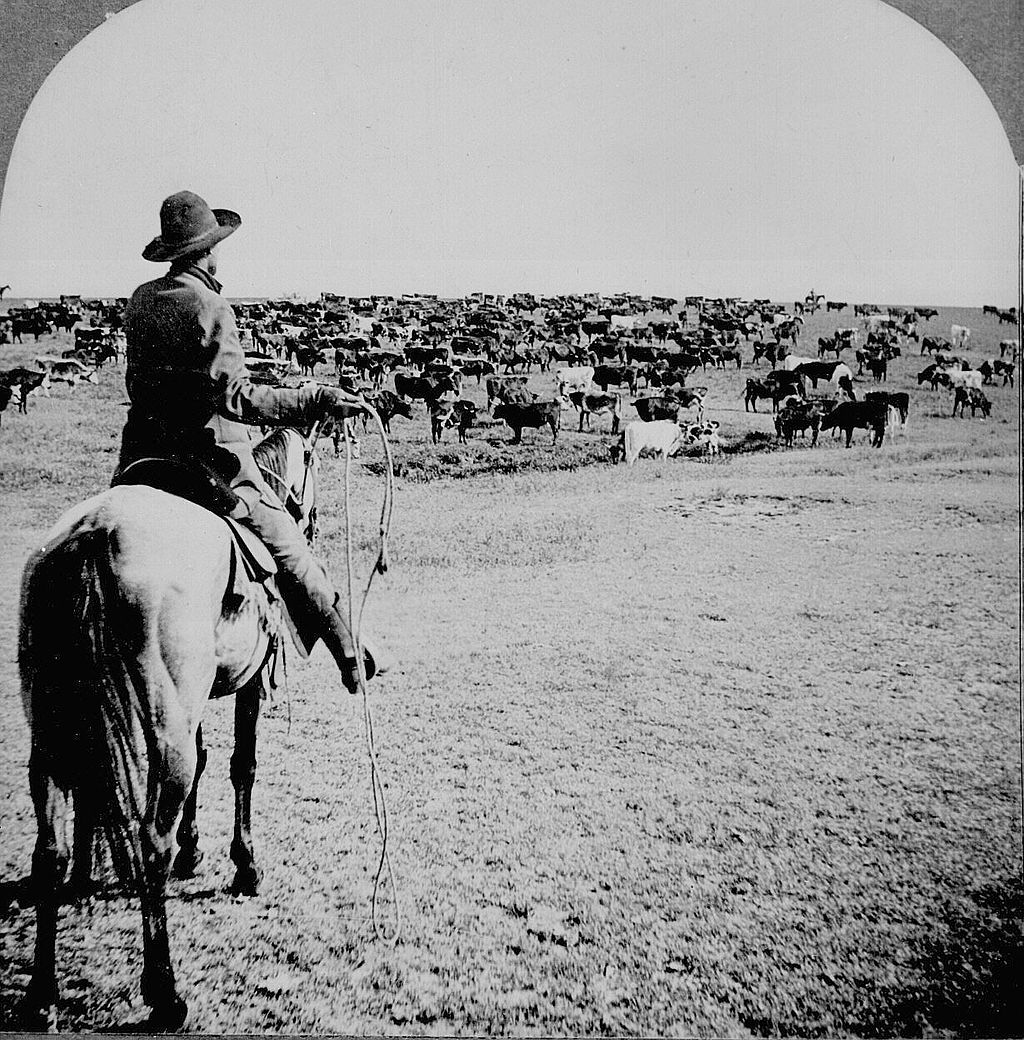 |
| A cowhand and his pony prepare to cut a steer from the herd. |
Then
one year—could it really have been 1886 the year of the Great Blizzard that
buried the high plains from Colorado all the way up into Canada in several feet of white death?—Blue and his rider were caught in the
high country near the Great Divide searching
for strays when the storm hit. As I recall
the tale, if they could not make it
to the safety of the home ranch, they would surely die.
Through
the raging storm with winds blowing icy pellets sideways, in
the dreaded white out the man lost all sense of direction. But Blue
knew. He kept plodding on breasting drifts up to his shoulders. Two, maybe three
days, the rider insensible and barely
clinging to the saddle. When the
storm finally broke they were in the
midst of a featureless plain far
from the Mountains.
 |
| Fredrick Remington's Drifting Before the Storm captured the brutality of the Blizzar of '86 on men, horses, and cattle. |
Finally
they encountered riders from the
home ranch not more than two or three miles away. When they reached Blue he gave up his burden to them—and lay down and died.
They
had to leave him where he lay. The body
quickly froze and was covered by
drifting snow.
But
as soon as it cleared that Spring the
cowboys rode out with their shovels and
buried Blue where he lay. But now there
was a new danger…the hungry coyotes that would find the shallow grave and dig it up. So they began to haul stones from a distant stream to build a cairn
over the grave to protect it the
same as they would do for any fallen
comrade.
A small pile a
couple of feet high
would have done the trick, but they
wanted something more—a monument. They built
the pile high and fenced the plot
with split rails. And on a tall board stuck into the ground they painted, “Erected to the memory of Old
Blue, the best old cow pony that ever pulled on a rope. By the cow punchers of
the 7 X L Outfit Rest in Peace.”
When
Mom finished telling the story to us she said, “That was a long, long time ago and some of the stones on Old Blue’s grave
have fallen. But we are going to help. We are going to bring new stones!”
She
let us each pick a stone and broke out the Tempera
paints and brushes. She had us each paint our rock and decorate it with the
brands we had designed for ourselves
the week before. Mine was the P-standing-A-T, the capital letter A standing
on the top of letters P and T with a leg on each.
At
our next Den meeting Mom loaded us into my Dad’s Wyoming Travel Commission station wagon and drove out on the giant Warren Ranch. We found the grave by a rutted dirt road not far from the Colorado line. It was a raw and blustery day, the sky
leaden, but the frozen ground clear of
snow. It must have been March.
The grave was there just like in the picture but the stones slipped along the ground on one side,
the sign had faded, and the rail
fencing long since replaced with wire.
One
by one we each solemnly stepped forward and placed our stones on the pile.
Mom took some pictures with
our old Kodak Brownie Box camera. We may have said a prayer for Old Blue, or sung
a song. Or not. We piled back into the station wagon and
drove back to town in an odd silence,
not a single boy trying to start a round of Ninety-nine Bottles of Beer on
the Wall.
And
that’s the story. Make of it what you
will. There may have been miracles involved.


