Showing posts with label James Joyce. Show all posts

Tuesday, June 16, 2026

On Bloomsday Remembering James Joyce, Nora Barnacle and Dublin


The banks of the River Liffey much as it would have looked on June 16, 1904.

Today is Bloomsday, a literary festival celebrated around the world in honor of Irish novelist James Joyce and his masterwork Ulysses.  It celebrates June 16, 1904, and the life and thoughts of Leopold Bloom, a Dublin Jew, his wife Molly and a host of other characters both fictional and real from 8 am that morning to the wee hours of the next day. 

He set his novel on that day because it was the occasion of the first date between Joyce and his future mistress and wife, Nora Barnacle

Joyce was born in Dublin in 1882, the eldest of ten children.  He was educated at Jesuit schools before enrolling at University College on Stephen’s Green where he studied modern languages at a time when Irish nationalism was spurring a renaissance of national culture and literature. 

Upon graduation he went to Paris as a medical student but spent most of his time drinking in cafés and writing.  He was called home for the terminal illness of his mother in 1904 during which time he met Nora. 


                                    Young Jim Joyce and Nora Barnacle in 1904--the would-be writer and his red haired future mistress and wife.

That August the first of his short stories was published in the Irish Homestead magazine.  In October he left Ireland with Nora in tow for a job as an English teacher with a Berlitz school in Pola, Croatia.  He would only return to Ireland for four short visits after that, and the last of those was in 1912.  The couple lived as expatriates. 

For ten years they lived in the city of Trieste where they immersed themselves in the local culture, spoke the local Italian dialect at home, and added two children, Georgio and Lucia, to the family.  Joyce contributed articles in Italian to the local press and lectured on literature. 

Joyce’s separation from Ireland crystallized his memories of it and fixed them perfectly in a set time in a way that might not have been possible had he been living there amid the inevitable changes. 

In 1914 Joyce had a breakthrough year as a writer.  American poet Ezra Pound assisted getting his first novel, the semi-autobiographical A Portrait of the Artist as a Young Man, published as a serial in Harriet Weaver’s London magazine, Egoist and his collection of short stories, begun in 1904, was published as The Dubliners.  These two works, plus a short play, The Exiles, introduced him as an important writer. 

World War I erupted the same year and disrupted Joyce’s life. Italian speaking Trieste was a southern outpost of the Austo-Hungarian Empire.  Suddenly Joyce and his family were “enemy aliens” in hostile territory apt to be arrested.  They escaped to Zurich, Switzerland where they waited out the war and lived in squalor and poverty, supported by handouts from friends and literary admirers. 

Joyce was working on the manuscript for Ulysses in which tied the events of Homer’s Odysseus to Bloom’s story and he incorporated people he knew from Trieste and Zurich into characters in his story.  Nora, particularly her distinct speech pattern and red hair, was the model for Molly Bloom. 


                                        Joyce as an expatriate language teacher and writer.

After the war Pound induced the family to move to Paris, where they stayed for twenty years.  Joyce became part of the international community of expatriate writers and intellectuals that included his some-time drinking companion, Ernest Hemmingway

In 1921 the serial publication of Ulysses in the American magazine The Little Review was stopped when the government charged the publisher with circulating pornography through the mails.  An English edition was scuttled before it could be issued when Harriet Weaver could not even find a printer willing to typeset the now notorious book.  In 1922 the American expatriate owner of the Shakespeare & Co. bookshop in Paris, Sylvia Beach finally published the novel, which was hailed as a masterpiece and denounced as lewd, unintelligible trash.  In 1932 an edition of the book was published by Joyce’s friend and associate Paul Léon, a Russian Jewish émigré living in Paris, under the imprint of Odyssey Press. 


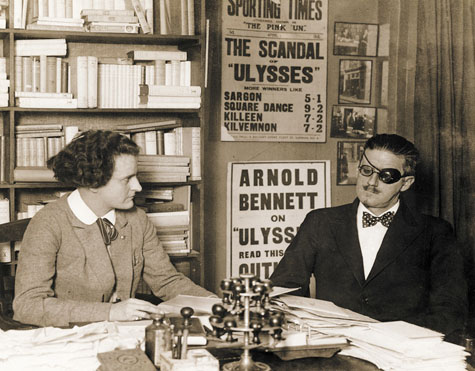
Joyce with the publisher of Ulysses, Sylvia Beach the American owner of Shakespeare & Company bookstore in Paris.

Despite a pirated 1929 edition, Ulysses remained banned in America until Bennett Cerf of Random House, a friend from Paris, arranged to have a French edition of the book seized by Customs authorities so he could challenge the earlier obscenity ruling.  In 1934 U.S. District Judge John M. Woolsey ruled that the novel was not pornography and thus not obscene. The decision was upheld on appeal the next year.   Random House published an authorized American edition the same year.

The case was the death knell of using postal regulations to censor literary works in the U.S.  Two years later British censorship restrictions fell and the Bodley Head edition was published. 

Each of these and subsequent editions have major differences in texts resulting from the lack of a single, unified original manuscript by Joyce, various textual editorial theories of the publishers and editors, and attempts to correct perceived “mistakes” in earlier editions. 

While all this publication drama swirled around him, Joyce worked on the manuscript of his most complex work, the enigmatic Finnegan’s Wake published in 1939. 

War once again disrupted his life as the Nazis closed in on Paris in 1940.  Joyce and family fled to the South of France before being given refuge once again in Zurich.  The faithful Paul Léon dared to return to Paris to rescue Joyce’s personal effects and manuscripts, which he put in hiding. 

Joyce, always frail and half blind, died in Zurich on January 31, 1941 at the age of 59. 


John Ryan, Anthony Cronin, Flann O’Brien aka Myles na Gopaleen, Patrick Kavanagh and Tom Joyce, on Sandymount Strand on Bloomsday 1954.

The first observation of Bloomsday was organized by the Irish writers Patrick Kavanagh and Flann O’Brien in 1954 on the 50th anniversary of the original date.  A tour of the various sites in the book was never completed when the participants partook too deeply at pubs in route.  Joyce would have approved.  Since then, Bloomsday events, usually involving extended readings from the book, have been spread around the globe.  Want to participate?  You can start from the beginning:


 STATELY, PLUMP BUCK MULLIGAN CAME FROM THE STAIRHEAD, bearing a bowl of lather on which a mirror and a razor lay crossed. A yellow dressing gown, ungirdled, was sustained gently-behind him by the mild morning air. He held the bowl aloft and intoned:


Introibo  ad altare Dei

.
Halted, he peered down the dark winding stairs and called up coarsely:

—Come up, Kinch. Come up, you fearful jesuit.


Solemnly he came forward and mounted the round gunrest. He faced about and blessed gravely thrice the tower, the surrounding country and the awaking mountains. Then, catching sight of Stephen Dedalus, he bent towards him and made rapid crosses in the air, gurgling in his throat and shaking his head. Stephen Dedalus, displeased and sleepy, leaned his arms on the top of the staircase and looked coldly at the shaking gurgling face that blessed him, equine in its length, and at the light untonsured hair, grained and hued like pale oak.

            Buck Mulligan peeped an instant under the mirror and then covered the bowl smartly.   


Dublin celebrates her wayward son.  Joyce at city center.

Friday, March 14, 2025

Sylvia Beach—Patron Saint of Bookstores and a Moveable Feast of Ex-Pats

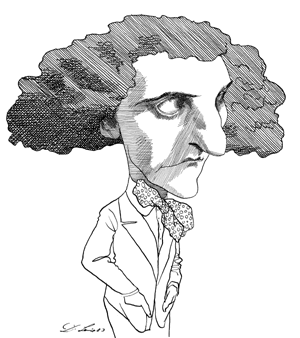
                                    A caricature of Sylvia Beach.

Sylvia Beach made her mark in wildly exciting post-World War I Paris when Americans and other English speaking expatriates flocked to the city for a taste of la vie boheme as a bookstore proprietor, center of social and intellectual life for a generation of writers, and almost accidentally as the publisher of the most notorious book of the 20th Century

She was born in a Presbyterian parsonage in Baltimore, Maryland on March 14, 1897. Her father, the Rev. Sylvester Beach, was the son of missionaries to China and the most recent in a long line of Calvinist clergy. The second of three daughters the very bright young girl was raised in every way to be a respectable American lady. And she might well have become one had not her father accepted an appointment as assistant minister at the American Church in Paris and director of the American Student Center in 1901. 

The young girl fell in love with the city and the culture. The family remained in the City of Lights until her father took up new duties as pastor of the First Presbyterian Church of Princeton, New Jersey in 1905. But she could not be kept home. She returned to Europe on several visits and even lived for two years in Spain. When World War I broke out, she volunteered with the International Red Cross and served in Eastern Europe with its Balkan Commission


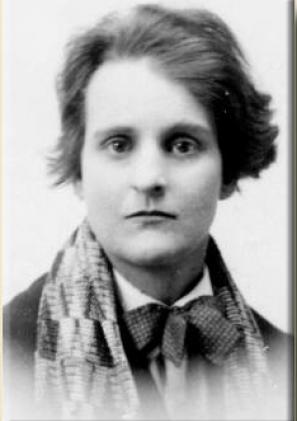
                                                     Beach as a young woman in Paris.

In 1917 as the cannons still roared on the Western Front, Beach returned to Paris to study French literature.Not long after she was naturally drawn to La Maison des Amis des Livres, the unusual bookstore opened by Adrienne Monnier at 7 rue de l’Odéon. At a time when most Paris book vendors were either rudimentary stalls peddling haphazardly whatever came their way or chaotic warehouses of old and used volumes, Monnier had carefully shelved her collection of the best and most forward contemporary work. The store doubled as a lending library—the first in France—so that impoverished writers could read and keep up with the latest trends in literature. She provided comfortable chairs, sofas, and writing desks encouraging visitors to sit and peruse the books—and engage in conversation. She provided coffee and a kind ear.  Since its opening in 1915 the shop had quickly become a home away from home for the most cutting edge writers in Paris. 

When Beach walked through the door, she fell in love. Not only with the shop, but with the proprietor. Monnier was 25 years old at the time—five years younger than the American—an earthy, sensuous woman in cropped hair, a peasant’s shirt, and long, already old fashion skirts. They took to each other immediately and spent their first afternoon together excitedly talking about books and writers for hours. They were soon lovers, life partners, and collaborators—a close relationship that endured until Monnier in ill health committed suicide in 1955. 

Through Monnier and the bookstore, Beach was soon introduced into a circle of the most innovative writers in Paris including André Gide, Paul Valéry, and Jules Romains all of whom staged readings at the shop. Beach was soon inspired to consider opening a branch of La Maison des Amis des Livres in New York City to introduce Americans to modern French literature in much the same way as the famous Armory Show had introduced impressionists, expressionists, cubists, and other modern artists. Her mother supplied her with $3,000 to finance the venture. But rents in New York proved exorbitant and, if the truth be known, Beach could not bear to part with Paris or Monnier. Instead, she took the money and opened her own shop in Paris to complement Monnier’s. Her’s would be an English language bookstore catering the growing expatriate communities filling Parisian cafés taking advantage of the favorable exchange rate for the Franc that made the city one of the most affordable big cities in the world. 

Beach celebrating her bookstore Shakespeare and Company.
 

The bookstore would also introduce French intellectuals to the best contemporary English language writing, especially American writing. Beach opened Shakespeare and Company in November of 1919 at 8 rue Dupuytren while she continued to live with Monnier in a fourth floor apartment over the French bookshop. The new store was a success and soon a busy expatriate center. In 1922 Beach was able to move the shop to larger quarters at 12 rue de l’Odéon directly across the street from La Maison. The street the two shops shared also housed a theater and two comfortable and inexpensive cafés making the small neighborhood a hub of Left Bank life. 

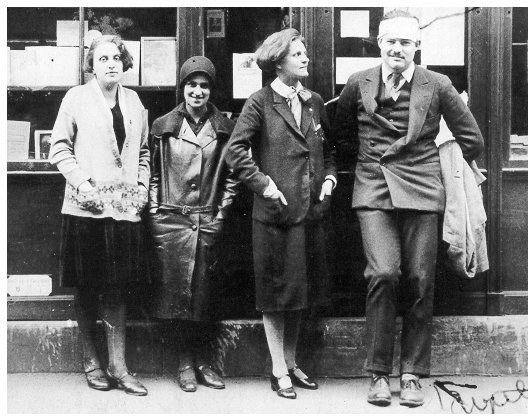
Beach with Adrienne Monnier, left,, and Ernest Hemingway at the store after he injured his head in an accident. 

Among those attracted to the store and its generous, engaging proprietor were Ezra Pound, Ernest Hemingway and his wife Hadley, James Joyce, Ford Maddox Ford, and F. Scott and Zelda Fitzgerald.  Hemmingway spoke for many writers in A Moveable Feast, his memoirs of his days in Paris when he wrote, “She was kind, cheerful and interested, and loved to make jokes and gossip. No one I knew was ever nicer to me.” Beach was convinced from the beginning that Hemmingway was an important writer and encouraged him in every way—including letting the impoverished writer borrow freely from her lending library without paying the customary membership fees. She also often fed him and loaned him money. 

French writer Andre Chamson summed up Beach’s importance in the emerging literary scene: 

Sylvia carried pollen like a bee. She cross-fertilized these writers. She did more to link England, the United States, Ireland, and France than four great ambassadors combined. It was not merely for the pleasure of friendship that Joyce, Hemingway, Bryher, and so many others often took the path to Shakespeare and Company in the heart of Paris, to meet there all these French writers. But nothing is more mysterious than such fertilizations through dialogue, reading, or simple contact. 

Hemmingway may have been a special friend and protégé, but of all the writers who hung out at her shop she cared most deeply about Joyce. The Irish writer had arrived in Paris from Zurich where he had passed the war years in 1920 at the invitation of Ezra Pound who wasted no time in introducing him to Beach. Beach in turn introduced him to Hemmingway and the pair became the most unlikely drinking buddies imaginable. 

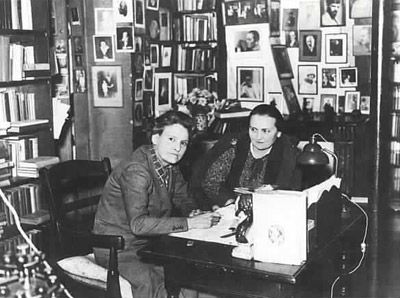
Beach with James Joyce in the shop decorated with posters celebrating the controversies about Ulysses. 

Joyce was struggling mightily to get his magnum opus, Ulysses. No English language publisher would touch the supposedly obscene work. Beach with backing by Monnier, decided to publish the book herself under a Shakespeare and Company imprint. It was published in 1922 to both acclaim and alarm. A second English edition by Harriet Shaw Weavers Egoist Press was published later that year but was seized by American postal authorities and 500 copies were burned by English customs agents. Beach kept new editions of her imprint in stock despite taking a beating first by bootleg copies in America, then by Joyce who finally got a legitimate publisher in the U.S. in 1932. 


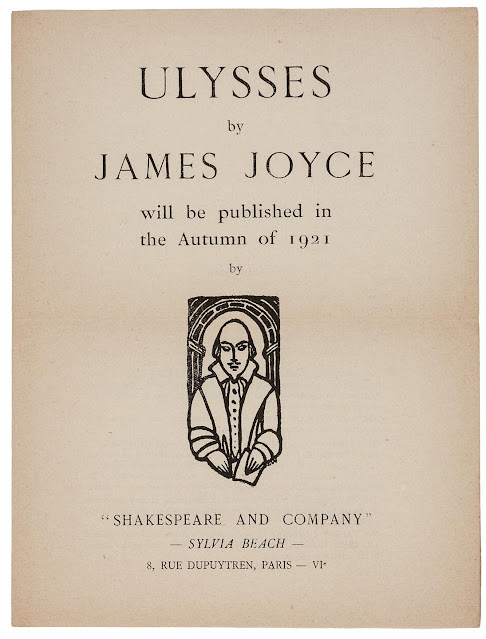
                                            A pre-publication announcement of  Ulysses.

The financial losses from the enterprise did not, however, disrupt her supportive relationship with Joyce, who Beach considered with Monnier and Paris to be one of the three great loves of her life. In 1925 Monnier took her own flyer as publisher with her literary magazine, le Navire d’Argent which published not only the most advanced French writers, but translations by English language writers like Hemingway. Beach collaborated closely in the effort. Together the produced the first translation into French of T. S. Eliots notoriously difficult The Love Song of J. Alfred Prufrock

Another issue of the magazine was devoted entirely of American writers including Walt Whitman, William Carlos Williams, and E. E. Cummings. Publication of the magazine had to be suspended after only a dozen issues because Monnier could not afford its losses anymore. 

The worldwide Depression, a dramatic shift in exchange rates which made Paris a much more expensive city, and rising political tensions caused many of her expatriate customers to flee the city in the 1930’s. The only Americans coming to Paris now were the wealthy on their Grand Tours or on shopping binges at the city’s fashion houses, people by in large uninterested in literature and disdainful of the Left Bank in general. By 1936 Beach was in despair that she might have to close the shop. 

 André Gide came to her rescue.  He organized a club of writers and called Friends of Shakespeare and Company. About 200 members paid 200 francs a year to attend special readings at Shakespeare and Company by the most famous literary figures of the day. The celebrated authors participating drew great attention to the shop—as well as more French customers. And, as tensions rose in Europe, a parade of American correspondents and writers trooped through the store that had famously nurtured Hemmingway. 

In 1937 Beach was thrilled to be made a Chevalier légion d’honneur (Knight of the Legion of Honor) by her beloved adopted homeland. She considered it the highest honor of her life and proudly wore the ribbon even after German occupation when it was dangerous to do so. Most Americans fled Paris in advance of the Nazis. Not Beach. It was her home and she refused to abandon it, for which her friends and neighbors greatly admired her. But she knew the risks she was taking and that eventually she would run afoul of the occupiers. Still, she kept her shop open even when she was visited with a stern warning for employing a Jewish shop girl. 

She knew her time was running short when the U.S. entered the war. In the summer of ’42 she refused to sell a book to a Nazi officer. She realized that her time was up. Summoning her army of friends, she stripped her store of its books, dismantled the bookshelves, and even painted over the sign in a single day. The books were laboriously hauled to an apartment where they were safe through the war. 

Beach with her long-time lover and business partner Monnier shortly before she had to close down Shakespeare and Company during the Nazi occupation of Paris.

In September Beach and 400 other American women were rounded up and interred at the monkey house of the Paris Zoo, of all places. She did not find the confinement particularly onerous as her many friends could visit and talk with her simply by paying admission to the zoo. But after being held there for more than a month she was moved to much harsher confinement in Vittel. She remained there until the following spring when influential friends in Paris finally secured her release. 

She returned to Monnier who had somehow kept her shop open. Together they endured the hardships of occupation as the Germans cut food and fuel supplies to the city. They were often literally starving. 

On August 23, 1944 Beach was roused by loud shouts from the street. She would recall: I heard a deep voice calling: 

“Sylvia!” And everybody in the street took up the cry of “Sylvia!” “It’s Hemingway! It’s Hemingway!” Cried Adrienne. I flew downstairs: we met in a crash. He picked me up and swung me around and kissed me while people on the streets and in the windows cheered. 

War correspondent Hemingway had somehow placed himself in command of a unit of the French Resistance and entered the city just ahead of the Allied armies. Before his famous “liberation” of the Bar of the Ritz Hotel, he had rushed to the rue de l’Odéon to personally liberate Beach. 

Beach was never able to reopen her store. She continued to help Monnier at her shop. But Monnier’s health was failing. Despondent, she committed suicide by an overdose of sleeping pills on May 25, 1955. Beach was devastated. 

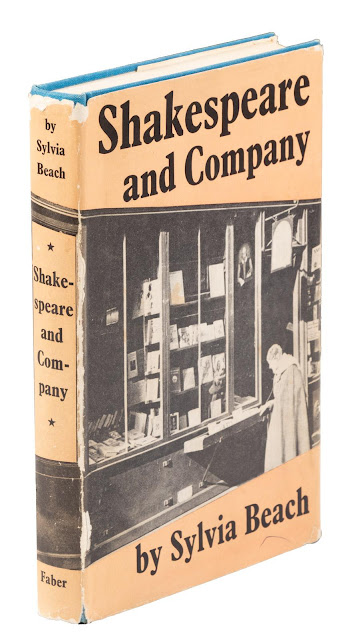
                                                                        Beach's memoirs of the bookstore and its denizens was published in the U.S. in 1960.
 

Perhaps to relive her life with Monnier, Beach wrote and published her memoirs of the heady days between the wars, Shakespeare and Company, in 1956 with profiles of all the many famous figures she had known. 

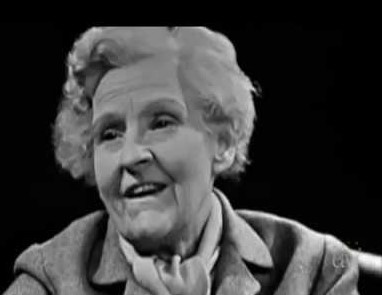
Late in life Beach recorded recollections of Hemingway and Joyce in interviews.

Beach remained in Paris until her death on October 5 1962. Her remains, however, were shipped home to be buried with her family at Princeton Cemetery in New Jersey. Princeton University became the repository of her papers. 

In 1964, after Sylvia Beach’s death and on the 400th anniversary of William Shakespeare’s birth, American ex-serviceman George Whitman renamed his English language Paris bookstore Shakespeare and Company. Whitman’s only child, Sylvia Whitman, named after Sylvia Beach, began helping her father with management of the bookstore in 2003. She now runs the store with her partner, David Delannet. It remains a monument to Jazz Age literati and a magnate for both aspiring writers and literary pilgrims.

Thursday, February 6, 2025

Once Upon a Real Ice Storm in Chicago—Murfin Memoir


This morning super slick and sometimes nearly invisible black ice coats sidewalks and roads.

Note—Chicago  and the Northern Boonies  were brushed by an ice storm for the first time this year.  Not as bad or thick as others in the past, but then a thin slick layer treacherous to pedestrians and motorists alike.  The ice brings to mind another ice storm about 45 years ago.

It was on an Easter weekend sometime in the early ‘70’s. Chicago was in the grips of a monumental ice storm.  A consultation on meteorological history and a table fixing the dates of that gypsy holiday would firmly fix the date.  1970 or ’71 would be my guess.

We slip-slided—literally since ice thickly coated the streets and sidewalks—over to my friend Penny Pixler’s place, a  second floor apartment somewhere south of Armitage Avenue between Old Town and Halstead.  The “we” were young Wobblies. The mission was to read aloud from James Joyce’s Finnegan’s Wake  while sipping Jameson’s Irish Whiskey and ingesting some very powerful purple acid.  We had a little grass as well, just to keep the edge off.

                                                            Most of us had this paperback edition of Finnegan's Wake published in 1968.

It was probably Kathleen Taylor’s idea.  She was our leading enthusiast for Irish culture.  She knew the great old songs, played a small, dark Martin guitar, could beat a bodhrán, and blow a penny whistle in a pinch.  Or it may have been Penny.  She was quite literary.  It may even have been my doing, hatched over too many beers at O’Rourke’s Pub on North Avenue where portraits of Joyce and other Irish scribes watched silently from the walls as newspaper types, writers, and a wannabes like me regaled each other with lies.

Maybe I was inspired for the gathering by the Old Town writer's hangout O'Roukes Pub.  Large portraits of Joyce and other Irish scribes hung above the wooden booths to right.
  
I am a little unclear as to all of the participants.  Young  Dean Nolan, recently arrived from Portland was there.  I can’t imagine that Leslie Fish and Mary Frohman—eccentric even in our circles—songwriter/singer/cat lady/lesbian/anarchists, missed the occasion.  I am sure there were others.

We settled into the living room mostly sprawled on the floor.  Kathy got us going with a rousing version of the old 19th Century Irish folk song—Joyce’s inspiration.  We passed the Jameson’s and a joint.  We started to read as the acid began its work.  I can’t remember if we tried to start at the beginning or someplace else.. 

Mourners grieve around the coffin in the cabin while others drink and share tales.  From an illustration for the song Finnegan's Wake. 

After a while, I remember watching the window in Penny’s living room as if it were a movie screen.  The window stretched nearly the width of the room, which itself took up the whole front of the second story of the frame two-flat. It was no more than two or three feet high.  Lying on the floor, I could see nothing but the three bare poplars, heavy with ice, swaying in the wind against a slate sky in time to the rhythms of Joycean nonsense.

Hours later we slid away in the dark, street lights shining reflections of the perfectly smooth ice.  I kept falling.  I was young then and could still bounce up.  Perhaps I was immortal.


Monday, March 14, 2022

Sylvia Beach—From Preachers Daughter to Patron Saint of Bookstores

A caricature of Sylvia Beach.

Sylvia Beach made her mark in wildly exciting post-World War I Paris when Americans and other English speaking expatriates flocked to the city for a taste of la vie boheme as a bookstore proprietor, center of social and intellectual life for a generation of writers, and almost accidentally as the publisher of the most notorious book of the 20th Century.

She was born in a Presbyterian parsonage in Baltimore, Maryland on March 14, 1897.  Her father, the Rev. Sylvester Beach, was the son of missionaries to China and the most recent in a long line of Calvinist clergy.  The second of three daughters the very bright young girl was raised in every way to be a respectable American lady.  And she might well have become one had not her father accepted an appointment as assistant minister at the American Church in Paris and director of the American Student Center in 1901.

The young girl fell in love with the city and the culture.  The family remained in the City of Lights until her father took up new duties as pastor of the First Presbyterian Church of Princeton, New Jersey in 1905.  But she could not be kept home.  She returned to Europe on several visits and even lived for two years in Spain.  When World War I broke out, she volunteered with the International Red Cross and served in Eastern Europe with its Balkan Commission.


                                Beach as a young woman in Paris.

In 1917 as the cannons still roared on the Western Front, Beach returned to Paris to study French literature.  Not long after she was naturally drawn to La Maison des Amis des Livres, the unusual bookstore opened by Adrienne Monnier a 7 rue de l’Odéon.  At a time when most Paris book venders were either rudimentary stalls peddling haphazardly whatever came their way or chaotic warehouses of old and used volumes, Monnier had carefully shelved her collection of the best and most forward contemporary work.  The store doubled as a lending library—the first in France—so that impoverished writers could read and keep up with the latest trends in literature.  She provided comfortable chairs, sofas, and writing desks encouraging visitors to sit and peruse the books—and engage in conversation.  She provided coffee and a kind ear.  Since its opening in 1915 it had quickly become a home away from home for the most cutting edge writers in Paris.

When Beach walked through the door, she fell in love.  Not only with the shop, but with the proprietor.  Monnier was 25 years old at the time—five years younger than the American—an earthy, sensuous woman in cropped hair, a peasant’s shirt, and long, already old fashion skirts.  They took to each other immediately and spent their first afternoon together excitedly talking about books and writers for hours.  They were soon lovers, life partners, and collaborators—a close relationship that endured until Monnier in ill health committed suicide in 1955.

Through Monnier and the bookstore, Beach was soon introduced into a circle of the most innovative writers in Paris including André Gide, Paul Valéry, and Jules Romains all of whom staged readings at the shop.

Beach was soon inspired to consider opening a branch of La Maison des Amis des Livres in New York City to introduce Americans to modern French literature in much the same way as the famous Armory Show had introduced impressionists, expressionists, cubists, and other modern artists.  Her mother supplied her with $3,000 to finance the venture.  But rents in New York proved exorbitant and, if the truth be known, Beach could not bear to part with Paris or Monnier.

Instead, she took the money and opened her own shop in Paris to complement Monnier’s.  Her’s would be an English language bookstore catering the growing expatriate communities filling Parisian cafés taking advantage of the favorable exchange rate for the Franc that made the city one of the most affordable big cities in the world.  The bookstore would also introduce French intellectuals to the best contemporary English language writing, especially American writing.


Beach celebrating her bookstore Shakespeare and Company.

Beach opened Shakespeare and Company in November of 1919 at 8 rue Dupuytren while she continued to live with Monnier in a fourth floor apartment over the French bookshop.  The new store was a success and soon a busy expatriate center.  In 1922 Beach was able to move the shop to larger quarters at 12 rue de l’Odéon directly across the street from La Maison.

The street the two shops shared also housed a theater and two comfortable and inexpensive cafés making the small neighborhood a hub of Left Bank life.  Among those attracted to the store and its generous, engaging proprietor were Ezra Pound, Ernest Hemingway and his wife Hadley, James Joyce, Ford Maddox Ford, and F. Scott and Zelda Fitzgerald.


Beach with Adrienne Monnier, left,, and Ernest Hemingway at the store after he injured his head in an accident.

Hemmingway spoke for many writers in A Moveable Feast, his memoirs of his days in Paris when he wrote, “She was kind, cheerful and interested, and loved to make jokes and gossip. No one I knew was ever nicer to me.”  Beach was convinced from the beginning that Hemmingway was an important writer and encouraged him in every way—including letting the impoverished writer borrow freely from her lending library without paying the customary membership fees.  She also often fed him and loaned him money.  

French writer Andre Chamson summed up Beach’s importance in the emerging literary scene:


Sylvia carried pollen like a bee. She cross-fertilized these writers. She did more to link England, the United States, Ireland, and France than four great ambassadors combined. It was not merely for the pleasure of friendship that Joyce, Hemingway, Bryher, and so many others often took the path to Shakespeare and Company in the heart of Paris, to meet there all these French writers. But nothing is more mysterious than such fertilizations through dialogue, reading, or simple contact.

Hemmingway may have been a special friend and protégé, but of all the writers who hung out at her shop she cared most deeply about Joyce.  The Irish writer had arrived in Paris from Zurich where he had passed the war years in 1920 at the invitation of Ezra Pound who wasted no time in introducing him to Beach.  Beach in turn introduced him to Hemmingway and the pair became the most unlikely drinking buddies imaginable.

Beach with James Joyce in the shop decorated with posters celebrating the controversies about Ulysses.

Joyce was struggling mightily to get his magnum opus, Ulysses.  No English language publisher would touch the supposedly obscene work Beach with backing by Monnier, decided to publish the book herself under a Shakespeare and Company imprint.  It was published in 1922 to both acclaim and alarm.  A second English edition by Harriet Shaw Weavers Egoist Press was published later that year but was seized by American postal authorities and 500 copies were burned by English customs agents.  Beach kept new editions of her imprint in stock despite taking a beating first by bootleg copies in America, then by Joyce who finally got a legitimate publisher in the U.S. in 1932.  The financial losses from the enterprise, did not, however, disrupt her supportive relationship with Joyce, who Beach considered with Monnier and Paris to be one of the three great loves of her life.


A pre-publication announcement of  Ulysses.

In 1925 Monnier took her own flyer as publisher with her literary magazine, le Navire d’Argent which published not only the most advanced French writers, but translations by English language writers like Hemingway.  Beach collaborated closely in the effort.  Together the produced the first translation into French of T. S. Eliot’s notoriously difficult The Love Song of J. Alfred Prufrock.  Another issue of the magazine was devoted entirely of American writers including Walt Whitman, William Carlos Williams, and E. E. Cummings.  Publication of the magazine had to be suspended after only a dozen issues because Monnier could not afford its losses anymore.

The worldwide Depression, a dramatic shift in exchange rates which made Paris a much more expensive city, and rising political tensions caused many of her expatriate customers to flee the city in the 1930’s.  The only Americans coming to Paris now were the wealthy on their Grand Tours or on shopping binges at the city’s fashion houses, people by in large uninterested in literature and disdainful of the Left Bank in general.  By 1936 Beach was in despair that she might have to close the shop.

André Gide came to her rescue.  He organized a club of writers and called Friends of Shakespeare and Company. About 200 members paid 200 francs a year to attend special readings at Shakespeare and Company by the most famous literary figures of the day.  The celebrated authors participating drew great attention to the shop—as well as more French customers.  And, as tensions rose in Europe, a parade of American correspondents and writers trooped through the store that had famously nurtured Hemmingway.

In 1937 Beach was thrilled to be made a Chevalier légion d’honneur (Knight of the Legion of Honor) by her beloved adopted homeland.  She considered it the highest honor of her life and proudly wore the ribbon even after German occupation when it was dangerous to do so.

Most Americans fled Paris in advance of the Nazis.  Not Beach.  It was her home and she refused to abandon it, for which her friends and neighbors greatly admired her.  But she knew the risks she was taking and that eventually she would run afoul of the occupiers.  Still, she kept her shop open even when she was visited with a stern warning for employing a Jewish shop girl.

Beach with her long-time lover and business partner Monnier shortly before she had to close down Shakespeare and Company during the Nazi occupation of Paris. 

She knew her time was running short when the U.S. entered the war.  In the summer of ’42 she refused to sell a book to a Nazi officer.  She realized that her time was up.  Summoning her army of friends, she stripped her store of its books, dismantled the bookshelves, and even painted over the sign in a single day.  The books were laboriously hauled to an apartment where they were safe through the war.

In September Beach and 400 other American women were rounded up and interred at the monkey house of the Paris Zoo, of all places.  She did not find the confinement particularly onerous as her many friends could visit and talk with her simply by paying admission to the zoo.  But after being held there for more than a month she was moved to much harsher confinement in Vittel.  She remained there until the following spring when influential friends in Paris finally secured her release.

She returned to Monnier who had somehow kept her shop open.  Together they endured the hardships of occupation as the Germans cut food and fuel supplies to the city.  They were often literally starving.

On August 23, 1944 Beach was roused by loud shouts from the street.  She would recall:


I heard a deep voice calling: “Sylvia!” And everybody in the street took up the cry of “Sylvia!” “It’s Hemingway!  It’s Hemingway!” Cried Adrienne.  I flew downstairs: we met in a crash. He picked me up and swung me around and kissed me while people on the streets and in the windows cheered.

War correspondent Hemingway had somehow placed himself in command of a unit of the French Resistance and entered the city just ahead of the Allied armies.  Before his famous “liberation” of the Bar of the Ritz Hotel, he had rushed to the rue de l’Odéon to personally liberate Beach.

Beach was never able to reopen her store.  She continued to help Monnier at her shop.  But Monnier’s health was failing.  Despondent, she committed suicide by an overdose of sleeping pills on May 25, 1955.  Beach was devastated.

Beach's memoirs of the bookstore and its denizens was published in the U.S. in 1960.

Perhaps to relive her life with Monnier, Beach wrote and published her memoirs of the heady days between the wars, Shakespeare and Company, in 1956 with profiles of all of the many famous figures she had known.

Late in life Beach recorded recollections of Hemmingway and Joyce in interviews.

Beach remained in Paris until her death on October 5 1962.  Her remains, however, were shipped home to be buried with her family at Princeton Cemetery in New Jersey.  Princeton University became the repository of her papers.


Wednesday, June 16, 2021

It’s Bloomsday—James Joyce and Dublin of the Imagination

The banks of the River Liffey much as it would have looked on June 16, 1904.

Today is Bloomsday, a literary festival celebrated around the world in honor of Irish novelist James Joyce and his masterwork Ulysses.  It celebrates June 16, 1904, and the life and thoughts of Leopold Bloom, a Dublin Jew, his wife Molly and a host of other characters both fictional and real from 8 am that morning to the wee hours of the next day

He set his novel on that day because it was the occasion of the first date between Joyce and his future mistress and wife, Nora Barnacle

Joyce was born in Dublin in 1882, the eldest of ten children.  He was educated at Jesuit schools before enrolling at University College on Stephen’s Green where he studied modern languages at a time when Irish nationalism was spurring a renaissance of national culture and literature

Upon graduation he went to Paris as a medical student but spent most of his time drinking in cafés and writing.  He was called home for the terminal illness of his mother in 1904 during which time he met Nora. 

Young Jim Joyce and Nora Barnacle in 1904--the would-be writer and his red haired future mistress and wife.

That August the first of his short stories was published in the Irish Homestead magazine.  In October he left Ireland with Nora in tow for a job as an English teacher with a Berlitz school in Pola, Croatia.  He would only return to Ireland for four short visits after that, and the last of those was in 1912.  The couple lived as expatriates

For ten years they lived in the city of Trieste where they immersed themselves in the local culture, spoke the local Italian dialect at home, and added two children, Georgio and Lucia, to the family.  Joyce contributed articles in Italian to the local press and lectured on literature

Joyce’s separation from Ireland crystallized his memories of it and fixed them perfectly in a set time in a way that might not have been possible had he been living there amid the inevitable changes

In 1914 Joyce had a breakthrough year as a writer.  American poet Ezra Pound assisted getting his first novel, the semi-autobiographical A Portrait of the Artist as a Young Man, published as a serial in Harriet Weaver’s London magazine, Egoist and his collection of short stories, begun in 1904, was published as The Dubliners.  These two works, plus a short play, The Exiles, introduced him as an important writer

World War I erupted the same year and disrupted Joyce’s life. Italian speaking Trieste was a southern outpost of the Austo-Hungarian Empire.  Suddenly Joyce and his family were “enemy aliens” in hostile territory apt to be arrested.  They escaped to Zurich, Switzerland where they waited out the war and lived in squalor and poverty, supported by handouts from friends and literary admirers

Joyce was working on the manuscript for Ulysses in which tied the events of Homer’s Odysseus to Bloom’s story and he incorporated people he knew from Trieste and Zurich into characters in his story.  Nora, particularly her distinct speech pattern and red hair, was the model for Molly Bloom. 

Joyce as an expatriate language teacher and writer.

After the war Pound induced the family to move to Paris, where they stayed for twenty years.  Joyce became part of the international community of expatriate writers and intellectuals that included his some-time drinking companion, Ernest Hemmingway

In 1921 the serial publication of Ulysses in the American magazine The Little Review was stopped when the government charged the publisher with circulating pornography through the mails.  An English edition was scuttled before it could be issued when Harriet Weaver could not even find a printer willing to typeset the now notorious book.  In 1922 the American expatriate owner of the Shakespeare & Co. bookshop in Paris, Sylvia Beach finally published the novel, which was hailed as a masterpiece and denounced as lewd, unintelligible trash.  In 1932 an edition of the book was published by Joyce’s friend and associate Paul Léon, a Russian Jewish émigré living in Paris, under the imprint of Odyssey Press. 

Joyce with the publisher of Ulysses, Sylvia Beach the American owner of Shakespeare & Company bookstore in Paris.

Despite a pirated 1929 edition, Ulysses remained banned in America until Benet Cerf of Random House, a friend from Paris, arranged to have a French edition of the book seized by Customs authorities so he could challenge the earlier obscenity ruling.  In 1934 U.S. District Judge John M. Woolsey ruled that the novel was not pornography and thus not obscene. The decision was upheld on appeal the next year.   Random House published an authorized American edition the same year.

The case was the death knell of using postal regulations to censor literary works in the U.S.  Two years later British censorship restrictions fell and the Bodley Head edition was published. 

Each of these and subsequent editions have major differences in texts resulting from the lack of a single, unified original manuscript by Joyce, various textual editorial theories of the publishers and editors, and attempts to correct perceived mistakes” in earlier editions. 

While all this publication drama swirled around him, Joyce worked on the manuscript of his most complex work, the enigmatic Finnegan’s Wake published in 1939. 

War once again disrupted his life as the Nazis closed in on Paris in 1940.  Joyce and family fled to the South of France before being given refuge once again in Zurich.  The faithful Paul Léon dared to return to Paris to rescue Joyce’s personal effects and manuscripts, which he put in hiding

Joyce, always frail and half blind, died in Zurich on January 31, 1941 at the age of 59. 

John Ryan, Anthony Cronin, Flann O’Brien aka Myles na Gopaleen, Patrick Kavanagh and Tom Joyce, on Sandymount Strand on Bloomsday 1954.

The first observation of Bloomsday was organized by the Irish writers Patrick Kavanagh and Flann O’Brien in 1954 on the 50th anniversary of the original date.  A tour of the various sites in the book was never completed when the participants partook too deeply at pubs in route.  Joyce would have approved.  Since then, Bloomsday events, usually involving extended readings from the book, have been spread around the globe.  Want to participate?  You can start from the beginning:


 STATELY, PLUMP BUCK MULLIGAN CAME FROM THE STAIRHEAD, bearing a bowl of lather on which a mirror and a razor lay crossed. A yellow dressing gown, ungirdled, was sustained gently-behind him by the mild morning air. He held the bowl aloft and intoned:


Introibo  ad altare Dei

.
Halted, he peered down the dark winding stairs and called up coarsely:

—Come up, Kinch. Come up, you fearful jesuit.


Solemnly he came forward and mounted the round gunrest. He faced about and blessed gravely thrice the tower, the surrounding country and the awaking mountains. Then, catching sight of Stephen Dedalus, he bent towards him and made rapid crosses in the air, gurgling in his throat and shaking his head. Stephen Dedalus, displeased and sleepy, leaned his arms on the top of the staircase and looked coldly at the shaking gurgling face that blessed him, equine in its length, and at the light untonsured hair, grained and hued like pale oak.

            Buck Mulligan peeped an instant under the mirror and then covered the bowl smartly.   

Dublin celebrates her wayward son.  Joyce at city center.