Showing posts with label James Mott. Show all posts

Sunday, January 7, 2018

The Essential Woman—Lucretia Mott—Part II, Seneca Falls

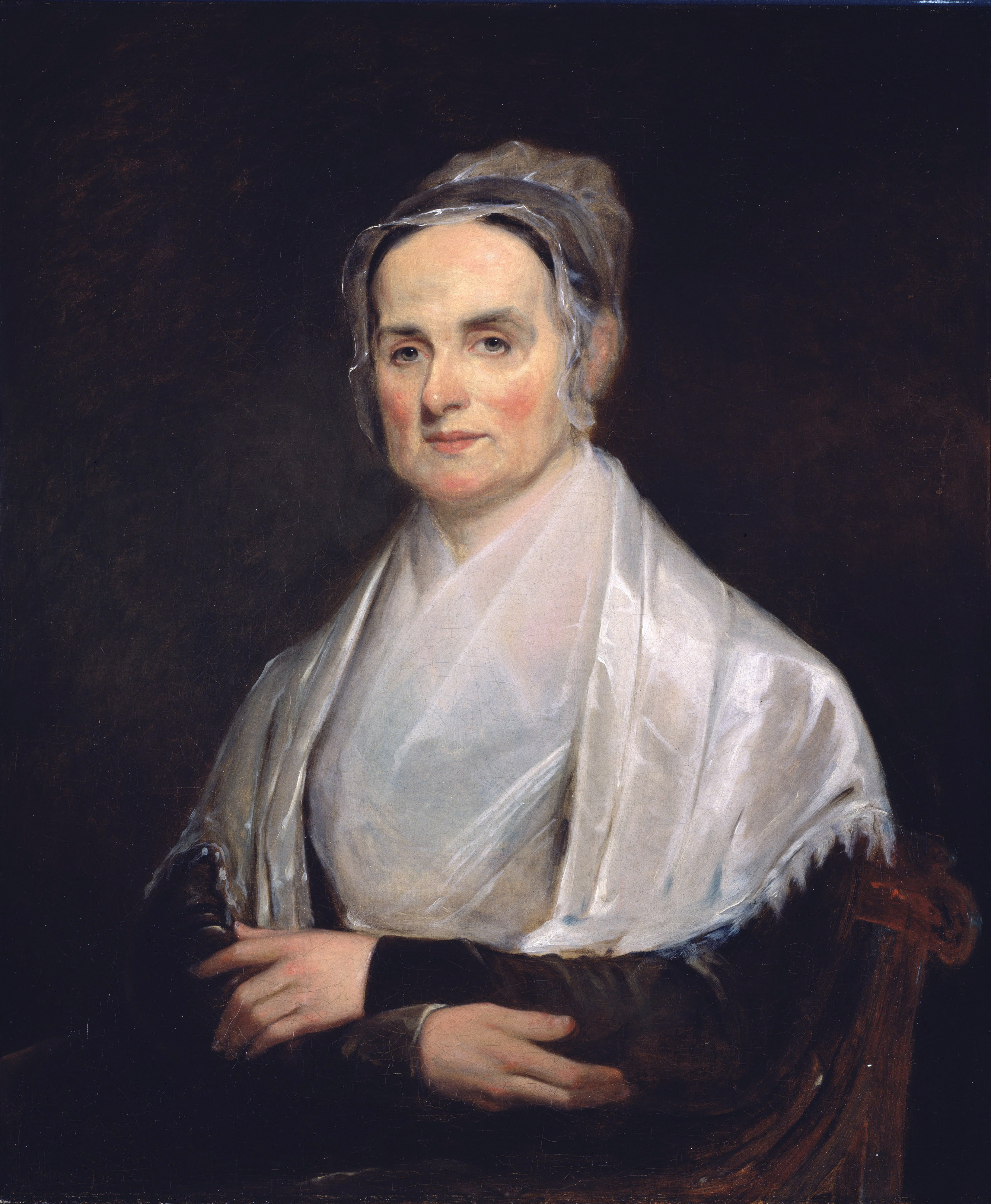
Lucretia Mott in 1841 by Joseph Kyle hangs in the Smithsonian National Portrait Gallery.


In the summer of 1848 Lucretia Mott and her husband John spent considerable time in Upstate New York.  In mid-June they attended the convention of the tiny abolitionist Liberty Party in Buffalo where Elizabeth Caddy Stanton’s Cousin Gerrit Smith was nominated for President and a platform plank in support of “universal suffrage in its broadest sense, females as well as males being entitled to voted” was adopted.  Despite her personal distaste for electoral politics Mott was nominated to be Smith’s vice-presidential running mate and received five votes placing fourth.  That made her the first woman every placed in nomination for national political office.
On the same busy trip the couple crossed the border into Canada to check on the status and wellbeing of escaped slaves who had made it there via the Underground Railroad.  Then back in New York they visited the Seneca Nation Cattaraugus Reservation to investigate reports of white encroachment and abuse. She preached to prisoners at the Auburn State Penitentiary as well, a typical of her wide reform interests.
 But perhaps most personally important was the opportunity to join about 200 Hicksite Quakers, from Seneca County including Mary Ann M’Clintock and her husband who formed an even more radical Quaker group, known as the Yearly Meeting of Congregational Friends, or Progressive Friends. The Progressive Friends intended to further elevate the influence of women in affairs of the faith. They introduced joint business meetings of men and women, giving women an equal voice.  Mott was supportive and spoke at the meeting although she retained her personal affiliation with the larger Hicksite movement.
Another Quaker activist Mary Ann M'Clintock, her husband, adult daughters, and close freind Jane Hunt were all key figures in the Seneca Falls Women's Convention and their critical contributions are often overlooked
On July 11, shortly after that meeting, Mary Ann M’Clintock invited Mott, her younger sister Martha Coffin Wright who was several months pregnant, and old friend Elisabeth Cady Stanton for a meeting over tea at the home of another leader of the Progressive Friends, Jane Hunt in Waterloo, a short distance from Seneca Falls.  Stanton vented her long-standing frustration with the status of women in society and the convention quickly turned to the old dream of a women’s convention.  They quickly agreed to take advantage of Mott’s visit and fame to call a meeting, but they had to act quickly because of her upcoming busy schedule of speaking engagements.
Stanton, with the assistance of Mott who knew about publicity, drew up a notice to be placed in the Seneca County Courier: “WOMAN'S RIGHTS CONVENTION—A Convention to discuss the social, civil, and religious condition and rights of woman.”  The meeting would be held on July 19 and 20 at the Wesleyan Methodist Chapel in Seneca Falls with Mott as the featured speaker.  The announcement said that only women would be admitted on the first day, but men would be allowed on the second when there would be a vote on a resolution.
The notice was quickly picked up by other newspapers across Up State New York, a hot bed of abolitionism and reform schemes.  More importantly it was reprinted in Horace Greely’s influential liberal Whig paper the New-York Tribune which brought it to national attention and was heartily endorsed by Fredrick Douglass in his widely read abolitionist paper The North Star.  Interest in the gathering grew quickly because of it complete novelty.
Elizabeth Cady Stanton and two of her sons in 1848, the year of the convention.  The only non-Quaker in the organiing group, she was thce driving force behiind the Declaration of Principles and the resoluteions, including the one calling for voting rights for women.  She had been close to Mott since the 1840 World Anti-Slavery Convention in London in 1840.  Mott continued as her supporter, confidant, and  mentor for decades.
While Mott and her husband had to leave Seneca County to attend to other New York engagements, Stanton and M’Clintock and her two adult daughters met to draw up a list of demands which Stanton took home to whip-up into a resolution.  Their points included the rights of women to own and maintain their own property in marriage and equality in the family, education, jobs, religion, and morals.  On her own Stanton added language call for the extension of voting suffrage to women—sure to be the most controversial item opposed by many of even the most liberal men, including Stanton’s husband who arranged to be elsewhere during the convention  for fear of damaging a hoped for political career.  She framed her resolutions with a Declaration of Sentiment echoing the ringing language of the Declaration of Independence.
As the date drew near, Mott wrote to Stanton to say that her husband too would be unable to attend because of illness, but that she would be there in the company of her sister Martha and would give the keynote address.
At the appointed hour, an unexpectedly large crowd found itself locked out of the Hall simply because in the rush of all of the arrangements Stanton had forgotten to secure the key to the building from the sexton.  No problem, a small boy was boosted through and open window to unlock the doors.  About 40 men were in the crowd and expected to be admitted despite the terms of the announcement.  Many were important abolitionists.  They were seated but asked to refrain from speaking on the first day.
That morning the convention organized itself with 26 year old Mary Ann M’Clintock, Jr., one of the youngest women present, elected secretary of the proceedings.  Both Mott and Stanton spoke briefly framing the mission of the convention, and Stanton gave a first reading to her draft of the Declaration and resolutions.  There was general agreement among those in attendance on most of the resolutions but many were uneasy about the 11th point—women’s suffrage.  After extended discussion during which the resolutions were amended and fine-tuned, the measure was tabled until the next day when the men could participate in the vote.
In the scorching 90̊ heat of the afternoon Stanton spoke again, and Mott delivered her major address.  She also read a humorous article by her sister Martha about why, after an overworked mother completed the myriad daily tasks that were required of her but not of her husband, she was the one upon whom written advice was “so lavishly bestowed.”
That evening the hall was thrown open for a meeting for the general public.  Mott spoke extemporaneously framing the cause of women’s rights in the light of other reform struggles including temperance and abolitionism to a packed audience.  The editor of the National Reformer based in Auburn, New York described the address as “one of the most eloquent, logical, and philosophical discourses which we ever listened to.”
The next morning even more men were in attendance, including James Mott who had recovered enough to come to support his wife.  He was elected to chair the morning session since it was considered unseemly for a woman to preside in mixed company.
The meeting was so crowded that late arriving Amelia Bloomer, one of the best know temperance advocates in the country, had to be seated in the upstairs gallery.  New York State Assemblyman Ansel Bascom boasted about sponsoring a new law that allowed women to retain property in their own right in marriage.  Frederick Douglas was among those who spoke in favor of the Declaration.  The Declaration was adopted unanimously although some of the men withdrew from the meeting first to drown their sorrows in a conveniently located saloon next door.
Elizabeth Caddy Stanton re-reads  her resolutions on the second day of the  Convention as James Mott presides as Chair and Lucretia next to him has a place of honor next to him. Also on the dias are Mary  Ann and Thomas M'Clintock, left, and Jane Hunt, right.  Mary Ann M'Clintock, Jr, one of the youngest delegates can be seen taking notes in her role as secretary just below the podium.  The younger Ann M'Clintock was the only delegate to survive to cast a vote after the ratification of the 19th Amendment in 1919

Men and women were asked to sign the document in separate sections.  Not everyone in attendance, including those who had not formally voted against it, signed.  Among those who did not were Bascom and Bloomer.  But of nearly 300 in the hall for the meeting, 68 women and 32 men were willing to go on record by signing their names.
That afternoon separate votes were taken on the 11 resolutions drawn up by Stanton.  All but #9 which included the suffrage language “Resolved, that it is the duty of the women of this country to secure to themselves their sacred right to the elective franchise” passed unanimously.  But there was strong opposition to suffrage from a minority.  Even the Motts told Stanton, “Lizzie, I fear thee will make us look ridiculous!”  But Stanton mounted a vigorous defense of her position and Frederick Douglas spoke passionately in support—saying that he could not accept the right to vote himself as a Black man if woman could not also claim that right that the world would be a better place if women were involved in the political sphere. “In this denial of the right to participate in government, not merely the degradation of woman and the perpetuation of a great injustice happens, but the maiming and repudiation of one-half of the moral and intellectual power of the government of the world.”  Douglas’s eloquence and towering reputation swayed many who had been wavering.  The resolution passed by a large margin and Mott signaled her support by adding closing remarks to the session.
The Convention closed with an evening session chaired by Mary Anne M’Cllintock’s husband Thomas.  Mott and the M’Clintock family played leading rolls in the event capstone.  After another vigorous defense of the Declaration and Resolution by Stanton against the slurs of the Lords of Creation and an approval of the minutes, Thomas M’Clintock read from sections of Blackstone’s Law illustrating the second class status of women under the law, material that had been researched by Stanton’s lawyer husband. 
Then Mott stood to offer a late resolution—“ Resolved, That the speedy success of our cause depends upon the zealous and untiring efforts of both men and women, for the overthrow of the monopoly of the pulpit, and for the securing to woman an equal participation with men in the various trades, professions and commerce.”  In its way the resolution was every bit as shocking and revolutionary as Stanton’s suffrage one.  It was a direct challenge to the huge power and influence of the Protestant Clergy which was deeply conservative and reactionary on social matters.  The resolution passed but in the days and weeks after the Convention it drew more angry denunciations from the pulpit than women’s voting rights. Mott had gored a powerful ox but in the process may have protected Stanton from grater wrath directed toward her.
Mary Ann M'Clintock, Jr. spoke briefly, calling upon woman to arouse from her lethargy and be true to herself and her God. Douglass again rose to speak in support of the cause of woman.
Then Mott offered a final one hour off-the-cuff oration in which she demurred of the credit for the proceedings despite her fame.  She lauded Stanton and M'Clintock as the “chief planners and architects” of the proceedings.  After a publicity committee consisting of Stanton, the M’Clintock women and other as elected to spread the message of the proceedings.
The committee did its work well and the events at Seneca Falls were soon the talk of the nation.  Attacks on the presumptuous women and their dangerous ideas that seemed to threaten the foundations of society, the family and the Church were commonplace. But it also inspired many women and drove them to action.  Similar local meetings were called in Boston Philadelphia and elsewhere.
The first truly National Women’s Rights Convention as called at  Worcester, Massachusetts  on October 24, 1850 with over 1,000 delegates from 11 states.  Mott, Stanton, Susan B. Anthony, Lucy Stone, and Abby Kelley, all signed the call to convene, as did such leading male reformers as Ralph Waldo Emerson, Bronson Alcott, and William Lloyd Garrison. 

Brinkley Hall on Main Street in Worcester, Massachusetts  hosted the first two National Women's Suffrage conventions in 1850 and '51.
National Conventions were held almost annually up to the Civil War and Mott played a leading role as an organizer or speaker at all of them.  She continued to work closely with Stanton and with Susan B. Anthony, a Quaker like herself, who became Stanton’s great collaborator.
Meanwhile in addition to her advocacy for women, Mott remained an important figure in the abolitionist movement and supported many reform causes.
Tomorrow—The Final Chapters.


Saturday, January 6, 2018

The Essential Woman—Lucretia Mott—Part I, The Quaker

There are no known images of Lucrecia Mott as a young woman this deguerotype by Granger of her in middle age is about the earliest.  Note the Quaker plain dress which she maintained all of her life.


Note:  Note this is an example of one of the fascinating topics that take on a life of their own when I tackle them.  What started out as a brief item on Lucretia Mott’s January 3 birthday grew and I did not post for while I worked on it.  I decided to put it up starting today in three parts.  I think you will find her as interesting as I did.
She was the essential woman to birth of American Feminism as she was to a raft of social justice crusades including but not limited to abolition, peace, prison reform, and religious liberty.  In 1848 Lucretia Mott was the most famous female orator—and almost the only one.  When she was invited by the remarkable group of young women in Seneca Falls, New York to speak in the Upstate Finger Lakes town she was already 55 years old, a generation senior to her hosts who included an ally from the anti-slavery movement, Elizabeth Caddy Stanton.  Together, virtually on the spur of the moment, the women decided to take advantage of Mott’s fame by calling what became the Seneca Falls Convention, the first American Women’s Rights Convention.  She helped draft Stanton’s wildly radical Declaration of Sentiments which she signed despite misgivings about political action in a system corrupted by slavery,  greed and moral compromise.  In the end she recognized that women’s “right to the elective franchise however…should be yielded to her, whether she exercises that right or not.”  And that was just part of her story
She was born Lucretia Coffin on January 3, 1793, in Nantucket, Massachusetts to Peter Coffin and the former Anna Folgier.   Through her mother she was a descendent of Peter Folgier, the Baptist poet and translator of native languages who became the surveyor of Nantucket Island, a joint proprietor of the land, and founder of the village.  Folgier had to avoid contact with the Puritans on the mainland or risk trial for heresy but made Nantucket a place of refuge for dissenters and of amity with the natives.  Folgier’s daughter became Benjamin Franklin’s mother and thus Lucretia was a cousin of the Founder and polymath.
Even when Lucretia was growing up the island and her family remained beacons of free inquiry and exceptional social equality.  Her parents recognized their daughter’s sharp mind and keen sense of justice and sent her to one of the few places in the infant United States where a young woman could get a quality formal education.  At age 13 she began studies at the Nine Partners School, located in Dutchess County, New York, which was maintained by the Society of Friends—the Quakers to which she became a devoted member.  Upon graduation she joined the faculty as a teaching assistant.
The Nine Partners school wittin a decade of Mots's time there.
While working at the school, Lucretia was moved to her first protest when she discovered that male instructors and aids were paid more than women for the identical work.  She was not so sheltered that that she did not realize this was commonly the case in the rare instances when women could find any paid work outside the home, but she was deeply shocked that the allegedly egalitarian Quakers would practice such discrimination.
She soon left the school but instead returning to New England Lucretia moved to Philadelphia, the epicenter of Quakerism in the United States.  So did a young former male teacher from Nine Partners, James Mott, perhaps the very young man who had alerted to the pay imbalance at the school.  Both were passionate about social justice issues, especially slavery.  They married in 1811 when Lucretia was 18 years old.  James Mott remained a devoted and supportive husband through all of his wife’s ground breaking work and actively collaborated with her on many endeavors.  It was a long and loving marriage that produced six children.

Lucretia with her devoted and supportive husband John, an active partern in her abolition and women's rights work.
The same year as the Motts married, 1811, the radical visionary Quaker minister Elias Hicks published Observations on the Slavery of Africans and Their Descendents in which he linked the moral issue of emancipation to the Quaker Peace Testimony, maintaining slavery was the product of war.  Since slavery was sustained by “purchasers and consumers of the produce of the slaves’ labour; as the profits arising from the produce of their labour, is the only stimulus or inducement for making slaves.”  He argued to end slavery peacefully, it must be made unprofitable by a total boycott of slave produced goods, most significantly cotton cloth and cane sugar.  This led to the Free Produce Movement which although never officially endorsed by most Quaker Annual Meetings was principally support by Friends members.
The Motts became ardent supporters of the Quaker visionary preacher and radical egalitarian Elias Hicks and Lucrecia devoted her time as a Quaker minister to spreading his theological and social ideas including his abolitionism and  Free Produce Movement.  When the Society of Freinds split over these issues, the Motts became leaders of the Hicksite Quakers.
Both Motts became fervent supporters of Hicks and his movement.  The young couple spent the early years of their marriage concentrating on their family.  For Lucretia it was her brood of small children and for James it was his successful career as merchant trader.  But by 1820 James could no longer reconcile his personal trade in cotton with his moral scruples and gave up that part of his business at a significant financial hardship to the family.  Lucretia explored domestic alternatives to cotton and white sugar and promoted them in her Quaker circles. 
The couple also embraced Hick’s radical theology which emphasized focus on the Inner Light of Society of Friends founder George Fox at the expense of orthodox stress on scripture and doctrine.  He specifically refuted penal substitution, original sin, the Trinity, predestination, an external Devil while maintaining the impossibility of falling from grace.  This essential universalism was deeply shocking and offensive to many Quakers who had been influenced by Evangelical Great Awakening that had recently swept much of the nation up in a religious frenzy.  Orthodox English Quakers came over to denounce Hick’s and his views and tensions were growing in the Philadelphia Annual Meeting and elsewhere.
In 1821 Lucretia determined to enter the fray in support of Hick’s religious and ethical views.  With her husband’s full support, she decided to become a Quaker Minister.  She traveled extensively, especially through the Burnt Out District of Upstate New York where the Evangelical frenzy had been the most intense and various self-anointed prophets battled to establish new cults and back to New England where a schism was brewing between orthodox Calvinists and the religious liberals who soon became, officially, Unitarians.  As a Quaker she was regarded as an ancestral enemy by the Calvinist Congregationalists but she found much to resonate with among the Unitarians.  In fact she would go on to be deeply influenced by Unitarians like William Ellery Channing and Theodore Parker.
At the time Mott began preaching no Protestant denomination had yet ordained a female minister.  In some areas Methodists tolerated a handful of women lay ministers.  Most denominations denied women the right to speak in Church under any circumstances.  Only the Quakers, who eschewed an ordained professional ministry as a priestly interference with a direct experience of the Holy, allowed women to regularly preach, although they were not welcome at all Meetings. 
As Mott’s fame as a minister grew and her radical message gained public attention, some became alarmed that she might inspire good Christian women to seek the ministry. Others were equally offended by women making any public appearances including the lectures that Mott increasingly mixed with her preaching.  Congregational Church General Assembly delegates voted for a pastoral letter warning women that lecturing directly defied St. Paul’s instruction for women to keep quiet in church.(1 Timothy 2:12) Other people opposed women speaking to mixed crowds of men and women, which they called “promiscuous.”
Her ministry not only honed and improved her oratorical skills, but Mott had to learn valuable skills which she would continue to use in her broadening career.  She learned to make travel arrangements, find and book halls where she was not speaking in Quaker Meeting Houses, publicize her appearances, make sure literature was available and sold, and maintain a network of supporters.  These were the essential skills of any effective activist.
By the early 1830’s Mott was noted not only as a preacher, but as a noted and outspoken opponent of slavery. In 1833, James Mott helped found the American Anti-Slavery Society and Lucretia was the only woman to speak at the organizational meeting in Philadelphia. She tested the language of the society’s Constitution and bolstered support when many delegates were wavering. Days after the conclusion of the convention Mott and other white and Black women founded the Philadelphia Female Anti-Slavery Society. Integrated from its founding, the organization opposed both slavery and racism, and developed close ties to Philadelphia’s Black community. Mott herself often preached at Black parishes.
Now one of America’s most noted abolitionists, Mott not only maintained a busy preaching and speaking schedule, but she endured threats and ostracism for her views and suffered from severe digestive trouble, then diagnosed as dyspepsia that plagued her the rest of her life.  She also managed the family’s often slender resources with enough left over to make cash donation to favored causes and to provide shelter to visiting religious and anti-slavery associates and even runaway slaves. 
 
The anti-abolitionist mob cheered as Pennsylvania Hall burned after Lucrecia Mott helped lead Black and White delegages to a women's anti-slavery convention to safety.
Mott played a leading roll in the three national Anti-Slavery Conventions of American Women in 1837, 1838, culminating in the violent confrontations in 1839 when an anti-abolitionist mob attacked and destroyed the new Pennsylvania Hall where the conference was getting under way.  Mott led white and Black women with linked arms through to mob to safety.  But the rampage continued as the rioters burned Black homes, institutions, and neighborhoods and began a march on the Mott home.  Lucretia managed to get her children to safety and then calmly stood in her parlor to meet the mob.  Luckily friends diverted the mob by ruse.  Undeterred both Motts continued their anti-slavery work.
In 1840 Mott and her husband were elected by American societies to be delegates to the most important international Anti-Slavery meeting to date—the World Anti-Slavery Convention, in London, which was expected attract a dazzling Who’s Who of British, European, and American politicians, intellectuals, religious leaders, and activists.  Lucretia was one of six accredited American women delegates.  
On arriving in London before the meeting started the American women were told by organizers that they would not be seated or recognized.  The British organizing committee was afraid their presence would associate women’s rights issues with the movement to end the slave trade and dilute the focus on abolition.  They were also afraid of offending the sensibilities of social conservatives they hoped to win to the cause who objected to any public role for women. 

This famous painting of the World Anti-Slavery Convention being adressed by its principle organizer Thomas Clarkson hangs in the National Portrait Gallery in London by Benjamin Robert Haydon depicted most of the delegates from life.  Lucretia Mott can be barely made out at the top of the segregated seating for women.
Some of the male American delegates, notably William Lloyd Garrison and Wendell Phillips, vigorously protested the women’s exclusion and the uproar stirred controversy across Britain.  Instead of disassociating the anti-slavery movement from women’s rights, the effect was to put the second class status of women to the forefront of public debate.  The women were allowed to observe the proceedings from a segregated seating area but were forbidden to participate in any way.  In protest Garrison, Nathaniel Peabody Rogers, William Adam, and Black abolitionist Charles Lenox Remond sat with the women in the segregated area.
Another of the excluded women was young Elizabeth Caddy Stanton who was in London on her honeymoon.  Despite their differences in ages and religion—Stanton was already a Freethinker—the  women became close during the conference and spent hours discussing the plight of women in the movement and in society.  Stanton recalled that before they parted they agreed on the need to call women’s right’s conventions and establish societies modeled on the anti-slavery movement in the U.S.  Although they took no immediate action, a firm friendship was established and Mott would become a supporter and mentor to Stanton for decades to come.
While in Britian, Mott met many abolitionist leaders and sympathetic women.  She spoke in several venues and was pleased to find considerable public support in the Industrial Midlands and in Scotland.  She was now an international figure.
On her return to the States Mott launched her most extensive speaking tour yet, now appearing before large audiences in lecture halls in major cities including Boston and New York City.  She even arranged a foray into “enemy territory” scheduling appearances in slave-holding Baltimore and in Virginia taking care to especially invite slave owners to her meetings.  She ended the tour in Washington, DC where there was still an active slave auction weekly.  She timed her lecture to coincide with the return of Congress from Christmas recess and more than 40 curious Congressmen attended. She even had a personal audience with President John Tyler, a Virginia planter who would later serve in the Confederate Congress.  Whatever his bemused reservations to her plea, he told her, “I would like to hand Mr. [John C.] Calhoun over to you.”
Meanwhile Stanton launched her public career as a speaker for temperance mixing her message with “an Homeopathic dose of woman’s rights, as I take good care to do in many private conversations.”  She remained in contact with the busy Mott and in 1842 the two met in Boston to discuss a possible women’s rights convention and renewed the discussion in 1847 just before Stanton moved from the Hub of the Universe to remote Seneca Falls.
Mott and Paulina Wright Davis began holding public meetings on women’s issues in Philadelphia beginning in 1846. The following year a wide circle of abolitionists began to informally discuss a women’s convention.  Several players were making public statements including Lucy Stone who gave her first public speech on the subject of women’s rights, The Province of Women, at her brother Bowman Stone’s church in Gardner, Massachusetts.
Tommorow—Seneca Falls