It’s the birthday of the organization that the ranting right likes to blame for lesbianism, abortion, Godlessness, tolerance of immigrants and dusky minorities, and a general threat to the American way of life. Yet the Girl Scouts of America (GSA) doesn’t seem to care and sails serenely and successfully on while the erstwhile conservative pet Boys Scouts have nearly collapsed in the wake of sex abuse scandals, financial mismanagement, a history racism, anti-Gay bigotry, discrimination against women and girls, and then rejection by the right when they tried to address those issues. The former BSA was forced to admit Gay Scouts and leaders leading to their largest troop sponsor, the Church of the Latter Day Saints (Mormons) to abandon them. Opting to admit girls to most programs caused Fox News talking heads to explode and membership has plummeted to a fraction of boys served just a few decades ago.
On March 12, 1912Juliette Gordon Low established the first troop ofGirl Guides in America in her hometown ofSavannah,Georgia. The troop included 12 girls, mostly friends of her nieceMargaret Gordon, who became the first enrolled member. The following year Low changed the name of her organization to Girl Scouts of America.
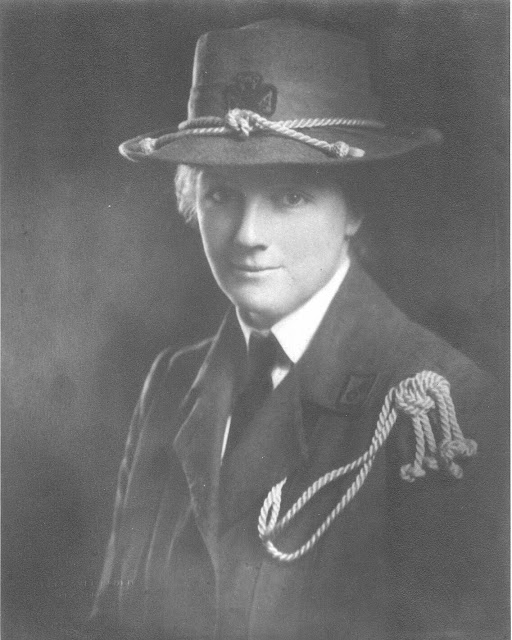
Girl Scouts founder Juliette Gordon Low.
Low was born in 1860. Her father, a member of an old Georgia family was soon off to war as a Confederate officer. Her mother was a Kinzie, one of the founding families of Chicago. Her mother encouraged Daisy, as she was called, in her interest in both the arts and social service. She wrote poetry, painted, and eventually became a skilled sculptor.
She grew up privileged and enjoyed the finest education available to girls of her class. She was sent to boarding school at the Virginia Female Institute and then to fashionable French finishing school in New York. She spent years touring extensively in Europe and the U.S. before marrying William Mackay Low, a wealthy Englishman in her Savannah home. An errant grain of rice thrown at the wedding ruptured an ear drum and the following infection left her totally deaf in that ear. Childhood illness had severely damaged the hearing in the other. Despite her disability Low continued to lead an active life.
The couple settled in England, but Low returned annually for extended stays in the States. When the Spanish American War broke out, her father was commissioned a General. Low joined her mother in establishing a hospital for wounded soldiers.
Although she later returned to England, her marriage was in a shambles. She separated from her husband but for social reasons could not divorce. His death in 1905 freed her to find a new mission in life.
A chance meeting in 1911 with Sir Robert Baden-Powell, founder of the Boy Scouts and Girl Guides in Britain awakened her interest in youth work. She returned to her ancestral home in Savannah and began the work.
Low with her own Troop 1 of the Girl Scouts in 1917.
She did not slavishly copy Baden-Powell program, which she thought did not do enough to encourage independence in young women and which kept them in an inferior status to boys. She kept her organization separate from the new Boy Scouts of America so as not to be swamped. But she defiantly took the name Scouts to emphasize parity.
Her program did not just include wholesome outdoor activity and domestic arts, but also encouraged the arts, intellectual development, and leadership skills necessary for women to establish careers and take positions of civic leadership. She also defied convention—and shocked many—by insisting that disabled girls be admitted as full members in integrated troops.
She saw her organization grow rapidly from its humble beginnings and spread across the nation. With her extensive international experience and her contact with Girl Guide and Scout movements in Europe on all sides even during the First World War she helped establish the World Association of Girl Guides and Girl Scouts after the end of the conflict.
Girl Scouts at the dedication of the Juliette Gordon Low Girl Scout National Center and Birthplace in 1953.
Low died of breast cancer in her beloved home in 1927. In 1953 the Girl Scouts purchased and restored that home as the Juliette Gordon Low Girl Scout National Center. Known reverently as simply The Birthplace, it was designated a National Historic Landmark in 1965.
The Girl Scouts of America are celebrating their birthday as World Thinking Day--perfect for an organization that fosters informed individual judgements.
It’s the birthday of the organization that the ranting right likes to blame for lesbianism, abortion, Godlessness, tolerance of immigrants and dusky minorities, and a general threat to the American way of life. Yet the Girl Scouts of America (GSA) doesn’t seem to care and sails serenely and successfully on while the erstwhile conservative pet Boys Scouts have nearly collapsed in the wake of sex abuse scandals, financial mismanagement, a history racism, anti-Gay bigotry, and discrimination against women and girls.
The former BSA was forced to admit Gay Scouts and leaders leading to their largest troop sponsor, the Church of the Latter Day Saints (Mormons) to abandon them. Opting to admit girls to most programs caused Fox News talking heads to explode and membership has plummeted to a fraction of boys served just a few decades ago.
On March 12, 1912 Juliette Gordon Low established the first troop of Girl Guides in America in her hometown of Savannah, Georgia. The troop included 12 girls, mostly friends of her niece Margaret Gordon, who became the first enrolled member. The following year Low changed the name of her organization to Girl Scouts of America.
Girl Scouts founder Juliette Gordon Low.
Low was born in 1860. Her father, a member of an old Georgia family was soon off to war as a Confederate officer. Her mother was a Kinzie, one of the founding families of Chicago. Her mother encouraged Daisy, as she was called, in her interest in both the arts and social service. She wrote poetry, painted, and eventually became a skilled sculptor.
She grew up privileged and enjoyed the finest education available to girls of her class. She was sent to boarding school at the Virginia Female Institute and then to fashionable French finishing school in New York. She spent years touring extensively in Europe and the U.S. before marrying William Mackay Low, a wealthy Englishman in her Savannah home.
An errant grain of rice thrown at the wedding ruptured an ear drum and the following infection left her totally deaf in that ear. Childhood illness had severely damaged the hearing in the other. Despite her disability Low continued to lead an active life.
The couple settled in England, but Low returned annually for extended stays in the States. When the Spanish American War broke out, her father was commissioned a General. Low joined her mother in establishing a hospital for wounded soldiers.
Although she later returned to England, her marriage was in a shambles. She separated from her husband but for social reasons could not divorce. His death in 1905 freed her to find a new mission in life.
A chance meeting in 1911 with Sir Robert Baden-Powell, founder of the Boy Scouts and Girl Guides in Britain awakened her interest in youth work. She returned to her ancestral home in Savannah and began the work.
Low with her own Troop 1 of the Girl Scouts in 1917.
She did not slavishly copy Baden-Powell program, which she thought did not do enough to encourage independence in young women and which kept them in an inferior status to boys. She kept her organization separate from the new Boy Scouts of America so as not to be swamped. But she defiantly took the name Scouts to emphasize parity.
Her program did not just include wholesome outdoor activity and domestic arts, but also encouraged the arts, intellectual development, and leadership skills necessary for women to establish careers and take positions of civic leadership. She also defied convention—and shocked many—by insisting that disabled girls be admitted as full members in integrated troops.
She saw her organization grow rapidly from its humble beginnings and spread across the nation. With her extensive international experience and her contact with Girl Guide and Scout movements in Europe on all sides even during the First World War she helped establish the World Association of Girl Guides and Girl Scouts after the end of the conflict.
Girl Scouts at the dedication of the Juliette Gordon Low Girl Scout National Center and Birthplace in 1953.
Low died of breast cancer in her beloved home in 1927. In 1953 the Girl Scouts purchased and restored that home as the Juliette Gordon Low Girl Scout National Center. Known reverently as simply The Birthplace, it was designated a National Historic Landmark in 1965.
It’s the birthday of the organization
that the ranting right likes to blame for lesbianism, abortion,
Godlessness, tolerance of immigrants and dusky
minorities, and a general threat to the American way of
life.Yet the Girl Scouts of America (GSA) doesn’t seem to care and sails
serenely and successfully on while the erstwhile conservative pet Boys
Scouts have nearly collapsed in the wake of sex abuse
scandals, financial mismanagement, a history racism, anti-Gay
bigotry, and discrimination against women and girls.The former BSA was forced to admit
Gay Scouts and leaders leading to their largest troop sponsor, the Church
of the Latter Day Saints (Mormons) to abandon them.Opting to admit girls to most programs
caused Fox News talking heads to explode and membership has
plummeted to a fraction of boys served just a few decades ago.
On March 12, 1912 Juliette
Gordon Lowestablished the first troop of Girl Guides in America in her hometown of Savannah, Georgia. The troop included 12
girls, mostly friends of her nieceMargaret Gordon,who became the first enrolled member. The following year Low changed the
name of her organization to Girl Scouts
of America.
Girl Scouts founder Juliette Gordon Low.
Low was born in
1860. Her father, a member of
an old Georgia family was soon
off to war as a Confederate
officer. Her mother was a Kinzie, one of the founding families of Chicago.Her mother encouraged Daisy, as she was called, in her interest in both the arts and social service. She wrote poetry, painted, and eventually became a skilled sculptor.
She grew up privileged
and enjoyed the finest education
available to girls of her class. She was sent to boarding school at the Virginia Female Institute and then to
fashionable Frenchfinishing school in New York.She spent years
touring extensively in Europe and the U.S. before marrying William
Mackay Low, a wealthy Englishman
in her Savannah home.
An errant grain of rice thrown at the weddingruptured an ear drum and the following infection left her totally deaf in that ear. Childhood illness had severely damaged the hearing in the other. Despite her
disability Low continued to lead an active life.
The couple settled
in England, but Low returned annually
for extended stays in the
States. When the Spanish American
War broke out, her father was commissioned
a General. Low joined her
mother in establishing a hospital for wounded soldiers.
Although she later returned to England, her marriage was in
a shambles. She separated from her husband but for social reasons could not divorce. His death in 1905 freed her
to find a new mission in
life.
A chance meeting in 1911 with Sir Robert Baden-Powell, founder of the Boy Scouts and Girl Guides
in Britainawakened her interest in youth work. She returned to her ancestral home in
Savannah and began the work.
Low with her own Troop 1 of the Girl Scouts in 1917.
She did not slavishly
copy Baden-Powell program, which she thought did not do enough to
encourage independence in young
women and which kept them in an inferior
status to boys. She
kept her organization separate from
the new Boy Scouts of America so as
not to be swamped. But she defiantly took the name Scouts to emphasize parity.
Her program did not just include wholesome outdoor activity and domestic
arts, but also encouraged the arts, intellectual
development, and leadership skills necessary for women
to establish careers and take positions of civic leadership. She also defied convention—and shocked
many—by insisting that disabled girls be admitted as full members in integrated troops.
She saw her organization grow rapidly from its humble
beginnings and spread across
the nation. With her extensive international experience and her contact with Girl Guide and Scout movements in Europe on all sides even during the First World War she helped establish
the World Association of Girl Guides and
Girl Scouts after the end of the conflict.
Girl Scouts at the dedication of the Juliette Gordon Low Girl Scout National Center and Birthplace in 1953.
Low died of breast cancer in her beloved home in
1927. In 1953 the Girl Scouts purchased and restored that home as the Juliette Gordon Low Girl Scout National
Center. Known reverently as simply The Birthplace, it was designated a National Historic Landmark in 1965.
It’s the birthday of the organization
that the ranting right likes to blame for lesbianism, abortion,
Godlessness, tolerance of immigrants and dusky minorities,
and a general threat to the American way of life.Yet the Girl
Scouts of America (GSA) doesn’t seem to care and sails serenely and successfully
on while the erstwhile conservative pet Boys Scouts have nearly collapsed
in the wake of sex abuse scandals, financial mismanagement,
a history racism, anti-Gay bigotry, and discrimination against
women and girls.The former BSA
was forced to admit Gay Scouts and leaders leading to their largest troop
sponsor, the Church of the Latter Day Saints (Mormons) to
abandon them.Opting to admit
girls to most programs caused Fox News talking heads to explode
and membership has plummeted to a fraction of boys served just a
few decades ago.
On March 12, 1912 Juliette
Gordon Lowestablished the first troop of Girl Guides in America in her hometown of Savannah, Georgia. The troop included 12
girls, mostly friends of her nieceMargaret Gordon,who became the first enrolled member. The following year Low changed the
name of her organization to Girl Scouts
of America.
Girl Scouts founder Juliette Gordon Low.
Low was born in
1860. Her father, a member of
an old Georgia family was soon off to war as a Confederate officer. Her mother was a Kinzie, one of the founding
families of Chicago. Her
mother encouraged Daisy, as she was called, in her interest in both the arts and social service. She wrote
poetry, painted, and eventually
became a skilled sculptor.
She grew up privileged
and enjoyed the finest education
available to girls of her class. She was sent to boarding school at the Virginia Female Institute and then to
fashionable Frenchfinishing school in New York.She spent years
touring extensively in Europe and the U.S. before marrying William
Mackay Low, a wealthy Englishman
in her Savannah home.
An errant grain of rice thrown at the weddingruptured an ear drum and the following infection left her totally deaf in that ear. Childhood illness had severely damaged the hearing in the other. Despite her
disability Low continued to lead an active life.
The couple settled
in England, but Low returned annually
for extended stays in the
States. When the Spanish American
War broke out, her father was commissioned
a General. Low joined her
mother in establishing a hospital for wounded soldiers.
Although she afterward returned to England, her marriage was
in a shambles. She separated from her husband but for social reasons could not divorce. His death in 1905 freed her
to find a new mission in
life.
A chance meeting in 1911 with Sir Robert Baden-Powell, founder of the Boy Scouts and Girl Guides
in Britainawakened her interest in youth work. She returned to her ancestral home in
Savannah and began the work.
Low with her own Troop 1 of the Girl Scouts in 1917.
She did not slavishly
copy Baden-Powell program, which she thought did not do enough to
encourage independence in young
women and which kept them in an inferior
status to boys. She
kept her organization separate from
the new Boy Scouts of America so as
not to be swamped. But she defiantly took the name Scouts to emphasize parity.
Her program did not just include wholesome outdoor activity and domestic
arts, but also encouraged the arts, intellectual
development and leadership skill
necessary for women to establish careers
and take positions of civic leadership. She also defied convention—and shocked
many—by insisting that disabled girls
be admitted as full members in integrated troops.
She saw her organization grow rapidly from its humble
beginnings and spread across the
nation. With her extensive
international experience and her contact
with Girl Guide and Scout
movements in Europe on all sides even during the First
World War she helped establish the World
Association of Girl Guides and Girl Scouts after the end of the conflict.
Girl Scouts at the dedication of the Juliette Gordon Low Girl Scout National Center and Birthplace in 1953.
Low died of breast cancer in her beloved home in
1927. In 1953 the Girl Scouts purchased and restored that home as the Juliette Gordon Low Girl Scout National
Center. Known reverently as simply The Birthplace, it was designated a National Historic Landmark in 1965.
Yesterday
was the 75th anniversary of the disappearance of Major Glenn Miller in the fog
over the English channel in
1944.The most wildly popular leader of
a big band in the pre-World War II years, Miller’s tight arrangements were the crowning
achievements of the swing era.At
the height of his fame and popularity and after making the films Sun
Valley Serenade and Orchestra Wives, he badgered his way
into the Army.
Glenn Miller leading his Army Air Forces Overseas Orchestra in a concert at an English air base.
At first
assigned to lead a conventional marching
band with the Army Air Forces
Southeast Training Center at Maxwell
Field in Montgomery, Alabama, he used his influence to
convince the brass to let him form the Army Air Forces Overseas Orchestra,
a 50 piece swing band to entertain the troops
and boost morale.After month of successful performances at allied air bases in England and making propaganda recordings to be broadcast to Germany—Miller spoke fluent German—Miller was flying to Paris to make arrangements for his
first continental performances when
the single engine light airplane he
was flying in disappeared.
A promotional photo for 1941's Sun Valley Serenade with figure skater Sonja Henie and John Payne. Miller and his big band were a bigger draw than the movie's romantic leads.
Today we
feature a release by his civilian Glenn
Miller Orchestra in 1941.Like
many others before and after him, Miller took a crack at the oldest American secular holiday song—Jingle
Bells—with Tex Beneke as the
vocalist.
Jingle Bells nevermentionsChristmasandwasnevermeanttobe associated
with the holiday at all.
Jingle Bells was first performed at Thanksgiving Sunday
School program in Medford, Massachusetts. The town claims, however, it
was penned at the Simpson Tavern pictured above. In fact it was written
in Savannah, Georgia.
The song’s origins stretch back more than 150 years.
James Lord Pierpont was the prodigal younger son of the Rev.
John Pierpont, a close associate of William Ellery Channing and an influential figure in the founding of American Unitarianism
who latter rose to prominence as an ardentabolitionist.AmongJames’ssiblingswereJohnJr.,anotherfutureUnitarianclericandasister,
Juliet, who became the mother of arch capitalist J.P. Morgan.
The artistically inclined young James was
the preverbal preacher’s son—restless
with restrictions at home, rebellious, and oftenin trouble. Born in 1822, he ran away to sea at the
age of 14 aboard the clipper shipShark. Another
rebellious Unitarian lad of the same period was Richard Henry Dana,
whose account of misery at sea in his book Two Years Before the Mast
that shocked the sensibilities of mercantileNewEngland.
James Lord Pierpont
Returning to New
England he married and fathered
three children while casting about in a series of failed business ventures. Lured to California by the Gold Rush
of 1849 he thought to strike it rich not by mining himself, but by taking pictures of the newly rich prospectors. But like his other
ventures, his San Francisco photography
shop ended in failure.
After his first wife
died in 1853 he took his young family to join his brother, the Rev. John Pierpont, Jr., minister of
the Unitarian Church in Savannah, Georgia, which was the largest Unitarian congregation in the South. He took up residence and earned a modest
living as organist in his brother’s
church. Eventually he also set himself up in business selling house paint, varnish, wallpaper, window glass, and art supplies. In 1857 he
married the daughter of a prominent Savannah civic leader who would go on to serve as the city’s Civil War mayor.
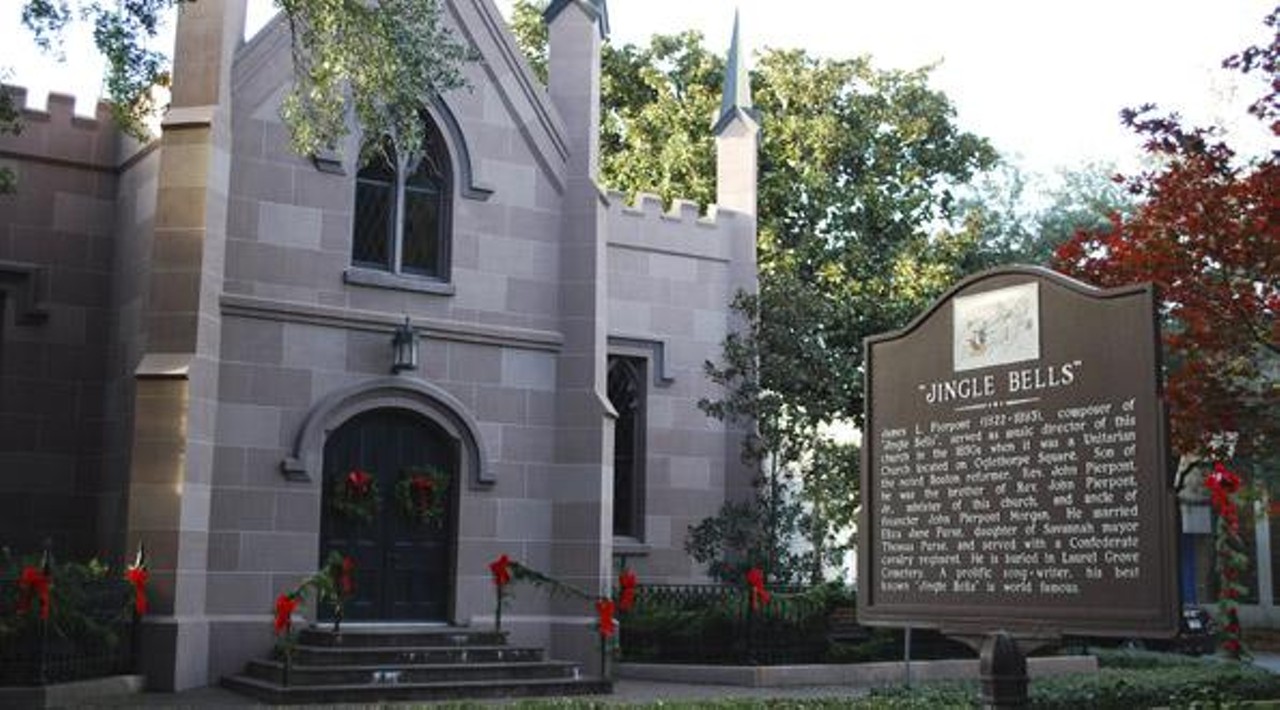
The historic Savannah Unitarian Church, the largest in the South, where
Jame Pierpont's brother was the minister and where he was employed as
the organist. The church posts it claim on Jingle Bells on the historical marker out front.
Sometime during those
years, restless as ever and lonesome for his lost New England childhood, he penned a song he called The
One Horse Open Sleigh. He may
have drawn as inspiration a sleighing
party that he had rapturously reported to his mother in an 1832 letter.
In snow bound New England the sleigh was
both a necessary form of transportation
and a winter diversion. There was a
whole genre of sleighing songs. The
best known today, Over the River and Through the Woods is associated with that
quiescently New England holiday, Thanksgiving.But it accounted a family expedition in a
large, multi-passenger sled of the sort often pulled by a team. Pierpont's song was about a cutter, a fast two seat light sleigh often pulled by a thoroughbred trotter. It is a courtship song, with a young man out to
impress Miss Fanny Bright with his
speed and daring until he miscalculates the depth of a drift and the sleigh becomes “up sot.”
The song may have
mystified his brother’s Southern parishioners, but James mailed copies home and
it was sung in Medford, Massachusetts at Thanksgiving parties
sometime in the mid 1850’s. This would lead to a later spurious claim that the song had been written there.
James copyrighted and published the song in 1857. Two years later it was issued in a new
edition as Jingle Bells or the One Horse Open Sleigh. Within a decade it
was a popular American parlor sing-a-long favorite, linked in the public’s mind
with the colorful Currier and Ives
prints of sleighing scenes that adorned many homes.It was considered a winter song, but not a Christmas one.
Unfortunately, James
never profited much from royalties
from the song.
Dark clouds were
gathering that would change his life forever.Asthepassionsstirredbythe1860 presidential election grew heated
brother John,anabolitionistlike hisfather,wasforced to give up his pulpit and return to
the North costing James his jobatchurch.James remained in Savannah, now an ardent
supporter of the Southern cause.After war broke out the combination of a war economy and the increasingly
effective blockade of Southern ports destroyed James’s shaky
business venture.
At the age of 40 he
enlisted as a clerk in the First Georgia Battalion, which became a
part of the 5th Georgia Cavalry.
Although he was a gentleman with
connections to a leading aristocratic
family, James never rose above the rank of private. He remained in the Confederate
Army for the duration of the war, although his rear echelon unit saw little action, mostly patrolling in defense of railroad
lines and later scouting Yankee
positions during the Atlanta campaign.His greatest contribution to the Confederate
war effort came as the composer of patriotic songs including We
Conquer or Die, Our Battle Flag, and Strike
for the South. Meanwhile his
father and brother served as chaplains
in the Union Army.
After the war there
were hard times in the South and James
and his family shared in them. Eventually he found a niche as professor of music
at Quitman Academy. He spent his
last years in Florida at his son’s
home in Winter Haven before dying in
1893.
Jingle Bells
may not have been his only contribution to seasonal music. According to the
1994 book American Christmas by Jim
Harrison, “For many years Martin
Luther was credited with writing one of the best loved Christmas songs, Away
in a Manger .. .but history now has evidence to dispute his authorship.
An American, James Pierpont, is currently believed to be the author.” UUA historian Peter Hughes doubted the
claim, however. Although the song is undoubtedly American dating from some time
in the 1880’s, its origins are murky, probably Lutheran although the lyrics
were first published as a poem in a Universalist
periodical.
A book and 45 rpm single for children.
Away in a Manger aside, James Pierpont’s claim on our seasonal culture is indisputable.By the early 20th Century, as the automobile
was replacing the horse, Jingle Bells
was being melded into the general sentimentality
of the Christmas season. In the days before the explosion of popular secular
holiday songs like White Christmas, I’ll Be Home for Christmas, Have
Yourself a Merry Little Christmas, and The Christmas Song, it
provided a much needed non religious
song suitable for performance in public schools and in mixed gatherings. The simple, lively tune was easy to sing and easy
to adapt to a host of musical styles. It has become an indisputable Christmas
classic.