Showing posts with label Troy Trojans. Show all posts

Saturday, September 27, 2025

Once the Champion Chicago White Stockings Couldn’t Draw Flies in Troy


Almost all of this 1880 Championship team was back for another romp to the crown a year later.  Cap Anson front and center. 

My beloved Chicago Cubs have had an exciting season this year with a stellar roster that seemed invincible until the All Star break.  Since then key injuries have taken their toll as did an inexplicable extended team batting slip.  Pitching, spectacular defense, and base path daring-do kept the team in the playoff race.  They secured a National League Wildcard slot but have struggled to nail down the top spot which would assure all first round games would be played at home.  But no matter what the most loyal fans in baseball not only packed Wrigley Field but turned out in big numbers on the road sometimes even out numbering the home teams wherever they went. 

That perspective makes todays baseball yarn even more of a head scratcher.

On September 27, 1881 the Chicago White Stockings (now known as the Cubs) played a game before the smallest “crowd” in their long history—12.  Probably also the smallest crowd for any Major League regular season game.  Which was strange.  Under legendary player/coach Cap Anson the Chicago Nine had been the top professional team for some time and dominated the early seasons of the National League.  On that Tuesday afternoon in Troy, New York, the team was coasting to another championship with an eight game lead.


Chicago player/manager Cap Anson was not only the biggest star in early Major League Baseball but a major player in shaping the National Pass Time. 

Perhaps it was because the Troy Trojans—you didn’t expect any other nickname did you—were a lousy team.  They struggled in 5th place and finished the season 39-45, 17 games behind Chicago.  But the White Stockings were so laden with talent that they were a draw everywhere, even when the host teams were certified mopes. The Trojans would be disbanded after the next losing season.  More than half of their players jumped to a brand new franchise in New York City, the Gothams—later known as the Giants.


The hapless Troy Trojans, soon to go out of business.

Perhaps the low attendance was due to the weather.  My attempts to ascertain conditions that day in Troy have been unsuccessful.  But it can get a mite nippy and/or rainy and raw in Upstate New York.  My guess is that is what kept the crowd below the combined number of players on the field.

The Cubs would go on to have their own attendance problems, even in beautiful Wriggly Field when they seemed mired in particular futility in the early 1950’s.  But they have gone on to become one of the most successful teams in baseball in terms of selling tickets.  Home games have routinely sell out.  Compared to the nearly empty stadiums you see on television for some teams—looking at you White Sox—they are the envy of baseball.

Oh, by the way, back to that game in Troy—the White Stockings won 10-8.


Wednesday, September 10, 2025

The First Ever Major League Baseball Grand Slam Came Long Before the Bambino


                                        Roger Connor of the Troy Trojans hits the first big league grand slam in 1880. 

In the early years of Major League Baseball home runs were hard to come by.  Ball parks were small, but the ball was dead—much softer with a less elastic core than modern balls.   Bats were heavy slowing down bat speed.  Pitchers had yet to perfect a 90 mile per hour fast ball.  It took a dead eye, prodigious strength, a bit of luck, and usually a tail wind to get a ball over the fences.  Instead of waiting for big innings where sluggers clear the bases, as in the modern game, it was small ballsingles, doubles, stolen bases, daring slides with sharpened spikes high, plus a lot of walks and hit batsmen.

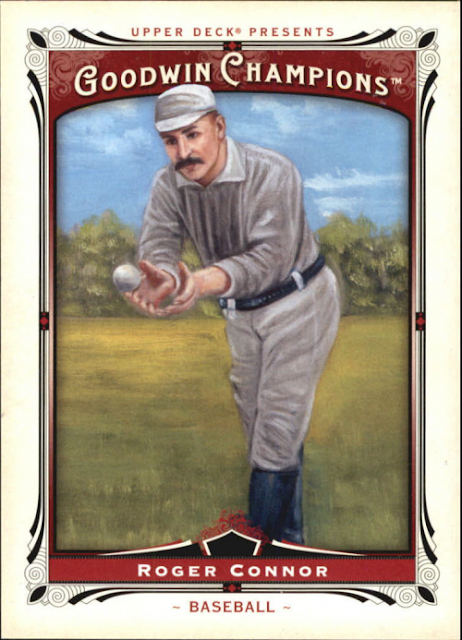
Before there was a Babe Ruth, there was Roger Connor, a towering first baseman—said to be 6’3’’ in an age when men were generally much shorter—who started his career with the Troy, New York Trojans in 1880 at the age of 22. 

Then, as now, there were cash poor teams in small markets who could not afford to pay the kind of stars playing on teams like Chicago White Stockings and clubs in Boston, New York, and Philadelphia.  The Trojans were one of them.  They packed their teams with promising amateurs like Conner, a kid who had played club ball in his hometown of Waterbury, Connecticut.

On September 10, 1881 the Trojans were playing another down-at-the-heels small city team, the Worcester Ruby Legs.  Down three runs in the 9th inning, their cause looked hopeless.  But the plucky team managed to load the bases.  With two outs Connor strode to the plate—and blasted the first grand slam home run in major league history. 

The thrilling storybook ending attracted the attention of the mighty New York Gothams.  By the 1882 season Connor was playing in the Big Apple for one of the National Leagues elite teams.  Soon he was the star of the team not only hitting for average and power, but despite his size a lithe and speedy base runner.  Sports writers began to refer to the team as the Giants in his honor.  The nickname stuck.


                                                Connor played first base barehanded in the era before fielding gloves.

In 1886 Connor gained fame for being the first person to hit a homerun entirely out of the Polo Grounds, a ballpark in which it was notoriously hard to hit homers.

In 1890 Connor was part of the revolt against National League owners that resulted in the short lived Players League.  As a member of a team made up of rebellious Giants, he led the new league in home runs with 14, the only time he ever held a single season home run title.  But he was consistent over an 18 year career.  He came in second four times in the National League and amassed a total of career total of 138 homers—a record that stood until Ruth broke it 23 years after Connor’s retirement in 1897.


The towering 6'3" Connor inspired the new nickname for the New York City National League club--the Giants.  He was the beau ideal of a Gilded Age baseball star. 

Ruth actually thought he broke the record when he smashed homer number 132.  Due to incomplete record keeping Connor was then only credited with 131.  Subsequent research shows that the real total was 138.

By the time Connor retired after spending his last seasons with the Philadelphia Phillies and St. Louis Browns, he had racked up an impressive record:  233 triples (still No. 4 on the all-time list after all of these years), 244 stolen bases, National League batting crown in 1885 with a .371 average, in the top ten for batting average 10 times, led the league in doubles ten times and triples 7, batted in 1,321 runs, and had a career average of .317.


                                                       Connor's Hall of Fame plaque. 

After his retirement from the majors, Connor returned to his Waterbury where he managed minor league teams and basked in the admiration of his hometown.  He lived to see Ruth break his career home run record.  He died in Waterbury in 1931 at the age of 73.

In 1976 the great left handed hitter was elected to the Baseball Hall of Fame by the Veterans’ Committee—a fitting tribute for the onetime Home Run King.


Sunday, September 10, 2023

Long Before the Bambino—The First Ever Major League Baseball Grand Slam

                          Roger Connor of the Troy Trojans hits the first big league grand slam in 1880.

In the early years of Major League Baseball home runs were hard to come by.  Ball parks were small, but the ball was dead—much softer with a less elastic core than modern balls.   Bats were heavy slowing down bat speed.  Pitchers had yet to perfect a 90 mile per hour fast ball.  It took a dead eye, prodigious strength, a bit of luck, and usually a tail wind to get a ball over the fences.  Instead of waiting for big innings where sluggers clear the bases, as in the modern game, it was small ballsingles, doubles, stolen bases, daring slides with sharpened spikes high, plus a lot of walks and hit batsmen.

Before there was a Babe Ruth, there was Roger Connor, a towering first baseman—said to be 6’3’’ in an age when men were generally much shorter—who started his career with the Troy, New York Trojans in 1880 at the age of 22. 

Then, as now, there were cash poor teams in small markets who could not afford to pay the kind of stars playing on teams like Chicago White Stockings and clubs in Boston, New York, and Philadelphia.  The Trojans were one of them.  They packed their teams with promising amateurs like Conner, a kid who had played club ball in his hometown of Waterbury, Connecticut.

On September 10, 1881 the Trojans were playing another down-at-the-heels small city team, the Worcester Ruby Legs.  Down three runs in the 9th inning, their cause looked hopeless.  But the plucky team managed to load the bases.  With two outs Connor strode to the plate—and blasted the first grand slam home run in major league history. 

The thrilling storybook ending attracted the attention of the mighty New York Gothams.  By the 1882 season Connor was playing in the Big Apple for one of the National Leagues elite teams.  Soon he was the star of the team not only hitting for average and power, but despite his size a lithe and speedy base runner.  Sports writers began to refer to the team as the Giants in his honor.  The nickname stuck.

                               Connor played first base barehanded in the era before fielding gloves.

In 1886 Connor gained fame for being the first person to hit a home run entirely out of the Polo Grounds, a ballpark in which it was notoriously hard to hit homers.

In 1890 Connor was part of the revolt against National League owners that resulted in the short lived Players League.  As a member of a team made up of rebellious Giants, he led the new league in home runs with 14, the only time he ever held a single season home run title.  But he was consistent over an 18 year career.  He came in second four times in the National League and amassed a total of career total of 138 homers—a record that stood until Ruth broke it 23 years after Connor’s retirement in 1897.

The towering 6'3" Connor inspired the new nickname for the New York City National League club--the Giants.  He was the beau ideal of a Gilded Age baseball star.

Ruth actually thought he broke the record when he smashed homer number 132.  Due to incomplete record keeping Connor was then only credited with 131.  Subsequent research shows that the real total was 138.

By the time Connor retired after spending his last seasons with the Philadelphia Phillies and St. Louis Browns, he had racked up an impressive record:  233 triples (still No. 4 on the all-time list after all of these years), 244 stolen bases, National League batting crown in 1885 with a .371 average, in the top ten for batting average 10 times, led the league in doubles ten times and triples 7, batted in 1,321 runs, and had a career average of .317.


                                    Connor's Hall of Fame plaque.

After his retirement from the majors, Connor returned to his Waterbury where he managed minor league teams and basked in the admiration of his hometown.  He lived to see Ruth break his career home run record.  He died in Waterbury in 1931 at the age of 73.

In 1976 the great left handed hitter was elected to the Baseball Hall of Fame by the Veterans’ Committee—a fitting tribute for the onetime Home Run King.