 |
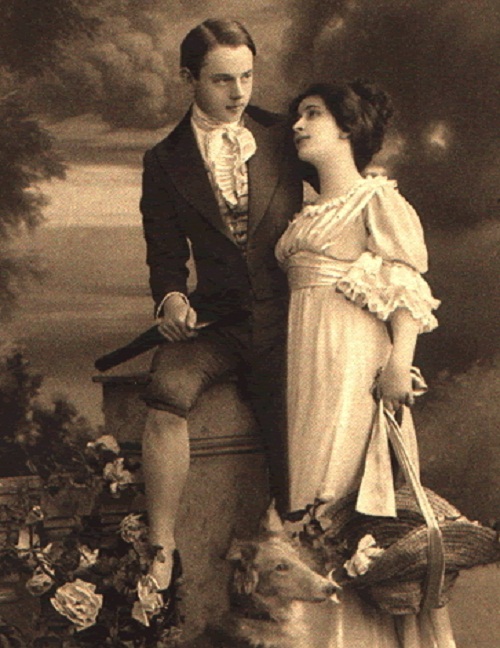
| A late 19th Century photo postcard idealization of the elopement of Elizabeth Barrett and Robert Browning. Note her beloved and loyal dog. |
It
may have been the most famous—and wildly romantic—elopement since
Romeo
and Juliette. The bride
was a lovely but disabled spinster who happened to be
perhaps the most famous living English poet at the time. Her dashing beau was six years younger, of an inferior social class and just establishing himself as a poet of
note in his own right. They courted in secret—he contrived to visit
her in the sick room to which she
was mostly confined—and on September
12, 1846 ran off to be wed at St. Marylebone Parish Church in London then fled to sunny Italy in imitation of two of their mutual heroes—Percy Bysshe Shelley and Mary
Wollstonecraft Shelley. Her father disowned her. Her beloved
brothers shunned her. But the couple
lived happily and productively—each writing some of the best verse of their lives—until her frail health gave out at age 55.
Such
is the tale of Elizabeth Barrett and
Robert Browning who celebrated their love in poetry—she in Sonnets
from the Portuguese which included Number 43 beginning with the lines
“How do I love thee? Let me count the
ways” and he in the poem One Word More with which he
concluded his collection Men and Women.
The
story also inspired literary work. Virginia Woolf’s Flush: A Dog’s Life saw the story through the eyes of
Elizabeth’s beloved spaniel. The
hugely successful play The Barretts of Wimpole Street by Rudolf Besier became the signature vehicle for American actress Catherine Cornell and was made into a popular MGM film starring Norma
Shearer, Fredric March, and Charles Laughton.
 |
| Fredric March, Charles Laughton, and Norma Shearer in MGM's 1934 production of The Barretts of Wimpole Street. |
Elizabeth
was born on March 6, 1806, the eldest of twelve children, to a family that had
made an enormous fortune in Jamaica in sugar, mercantile trade,
manufacture, and slaves over the previous 150 years. She personally
believed that she had some Black
ancestry although none was ever documented. She was raised at Hope End near Malvern Hills
in Ledbury, Herefordshire, the country
estate of her father, Edward Barrett
Moulton Barrett. She was educated at home and benefited by
sharing a tutor with her oldest brother, giving her access to education beyond
most girls. She was extremely precocious reading novels at six and learning Greek
to read The Iliad shortly after.
Her
love of all things Greek led her, at age ten, to write her own epic in the style of Homer, The
Battle of Marathon which so delighted her father that he had 50 copies privately printed. She became a prolific, even compulsive,
poet and her mother carefully preserved
all of her work in scrapbooks which
are said to represent the largest
collection of juvenilia of any English writer.
Elizabeth’s
interests as a child were wide. She
took religion seriously both as a matter of faith and philosophic speculation. Her family were devout Dissenters and reading of sermons
and tracts exposed her to the
most liberal opinion in
England. In her early teens she had
absorbed Mary Wostoncraft’s Vindication of the Rights of Women. She was entranced by Lord Byron and the Greek
Revolution which inspired her first published poems, Stanzas Excited by Reflections on the
Present State of Greece in The
New Monthly Magazine and
Thoughts
Awakened by Contemplating a Piece of the Palm which Grows on the Summit of the
Acropolis at Athens in 1821.
But
about this time her happy adolescence
was dealt a severe blow—she came down with a serious illness inflicting excruciating
pain in her brain and spine and sometimes rendering her incapable of walking. Two of her sisters
had the same condition, but ultimately recovered. Elizabeth would regain some strength but be a
semi-invalid the rest of her life.
The
exact cause of this condition has never
been diagnosed with certainty. Speculation has run wild. Polio was
suspected. In the early 20th Century it became fashionable to dismiss her ailment as female
hysteria, a form of hypochondria said
to affect creative women with “over
active imaginations.” But those who knew
or observed her had no doubt her suffering was real.
She began to rely on laudanum for the pain and later graduated to morphine making her a life-long
addict.
Some believe reveries from
the drug contributed to the vivid
imagination she employed in her maturing poetry. On the other hand, dependency contributed to her general
weakness and after she developed a separate respiratory ailment—likely tuberculosis—in
her twenties would have made that condition worse.
Still,
she was an extremely attractive young woman as recorded in portraits made of her at the time and descriptions of family and
friends. She was small and delicate with
large, expressive brown eyes and a dazzling smile readily offered. She wore her nearly black hair in long ringlets divided by a center part which
framed her heart shaped face. She
maintained that hair style through her life, long after it had gone out of
style.
When
she was 22 she lost her devoted mother.
An aunt moved in to supervise
the children, including the now adult Elizabeth. Where her mother had encouraged her literary career, the aunt found it unseemly. They clashed. The family left beloved Hope End and moved
three times in the next few years before settling in a London town house, first
in Gloucester Place and ultimately
to that famous address, 50 Wimpole
Street.
 |
| Young Elizabeth Barrett, celebrated poetess. |
Elizabeth’s
condition relieved her of the domestic
duties expected of her sisters, as well as the sometimes demanding social obligations of a wealthy
young woman. She spent much time in
her room devoting herself to wide ranging reading and study, voluminous correspondence, and, above all,
writing. But she was hardly a recluse. She could, and did leave the house, and regularly received visitors, including
many admirers of her growing literary reputation. She was witty
and charming between bouts of
serious illness.
In
fact in London she was able to meet—and
impress—a wide circle of the English literary establishment, introduced by
her cousin and close friend John Kenyan,
including William Wordsworth, Mary Russell Mitford, Samuel Taylor Coleridge, Alfred Lord Tennyson and Thomas Carlyle.
Through
the 1830’s and early ‘40’s Barrett’s literary
output was astonishing. Much of
her work was social commentary. Unlike other popular female poets of the era,
she had little patience for art-for-art’s-sake poetry. She meant to instruct and uplift, not
merely to decorate. In the early 1830’s she became a passionate abolitionist and her popular poems like
The Runaway Slave at Pilgrim’s Point and A Curse for a Nation were
said to have helped swing public opinion
behind the Emancipation Act of 1833 which
abolished slavery in the colonies.
But
this activity put a strain on her
relations with the father she adored, whose income relied on slavery.
And indeed after emancipation, the family’s fortunes waned dramatically.
Her father was forced to sell his
country estates. While the family
was never reduced to poverty, their circumstances
were reduced—and the income from
Elizabeth’s literary output was surely welcome.
Later
in the decade she turned her attention to child
labor in The Cry of the Children published in 1842 and actively—by pen—campaigned in support of the Ten Hour Bill advanced by Lord Shaftsbury. In addition to her original verse Barrett
also contributed translations and essays to popular magazines.
The Seraphim and Other Poems in 1838 was her first
mature collection of poetry followed
by Poems in 1844. She was one of the most popular, and widely
respected poets in England, and the American edition of Poems re-titled A Drama
of Exile, and other Poems was just as popular and influenced Edgar Allan Poe and Emily Dickinson whose life in some ways echoed hers.
It was that 1844 edition of Poems that led
Robert Browning to write a fateful fan
letter.
 |
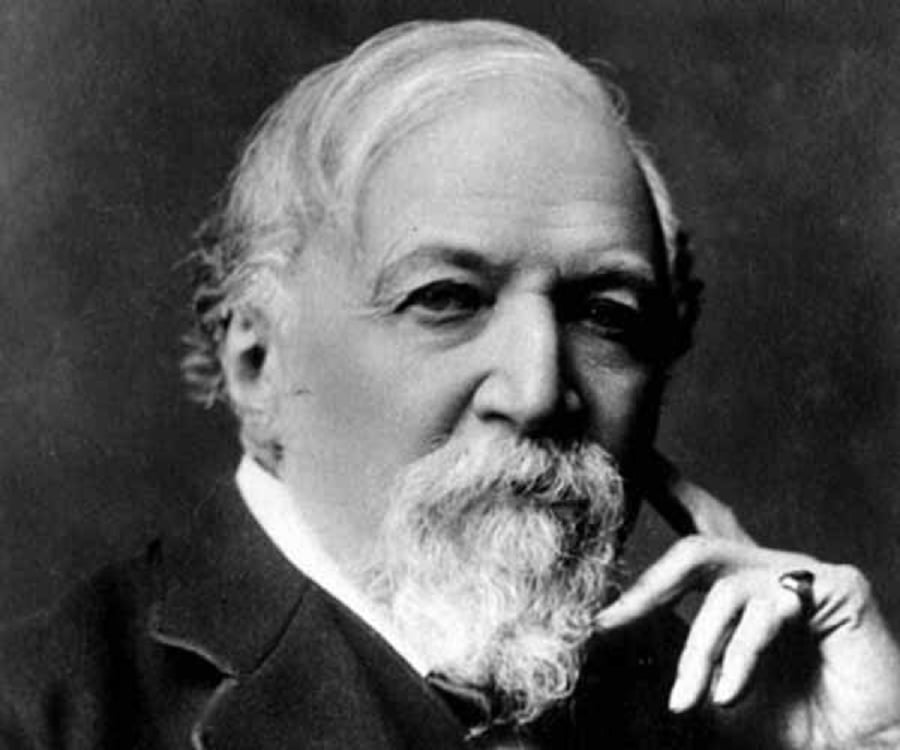
| Robert Browning--a younger suitor with insufficient social standing. |
Browning
was born less extravagant circumstances than his beloved on May 7, 1812 in
London, but it was hardly poverty. His
father, also named Robert had a sinecure
at the Bank of England that paid £155
a year—a very comfortable middle class
income. Other than class Robert and
Elizabeth shared remarkably similar backgrounds and upbringings.
His
father was also a scion of a land and slave holding colonial Caribbean family with holdings in St. Kitts, but youthful experience on the plantation
left him revolted with slavery. He
became an abolitionist, which cost him
his inheritance on his father’s side.
There was also rumored to be slave ancestry in the family. Robert’s mother was the daughter of a German ship owner and a Scottish mother who brought a modest income of her own to the family
and was a devout Dissenter.
The
elder Browning was a bibliophile who
filled his home with a library of over 1000 volumes. When his son rebelled at the tedium of
school, the library became his education.
He was literary almost by osmosis. At age 12 he completed a manuscript of poetry
which he angrily destroyed when he could find no publisher for it. He was soon fluent in Greek, Latin, French, and Italian. He entranced
by the Romantics, especially Shelley in imitation of whom he dramatically renounced his mother’s
fervent Protestantism for a noble atheism.
Barred
from Oxford or Cambridge by his family’s non-conformist
religion, Browning entered
University College London at age 16 to study Greek. He left after one year and refused all
entreaties by his father to pursue some
remunerative career. He declared his
intention to dedicate himself to literature.
His noble sacrifice to this
end was to remain in his father’s
household until he was 32 and eloped with Barrett. His indulgent father accepted the situation and even underwrote some of his largely unsuccessful
publications.
In
1833 he privately published—on the largess of his aunt and father—Pauline,
a fragment of a confession, a long poem in appreciation and imitation
of Shelley. The book attracted a few
positive reviews but sold almost no copies.
Only anonymity spared the
author deep public humiliation. Years later, in 1850, Dante Gabriel Rossetti stumbled on the work in the British Museum and connected it the by
then established Browning. The author heavily revised the poems for inclusion
in his later collection.
He
fared better with Paracelsus published in 1835 after a brief visit to St. Petersburg as the companion to a French/Russian aristocrat and diplomat. The poems were cast as monologues of a 16th Century
alchemist and sage and were meditations on
an intellectual trying to find his
role in society. The esoteric subject matter did not sell
well with the general public, but found an appreciative
audience among the London literati
including Wordsworth, Charles Dickens, John Stuart Mill, and Tennyson.
At least it gained him admittance to the fringes of literary society.
After
turning his hand unsuccessfully to play writing, Browning went to Italy for the first time in 1835 where
he found the inspiration for his ambitious Sordello, a long poem in heroic couplets, the imaginary biography of the Mantuan bard spoken of by Dante
in the Divine Comedy. The book was both dense and obscure. Tennyson complained he could only understand the first and last lines. The effort was ridiculed in the literary press, and an abject failure that nearly sank Browning’s reputation.
From
1841 to ’44 Browning slowly recovered his reputation with the modest publication of a series of eight pamphlets—we would call
them chap books today—assembling
work that had been published in various journals as well at the texts of his
plays. The plays impressed no one, but
the poems which he styled dramatic
lyrics, drew admiration.
Such
was the modest state of Browning’s
career and reputation when he eloped with the far more celebrated Barrett.
The
couple first resided in Pisa where
they weathered the anticipated storm created by their
scandalous elopement. Of course they
expected her father’s reaction. He disinherited his daughter, as they knew
he would. But he went further, severing all connection to what had once
been a close and loving relationship.
When the press painted
Browning as a cad, seducer, and fortune hunter, even Elizabeth’s beloved and once supportive
brother turned against her. None would
ever deign to receive or acknowledge her husband.
Italy
in those days was something of a
paradise for exiled Brits. The climate
was salubrious, the people warm
and friendly, the food a delight and adventure to English palates
raised on boiled beef, and the expenses low. The couple and the nurse Elizabeth had brought
with her were able to live simply but
comfortably on her independent
income derived from her mother’s estate and her earnings as a writer. Better yet, the sunshine and fresh air—not
to mention happiness—improved Elizabeth’s heath.
The
following year the couple settled into apartments
in Florence, which they would make
their home the rest of their time together.
Both were writing productively—Elizabeth completing the love poems that
became known as Sonnets from the
Portuguese. The title had a double meaning—the sonnets were
composed in a somewhat unusual Portuguese style and Browning had made a pet name of calling her My Portuguese for her dark hair and eye
beauty. Barrett was contributing poems
to London journals, the notoriety of the elopement probably helping to gain
interest in more popular publications.
Yet the critical reception of these pieces was wildly divided.
 |
| Elizabeth Barrett Browning with her son in 1860. One of her last pictures. |
After
suffering miscarriages Elizabeth,
now 43 years old, successfully gave
birth to a son, Robert Wiedeman
Barrett Browning, whom they called Pen. Their joy
was unbounding and the boy doted on.
Meanwhile
Elizabeth was preparing a new edition of her Poems. Robert insisted that
she include Sonnets from the Portuguese which
she had considered private. When the new edition was published in 1850 it
created a sensation. Whatever fame and
admiration Elizabeth had enjoyed previously, it was now magnified. And so was the public view of the story of
her and Robert’s elopement—it was transformed
almost immediately to the stuff of high
romance. Victorian audiences were thrilled.
When
Wordsworth died that year so high was her star that she was seriously in the running with Tennyson
to be named successor as national Poet Lauriat.
While
in Florence the couple regularly
socialized with the large English expatriate community there and
entertained a stream of distinguished
visitors from Britain and the United States which included William Makepeace Thackeray, sculptor Harriet Hosmer, Harriet Beecher Stowe, Margaret Fuller, and the female French novelist George Sand.
In
1855 Browning finally had a breakthrough
in his own career with the publication of the two-volume Men and Women, a collection of dramatic monologues in verse, the form
for which he would become best known.
Elizabeth
was even more active. She produced Casa
Guidi Windows in 1851 and her 1857 epic novel in verse, Aurora
Leigh which was considered by many critics the greatest long form poem of the Victorian era.
Elizabeth
also took note of social developments in England, and as she had done with
abolitionism and child labor, composed poetic commentaries including Two
Poems: A Plea for the Ragged Schools of London and The Twins.
Meanwhile
Elizabeth became passionately involved
in Italian politics, casting her lot with Giuseppe Garibaldi, his Red
Shirts and their ambition to drive
foreign influence out of Italy and create a unified kingdom. She
composed a short book of poems, Poems before Congress in support of
the cause. Back home in England these
created an uproar in the Tory press,
which denounced her as a fanatic.
In
1860 Elizabeth’s health began to
collapse. After winter in warmer Rome, the
couple returned to Florence. There on
June 21, 1861 she died in her husband’s arms “smilingly, happily, and with a
face like a girl’s. … Her last word
was … ‘Beautiful.’” So beloved was she in her adopted homes that shops closed down for her funeral. She was buried in the famed Protestant English Cemetery of Florence,
last resting place of several notables.
 |
| Robert Browning--at long last a literary lion in his own right. |
Grief
stricken Browning and his son returned to London, although he frequently
visited Italy. He edited and supervised a posthumous collection Last
Poems published in 1862.
In
subsequent years Browning’s own reputation as a poet soared with the long blank-verse poem The Ring and the Book based
on a Roman murder-case from 1690s. Later
works included Balaustion’s Adventure, Red Cotton Night-Cap Country, Parleyings with Certain People of Importance
in Their Day and Asolando, coincidentally published
on the day of his death. Perhaps his best loved individual poem was his
re-telling of The Pied Piper of Hamlin.
Browning
died full of honors, at last one of
the most admired English, poets on December
12, 1889 at his son’s home in Venice. He was laid to rest in Poets’ Corner in Westminster Abbey next to Tennyson.