Showing posts with label White Christmas. Show all posts

Monday, May 11, 2026

The Songwriter of the American Century--Israel Isidore Baline Alias Irving Berlin


Irving Berlin--American master song smith.

There was a lot of buzz over Rolling Stones list of the “100 Greatest Songwriters of All Time.”  There is always room for entertaining debate about such lists.  But this one doesn’t come close to living up to the claim of representing “All Time.”  The earliest on the list were Woody Guthrie and Fats Domino.  Most were active from the 1970’s—the magazine’s birth decade—and were limited to rock, pop, R&B, and a smidgen of rap.  Not a single mention of any of the composers and lyricists from the Great American Song Book who were active from about 1900 to the ‘60s.  That’s a lot of enormous talent to overlook.  And the most egregious omission was this guy.

Say happy birthday to Israel Isidore Baline, born May 11, 1888 in the city of Tyumen in the Ural Mountains 1200 miles west of Moscow.  His father, a Canter, moved his family to the relative safety of the United States in 1893 after Cossacks burned the Jewish Quarter of Tyumen to the ground.  Only three years later his father was dead and the eight-year-old boy had to quit school and work as a news butchera street peddling paper boy—for pennies a day.

He left home at 14 so his mother would have one less mouth to feed and began to support himself singing for tips in saloons, eventually working up to being a song plugger at Tony Pastor’s seminal night club in New York City


                                        Berlin in costume in some sort of parade in New York City in 1911, his break-out year with Alexanders Rag Time Band.

He changed his name to Irving Berlin and began to try his hand at songwriting.  His first success was Alexander’s Rag Time Band in 1911which became a sensation after he wrote words to go with his music and got it placed in a Broadway revue.  Its fresh sound and syncopated rhythm helped set off a new national rage for Rag Time music, which had gone out of fashion a decade earlier.  

Self-taught on the piano—he never could play in any key but F—and unable to read music, he none-the-less eagerly launched himself on a career as a songwriter.  His first Broadway show, Watch You Step in 1914, starred dancing sensations Verne and Irene Castle and included several hits including Play a Simple Melody, the first of his famous “double” songs in which two different melodies and lyrics are counterpointed against one another. 

He continued to write for Broadway and films for the next 60 years producing an unrivaled string of hits that included, A Pretty Girl is Like a Melody, Always, Blue Skies, God Bless America, and There’s No Business Like Show Business to name just a few. 

                           
                                             Sheet music for one of the songs from Belin's Doughboy revue Yip Yip Yaphank

Nearly as patriotic as George M. Cohan, Berlin penned Oh, How I Hate to Get Up in the Morning for his World War I camp show with an all-doughboy cast, Yip Yip Yaphank.   God Bless America was also written for that revue but somehow failed to make the cut.  In 1938 he gave it to Kate Smith for a special 20th anniversary Armistice Day broadcast, and it became a virtual second National Anthem.   He toured for three and a half years to posts in the U.S. and Europe with a second all-GI review This Is the Army in which he sang This is the Army Mr. Jones in GI uniform.  The show became the basis of a 1945 film of the same name staring Ronald Regan and Joan Leslie in which Smith reprised God Bless America. Berlin signed over all royalties from that song to benefit the Boy Scouts of America earning them millions of dollars. 

Berlin, a secularized Jew, is also known for his holiday songs including Easter Parade and White Christmas both of which were featured in the 1940 film Holiday Inn with Bing Crosby and Fred Astaire.  Easter Parade was the only song not written for the movie.  It first appeared in the 1933 revue As Thousands Cheer which presented each number as an item in a newspaper, Marilyn Miller and Clifton Webb originally sang it.  Holiday Inn essentially transformed the newspaper items for holidays throughout the year stitched together by the thinnest of plots.  Both Easter Parade and White Christmas were again featured two in enormously successful self-titled movie musicals.  Crosby’s 1948 re-recording of White Christmas remains America’s favorite secular Christmas song and is an annual seasonal hit.  For decades it held the record as the bestselling recording of all time.


The Easter Parade number with Clifton Webb and Marilyn Miller from As Thousands Cheer on Broadway in 1933.

Early Berlin Broadway revues included now embarrassing blackface minstrel numbers and some of those were carried over to the silver screen.  But Berlin was a staunch advocate of civil rights and a long-time member of the NAACP.  In As Thousands Cheer Ethel Waters sang Supper Time, a lament for the lynching of her husband of which she said “If one song can tell the whole tragic history of a race, Supper Time was that song. In singing it I was telling my comfortable, well-fed, well-dressed listeners about my people...those who had been slaves and those who were now downtrodden and oppressed.”  Not surprisingly Hollywood film makers concerned with being able to show films in the segregated South never included Supper Time in any of the several movies they built around the Berlin song book.

Show business itself was often a theme for Berlin including numbers presented as vaudeville acts like A Couple of Swells.  And of course, There’s No Business Like Show Business from his most successful book musical Annie Get Your Gun has become the enduring anthem of the entertainment industry.


Berlin and bride Dorothy depart on their ill-fated honeymoon to Cuba.

Berlin’s personal life from the days when he was singing on the streets for pennies on was reflected in his music.  His first wife, 20-year-old Dorothy Goetz was the sister of E. Ray Goetz one of his early collaborators.  She died tragically of typhoid contracted during their Cuban honeymoon in 1912.  Grief stricken, Berlin could not write for months. Then his first composition was also his first ballad, the heart felt When I Lost You.


                                    Berlin and his second wife Ellin MacKay at their New York City Hall wedding--the beginning of an enduring 63-year marriage.
  

In 1924 Berlin married Ellin Mackay, and Irish-American Catholic heiress whose father bitterly opposed the marriage.  He wrote the enduring classic love song Always for her and signed over to her personally rights to the song to make up for being disinherited by her father. The rights to that one song alone would make her independently wealthy.  Their marriage remained a love affair and they were inseparable until Ellin died in July 1988 at the age of 85. They had four children during their 63 years of marriage: Irving, who died in infancy on Christmas Day 1928; Mary Ellin, Elizabeth Irving, and Linda Louise.  Blue Skies in 1926 was a jubilant celebration of his first daughter’s birth.

Berlin wrote in many styles over his long career but is perhaps best remembered for his simple, direct, and heartfelt love songs with lilting melodies and lyrics that seemed an extension of everyday speech.  A classic example was What’ll I Do? From 1924.
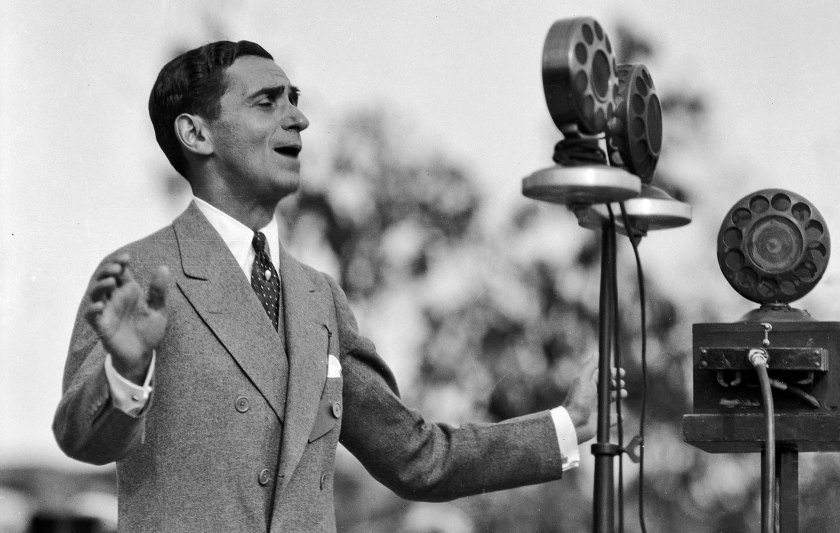

Berlin never gave up his love of singing his own songs.  This is from a 1930's outdoor concert and radio broadcast.

In all Berlin wrote around 15,000 songs.  Many of them are as fresh today as when first written and continue to be recorded by artists in many styles.  Berlin died in his adopted hometown of New York in 1989 a year after Ellin at the age of 101.

Friday, December 20, 2024

White Christmas—Murfin Winter Holidays Music Festival 2024-‘25

                                             White Christmas from the finale of the 1954 MGM film of the same name.

Tomorrow Kathy Brady-Murfin and I will be taking in perhaps the most iconic of the classic Golden Age of American Secular Christmas songs,  a production of the stage version of Irving Berlins’s White Christmas at the Marriott Theatre in Lincolnshire.  It was at least the third production of a version of the classic film we have seen.  It is a staple of both the professional and community holiday theater.  It is both comfortable and an invitation to sing along.

The leads in the Marriott Theater production of Irving Berlin's White Christmas.

You probably know that the most played and beloved secular American Christmas song—White Christmas—was first featured in the 1942 movie musical Holiday Inn. It was not one of the elaborate production numbers but was a simple parlor piano duet by Bing Crosby and Marjorie Reynolds.  It was not expected to be a hit, but it struck a deep chord with American GIs far from home.  The rest is history.

The idea of a film based on a country inn that opened as an entertainment venue only on holidays was Irving Berlin’s own.  So was the idea of writing original songs for each holiday.  Eventually he penned 12 new songs including White Christmas and another soon-to-be seasonal classic Happy Holidays.  Also included in the film was Easter Parade, written by Berlin for the 1933 Broadway revue As Thousands Cheer.

Berlin signed with Paramount Pictures in 1940 to write the songs for a film based on his story idea.  The studio intended it to showcase its most bankable star—Bing Crosby.  The studio signed Mark Sandrich, who helmed four of the great Fred Astaire-Ginger Rodgers musicals at RKO.  He brought Astaire along, on loan from his studio for a dream team matchup of two of the biggest movie musical stars.

White Christmas was introduced in 1942's Irving Berlin's Holiday Inn.

Casting the female lead was trickier.  Paramount, not the richest of studios, already faced a big payroll with its stars, Irving Berlin and Sandrich plus the costs of the elaborate production numbers, could not afford an A list star who they would have likely had to borrow from a major studio.  After rummaging around the role of Linda Mason, the fresh-faced wanna-be performer, went to Marjorie Reynolds, a starlet rather than a star, who had mostly worked in two-reel Westerns with the likes of Tex Ritter and young Roy Rogers.  Famous or not Reynolds, turned out to be a lovely singer and accomplished dancer who had no trouble keeping up with the men

The second female lead went to an even lesser known performer, Virginia Dale, a former Miss California and a hoofer as the faithless Lila Dixon.

The film premiered on August 4, 1942 and was an immediate hit—Paramount’s top grossing film of the year.  It easily returned its hefty $3.2 million budget.  The music from the show also did well.  As expected the Valentines Day romantic ballad Be Careful, It’s My Heart did well even if it never exactly became a Berlin standard.  But White Christmas really took off after a slow start breaking into the Billboard chart in late October and staying at or near the top for the next 11 weeks.  It went on to win the 1943 Academy Award for Best Song.

The Decca Records studio recordings of songs from the film was issued in a 78 rpm album but did not include the original female stars.  White Christmas from this album was later released as a single and became a legendary success.

Crosby’s studio recording of the song originally included in a Decca 78 rpm album of songs from the show was released as a single and sold so briskly that it damaged the master recording and Crosby had to go back in the studio to rerecord it in 1947.  That version easily became a #1 hit and is the one most heard today.  In 1949 Crosby included it in his Merry Christmas album which has never gone out of issue.  It became the title song of the 1954 Technicolor film White Christmas starring Crosby, Rosemary Clooney, Danny Kay, and Vera-Ellen, another all-Irving Berlin musical that became a holiday classic of its own.


Crosby in his Santa hat graced the covers of countless LPs, singles, and CDs.

Taken together sales the 1942 and ’47 versions of the song are estimated 50 million copies, the most by any release and the biggest-selling single worldwide of all time.  It returned to the Billboard Pop Chart twenty times before the magazine created a distinct Christmas chart for seasonal releases.  It retained it’s top Christmas recording status until Maria Careys ubiquitous All I Want for Christmas is You.

White Christmas is also the most recorded song of all time with over 500 covers by other artists, several of which became hits in their own right.  


Thursday, December 7, 2023

Pearl Harbor Day Recalls I’ll Be Home for Christmas— The Murfin Winter Holidays Music Festival 2024-'25


An animated  video I'll Be Home for Christmas by Bing Crosby was heavy on nostalgia, but decoupled the song from its World War II associations.

Eighty-three years ago, today the Japanese launched their devastating surprise attack on Pearl Harbor thrusting the United States into a bloody worldwide conflagration and forever altering the lives and destinies of millions.  It also cast a somber pall over Christmas festivities getting underway stateside just as the last vestiges of the Great Depression were being shaken off and folks had money to spend for a change.

The USS Arizona going down after the Japanese attack on Pearl Harbor, December 7, 1949.

With a long war ahead with families and sweethearts wrenched by separation and fear, people turned to music for comfort, especially at Christmas time.  There were many war-time Christmas songs written and recorded—almost every Big Band with a singer had at least one in their repertoire.  They filled the holiday radio shows and were transcribed to be played for the troops around the world.   Many of the songs were forgettable, but some have become timeless classics.

For my father, First Sargent W. M. Murfin posted to a forward American field hospital attached to the British and Anzac forces under Field Marshall Montgomery in North Africa in 1942, the song that brightened a cold night in the desert was White Christmas, the Irving Berlin song that made its debut in Holiday Inn with Bing Crosby and Fred Astaire.  Its wistful note of nostalgia plucked many hearts and cemented its place as the most beloved secular American Christmas song.

A compilation album of World War II songs, especially the ones of longing and separation.

Later in the war, millions thought that Judy Garland was singing for them as well as for Margaret O’Brien when she crooned the melancholy Have Yourself a Merry Little Christmas.

In 1943 Bing Crosby scored again with a song aimed directly at lonely servicemen far from home and their families.  Ill be Home For Christmas by lyricist Kim Gannon and composer Walter Kent was released by Decca Records and became a top ten hit and Crosby’s fifth Gold Record.  Buck Ram was later also given credit after a lawsuit because he had written a poem with the same name and similar sentiments.

Within a month of release, the song charted for 11 weeks, with a peak at #3. The next year, it reached #16.   It soon became a perennial on Christmas radio and after Billboard established a separate seasonal chart for air play it was frequently near the top.  The song was also featured on Crosby’s famous 1945 78 rpm album and it’s LP release in 1949 which has itself been re-released and re-mastered several more times.

Bing Crosby on a USO tour in Europe, 1944.

The song has been covered by Perry Como, Frank Sinatra, Elvis Presley, Johnny Mathis, Connie Francis, The Carpenters, Anita Baker, Kelly Clarkson, Michael Bublé, Pentatonix, and Demi Lovato among many others.

But Der Bingle did it best.


Saturday, December 2, 2023

White Christmas—Murfin Winter Holidays Music Festival 2023-‘24


                                            White Christmas from the finale of the 1954 MGM film of the same name.

It is a bit early to break out perhaps the most iconic of the classic Golden Age of American Secular Christmas songs, but last night my wife Kathy Brady-Murfin and I took in a production of the stage version of Irving Berlinss White Christmas by Theatre 121 at the Woodstock Opera House.  It was at least the third production of a version of the film classic we have seen.  It is a staple of both the professional and community holiday theater.  It is both comfortable and an invitation to sing along.

You probably know that the most played and beloved secular American Christmas song—White Christmas—was first featured in the 1942 movie musical Holiday Inn. It was not one of the elaborate production numbers but was a simple parlor piano duet by Bing Crosby and Marjorie Reynolds.  It was not expected to be a hit, but it struck a deep chord with American GIs far from home.  The rest is history.

The idea of a film based on country inn that opened as an entertainment venue only on holidays was Irving Berlin’s own.  So was the idea of writing original songs for each holiday.  Eventually he penned 12 new songs including White Christmas and another soon-to-be seasonal classic Happy Holidays.  Also included in the film was Easter Parade, written by Berlin for the 1933 Broadway revue As Thousands Cheer.

Berlin signed with Paramount Pictures in 1940 to write the songs for a film based on his story idea.  The studio intended it to showcase its most bankable star—Bing Crosby.  The studio signed Mark Sandrich, who had helmed four of the great Fred Astaire-Ginger Rodgers musicals at RKO.  He brought Astaire along, on loan from his studio for a dream team matchup of two of the biggest movie musical stars.

White Christmas was introduced in 1942's Irving Berlin's Holiday Inn.

Casting the female lead was trickier.  Paramount, not the richest of studios, already faced a big payroll with its stars, Irving Berlin and Sandrich plus the costs of the elaborate production numbers, could not afford an A list star who they would have likely had to borrow from a major studio.  After rummaging around the role of Linda Mason, the fresh-faced wanna-be performer, went to Marjorie Reynolds, a starlet rather than a star, who had mostly worked in two-reel Westerns with the likes of Tex Ritter and young Roy Rogers.  Famous or not Reynolds turned out to be a lovely singer and accomplished dancer who had no trouble keeping up with the men.

The second female lead went to an even lesser known performer, Virginia Dale, a former Miss California and a hoofer as the faithless Lila Dixon.

The film premiered on August 4, 1942 and was an immediate hit—Paramount’ top grossing film of the year.  It easily returned its hefty $3.2 million budget.  The music from the show also did well.  As expected the Valentines Day romantic ballad Be Careful, Its My Heart did well even if it never exactly became a Berlin standard.  But White Christmas really took off after a slow start breaking into the Billboard chart in late October and staying at or near the top for the next 11 weeks.  It went on to win the 1943 Academy Award for Best Song.

The Decca Records studio recordings of songs from the film was issued in a 78 rpm album but did not include the original female stars.  White Christmas from this album was later released as a single and became a legendary success.

Crosby’s studio recording of the song originally included in Decca 78 rpm album of songs from the show was released as a single and sold so briskly that it damaged the master recording and Crosby had to go back in the studio to record it again in 1947.  That version easily became a #1 hit and is the one most heard today.  In 1949 Crosby included it in his Merry Christmas album which has never gone out of issue.  It became the title song of the 1954 Technicolor film White Christmas starring Crosby, Rosemary Clooney, Danny Kay, and Vera-Ellen, another all-Irving Berlin musical that became a holiday classic of its own.

Crosby in his Santa hat graced the covers of countless LPs, singles, and CDs.

Taken together the 1942 and ’47 versions of the song are estimated 50 million copies, the most by any release and the biggest-selling single worldwide of all time.  It returned to the Billboard Pop Chart twenty times before the magazine created a distinct Christmas chart for seasonal releases.

White Christmas is also the most recorded song of all time with over 500 covers by other artists, several of which became hits in their own right.