Showing posts with label Yale. Show all posts

Saturday, February 1, 2025

John O’Hara’s Soured American Dream


                                                John O'Hara at the time of his first success as a novelist at the age of 29.

John O’Hara was one of those mid-century American novelists who soared to fame and acclaim.  But like a supernova his flame seems to have burnt out.  In his day he was as controversial as he was famous.  His defenders like John Updike compared him to Chekhov and wag Fran Lebowitz tagged him “The real F. Scott Fitzgerald.”  But many critics dismissed him as a hack turning out sensationalized pot boilers for a low brow audience.  O’Hara himself said simply, “Being a cheap, ordinary guy, I have an instinct for what an ordinary guy likes.”

Of course O’Hara never really considered himself neither cheap nor ordinary.  He spent a life time chaffing against the social slights suffered as an outsider on the edge of social respectability and resenting that his father never sent him to Yale.  All of this became grist for his short stories and novels but also earned him a well-deserved reputation as a needy social climber.

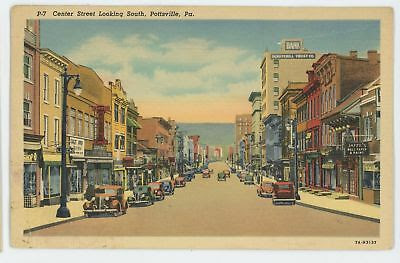
O’Hara was born in Pottsville, Pennsylvania on January 31, 1905.  The town, 90 miles northwest of Philadelphia, was in the heart of the state’s coal country on the banks of the Schuylkill River.  The river also provided power for a textile industry that included the Phillips Van Heusen Company of shirt fame.  The mines and textile mills generated enough local nabobs to populate mansions in a swanky part of the otherwise grimy city.  O’Hara’s physician father grew rich enough to live there.  But the O’Hara’s, Irish Catholics, were excluded from polite society tightly guarded by a WASP elite.  Both father and son bitterly resented it.

O'Hara yearned to shake the dust of his Pottsville, Pennsylvania roots off of his boots and join the ranks of the elite denied him as a Catholic,  Bitterness over his failure to do so tainted his life.

John’s father imbued him with the idea that if he went to Yale, it would be the ticket to respectability and acceptance both yearned for.  In pursuit of that dream his father had high academic expectations for his son and little tolerance for not meeting them. He was sent to Niagara Prep in Lewiston, New York where he was named class poet but was otherwise a lackluster student.  To teach the boy a lesson about what life would be like without college, his dad sent him to work in the steel mills over summer breaks.  John hated the humiliation even more than the back breaking labor.

His disappointed father felt he had not earned the right to attend Yale and refused to send him.  Moreover when the elder man died shortly after John’s graduation and he left no provision in his will for his education.  It was a bitter blow from which he literally never recovered, spending the rest of his life pining for Yale and all it could have brought him.

Rather than attend a lesser school which he might be able to work his way through, O’Hara went to work as a reporter on the local Pottstown paper.  Among his assignments was covering the Pottsville Maroons, the town’s short-lived entry into the infant National Football League.

But he soon threw even that up, going, as he described it, “on the bum. I traveled out West, worked on a steamer, took a job in an amusement park.”    Great experience for a writer, but for him a constant reminder that he had been “cheated” of a better life.

Eventually O’Hara drifted to New York City determined to become a writer.  He took a cheap room and began writing.  He supported himself with book and film reviews while concentrating on short stories. In 1928 the first of those stories appeared in the still young New Yorker.  He would soon become a fixture on its pages, publishing more than 200 stories in the magazine over the next decades.  The stories featured a keen eye for the details of life and sharp, believable dialogue.  They were often set in a thinly veiled version of Pottsville named Gibbsville and chronicled the lives and foibles of both the local elite and those who aspired to crash their party.

The stories were highly regarded and established O’Hara’s reputation.  They were even said to have established the New Yorker style of short story.  Updike and other future contributors like Saul Bellow were directly in his debt.

O'Hara yearned to shake the dust of his Pottsville, Pennsylvania roots off of his boots and join the ranks of the elite denied him as a Catholic,  Bitterness over his failure to do so tainted his life.
 
In 1934 O’Hara published his first novel, Appointment in Samarra, which he had been working on for years.  The novel describes how, over the course of three days, Julian English, the owner of the Gibbsville Cadillac dealership and a younger member of the WASP social clique, destroys himself with a series of impulsive acts, culminating in suicide. O’Hara never gives any obvious cause or explanation for his behavior, which is apparently predestined by his character.  The novel was a critical—mostly—and popular success.  No less than Ernest Hemingway enthused, “If you want to read a book by a man who knows exactly what he is writing about and has written it marvelously well, read Appointment in Samarra.”  On the other hand Sinclair Lewis castigated the book as vulgar for it oblique but frank sexual episodes.
 
Heady days at the Stork Club in New York O'Hara, left, with Ernest Hemingway and club owner Sherman Billinsgley.
 
What is left of O’Hara’s literary reputation today rests on the short stories and this first novel.  In 1998, long after the literary establishment had turned on O’Hara, Modern Library ranked Appointment in Samarra 22nd on its list of the 100 best English-language novels of the 20th Century.  As a result at least one critic said its placement on the list “was used to ridicule the entire project.”  Harsh.
 
If contemporary critics thought O’Hara’s first book was vulgar, they hadn’t seen anything yet.  BUtterfield 8 was based on a real life juicy scandal of speakeasy days when the dead body of a young woman named Starr Faithfull was found drown on Long Beach in Long Island. She was shown to be a goodtime girl of easy virtue who drank and partied too much.  Her back story even included a childhood molestation by a former mayor of Boston. O’Hara made her Gloria Wandrous and put her in a mutually destructive and obsessive relationship with—you guessed it—a wealthy WASP.  A classic O’Hara story, according to one reviewer, in which he “He plumbs the fault lines of society where the slumming rich meet with the aspiring poor.”  Of course the book had plenty of juicy sex.
                                                        O'Hara's novels seemed best suited for the lurid covers of drug store paperbacks.
 
It is best known now for the 1960 film starring Elizabeth Taylor and Laurence Harvey which took considerable liberties from the book—including resetting it in contemporary New York.  But like the novel, it sizzled with sex and won Taylor an Academy Award as Best Actress.
 
In 1940 O’Hara stitched together a popular series of stories that he ran in the New Yorker about a second rate nightclub entertainer in Chicago, a certified heel and louse, with big ambitions.  Written in the form of a series of letters from Joey to his much more successful pal Ted, Pal Joey was more character study than story. 
 
Richard Rodgers and Lorenz Hart inspired by the success of Porgy and Bess, which was based on a gritty novel, were on the lookout for darker, more serious material when they came on O’Hara’s book.  They enlisted the author to write the script for a new kind of musical.  The show Pal Joey opened to acclaim in 1940, just months after the book hit the stores with Gene Kelly in a star making turn in the lead.  The show featured two great American standards, If They Ask Me, I Could Write a Book and Bewitched, Bothered, and Bewildered.  It became the third longest running show of Rodgers and Hart’s long collaboration.  But it was also controversial.  Radio effectively banned playing songs from the show through most of the 1940’s because of their frank lyrics.  It was considered un-filmable in a Hollywood built on sunny, optimistic musicals.
 
 
                                                The poster for the original Broadway production of Pal Joey in 1940, a production that made Gene Kelly, Irish like O'Hara, a star.
 
It was not until 17 years later that Pal Joey finally made it to the screen in an adaptation starring Frank Sinatra, Rita Hayworth, and Kim Novak and featuring additional Rodgers and Hart songs cribbed from other shows, including My Funny Valentine.  The play, now considered a landmark classic, has been revived several times on Broadway and in London.
 
During World War II O’Hara returned to journalism.  He was a war correspondent in the Pacific Theater, although he would have preferred a gentleman’s commission like the graduates of Ivy League colleges received—or maybe an OSS posting like so many old Yalies.
 
After the war he returned to New York more confident in his own greatness as a writer on one hand and more than ever resentful of what he believed was the back hand snubbing by the snooty aristocrats of publishing and critical circles.  The more wounded he was, the harder he tried to become one of them.  He adopted their manners, style of dress, and distinctive speech patterns.   He studied and memorized trivia and minutia about the Ivy schools and even the elite prep schools that fed them.  He stalked social gatherings.
 
But in perfect imitation of the self destructive social climbers of his fiction, O’Hara only further alienated the closed club he yearned to join.  Then he would get belligerent.  A leading critic referred to him simply as “a well known lout.”  The harder he tried, the harder the critics—most of them—got on his work.
 
                                                                Despite Gary Cooper's star power, the movie adaptation of Ten North Fredrick was not a success.
 
He continued to churn out novels—O’Hara was nothing if not prolific—but most did not catch on.  Finally in 1955, the same year his reputation was somewhat buoyed by the release of the film version of Pal Joey, he won a highly controversial National Book Award for Ten North Fredrick, the story of Joe Chapin, an ambitious man who yearns to become President and his long suffering patrician wife, two rebellious children, and mistress.  The book was made into a film in 1958 starring Gary Cooper.
 
O’Hara had one more moderate success as a novelist before critics started simply ignoring his work and the public stopped buying.  In From the Terrace he painted a picture of a young lawyer from a family of small city aristocrats.  His mother has been driven to drink by a neglectful and distant father.  His wife is socially ambitious, self-pitying, and unfaithful.  The man finds solace with a young, tenderhearted exotic—read Jewish—do-gooder in the city.  O’Hara himself wrote the screenplay for the 1960 film version starring Paul Newman, Joanne Woodward, and Ina Balin.
 
Probably contributing to O’Hara’s fading reputation as a novelist was his decision to become weekly book columnist for the Trenton Times-Advertiser, and a biweekly column, Appointment with O’Hara, for Colliers magazine. In both venues he proved himself to be, “simultaneously embarrassing and infuriating in his vaingloriousness, vindictiveness, and general bellicosity.”  He bemoaned never receiving any academic honors, despite his firm conviction that he was the greatest living American Novelist.  He openly invited Yale to finally recognize his genius.  Yale considered it groveling and did not deign himself to respond.
 
But he still yearned for vindication. Privately, he told friends that he expected to be the next American recipient of the Nobel Prize.  He wrote to his daughter “I really think I will get it,” and “I want the Nobel prize... so bad I can taste it.”  It was not to be.  The next American to win the prize for literature was John Steinbeck in 1962.  He could barely conceal his disappointment.
 
When he took this act to a broader stage as a nationally syndicated columnist based at Newsday in 1964, O’Hara showed himself to be not just a conservative, but a vicious reactionary.  Many young writers suffered the stings of class prejudice. Most of them became liberals, even radicals.  Not O’Hara.  Just as he assumed the proper suites and accents of the WASP elite, so did he assume what he believed were the politics of the very richest barons of the boardroom and denizens of the old school clubs. 
 
In his first Newsday column O’Hara proclaimed his willingness to spit in the eye of his critics: “Let’s get off to a really bad start.” He endorsed Barry Goldwater for President claiming that he spoke for the stolid fans of Lawrence Welk and blaming the downfall of the country on those who loved the jazz of Black musicians like Lester Lanin and Dizzy Gillespie.  Then he railed at Martin Luther King’s Nobel Prize.  It was downhill from there, week by week more antagonistic and outrageous.  Papers started dropping the syndicated feature.  In 53 weeks Newsday canceled the column.
 
 
                                                                O'Hara as critic--a crass curmudgeon masquerading in an Old School tie.
 
The super rich graduates of his beloved Yale might have nodded approval, but the literary establishment was notoriously liberal.  The columns were like thumbs in their eyes.  O’Hara had successfully poisoned the well.
 
O’Hara continued publishing to diminishing success.  The last novel published during his life time was The Ewings in 1970.  A sequel to that novel came out posthumously.  Neither was successful.
 
O’Hara died in Princeton, New Jersey, his longtime home, on April 13, 1970 at the age of 65. Just to make sure that everyone knew just who he was, he had this inscription carved on his headstone, “Better than anyone else, he told the truth about his time. He was a professional. He wrote honestly and well.”   The final hubris of Pal Johnny.  

Wednesday, April 21, 2021

Covid and Refugees Performance Poem by Emi Mahmoud—National Poetry Month 2021

Emi Mahmoud at the Individual World Poetry Slam Championships.

When this blog first took notice of Emi Mahmoud for our National Poetry Month series in 2016 she was a  Yale senior who was born in Darfur in Sudan.

Her parents were writers who were displaced by the genocide in that country.  When she was a toddler they fled to Yemen and then to the U.S. in 1998.  Her parents worked to raise awareness of the genocide.  At first, she told an interviewer for YaleNews, her parents tried to shield their children from the grim reality.  But she became curious about what they were doing, “When I insisted they tell me, they did. I just picked up a pen and started was soon composing verse for the cause.”

Although she was an experienced writer who had dabbled in poetry, Mahmoud was completely unfamiliar with the world of spoken word performance art that had percolated up from coffee houses, smoky saloons, and even street corners carrying on the traditions of beat poetry, infused with hip-hop and rap, and the self-conscious avant gurde art scene.  It was a poetry alternative to the literary/academic establishment with its little magazines and fading connections to the broader culture.

It was somewhat of a struggle for her to enter that world and to gain confidence as a live performer.  But when she did there was no stopping her.  By 2014 she won the crown at the Individual World Poetry Slam Championship (iWPS).  Video of that performance and others went viral.

Mahmoud addressing the United Nations General Assembly.

After that there was no stopping her.  Mahmoud was on the BBC’s  list of The Most Inspirational Women Across the World in 2015, and she was invited to a 2016 roundtable with President Obama, when he visited the Islamic Society of Baltimore.  That same year she was invited to recite one of her poems at the United Nations General Assembly in New York, launched a campaign at the Laureates and Leaders Summit in New Delhi, and gave a talk at the TEDMED conference. 

In 2017 and ‘18, Mahmoud took part in the How to Do Good speaker tour, performing poetry and discussing her advocacy work in New York, Oslo, Stockholm, The Hague, Brussels, Paris, London, and York in.  She was the opening speaker at a TEDxTalk in Kakuma refugee camp in Kenya in 2018. She remains in demand at events around the world and has a huge You Tube following.

Long interested in health issues including sickle cell disease, linking her refugee experience to the Coronavirus pandemic came naturally.

Mahmoud visiting a refugee camp as a Goodwill Ambassador  of the UNHCR.

Mahmoud’s poetry is best experience in performance.  She Tweeted this about her participation in a conference on The Seven Stages of Grief During Coronavirus.

A couple of months ago, I sat down to write about the pandemic when it was still the most pressing thing on our minds. I couldn’t shake the feeling that for some of us, crisis is all too familiar, for some of us, the world has ended many times. It continues to end every day. That sentiment still rings true today, if anything, it’s even more appropriate now. And I’m happy to now be bringing this to life through UNHCR [United Nations High Commissioner for Refugees] for World Refugee Day—it’s been an honor to work on this project with the UN Refugee Agency.


There is no alternative but to decide to care, there is no alternative but to decide to do our absolute best in changing our world for the better in every way possible and that starts with centering the people most affected in our push against disparity, inequality, oppression, and violence in all its forms. In America that looks like standing up for black people and standing up against injustice, and refugees are included in that sentiment in every way. What does it look like where you are? And how will you include #refugees ? Sending love and joy and the hope and the dream—the goal, that we carry one another through this.  I hope this inspires you, I hope it offers solace, I hope it drives you to support the most vulnerable people, wherever they may be, this world refugee day and every day after ️ finding strength in solidarity #withrefugees

#WorldRefugeeDay.


Here is the video she made  for that occasion. 


Monday, February 1, 2021

John O’Hara’s Sour American Dream

                       John O'Hara at the time of his first success as a novelist at the age of 29.

John O’Hara was one of those mid-century American novelists who soared to fame and acclaim.  But like a supernova his flame seems to have burnt out.  In his day he was as controversial as he was famous.  His defenders like John Updike compared him to Chekhov and wag Fran Lebowitz tagged him “The real F. Scott Fitzgerald.  But many critics dismissed him as a hack turning out sensationalized pot boilers for a low brow audience.  O’Hara himself said simply, “Being a cheap, ordinary guy, I have an instinct for what an ordinary guy likes.”

Of course O’Hara never really considered himself neither cheap nor ordinary.  He spent a life time chaffing against the social slights suffered as an outsider on the edge of social respectability and resenting that his father never sent him to Yale.  All of this became grist for his short stories and novels, but also earned him a well-deserved reputation as a needy social climber.

O’Hara was born in Pottsville, Pennsylvania on January 31, 1905.  The town, 90 miles northwest of Philadelphia, was in the heart of the state’s coal country on the banks of the Schuylkill River.  The river also provided power for a textile industry that included the Phillips Van Heusen Company of shirt fame.  The mines and textile mills generated enough local nabobs to populate mansions in a swanky part of the otherwise grimy city.  O’Hara’s physician father grew rich enough to live there.  But the O’Hara’s, Irish Catholics, were excluded from polite society tightly guarded by a WASP elite.  Both father and son bitterly resented it.

O'Hara yearned to shake the dust of his Pottsville, Pennsylvania roots off of his boots and join the ranks of the elite denied him as a Catholic,  Bitterness over his failure to do so tainted his life.

John’s father imbued him with the idea that if he went to Yale, it would be the ticket to respectability and acceptance both yearned for.  In pursuit of that dream his father had high academic expectations for his son and little tolerance for not meeting them. He was sent to Niagara Prep in Lewiston, New York where he was named class poet but was otherwise a lackluster student.  To teach the boy a lesson of what life would be like without college, his dad sent him to work in the steel mills over summer breaks.  John hated the humiliation even more than the back breaking labor.

His disappointed father felt he had not earned the right to attend Yale and refused to send him.  Moreover when the elder man died shortly after John’s graduation and he left no provision in his will for his education.  It was a bitter blow from which he literally never recovered, spending the rest of his life pining for Yale and all it could have brought him.

Rather than attend a lesser school which he might be able to work his way through, O’Hara went to work as a reporter on the local Pottstown paper.  Among his assignments was covering the Pottsville Maroons, the town’s short-lived entry into the infant National Football League. 

But he soon threw even that up, going, as he described it, “on the bum. I traveled out West, worked on a steamer, took a job in an amusement park.”    Great experience for a writer, but for him a constant reminder that he had been “cheated” of a better life.

Eventually O’Hara drifted to New York City determined to become a writer.  He took a cheap room and began writing.  He supported himself with book and film reviews while concentrating on short stories. In 1928 the first of those stories appeared in the still young New Yorker.  He would soon become a fixture in its pages, publishing more than 200 stories in the magazine over the next decades.  The stories featured a keen eye for the details of life and sharp, believable dialogue.  They were often set in a thinly veiled version of Pottsville named Gibbsville and chronicled the lives and foibles of both the local elite and those who aspired to crash their party.

The stories were highly regarded and established O’Hara’s reputation.  They were even said to have established the New Yorker style of short story.  Updike and other future contributors like Saul Bellow were directly in his debt.

The dusk jacket for the first edition of appointment in Samarra.  Crosset & Dunlap was not considered a top-flight literary publisher like Scrivners, yet another disappointment for the author.  It is best known today as the publisher of the Hardy Boys and Nancy Drew books.

In 1934 O’Hara published his first novel, Appointment in Samarra which he had been working on for years.  The novel describes how, over the course of three days, Julian English, the owner of the Gibbsville Cadillac dealership and a younger member of the WASP social clique, destroys himself with a series of impulsive acts, culminating in suicide. O’Hara never gives any obvious cause or explanation for his behavior, which is apparently predestined by his character.  The novel was a critical—mostly—and popular success.  No less than Ernest Hemingway enthused, “If you want to read a book by a man who knows exactly what he is writing about and has written it marvelously well, read Appointment in Samarra.”  On the other hand Sinclair Lewis castigated the book as vulgar for it oblique but frank sexual episodes.

Heady days at the Stork Club in New York O'Hara, left, with Ernest Hemingway and club owner Sherman Billinsgley.

What is left of O’Hara’s literary reputation today rests on the short stories and this first novel.  In 1998, long after the literary establishment had turned on O’Hara, Modern Library ranked Appointment in Samarra 22nd on its list of the 100 best English-language novels of the 20th century.  As a result at least one critic said its placement on the list “was used to ridicule the entire project.”  Harsh.

If contemporary critics thought O’Hara’s first book was vulgar, they hadn’t seen anything yet.  BUtterfield 8 was based on a real life juicy scandal of speakeasy days when the dead body of a young woman named Starr Faithfull was found drown on Long Beach in Long Island. She was shown to be a goodtime girl of easy virtue who drank and partied too much.  Her back story even included a childhood molestation by a former mayor of Boston. O’Hara made her Gloria Wandrous and put her in a mutually destructive an obsessive relationship with—you guessed it—a wealthy WASP.  A classic O’Hara story, according to one reviewer, in which he “He plumbs the fault lines of society where the slumming rich meet with the aspiring poor.”  Of course the book had plenty of juicy sex.

O'Hara's novels seemed best suited for the lurid covers of drug store paperbacks.

It is best known now for the 1960 film starring Elizabeth Taylor and Laurence Harvey which took considerable liberties from the book—including resetting it in contemporary New York.  But like the novel, it sizzled with sex and won Taylor an Academy Award as Best Actress.

In 1940 O’Hara stitched together a popular series of stories that he ran in the New Yorker about a second rate nightclub entertainer in Chicago, a certified heel and louse, with big ambitions.  Written in the form a series of letters from Joey to his much more successful pal Ted, Pal Joey was more character study than story. 

Richard Rodgers and Lorenz Hart inspired by the success of Porgy and Bess, which was based on a gritty novel, were on the lookout for darker, more serious material when they came on O’Hara’s book.  They enlisted the author to write the script for a new kind of musical.  The show Pal Joey opened to acclaim in 1940, just months after the book hit the stores with Gene Kelly in a star making turn in the lead.  The show featured two great American standards, If They Ask Me, I Could Write a Book and Bewitched, Bothered, and Bewildered.  It became the third longest running show of Rodgers and Hart’s long collaboration.  But it was also controversial.  Radio effectively banned playing songs from the show through most of the 1940’s because of their frank lyrics.  It was considered un-filmable in a Hollywood built on sunny, optimistic musicals.

The poster for the original Broadway production of Pal Joey in 1940, a production that made Gene Kelly, Irish like O'Hara, a star.

It was not until 17 years later that Pal Joey finally made it to the screen in an adaptation staring Frank Sinatra, Rita Hayworth, and Kim Novak and featuring additional Rodgers and Hart songs cribbed from other shows, including My Funny Valentine.  The play, now considered a landmark classic, has been revived several times on Broadway and in London.

During World War II O’Hara returned to journalism.  He was a war correspondent in the Pacific Theater, although he would have preferred a gentleman’s commission like the graduates of Ivy League colleges received—or maybe an OSS posting like so many old Yalies.

After the war he returned to New York more confident in his own greatness as a writer on one hand and more than ever resentful of what he believed was the back hand snubbing by the snooty aristocrats of publishing and critical circles.  The more wounded he was, the harder he tried to become one of them.  He aped their manners, style of dress, and distinctive speech patterns.   He studied and memorized trivia and minutia about the Ivy schools and even the elite prep schools that fed them.  He stalked social gatherings.

But in perfect imitation of the self destructive social climbers of his fiction, O’Hara only further alienated the closed club he yearned to join.  Then he would get belligerent.  A leading critic referred to him simply as “a well known lout.”  The harder he tried, the harder the critics—most of them—got on his work.

                                    Despite Gary Cooper's star power, the movie adaptation of Ten North Fredrick was not a success.

He continued to churn out novels—O’Hara was nothing if not prolific—but most did not catch on.  Finally in 1955, the same year his reputation was somewhat buoyed by the release of the film version of Pal Joey, he won a highly controversial National Book Award for Ten North Fredrick, the story of Joe Chapin, an ambitious man who yearns to become President and his long suffering patrician wife, two rebellious children, and mistress.  The book was made into a film in 1958 starring Gary Cooper.

O’Hara had one more moderate success as a novelist before critics started simply ignoring his work and the public stopped buying.  In From the Terrace he painted a picture of a young lawyer from a family of small city aristocrats.  His mother has been driven to drink by a neglectful and distant father.  His wife is socially ambitious, self-pitying, and unfaithful.  The man finds solace with a young, tenderhearted exotic—read Jewishdo-gooder in the city.  O’Hara himself wrote the screenplay for the 1960 film version starring Paul Newman, Joanne Woodward, and Ina Balin.

Probably contributing to O’Hara’s fading reputation as a novelist was his decision to become weekly book columnist for the Trenton Times-Advertiser, and a biweekly column, Appointment with O’Hara, for Collier’s magazine. In both venues he proved himself to be, “simultaneously embarrassing and infuriating in his vaingloriousness, vindictiveness, and general bellicosity.”  He bemoaned never receiving any academic honors, despite his firm conviction that he was the greatest living American Novelist.  He openly invited Yale to finally recognize his genius.  Yale considered it groveling and did not deign to respond.

But he still yearned for vindication. Privately, he told friends that he expected to be the next American recipient of the Nobel Prize.  He wrote to his daughter “I really think I will get it,” and “I want the Nobel prize... so bad I can taste it.”  It was not to be.  The next American to win the prize for literature was John Steinbeck in 1962.  He could barely conceal his disappointment.

When he took this act to a broader stage as a nationally syndicated columnist based at Newsday in 1964, O’Hara showed himself to be not just a conservative, but a vicious reactionary.  Many young writers had suffered the stings of class prejudice. Most of them became liberals, even radicals.  Not O’Hara.  Just as he assumed the proper suites and accents of the WASP elite, so did he assume what he believed were the politics of the very richest barons of the boardroom and denizens of the old school clubs.

In his first Newsday column O’Hara proclaimed his willingness to spit in the eye of his critics: “Let’s get off to a really bad start.” He endorsed Barry Goldwater for President claiming that he spoke for the stolid fans of Lawrence Welk and blaming the downfall of the country on those who loved the jazz of Black musicians like Lester Lanin and Dizzy Gillespie.  Then he railed at Martin Luther King’s Nobel Prize.  It was downhill from there, week by week more antagonistic and outrageous.  Papers started dropping the syndicated feature.  In 53 weeks Newsday canceled the column.

                                                O'Hara as critic--a crass curmudgeon masquerading in an Old School tie.

The super rich graduates of his beloved Yale might have nodded approval, but the literary establishment was notoriously liberal.  The columns were like thumbs in their eyes.  O’Hara had successfully poisoned the well.

O’Hara continued publishing to diminishing success.  The last novel published during his life time was The Ewings in 1970.  A sequel to that novel more came out posthumously.  Neither was successful.

O’Hara died in Princeton, New Jersey, his longtime home, on April 13, 1970 at the age of 65. Just to make sure that everyone knew just who he was, he had this inscription carved on his headstone, “Better than anyone else, he told the truth about his time. He was a professional. He wrote honestly and well.”  The final hubris of Pal Johnny. 

Monday, February 6, 2017

Sinclair Lewis Finds His Moment

Facebook memes like this reintroduced Sinclair Lewis to many Americans.


Note—When a version of this was posted two years ago American novelist Sinclair Lewis was at the nadir of his literary reputation.  Events have changed that.  Quotes from his prophetic but long overlooked novel It Can’t Happen Here began appearing as Facebook memes.  Like George Orwell’s 1984, the curious have been seeking out the book and discovering the author.  But while Orwell’s tale is chillingly effective, Lewis deeply understood things about the American character.  He would not be at all surprised by the rise of Donald Trump.  Hell, he could have written Trump and very nearly did.  Lewis deserves this moment.  And I urge you to look him up and read him!
It’s a big day for literary birthdays including Charles Dickens in 1812 and Laura Ingles Wilder in 1867.  I bet you’ve read their books.  I bet you haven’t read one by another birthday boy, Sinclair Lewis.  He was supposed to be The Great American Novelist of the 20th Century. 
Lewis was born and raised in Sauk Centre, Minnesota on February 7, 1885 to an autocratic physician father who made his sensitive third son’s life miserable.  His mother died when he was when he was only six.  His father remarried, but his new wife was not a wicked stepmother—she gave the boy attention and affection that he craved and encouraged his avid and wide ranging reading.
A gangling, red head with a bad case of acne he was mocked at school.  He fell in love with all of the pretty girls but was too awkward to do anything about it or rudely rebuffed.  To escape the torment and in hopes of finding like-minded bookish companions Lewis enrolled at Oberlin Academy, the prep school of the liberal Ohio college.  He was already writingWalter Scott inspired tales of knights and daring do and romantic poetry.  He adopted high flown verbiage in his speech in an attempt to seem less provincial.  All of this elicited the same ridicule as he faced back home.
Despite finding solace in contributing to the Yale Literary Magazine when he entered that university, he made few friends and remained a social outcast.  Several times he abandoned his studies in search of adventure or at least something better.  He sailed to England on a cattle boat, went to Panama to work as a common laborer on the Canal, he lived and worked as a janitor at Upton Sinclair’s socialist commune Helican Hall, and spent time in Greenwich Village trying to make a living as a free-lance writer.  It was there he joined the Socialist Party and met Jack London, to whom he would later sell ideas for short stories.
But he always returned to Yale and slowly earned his bachelor’s degree and then completed his masters in 1908.
After graduation Lewis became a sort of literary vagabond bouncing around to jobs as editing small magazines and work for publishing houses in Iowa, San Francisco, and Washington D.C.  He spent some time at a writer’s colony at Carmel-by-the-Sea in California.  Then it was back to New York and the Greenwich Village scene where he ran in circles that included radical journalist and founding member of the Provincetown Players Jack Reed.  All the while he was turning out facile short stories for popular magazines in a variety of genres for fast cash while working on more serious projects.  More importantly, he was absorbing the throbbing life of a rapidly changing America.
Lewis was nothing if not prolific.  In 1912 he published his first novel a quickie in the Tom Swift style, Hike and the Aeroplane published under the nom de plume Tom Graham.  In 1914 he published his first serious novel under his own name. Our Mr. Wrenn: The Romantic Adventures of a Gentle Man, a rambling, whimsical tale of a meek novelty company salesman who throws over his job when he receives a small inheritance and goes traveling.  It received mostly positive reviews but was not commercially successful.

Sinclair Lewis as his career started to take off.

The same year he married a figure in the New York literary scene in which he was now traveling, Grace Livingston Hegger, an editor at Vogue.  The couple had a son who they named Wells in honor of the British writer and Socialist H. G. Wells.  He was working as an editor and advertising manager at the publisher George H. Doran Company.  On the side he started a syndicated book review page for smaller newspapers around the country that met with some success.  As a bonus he found that the writers he mentioned and reviewed favorably were inclined to return the favor and review his books.
After 1916 Lewis emulated the model of his character Mr. Wrenn and quit his regular employment to travel with his wife and dedicate himself to his writing.  In addition to continuing to supply short stories to magazine, he alternated serious novels like The Trail of the Hawk: A Comedy of the Seriousness of Life and The Job and pot boilers expanded from romance serials he had previously published in magazines.

Main Street, the novel that make Lewis's reputation and was jury picked for the Pulitzer Prize only to see the selection overturned by the Pulitzer Foundation's Board of Directors in favor of the more high minded Edith Warton.

Lewis and his family settled in Washington where he began work on the novel that would finally win him the wide-spread approval and fame he had so long chased.  Main Street was published in October of 1920.  The fictional Minnesota town of Gopher Prairie was drawn from his home town of Sauk Centre.  The protagonist, Carol Milford, was a carefree, spirited, and cultured young woman from the relatively sophisticated city of St. Paul who marries a small town doctor.  She was drawn from Lewis’s beloved step mother but was also a female version of himself, down to a face scared by acne. 
The realistic but unflattering depiction of small town American life not as a Tarkingtoneque rustic utopia, but as a stultifying, small minded place demanding soul crush conformity turned out to be a huge success beyond its author’s wildest expectations.  It sold an astonishing 250,000 copies in the first six month alone and royalties made Lewis rich, eventually mounting to over $3 million dollars.
Main Street was selected for the 1921Pulitzer Prize for Fiction but the Pulitzer Foundation’s horrified Board of Trustees overturned the jury selection and gave the award instead to Edith Wharton for The Age of Innocents.  Lewis was so enraged that when he was awarded the prize in 1925 for Arrowsmith he curtly refused to receive it.
Babbit, published in 1922, was a comically sour portrait of a crass businessman and civic boosterism that added a new word to the English Language.  The setting of Zenith was a larger, more bustling version of Sauk Centre/Gopher Prairie and would continue to be used by Lewis in future work.  Arrowsmith was about the corruption of an idealistic doctor.
Success and both Lewis’s compulsive dedication to his writing and increasingly heavy drinking led to the break-up of his marriage in 1925.  Three years later he married noted political journalist Dorothy Thompson.  The couple had one son, Michael and they bought a summer home in Vermont to escape the oppressive heat of Washington in August.  The marriage was a notoriously stormy one fueled by both of their alcoholism.  The couple separated in 1936 and their divorce was final in 1942.
Lewis’s success continued in 1927 with Elmer Gantry exposed charlatan revivalism and was drawn from the career of evangelist Aimee Simple McPherson.  Although successful, the book aroused a firestorm of criticism and was banned and burned in several cities.   Dodsworth in 1929 cast a harsh light on the highest levels of American society and documented the personal liberation of a decent man dragged on a European grand tour by his shallow wife.
In 1930 he was awarded the Noble Prize for Literature, the first American so honored.  His lasting fame seemed assured.  In his acceptance speech in Oslo Lewis praised the work of Ernest Hemmingway and Willa Cather but castigated most American writers for being afraid to paint their country realistically and in lights that were less than flattering and was even harsher on critics and the academics who he described as liking “their literature clear and cold and pure and very dead.” 

The speech turned that literary and academic establish almost universally against him.  The days of glowing reviews were over.  Very suddenly Lewis was out of fashion and a literary pariah.  His reputation has never recovered and his books seldom make required reading lists for American Lit undergraduates.  Generations have grown up only dimly aware of who he was.
Of course this was not all immediately apparent to him.  For one thing, his books were successfully being made into popular movies.  In 1931 Samuel Goldwin made a film version of Arrowsmith directed by John Ford and starring Ronald Coleman and Helen Hays which was nominated for four Academy Awards.  It took much longer—long after Lewis’s death—for the more controversial Elmer Gantry to make it to the big screen.  In 1960 it was finally made starring Burt Lancaster, Jean Simmons, Arthur Kennedy, and Shirley Jones.  Lancaster and Jones took home Oscars for their work and the film was also nominated for Best Picture.
Lewis continued to regularly churn out novels which met with poor critical receptions and sagging sales.  He completed 11 more novels and lived to see 10 of them published.  His ongoing battle with the bottle eventually began to have an effect on the quality of his work.  In 1937 after a particularly epic binge he checked himself into the Austen Riggs Center, a psychiatric hospital in Stockbridge.  His doctors told him bluntly that he would die if he did not stop drinking.  Lewis checked himself out of the hospital after ten days and resumed his old habits.
It Can’t Happen Here, a dystopian tale of the rise of fascism in America “wrapped in the American Flag and holding the Cross is considered his last great work.  It remains prescient and perhaps of greater relevance than ever to American readers—if they were aware of it and could find it.  It deserves a place right alongside 1984 and Brave New World.
In the early 1940’s mutual anti-fascism and admiration for each other’s work led to Lewis teaming with Rabbi and author Lewis Browne for a series of successful lecture tours.  In 1944 Lewis was devastated by the news that his oldest son Wells was killed in action in an attempt to rescue and relieve the Lost Battalion in the Forêt de Champ, France.

Alcohol and career disappointments were taking a toll on Lewis by 1947 when he was photographed on Main Street in his home town of Sauk Center, Minnesota.

In 1945 he had a last popular success with Cass Timberlane about a mature ex-Congressman and Judge, who falls in love with a much younger woman from the wrong side of the tracks.  It was made into a weepy melodrama by MGM starring Spencer Tracy and Lana Turner.
 Lewis had in him one more important, if flawed book.  Kingsblood Royal told about an accomplished Black doctor and what happened to him and his family when he tried to move into an upscale White neighborhood in a supposedly liberal Minnesota city.  Not widely read at the time, it is now considered an important early literary contribution to the Civil Rights Movement.
With his health deteriorating seriously and alcohol fueling and increasingly nasty temper, Lewis exiled himself to Europe for his final years, loosely chronicling, his experiences in the novel he was working on.  He died in Rome on January 10, 1951 of the acute effects of alcoholism.  His remains were taken home to Sauk Centre to be buried near his mother, father, and beloved step mother.
That last novel, So Wide World was published posthumously.
Despite being deeply unfashionable Lewis’s fine books remain readable and are a great lens through which to discover America, warts and all.