Showing posts with label cassette tape. Show all posts

Saturday, July 27, 2013

Billboard Charts Changed the Music Biz


On July 27, 1940 Billboard magazine began its chart of best selling single records. It subsequently added charts on radio play frequency and juke box plays in an attempt to assess the overall popularity of any recording.
Although Billboard gave the charts equal weight, the record store sales were most highly valued by the industry. Records across all genres were recorded on the same chart, and radio stations using it as a guide tended to play the variety of top sellers, exposing wide audiences to different styles and sounds.
The first 1# hit on the new chart was I’ll Never Smile Again by the Tommy Dorsey Orchestra with a vocal by Frank Sinatra. It stayed on top for twelve weeks.
On August 4, 1958, Billboard premiered one main all-genre singles chart, the Hot 100 which combined sales and air play and which became increasingly the Bible of the Industry. The first song on the Hot 100 was Poor Little Fool by Ricky Nelson.
The Hot 100 is still issued, although criteria have changed with the evolution of the recording industry.
The FM radio revolution beginning in the late 1960’s ushered in an era of increasingly specialized broadcasting with play lists tightly bound to particular genres causing the downfall of AM cross genre hit radio. Many album cuts, though enormously popular and receiving heavy air play were not counted on the singles-only chart.
Album sales eventually swamped singles, which began to virtually disappear with the beginning of the eight-track and later cassette tape era. To accommodate these changes on December 5, 1998 the Hot 100 changed from being a singles chart to a songs chart.
The era of music downloading effectively killed the remaining singles market as it was known by the turn of the 21st Century. Since February 12, 2005, the Hot 100 tracks paid digital downloads. Controversies about the gathering of data and about recording industry attempts to manipulate it are constant, but the list remains the best evidence of over-all popularity of a song.
Over the air radio, satellite radio, and internet broadcasting has continued the trend of becoming more specialized and literally dozens of charts track everything from European techno-pop to traditional folk sales. Few listeners get the chance to sample broadly across genres anymore.
As of today Blurred Lines by Robin Thicke Featuring T.I. and Pharrell sits atop the Hot 100. I never heard it. Have you?


Thursday, June 21, 2012

Your Mellow and Groove Made Possible by Columbia’s LP

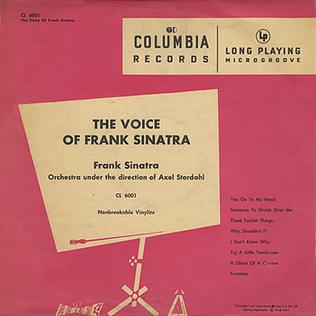
Columbia's first pop 10" LP album

Columbia Records introduced their revolutionary new Long Playing Record format on this date in 1948.  Played at 33⅓ rpm, less than half the speed of the industry standard 78 rpm, the new disks were pressed in soft vinyl instead of hard shellac with a narrow groove.  They could hold up to 20 minutes of music per side and when played with an improved stylus reproduced music clearly and with less distortion from surface noise.

There were antecedents to the long playing format, notably the discs used in the Vitaphone motion picture sound system in the 1920’s and the 16” electronic transcription discs for radio broadcasting beginning in 1930.  Originally recorded on shellac, Columbia introduced vinyl pressing in 1930 and other companies experimented with other plastics.

Columbia released one hundred titles simultaneously in two formats in 1948.  Twelve inch discs were intended for long form classical music, opera, and Broadway scores.  Popular music was released on 10” disks usually with three songs to a side.  By catalog number the first pop album was a re-release of a previous 78 album set, The Voice of Frank Sinatra.

Despite the need of many to upgrade their phonographs to play the new disks, they were phenomenal success and were soon the industry standard.  Columbia’s success allowed to eclipse long time dominant RCA Victor.

Victor responded in 1949 by introducing its own new format, 45 rpm also on vinyl.  The small disks could only hold one song no longer than about 3½ minutes of music on each side.  The company expected to package albums of 45s like they had with 78.  The multi-disc album idea was a bust, but the new format quickly replaced the 78 as the standard for singles.

Together the two formats, after Columbia dropped the 10” LP, would rule the recording industry for 40 years with upgrades including longer content per side on LP that would allow whole Broadway shows to be recorded, and, of course, the introduction of stereophonic sound and multi-track recording technology.

Even the introduction of cheap tape alternatives like eight track cartridge and cassette tapes in the ‘70s mainly captured the market for play in cars, never an option for discs of any kind, and on popular portable devices like boom boxes.  In fact, sales of the cheap tapes often spurred the sales of disk recording to be played on high quality home audio equipment.

The death knell for the LP was the one-two punch of technology.  First the new, light weight and easily portable Compact Disc (CD) that also reproduced sound at high quality—although without the “warmth” of vinyl in the eyes of some audiophiles.  Then the I-pod and downloadable music was a hand grenade that nearly destroyed the whole recording industry.  By the early years of this century, few albums were being issued in vinyl LP format.

A niche market remained for club DJs who could better cue songs from LPs and for Hip Hop DJs who relied on manipulation—hand spinning disks back and forth—for some of the signature sounds of rap.
But vinyl LPs have had a loyal cult following and some artists are now releasing their music again in the format for a discriminating audience.

But the days so many of us remember of lining up at record stores for the release of a hotly anticipated LP by The Beatles or other hot act are now as quaint a memory as the listening booths in stores of an earlier era where Bobby Soxers picked out the latest tunes on 78 from their Big Band idols.