Showing posts with label Christian. Show all posts

Monday, February 12, 2024

Examining the Religion and Spirituality of Abraham Lincoln

Lincoln summed up his view.

Note--On Abraham Lincoln's Birthday we reconsider his religious life.

Abraham Lincoln spent a lifetime wrestling with the deepest religious and spiritual questions.  He kept his personal beliefs generally close to his vest.  Although not a conventional Christian, he knew the Bible intimately from thousands of hours of reading and study and could quote chapter and verse with ease.  He was a deeply moral man who agonized over the consequences of his decisions and actions and never let himself off the hook with facile excuses. 

Back in 2009 the nation was in the grip of a wave of Lincoln mania in conjunction with the bi-centennial of his birth.  There was an avalanche of new books and articles examining every aspect of the Great Emancipators life, work, and connections.

The Religious Right—those who were not also neo-Confederates anyway—was busy, as usual, trying to retroactively adopt him as an Evangelical Christian.  On the other hand, the small world of the Unitarian Universalist blog-o-sphere and a spate of sermons, tried to lay claims that Lincoln was, at least in spirit, a Unitarian or a Universalist.

Scott Wells, then a leading Universalist and Christian blogger from a Southern background who has since left the denomination, claimed to be immune to the cult of Lincoln worship.  For his family Lincoln represented oppression, destruction, and the nightmare of Reconstruction.  He also scolded U.U.s for trying to appropriate Lincoln into our ever popular lists of famous UUs.

The following is adapted from my response to Wells.

Hagiography aside, there are many reasons to put your understandable regional bias aside and spend some time studying Abraham Lincoln.  As flawed and inconsistent as any man, he is still rewarding for the subtlety and depth of his thought and his life-long struggle to reconcile a true and deeply held idealism with both personal ambition and the need to act in a brutal and unforgiving environment. Even Harry Truman, a Missouri Democrat whose unreconstructed Confederate mother never forgave him for making Lincolns Birthday a national holiday, came to deeply admire his ancient tribal enemy.

At the dawn of modern Fundamentalism, this author tried to paint Lincoln as an Evangelical Christian despite all the evidence to the contrary.

Lincoln’s relationships to religion are not a murky as some suppose.  Certainly, any denomination that would attempt to claim him as its own is self-delusional. Here is some of what we know.

  • At no time in Lincoln’s life did he ever claim to be a Christian as understood in his time or to be saved.
  • As far is known he was never baptized and never became a member of any church.
  • Among his earliest published writings were attacks on a political rival, Peter Cartwright, a fire-and-brimstone Methodist circuit rider who had accused Lincoln of infidelity and had used his wide Methodist connections to build a Democratic political operation.  The articles, which appeared under a nom de plume, mocked both the man’s religion and his attempts to use his followers as a political base.  Lincoln claimed never to have “denied the truth of Scripture” but did acknowledge that he was not a church member.  Lincoln defeated Cartwright for a seat in Congress, but Cartwright’s charges that he was an infidel—and his own tart responses—would dog him for years.
  • Like most self-educated Americans who had literary aspirations and who were not versed in the Latin and Greek of the Eastern college educated elite, Lincoln had two primary sources to draw from for both inspiration and style—The King James Version of the Bible and the popular plays of William Shakespeare.  He knew both.  But his writing was infused with the cadences and majesty of the Bible. He could also, if the occasion called for it, usually in response to some hypocrisy from the mouth of a believer, quote verse with ease.
  • He deeply admired Thomas Jefferson and treasured the Declaration of Independence as the essential founding document. He borrowed from Jefferson, and from George Washington, the language of Deism in public discourse. He frequently spoke of Providence, Creator, and other Deist constructions. He did not avoid the word God as they usually did, but he did not invoke an explicitly Christian God. One can search in vain for much use of the words Christ or Savior outside of the context of letters of condolence to the families of fallen soldiers often echoing back sentiments expressed by the bereaved. He was all for giving whatever comfort he could.

     ·   In Springfield he attended Marys Presbyterian Church and was friendly with its ministerbut never joined the church or partook in the Spartan Presbyterian communion.  That hasn’t stopped that congregation from calling itself “Lincolns Church” to this day.

Despite the claims by some, Lincoln was no Unitarian but did avidly read the sermons of Transcendentalist, abolitionist, and social reformer the Rev. Theodore Parker and famously paraphrased him in speeches.
 

·         He read the published sermons of both William Ellery Channing and Theodore Parker and appropriated or adapted words from each—especially Parker—in his speeches. But in practice as President, despite a personally cordial relationship with Radical Republican Senator Charles Sumner, he found Abolitionist Unitarians to be pig-headed impediments to a practical prosecution of the war and a move toward healing a post-war, re-united country.  Despite this the UU congregation in Springfield proudly his name.


Maybe Abe was a prophet after all.

In the post-war years both the Abolitionist preachers with whom he sparred during the war and a generation of new Unitarian leaders bloodied on the battlefields of that war—Jenkin Lloyd Jones being a prime exampleparticipated in the myth making that turned the martyred President into a kind of a Saint. They went too far. And rubbing the defeated South’s nose in it exacerbated the regional disdain with which continues to deepen.

But I think many modern Unitarians and Universalists can find much with which to resonate in Lincoln’s personal spiritual journey.  It so resembles so many of our own.


Monday, December 27, 2021

The Holly and the Ivy Annie Lennox—Murfin Winter Holidays Music Festival

                                            The Holly and the Ivy sung by Annie Lennox.

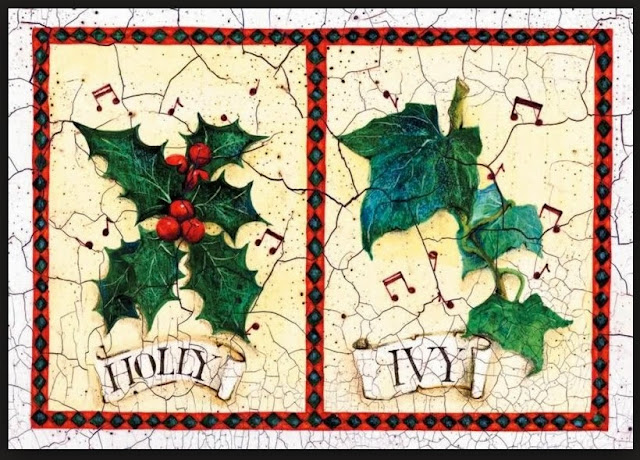
Today we feature one of the oldest English carols, The Holly and the Ivy.  Its origins are shrouded in the mist of time.  Pagan greenery was anointed with Christian symbolism.

The most familiar melody of several that have been set to the is very old and resembles the songs of the Tudor era 1485–1602 which is why it is a favorite of Madrigal Singers.


The earliest surviving mention of the song in print occurred in the early 19th Century when collecting folk music became fashionable.  The earliest recorded version of the lyrics was in a broadside published by H. Wadsworth in Birmingham between 1814 and ’18.  Later Victorian sources claimed that it was on a now lost broadside published about 1710.  Variations of the words were reproduced and the form in which they are most usually sung now first appeared in Cecil Sharp’s 1911 collection English Folk-Carols.  Sharp also married the words to the melody we now know.

The holly’s bright red berries were identified with the Blood of Christ and its sharp leaves with the Crown of Thorns and the Ivy was said to represent the purity of the Virgin Mary.  Versions of the song were sung during the Advent hanging of the greens in country parishes and were also popular with carolers and wassailers during the Twelve Days of Christmas.

                                An early broadside of The Holly & Ivy.

The custom of decorating homes with greens around the Winter Solstice pre-dates Christianity.  The Druids apparently used the ever-green holly and in Roman Britain greens were hung for Saturnalia.  The Christian references in the song as we now sing it may have been grafted onto earlier pagan or rural versions that orally preserved the old traditions.

The Holly King whose effigy was burned at Winter Solstice to be replaced by the Oak King or Green Man, the ruler of the growing light.

The earliest recording of the song was collected by Cecil Sharp from Mrs. Mary Clayton, at Chipping Camden, Gloucestershire and can be found in the British Museum.  Sir Henry Walford Davies wrote a popular choral arrangement that is often performed at the Festival of Nine Lessons and Carols and by choirs around the world.

In addition to choral presentations, many artists have recorded versions of the song.  None are lovelier than the rendition of Anne Lennox, the classically trained contralto who gained fame as one half of Eurhythmics.  Until Adelle she was the “the most successful female British artist in UK music history.” As of 2008, including her work with Eurythmics, Lennox had sold over 80 million records worldwide. She has been named the Greatest White Soul Singer Alive by VH1 and one of the 100 Greatest Singers of All Time by Rolling Stone.  In 2012, she was rated #22 on VH1’s 100 Greatest Women in Music. At the 2015 Ivor Novello Awards, Lennox was made a fellow of the British Academy of Songwriters, Composers and Authors, the first woman to receive the honor.

In addition to her career as a musician, Lennox is also a political and social activist, notable for raising money and awareness for HIV/AIDS as it affects women and children in Africa. She founded the SING Campaign in 2007 and founded a women’s empowerment charity The Circle in 2008. In 2011, Lennox was appointed a member of the Order of the British Empire (OBE) by Queen Elizabeth II for her “tireless charity campaigns and championing of humanitarian causes.”

Annie Lennox's 2010 album A Christmas Cornucopia is a modern classic and one of the greatest holiday recordings of all time.

Lennox considers herself an agnostic and became a vegetarian at age 29.  Her work, especially on her 2010 album A Christmas Cornucopia which included The Holly and the Ivy shows, distinctly pagan influences, a common tendency of feminists interested in the environment, justice, and the divine feminine. 

Wednesday, February 12, 2020

Comparing and Contrasting—The Religion and Spirituality of Lincoln and Trump

One of these Republicans is not like the other.
Note:  This post on the spiritual life of Abraham Lincoln has been nearly annual fixture here on his birthday.  But it remains ever relevant.  No more so than now.  The latest—and perhaps last—Republican President could not have a more starkly different religious life than the first and greatest. 
Abraham Lincoln spent a life time wrestling with the deepest religious and spiritual questions.  He kept his personal beliefs generally close to his vest.  Although not a conventional Christian, he knew the Bible intimately from thousands of hours of reading and study and could quote chapter and verse with ease.  He was a deeply moral man who agonized over the consequences of his decisions and actions and never let himself off the hook with facile excuses.  
Donald Trump, on the other hand, although a nominal Presbyterian and self-declared good Christian, seems totally unaware of the basic precepts of his professed faith and actually ignorant of basic Biblical literacy.  During the campaign he famously fumbled questions about favorite Bible verses and the teachings of Jesus.  At the National Prayer Breakfast the morning after his inauguration TV cameras caught him fidgeting in the pew and obviously bored by the proceedings.   Then, when it his turn to speak he delivered rambling, incoherent remarks including bragging about the ratings on Celebrity Apprentice, chiding his replacement Arnold Schwarzenegger who had been critical his climate change denial and environmental recklessness; and asking the worshipers to pray for the show’s ratings.  These are the action of a man with no serious faith of his own.  
Likewise, like any classic narcissist, he his only morality seems to be the notion that any criticism or slight to him is “unfair.”  But he displays absolutely no moral compunctions in his own behavior—he will do or say anything that pleasures or advantages him no matter the consequences to others.  He is a man for whom the Golden Rule is not only empty words but is completely unfathomable as a concept.

Trump gloating at the National Prayer Breakfast before refuting basic Christian values and attacking his political enemies for their religious convictions.
That could not have been more evident at yet another National Prayer Breakfast this year on the heels of his acquittal in the Senate of Impeachment charges immediately made a point of refuting the remarks of Washington Post columnist Arthur Brooks addressed traditional Christian themes during his remarks, urging attendees to “love your enemies” and transcend “contempt.”  Trump refuted these core values of the New Testament and teachings of Jesus—
Arthur, I don’t know if I agree with you.  As everybody knows, my family, our great country, and your president have been put through a terrible ordeal by some very dishonest and corrupt people.  They have done everything possible to destroy us, and by so doing, very badly hurt our nation.
Clearly, this was a man in no mood to love his enemies or turn the other cheek.  Instead in his rambling, sometime incoherent, comments he went on to attack his political enemies— Mitt Romney, the lone Republican Senator to vote for a count of impeachment for citing his faith and conscience for the stand and House Speaker Nancy Pelosi for daring to say that she prayed for him:

I don’t like people who use their faith as justification for doing what they know is wrong. Nor do I like people who say, “I pray for you,” when they know that that’s not so.
Despite this, the most rabid elopements of the Religious Right including Franklin Graham, Jim Bakker, and his alleged spiritual advisor Paula White contuse to embrace him and anointed him as a fulfillment of prophesy.  Most Republican leaders and prominent Evangelicals remained silent.
If Trump’s religion is facile and fraudulent, Lincoln’s is endlessly fascinating. 
Back in 2009 the nation was in the grip of a wave of Lincoln mania in conjunction with the bi-centennial of his birth.  There was an avalanche of new books and articles examining every aspect of the Great Emancipator’s life, work, and connections.
The Religious Right—those who were not also neo-Confederates anyway—was busy, as usual, trying to retroactively adopt him as an Evangelical Christian.  On the other hand the small world of the Unitarian Universalist blog-o-sphere and a spate of sermons, tried to lay claims that Lincoln was, at least in spirit, a Unitarian or a Universalist.
Scott Wells, a leading Universalist and Christian blogger from a Southern background claimed to be immune to the cult of Lincoln worship.  For his family Lincoln represented oppression, destruction, and, for them, the nightmare of Reconstruction.  He also scolded U.U.s for trying to appropriate Lincoln into our ever popular lists of famous UUs.
The following is adapted from my response to Wells.

Lincoln summed up his view.
Hagiography aside, there are many reasons to put your understandable regional bias aside and spend some time studying Abraham Lincoln.  As flawed and inconsistent as any man, he is still rewarding for the subtlety and depth of his thought and his life-long struggle to reconcile a true and deeply held idealism with both personal ambition and the need to act in a brutal and unforgiving environment. Even Harry Truman, a Missouri Democrat whose unreconstructed Confederate mother never forgave him for making Lincoln’s Birthday a national holiday, came to deeply admire his ancient tribal enemy.
Lincoln’s relationships to religion are not a murky as some suppose. Certainly any denomination that would attempt to claim him as its own is self-delusional. Here is some of what we know.
  • At no time in Lincoln’s life did he ever claim to be a Christian as understood in his time or to be saved.
  • As far is known he was never baptized and never became a member of any church.
  • Among his earliest published writings were attacks on a political rival, Peter Cartwright, a fire-and-brimstone Methodist circuit rider who had accused Lincoln of infidelity and had used his wide Methodist connections to build a Democratic political operation.  The articles, which appeared under a nom de plume, mocked both the man’s religion and his attempts to use his followers as a political base.  Lincoln claimed never to have “denied the truth of Scripture” but did acknowledge that he was not a church member.  Lincoln defeated Cartwright for a seat in Congress, but Cartwright’s charges that he was an infidel—and his own tart responses—would dog him for years.
  • Like most self-educated Americans who had literary aspirations and who were not versed in the Latin and Greek of the Eastern college educated elite, Lincoln had two primary sources to draw from for both inspiration and style—The King James Version of the Bible and the popular plays of William Shakespeare.  He knew both.  But his writing was infused with the cadences and majesty of the Bible. He could also, if the occasion called for it, usually in response to some hypocrisy from the mouth of a believer, quote verse with ease.
  • He deeply admired Thomas Jefferson and treasured the Declaration of Independence as the essential founding document. He borrowed from Jefferson, and from George Washington, the language of Deism in public discourse. He frequently spoke of Providence, Creator, and other Deist constructions. He did not avoid the word God as they usually did, but he did not invoke an explicitly Christian God. One can search in vain for much use of the words Christ or Savior outside of the context of letters of condolence to the families of fallen soldiers often echoing back sentiments expressed by the bereaved. He was all for giving whatever comfort he could.
  • In Springfield he attended Mary’s Presbyterian Church and was friendly with its minister but never joined the church or partook in the Spartan Presbyterian communion.  That hasn’t stopped that congregation from calling itself “Lincoln’s Church” to this day.
    Despite the claims by some, Lincoln was no Unitarian but did avidly read the sermons of Transcendentalist, abolitionist, and social reformer the Rev. Theodore Parker and famously paraphrased him in speeches.

  • He read the published sermons of both William Ellery Channing and Theodore Parker and appropriated or adapted words from each—especially Parker—in his speeches. But in practice as President, despite a personally cordial relationship with Radical Republican Senator Charles Sumner, he found Abolitionist Unitarians to be pig-headed impediments to a practical prosecution of the war and a move toward healing a post-war, re-united country.  Despite this the UU congregation in Springfield proudly adopted his name.

Maybe Abe was a prophet after all...
In the post-war years both the Abolitionist preachers with whom he sparred during the war and a generation of new Unitarian leaders bloodied on the battlefields of that war—Jenkin Lloyd Jones being a prime exampleparticipated in the myth making that turned the martyred President into a kind of a Saint. They went too far. And rubbing the defeated South’s nose in it exacerbated the regional disdain with which continues to deepen.
But I think many modern Unitarians and Universalists can find much with which to resonate in Lincoln’s personal spiritual journey.  It so resembles so many of our own.

Tuesday, February 12, 2019

Lincoln and Faith—Fact and Fiction

Evangelicals have been trying to claim Lincoln for a long time.  Today's Religious Right continues to do it.

Note—On Abraham Lincoln’s 210th birthday we revisit an analysis of Honest Abe’s religious beliefs and connection.  As you read, contrast to those of the current occupant of the White House who claims to be a born again Christian and a champion of the Religious Right yet shows no knowledge of or interest in the faith he professes.

Back in 2009 the nation was in the grip of a wave of Lincoln mania in conjunction with the bi-centennial of his birth.  There was an avalanche of new books and articles examining every aspect of the Great Emancipator’s life, work, and connections.

The Religious Right—those who were not also neo-Confederates any way—was busy, as usual, trying to retroactively adopt him as an Evangelical Christian.  On the other hand the small world of the Unitarian Universalist blog-o-sphere and a spate of sermons, tried to lay claims that Lincoln was, at least in spirit, a Unitarian or a Universalist.

Scott Wells, a leading Universalist and Christian blogger from a Southern background claimed to be immune to the cult of Lincoln worship.  For his family Lincoln represented oppression, destruction, and, for them, the nightmare of Reconstruction.  He also scolded U.U.s for trying to appropriate Lincoln into our ever popular lists of famous UUs.

The following is adapted from my response to Wells.

Hagiography aside, there are many reasons to put your understandable regional bias aside and spend some time studying Abraham Lincoln. As flawed and inconsistent as any man, he is still rewarding for the subtlety and depth of his thought and his life long struggle to reconcile a true and deeply held idealism with both personal ambition and the need to act in a brutal and unforgiving environment. Even Harry Truman, a Missouri Democrat whose unreconstructed Confederate mother never forgave him for making Lincoln’s Birthday a national holiday, came to deeply admire his ancient tribal enemy
In talking about religion Lincoln often expressed a modest practicalism.
Lincoln’s relationships to religion are not a murky as some suppose. Certainly any denomination that would attempt to claim him as its own is self-delusional. Here is some of what we know.

1)   At no time in Lincoln’s life did he ever claim to be a Christian as understood at his time or to be saved.

2)  As far is known he was never baptized and never became a member of any church.

3)  Among his earliest published writings were attacks on a political rival, Peter Cartwright who was a fire-and-brimstone Methodist circuit rider who had accused Lincoln of infidelity and had used his wide Methodist connections to build a Democratic political operation.  The articles, which appeared under a nom de plume, mocked both the man’s religion and his attempts to use his followers as a political base.  Lincoln claimed never to have “denied the truth of Scripture” but did acknowledge that he was not a church member.  Lincoln defeated Cartwright for a seat in Congress, but Cartwright’s charges—and his own tart responses—would dog him for years.

4)   Like most self-educated Americans who had literary aspirations and who were not versed in the Latin and Greek of the Eastern college educated elite, Lincoln had two primary sources to draw from for both inspiration and style—The King James Version of the Bible and the popular plays of William Shakespeare. He knew both. But his writing was infused with the cadences and majesty of the Bible. He could also, if the occasion called for it, usually in response to some hypocrisy from the mouth of a believer, quote verse with ease.

5)  He deeply admired Thomas Jefferson and treasured the Declaration of Independence as the essential founding document. He borrowed from Jefferson, and from George Washington, the language of Deism in public discourse. He frequently spoke of Providence, Creator, and other Deist constructions. He did not avoid the word God, but he did not invoke an explicitly Christian God. One can search in vain for much use of the words Christ or Savior outside of the context of letters of condolence to the families of fallen soldiers often echoing back sentiments expressed by the bereaved. He was all for giving whatever comfort he could.

Springfield"s Presbyterian Church continues to call itself  Lincoln's Church and includes this inaccurate--Lincoln was still just growing his beard when he left town--illustration in their literature
6)  In Springfield he attended Mary’s Presbyterian Church and was friendly with its minister but never joined the church or partook in the Spartan Presbyterian communion.  That hasn’t stopped that congregation from calling itself “Lincoln’s Church” to this day.

7)  He read the published sermons of both William Ellery Channing and Theodore Parker and appropriated or adapted words from each—especially Parker—in his speeches. But in practice as President, despite a personally cordial relationship with Radical Republican Senator Charles Sumner, he found Abolitionist Unitarians to be pig-headed impediments to a practical prosecution of the war and a move toward post-war healing and a re-united country.  Despite this the UU congregation in Springfield proudly adopts his name.
Lincoln read, admired, and paraphrased Unitarian Theodore Parker.
8) He believed deeply and viscerally in Fate and implacable Destiny. This was part and parcel of his widely reported melancholia. Some scholars have attributed this to a sort of Calvinist hang-over. Could be. But Lincoln’s sense of fate and destiny seem to rise from far more ancient impulses.

9) There is nothing to connect Lincoln to institutional Universalism. Steven Rowe a Southern Universalist Church  historian responded to Wells with an excerpt from memoirs by Universalist minister quoting appreciative comment by Lincoln after attending a debate between a Universalist and a orthodox minister:

“I used to think that it took the smartest kind of man to preach and defend Universalism; I now think entirely different. It is the easiest faith to preach that I have ever heard.  There is more proof in its favor, than in any other doctrine I have ever heard. I  have a suit in court here to-morrow and if I had as much proof in its favor as there is in Universalism, I would go home, and leave my student to take charge of it, and I should feel perfectly certain that he would gain it.” Such were his words.

Unfortunately there are no other witnesses to Lincoln attending the debate described or speaking this assessment of it.  And I am sure a diligent search of the memoirs of ministers of other denominations can turn up appreciative Lincoln quotes, some perhaps true, others the product of devout wishful thinking.  Yet there is much to suggest that Lincoln privately embraced a kind universalism of spirit that accepted a common struggle for understanding a greater mystery that transcended mere denominationalism.
Artist Michelle L. Hamilton depicted Lincoln describing his experiences in a White House séance.
10) In the White House, with the gruesome burdens of a war-time presidency on his shoulders and the private grief over the loss of his beloved son Willie, Lincoln followed Mary’s lead and seemed to take Spiritualism, then at the height of its American popularity, with due seriousness. At the time many Universalist ministers were also toying—to considerable controversy—with Spiritualism. But again Lincoln never publicly endorsed Spiritualism, or acknowledged it as his faith.

In the post-war years both the Abolitionist preachers with whom he sparred during the war and a generation of new Unitarian leaders bloodied on the battlefields of that war—Jenkin Lloyd Jones being a prime example—participated in the myth making that turned the martyred President into a kind of a Saint. They went too far. And rubbing the defeated South’s nose in it exacerbated the regional disdain with which you grew up.

But I think many modern Unitarians and Universalists can find much with which to resonate in Lincoln’s personal spiritual journey.  It so resembles so many of our own.