Showing posts with label Declaration of Independence. Show all posts

Saturday, July 4, 2026

The Fourth of July Had Competition to be Independence Day


A scene that never happened--the signing of the Declaration of Independence.  There was no great signing ceremony on July 4th or any other day.  On August 2, 1776 the Delegates to the Continental Congress who were still in Philadelphia stopped by the Pennsylvania State House to add their signatures before they left town.  Those who were already gone added their signatures when they could--weeks, months, and in one case years later.

Note--Officially, the United States is celebrating it 250th birthday today.  Due to distractions, divergence, and disappointment the celebration is much more muted than the national hoopla fifty years ago for the Bicentennial.  But gloomy or not the commemoration might not be on the right date. 

As we all know today is Independence Day when Americans celebrate the adoption of a resolution by the Continental Congress formally severing ties between the England and her former colonies in 1776. Although we celebrate on July 4th, the date is just one of several that could have been chosen. 

On May 15 Congress adopted a preamble for a resolution offered by Richard Henry Lee of Virginia calling for colonies without a “government sufficient to the exigencies of their affairs” to adopt new governments.  The preamble, written by John Adams, said that “it is necessary that the exercise of every kind of authority under the said crown should be totally suppressed.”  Although the four Middle Colonies voted against it, Adams wrote home that he considered this a virtual declaration of independence.  The same day the Virginia Convention adopted a resolution calling for a dissolving all allegiance to the Crown 


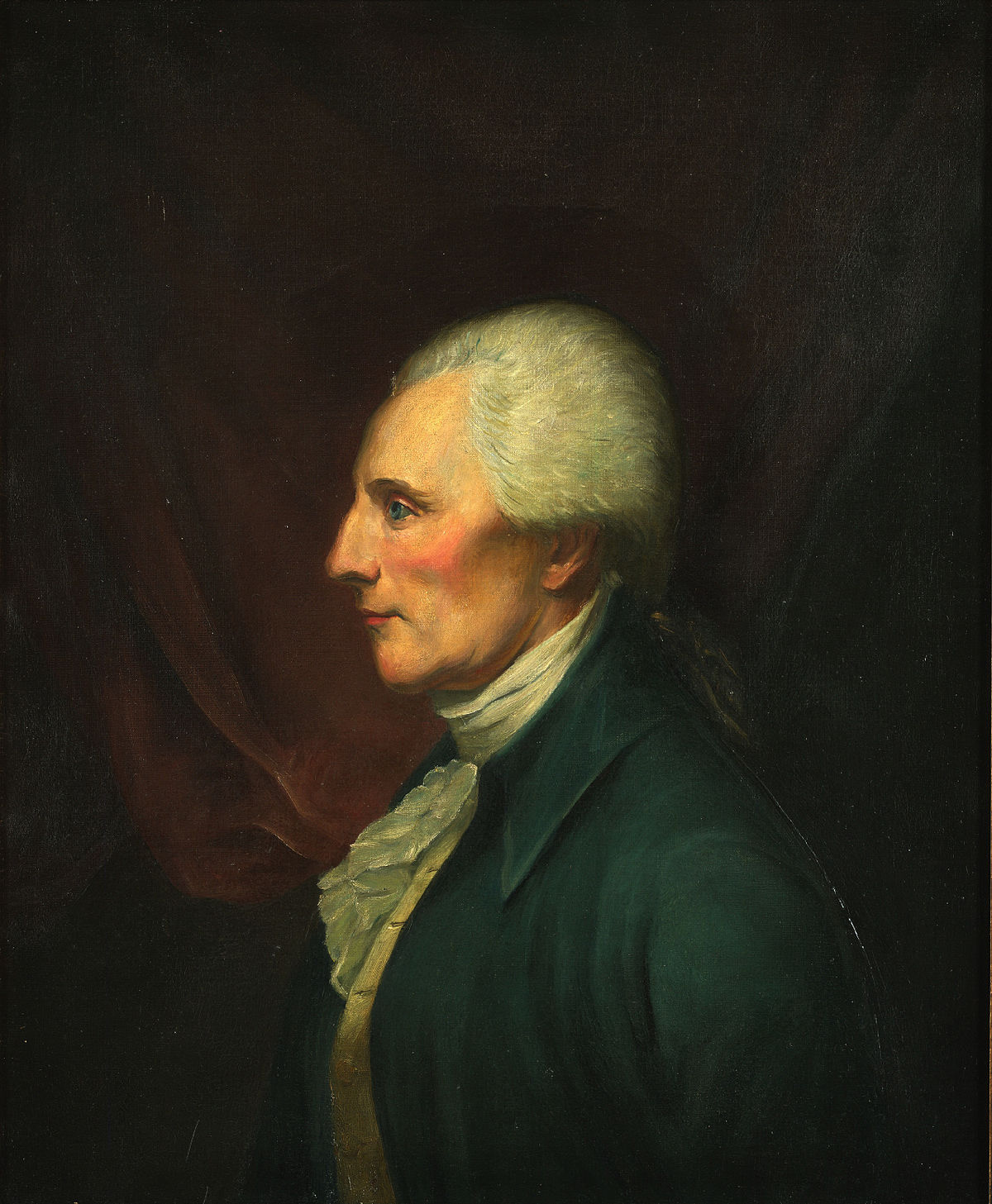
Virtually forgotten in popular accounts, Virginia delegate Richard Henry Lee offered the underlying resolution for Independence.  The familiar document was an explanation and justification of the act drafted by a special committee.  It was not the legal document accomplishing separation.  Lee's resolution and the votes for and against it were recorded in the official proceedings of Congress.

In keeping with his instructions on June 11 Lee offered a resolution that Congress declare independence, seek foreign alliances, and begin laying the groundwork for a new confederation:

Resolved, that these United Colonies are, and of right ought to be, free and independent States, that they are absolved from all allegiance to the British Crown, and that all political connection between them and the State of Great Britain is, and ought to be, totally dissolved.

As Lee’s resolution was being debated, Congress authorized a Committee of Five to draw up a document explaining the action, should it be passed.  The committee consisted of Adams; Benjamin Franklin of Pennsylvania, the delegate with the most international renown and prestige; Thomas Jefferson of Virginia, one of the youngest delegates; Robert R. Livingston of New York, and Roger Sherman of Connecticut.  


The famous committee charged with drafting a justification for Independence. Left to right:  Thomas Jefferson, Roger Sherman, Benjamin Franklin, Robert Livingston, and John Adams.  Jefferson wrote the first draft.  Franklin and Adams were actively involved in editing and fine tuning the document.  Sherman and Livingston are not known to have contributed to the wordage but were important politically to secure support from their states--especially Livingston whose New York delegation was deadlocked on Independence.

The committee delegated to Jefferson the job of writing a first draft.  He did so over several days.  The committee conferred and recommended some changes, which mortified Jefferson, and then he produced a draft incorporating the edits.  It remained, however, mostly Jefferson’s work. 

The language was sent to Congress on June 28.  The document was tabled until action on Lee’s resolution was completed. On July 1, sitting as a Committee of the Whole with each Colony having one vote, the resolution was approved with 9 yeas, two nays (Pennsylvania and South Carolina), and a no vote by New York, whose delegation lacked instructions, and Delaware whose two delegates were split.  


                    Ceasar Rodney rode hell-for-leather from Delaware to cast his deciding vote in that colony's delegation on June 2 passing Lee's resolution.

On July 2 South Carolina reconsidered and switched its vote to yes and the two most ardent opponents of independence in the Pennsylvania delegation, John Dickinson and Robert Morris, bowing to the inevitable, abstained in a caucus of the state’s delegates allowing the delegation to follow Franklin for independence.  Then, dramatically, Caesar Rodney arrived after an epic ride from Delaware to cast a vote breaking the tie in that delegation.  Only New York, then, had not voted for independence.  Adams regarded the July 2 vote as definitively the day of independence.  He wrote home to his wife Abigail:

The Second Day of July 1776, will be the most memorable Epocha, in the History of America. I am apt to believe that it will be celebrated, by succeeding Generations, as the great anniversary Festival. It ought to be commemorated, as the Day of Deliverance by solemn Acts of Devotion to God Almighty. It ought to be solemnized with Pomp and Parade, with Shews, Games, Sports, Guns, Bells, Bonfires and Illuminations from one End of this Continent to the other from this Time forward forever more. You will think me transported with Enthusiasm but I am not. I am well aware of the Toil and Blood and Treasure, that it will cost us to maintain this Declaration, and support and defend these States. Yet through all the Gloom I can see the Rays of ravishing Light and Glory. I can see that the End is more than worth all the Means. And that Posterity will tryumph in that Days Transaction, even altho We should rue it, which I trust in God We shall not.

Congress then took up the wording declaration from the Committee of Five. On July 3 after spirited debate Congress adopted most of Jefferson’s text except for a lengthy passage critical of the slave trade and some other relatively minor matters of language.  He was bitterly disappointed, but the deed was done.  Congress ordered official copies be made for each state and printed copies to be read publicly. These copies were dated July 4.  A calligrapher worked on a very fine original document which most delegates signed on August 2 and to which absent delegates appended their signatures weeks, maybe even months later.  There was no grand signing ceremony as enshrined in myth.  


The iconic document on display at the Library of Congress and reproduced in class rooms across the country is one of about three copies made by a calligrapher.  Like the printed copies it was dated July 4 although there was no action by Congress that day.  The Fourth was meant to be the date that the Declaration was to be read publicly for the first time but the broadsides were not ready from the printer.  The Philadelphia Evening Post ran it on July 6 and it was not until July 8 that Col. John Nixon of the Philadelphia Committee of Safety read it on the steps of the State House.   General George Washington personally read the document to his troops and local citizens in New York City on July 9.

Here are some dates in the associated with marking Independence Day and the Fourth of July:

1776—Philadelphia celebrated with toasts, 13-gun salutes, speeches, fireworks, and parades after the official reading on July 8.

1777—13 guns were fired once in the morning and once in the evening in Bristol, Rhode Island

1778George Washington marked the occasion with double rum ration for the troops. Benjamin Franklin and John Adams held a dinner for fellow Americans in Paris.

1779—The Fourth fell on a Sunday. To keep the Sabbath, observances in many places were held July 5.

1781Massachusetts became the first state legislature to recognize the day as an official occasion.

1791—The first recorded use of the name Independence Day occurred.

1826Former Presidents John Adams and Thomas Jefferson died within an hour of each other on the 50th anniversary of the dated copies of the Declaration

1831—Former President James Monroe died on the Fourth.

1870—Congress made the 4th of July an unpaid holiday for Federal employees.

1884—The Statue of Liberty was presented to the American People in Paris.

1941—Congress made Independence Day a paid Federal holiday.


Friday, July 4, 2025

At Issue Today is Independence or Interdependence


 Congress Voting Independence by Edward Savage circa 1800.

Note—This essay lightly updated from a first posted four years ago but remains on point.

Today is the great patriotic holiday of the United States.  We call it the Fourth of July, or just the Fourth.  But that is just a date.  The official Federal holiday is called Independence Day in celebration of the adoption of the document that proclaimed separation from England, its King, and Parliament.  The Fourth was the date that wrangling over the wording of the document was completed and the final draft was dispatched to the printer.  The actual vote to approve independence had been cast by the Continental Congress two days earlier, July 2, 1776 and John Adams, the prime mover of the resolution believed that was the date which would be marked and celebrated.


The committee to draft an Independence resolution at work.  Left to right Benjamin Franklin, Thomas Jefferson, Robert Livingston, and Roger Sherman.
 

The soaring rhetoric of what we now call the Declaration of Independence was crafted mostly by young Virginia delegate Thomas Jefferson, a member of a committee that included Adams, senior sage Benjamin Franklin, plus Robert Livingston of New York and Roger Sherman of Connecticut—the latter two contributing almost nothing to the work.  Jefferson was wounded to the quick that Congress slashed almost a quarter of his verbiage, including passages decrying the slave trade.  But his words still had undeniable power.  As soon as a messenger could gallop to Massachusetts, General George Washington had them read to the assembled troops laying siege to British-held Boston.

The document began:

When in the Course of human events, it becomes necessary for one people to dissolve the political bands which have connected them with another, and to assume among the powers of the earth, the separate and equal station to which the Laws of Nature and of Nature’s God entitle them, a decent respect to the opinions of mankind requires that they should declare the causes which impel them to the separation.

We hold these truths to be self-evident, that all men are created equal, that they are endowed by their Creator with certain unalienable Rights, that among these are Life, Liberty and the pursuit of Happiness.

That to secure these rights, Governments are instituted among Men, deriving their just powers from the consent of the governed, That whenever any Form of Government becomes destructive of these ends, it is the Right of the People to alter or to abolish it, and to institute new Government, laying its foundation on such principles and organizing its powers in such form, as to them shall seem most likely to effect their Safety and Happiness. Prudence, indeed, will dictate that Governments long established should not be changed for light and transient causes; and accordingly all experience hath shewn, that mankind are more disposed to suffer, while evils are sufferable, than to right themselves by abolishing the forms to which they are accustomed. But when a long train of abuses and usurpations, pursuing invariably the same Object evinces a design to reduce them under absolute Despotism, it is their right, it is their duty, to throw off such Government, and to provide new Guards for their future security.


 The Declaration of Independence as first printed and circulated as a broadside.

After serving it purpose, the Declaration had no further legal importance.  None of its noble sentiments had the force of law.  Neither the Constitution, which formed our present government structure and was adopted years later after the conclusion of the lengthy Revolutionary War, nor the Bill of Rights made mention of them.  In practice the rights to “life, liberty, and the pursuit of happiness” were severely limited and did not include at first even non-propertied citizens, let alone women, children, and slaves—all of whom were chattel of their masters—or the Native peoples with whom they shared the continent.

But Jefferson’s words would not go away and would time and again become a call to “the better angels of our Nature” in the words of Abraham Lincoln.  Lincoln famously drew inspiration from the document in the Gettysburg Address and in his Emancipation Proclamation, just as the ladies at Seneca Falls had paraphrased them in their Declaration of Sentiments on the Rights of Women.  They would inspire abolitionists, the labor movement, Suffragists, the Civil Rights Movement, the struggle for lesbian/gay/transgender rights, as well as other peoples across the globe.  Slowly, and at great sacrifice and often bloody cost Jefferson’s vision of liberty has become wider and more inclusive.

Some conservative intellectuals recognizing the power of the inspiration now argue that the words were mere convenient propaganda of the moment and that only the “clear language and original intent” of the Constitution— meaning a government of, by, and for white propertied males—should bind society.  So far that is a distinctly minority view, but events show it is gaining traction.

Speaking of original intent, many Americans don’t have a clear understanding of what the Founders meant by Independence.  We think of it as the national independence of a nation state called the United States of America.  The Delegates saw it as a declaration by 13 united sovereign states, here-to-fore colonies, in a loose alliance.  Not a single delegate thought that they were creating a united nation and no state legislature would have approved of a document that made that claim.  


The emergency of an already underway revolutionary war necessitated some cooperation among the former colonies as advocated by this famous political cartoon.  But the reluctant snake was not really whole or healthy. 

The minimal government overseen by the Continental Congress had almost no power over the states.  It could only beg money to keep an Army in the field and could pass few laws binding on its member states.  After the adoption of the documents only marginally more authority was granted under the Articles of Confederation in 1777 and its ratification by the States in 1781. 

For its part the English Crown and Parliament likewise considered each of its rebellious colonies a unique entity and on that basis refused to treat with representatives of Congress until the French entered into the conflict and turned it into a literal world war threatening to bleed and bankrupt the United Kingdom.

After the war was finally over the Articles proved too weak to perform basic functions including facilitating trade between the member states which were levying internal tariffs against one another.  It also could not raise the considerable money needed to retire the enormous war debt—much of it owed to former soldiers and suppliers to the Army as well as bond holders both here and in Europe.  After much wrangling and anguish, the states ceded some authority to a new government under the Constitution.  But there was still not much sense of a National identity.  Most people considered themselves citizens of their states.   


 Many historians credit Lincoln's Gettysburg Address for re-establishing the Declaration of Independence as a foundational national document and identifying it to with an indivisible nation.

It took decades for the interdependence of the states to begin to take hold—and that was mortally tested by sectional differences over slavery and the eventual Civil War.  Most historians now believe that the United States finally consolidated as a nation at gun point after the great national conflagration.  Two World Wars, the Cold War, and eventual national prosperity helped create a widely embraced national identity that we celebrate with much flag waving on the Fourth of July.

But even today, not everyone thinks it is a great idea—ask the League of the South, libertarian neo-confederate think tanks, the rise of some of the new so-called Alt-right, and Trumpist MAGA minions.

In the long run, probably more serious is the consequence of the globalization of the economy, and the information revolution of the World Wide Web, and computerization which many economists and futurists believe is rendering the old concept of national independence obsolete and perhaps even threatens the viability of nation states as the dominant institutions of the world.

The future is now for many globalists.  Instantaneous communications; rapid transportation connections on land, sea, and air; and the trading system that has evolved since the end of World War II all mean that manufacturing will move wherever production costs—mostly labor—is the cheapest and natural resources are available  to compete in a global market requiring economies of scale.  This has already destroyed the semi-autonomous economies of many nation states and redealt the wealth cards.  There are winners and losers in this process, but both critics and enthusiastic supporters of the new system believe that it is mostly inevitable.

In this scenario, various international connectionstreaty and trade agreements, transnational organizations from the United Nations to regional groupings like the European Union, banking and economic groups like the International Monetary Fund, and Non-Governmental Organizations of many types largely supplant national governments.  Developments like Bitcoin and other Cryptocurrency alternatives even detach the world economy from the Dollar, Euro, Yen, Ruble and other currencies.


Optimists hope that this interdependent world, after natural birth pangs, will result in a fairer and more equitable distribution of wealth across the globe and ultimately raise the standard of living to billions while curbing the hoarding of wealth by rich nations, most notably the United States.

Pessimists fear instead that a libertarian global free market will turn into a Hobbesian war of all against all with an unaccountable oligarchy gaining the vast majority of benefits and most of the power.

The rise of populist nationalism represented by Donald Trump in the U.S; by forces in Europe where Brexit triumphed in Britain;  neo-fascist governments in the Philippines, Turkey, Poland and other former Soviet satellites or republics; and Brazil  are a direct result of resistance to the trend of global interdependence.  It turns out people want not only economic protection for their narrow self-interest, but also to preserve their very identities which are defined by ethnicity, language, religion, and culture.  They want to insure national independence.

Meanwhile the world was engulfed in crises—out of control climate change and a global pandemic—that can only be addressed by global cooperation, the essence of interdependence.

This should not be and cannot be an either/or choice.  The metaphor of choice is a magnet with its north and south polls which cannot exist without each other.  The world will have to find way to be both/and—both independent and interdependent.  There will be tensions and stress, but the alternatives are just choices of dystopian nightmares.