Showing posts with label Robert Livingston. Show all posts

Saturday, July 4, 2026

The Fourth of July Had Competition to be Independence Day


A scene that never happened--the signing of the Declaration of Independence.  There was no great signing ceremony on July 4th or any other day.  On August 2, 1776 the Delegates to the Continental Congress who were still in Philadelphia stopped by the Pennsylvania State House to add their signatures before they left town.  Those who were already gone added their signatures when they could--weeks, months, and in one case years later.

Note--Officially, the United States is celebrating it 250th birthday today.  Due to distractions, divergence, and disappointment the celebration is much more muted than the national hoopla fifty years ago for the Bicentennial.  But gloomy or not the commemoration might not be on the right date. 

As we all know today is Independence Day when Americans celebrate the adoption of a resolution by the Continental Congress formally severing ties between the England and her former colonies in 1776. Although we celebrate on July 4th, the date is just one of several that could have been chosen. 

On May 15 Congress adopted a preamble for a resolution offered by Richard Henry Lee of Virginia calling for colonies without a “government sufficient to the exigencies of their affairs” to adopt new governments.  The preamble, written by John Adams, said that “it is necessary that the exercise of every kind of authority under the said crown should be totally suppressed.”  Although the four Middle Colonies voted against it, Adams wrote home that he considered this a virtual declaration of independence.  The same day the Virginia Convention adopted a resolution calling for a dissolving all allegiance to the Crown 


Virtually forgotten in popular accounts, Virginia delegate Richard Henry Lee offered the underlying resolution for Independence.  The familiar document was an explanation and justification of the act drafted by a special committee.  It was not the legal document accomplishing separation.  Lee's resolution and the votes for and against it were recorded in the official proceedings of Congress.

In keeping with his instructions on June 11 Lee offered a resolution that Congress declare independence, seek foreign alliances, and begin laying the groundwork for a new confederation:

Resolved, that these United Colonies are, and of right ought to be, free and independent States, that they are absolved from all allegiance to the British Crown, and that all political connection between them and the State of Great Britain is, and ought to be, totally dissolved.

As Lee’s resolution was being debated, Congress authorized a Committee of Five to draw up a document explaining the action, should it be passed.  The committee consisted of Adams; Benjamin Franklin of Pennsylvania, the delegate with the most international renown and prestige; Thomas Jefferson of Virginia, one of the youngest delegates; Robert R. Livingston of New York, and Roger Sherman of Connecticut.  


The famous committee charged with drafting a justification for Independence. Left to right:  Thomas Jefferson, Roger Sherman, Benjamin Franklin, Robert Livingston, and John Adams.  Jefferson wrote the first draft.  Franklin and Adams were actively involved in editing and fine tuning the document.  Sherman and Livingston are not known to have contributed to the wordage but were important politically to secure support from their states--especially Livingston whose New York delegation was deadlocked on Independence.

The committee delegated to Jefferson the job of writing a first draft.  He did so over several days.  The committee conferred and recommended some changes, which mortified Jefferson, and then he produced a draft incorporating the edits.  It remained, however, mostly Jefferson’s work. 

The language was sent to Congress on June 28.  The document was tabled until action on Lee’s resolution was completed. On July 1, sitting as a Committee of the Whole with each Colony having one vote, the resolution was approved with 9 yeas, two nays (Pennsylvania and South Carolina), and a no vote by New York, whose delegation lacked instructions, and Delaware whose two delegates were split.  


                    Ceasar Rodney rode hell-for-leather from Delaware to cast his deciding vote in that colony's delegation on June 2 passing Lee's resolution.

On July 2 South Carolina reconsidered and switched its vote to yes and the two most ardent opponents of independence in the Pennsylvania delegation, John Dickinson and Robert Morris, bowing to the inevitable, abstained in a caucus of the state’s delegates allowing the delegation to follow Franklin for independence.  Then, dramatically, Caesar Rodney arrived after an epic ride from Delaware to cast a vote breaking the tie in that delegation.  Only New York, then, had not voted for independence.  Adams regarded the July 2 vote as definitively the day of independence.  He wrote home to his wife Abigail:

The Second Day of July 1776, will be the most memorable Epocha, in the History of America. I am apt to believe that it will be celebrated, by succeeding Generations, as the great anniversary Festival. It ought to be commemorated, as the Day of Deliverance by solemn Acts of Devotion to God Almighty. It ought to be solemnized with Pomp and Parade, with Shews, Games, Sports, Guns, Bells, Bonfires and Illuminations from one End of this Continent to the other from this Time forward forever more. You will think me transported with Enthusiasm but I am not. I am well aware of the Toil and Blood and Treasure, that it will cost us to maintain this Declaration, and support and defend these States. Yet through all the Gloom I can see the Rays of ravishing Light and Glory. I can see that the End is more than worth all the Means. And that Posterity will tryumph in that Days Transaction, even altho We should rue it, which I trust in God We shall not.

Congress then took up the wording declaration from the Committee of Five. On July 3 after spirited debate Congress adopted most of Jefferson’s text except for a lengthy passage critical of the slave trade and some other relatively minor matters of language.  He was bitterly disappointed, but the deed was done.  Congress ordered official copies be made for each state and printed copies to be read publicly. These copies were dated July 4.  A calligrapher worked on a very fine original document which most delegates signed on August 2 and to which absent delegates appended their signatures weeks, maybe even months later.  There was no grand signing ceremony as enshrined in myth.  


The iconic document on display at the Library of Congress and reproduced in class rooms across the country is one of about three copies made by a calligrapher.  Like the printed copies it was dated July 4 although there was no action by Congress that day.  The Fourth was meant to be the date that the Declaration was to be read publicly for the first time but the broadsides were not ready from the printer.  The Philadelphia Evening Post ran it on July 6 and it was not until July 8 that Col. John Nixon of the Philadelphia Committee of Safety read it on the steps of the State House.   General George Washington personally read the document to his troops and local citizens in New York City on July 9.

Here are some dates in the associated with marking Independence Day and the Fourth of July:

1776—Philadelphia celebrated with toasts, 13-gun salutes, speeches, fireworks, and parades after the official reading on July 8.

1777—13 guns were fired once in the morning and once in the evening in Bristol, Rhode Island

1778George Washington marked the occasion with double rum ration for the troops. Benjamin Franklin and John Adams held a dinner for fellow Americans in Paris.

1779—The Fourth fell on a Sunday. To keep the Sabbath, observances in many places were held July 5.

1781Massachusetts became the first state legislature to recognize the day as an official occasion.

1791—The first recorded use of the name Independence Day occurred.

1826Former Presidents John Adams and Thomas Jefferson died within an hour of each other on the 50th anniversary of the dated copies of the Declaration

1831—Former President James Monroe died on the Fourth.

1870—Congress made the 4th of July an unpaid holiday for Federal employees.

1884—The Statue of Liberty was presented to the American People in Paris.

1941—Congress made Independence Day a paid Federal holiday.


Thursday, July 4, 2024

Is Independence Day Celebrated on the Wrong Date?

A scene that never happened--the signing of the Declaration of Independence.  There was no great signing ceremony on July 4th or any other day.  On August 2, 1776 the Delegates to the Continental Congress who were still in Philadelphia stopped by the Pennsylvania State House to add their signatures before they left town.  Those who were already gone added their signatures when they could--weeks, months, and in one case years later.

As we all know today is Independence Day when Americans celebrate the adoption of a resolution by the Continental Congress formally severing ties between the England and her former colonies in 1776. Although we celebrate on July 4th, the date is just one of several that could have been chosen. 

On May 15 Congress adopted a preamble for a resolution offered by Richard Henry Lee of Virginia calling for colonies without a “government sufficient to the exigencies of their affairs” to adopt new governments.  The preamble, written by John Adams, said that “it is necessary that the exercise of every kind of authority under the said crown should be totally suppressed.”  Although the four Middle Colonies voted against it, Adams wrote home that he considered this a virtual declaration of independence.  The same day the Virginia Convention adopted a resolution calling for a dissolving all allegiance to the Crown.  
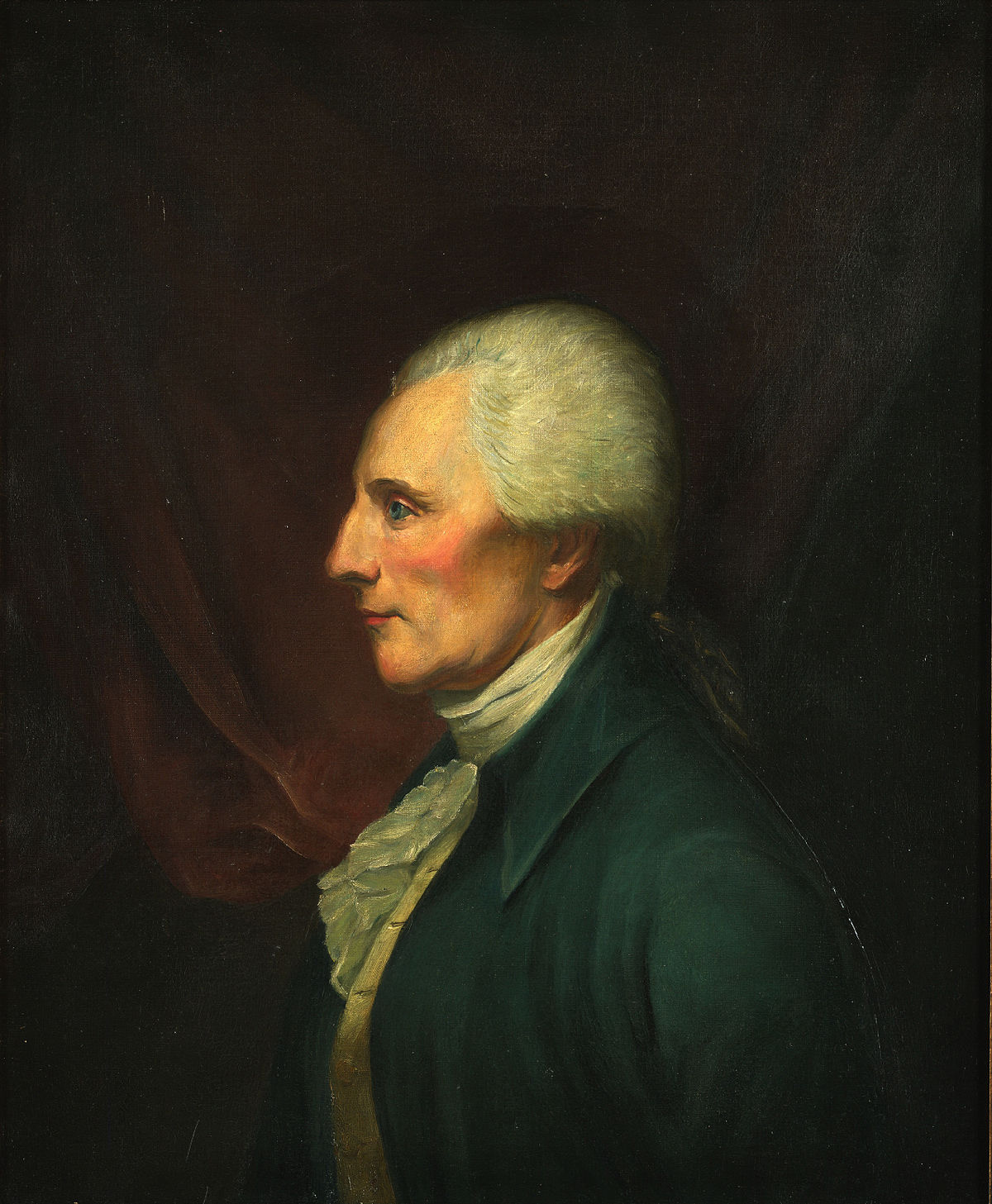
Virtually forgotten in popular accounts, Virginia delegate Richard Henry Lee offered the underlying resolution for Independence.  The familiar document was an explanation and justification of the act drafted by a special committee.  It was not the legal document accomplishing separation.  Lee's resolution and the votes for and against it were recorded in the official proceedings of Congress.

In keeping with his instructions on June 11 Lee offered a resolution that Congress declare independence, seek foreign alliances, and begin laying the groundwork for a new confederation:

Resolved, that these United Colonies are, and of right ought to be, free and independent States, that they are absolved from all allegiance to the British Crown, and that all political connection between them and the State of Great Britain is, and ought to be, totally dissolved.

As Lee’s resolution was being debated Congress authorized a Committee of Five to draw up a document explaining the action, should it be passed.  The committee consisted of Adams; Benjamin Franklin of Pennsylvania, the delegate with the most international renown and prestige; Thomas Jefferson of Virginia, one of the youngest delegates; Robert R. Livingston of New York, and Roger Sherman of Connecticut.  

The famous committee charged with drafting a justification for Independence. Left to right:  Thomas Jefferson, Roger Sherman, Benjamin Franklin, Robert Livingston, and John Adams.  Jefferson wrote the first draft.  Franklin and Adams were actively involved in editing and fine tuning the document.  Sherman and Livingston are not known to have contributed tot he wordage but were important politically to secure support from their states--especially Livingston whose New York delegation was deadlocked on Independence.

The committee delegated to Jefferson the job of writing a first draft.  He did so over several days.  The committee conferred and recommended some changes, which mortified Jefferson, and then he produced a draft incorporating the edits.  It remained, however, mostly Jefferson’s work. 

The language was sent to Congress on June 28.  The document was tabled until action on Lee’s resolution was completed. On July 1, sitting as a Committee of the Whole with each Colony having one vote, the resolution was approved with 9 yeas, two nays (Pennsylvania and South Carolina), and a no vote by New York, whose delegation lacked instructions, and Delaware whose two delegates were split.  

Ceasar Rodney rode hell-for-leather from Delaware to cast his deciding vote in that colony's delegation on June 2 passing Lee's resolution.

On July 2 South Carolina reconsidered and switched its vote to yes and the two most ardent opponents of independence in the Pennsylvania delegation, John Dickinson and Robert Morris, bowing to the inevitable, abstained in a caucus of the state’s delegates allowing the delegation to follow Franklin for independence.  Then, dramatically, Caesar Rodney arrived after an epic ride from Delaware to cast a vote breaking the tie in that delegation.  Only New York, then, had not voted for independence.  Adams regarded the July 2 vote as definitively the day of independence.  He wrote home to his wife Abigail:

The Second Day of July 1776, will be the most memorable Epocha, in the History of America. I am apt to believe that it will be celebrated, by succeeding Generations, as the great anniversary Festival. It ought to be commemorated, as the Day of Deliverance by solemn Acts of Devotion to God Almighty. It ought to be solemnized with Pomp and Parade, with Shews, Games, Sports, Guns, Bells, Bonfires and Illuminations from one End of this Continent to the other from this Time forward forever more. You will think me transported with Enthusiasm but I am not. I am well aware of the Toil and Blood and Treasure, that it will cost us to maintain this Declaration, and support and defend these States. Yet through all the Gloom I can see the Rays of ravishing Light and Glory. I can see that the End is more than worth all the Means. And that Posterity will tryumph in that Days Transaction, even altho We should rue it, which I trust in God We shall not.

Congress then took up the wording declaration from the Committee of Five. On July 3 after spirited debate Congress adopted most of Jefferson’s text except for a lengthy passage critical of the slave trade and some other relatively minor matters of language.  He was bitterly disappointed, but the deed was done.  Congress ordered official copies be made for each state and printed copies to be read publicly. These copies were dated July 4 A calligrapher worked on a very fine original document which most delegates signed on August 2 and to which absent delegates appended their signatures weeks, maybe even months later.  There was no grand signing ceremony as enshrined in myth.  

The iconic document on display at the Library of Congress and reproduced in class rooms across the country is one of about three copies made by a calligrapher.  Like the printed copies it was dated July 4 although there was no action by Congress that day.  The Fourth was meant to be the date that the Declaration was to be read publicly for the first time  but the broadsides were not ready from the printer.  The Philadelphia Evening Post ran it on July 6  and it was not until July 8 that Col. John Nixon of the Philadelphia Committee of Safety read it on the steps of the State House.   General George Washington personally read the document to his troops and local citizens in New York City on July 9.

Here are some dates in the associated with marking Independence Day and the Fourth of July:

1776—Philadelphia celebrated with toasts, 13-gun salutes, speeches, fireworks, and parades after the official reading on July 8.

1777—13 guns were fired once in the morning and once in the evening in Bristol, Rhode Island

1778George Washington marked the occasion with double rum ration for the troops. Benjamin Franklin and John Adams held a dinner for fellow Americans in Paris.

1779—The Fourth fell on a Sunday. To keep the Sabbath, observances in many places were held July 5.

1781Massachusetts became the first state legislature to recognize the day as an official occasion.

1791—The first recorded use of the name Independence Day occurred.

1826—former Presidents John Adams and Thomas Jefferson died within an hour of each other on the 50th anniversary of the dated copies of the Declaration

1831—Former President James Monroe died on the Fourth.

1870—Congress made the 4th of July an unpaid holiday for Federal employees.

1884—The Statue of Liberty was presented to the American People in Paris.

1941—Congress made Independence Day a paid Federal holiday.


Friday, March 10, 2023

With a Flag Ceremony on the Frontier an Empire Changes Hands


Transfer of Louisiana by Ford P. Kaiser for the Louisiana Purchase Exposition--The St. Louis World's Fair--in 1904.

On March 10, 1804 the final official transfer of vast lands stretching north from the mouth of the Mississippi River and far into the interior of North America was conducted at St. Louis.  A small French Army detachment brought down the Tricolors and a not much larger contingent of U.S. Army regulars ran up the Stars and Stripes in the muddy streets of the settlement.  A few score civilians, mostly French with a sprinkling of early bird American land speculators, trappers, and Native Americans watched.  After shaking hands all around, everyone went to celebrate with plenty of good stiff drinks.  With that the whole vast region of Upper Louisiana became U.S. property—if the infant nation could protect it from the British and their Indian allies.

A few months earlier, on December 20, 1803 the French had turned over the real seat of their power, New Orleans, the city through which the riches of all of the drainages of the Mississippi, Ohio, and Missouri rivers, would have to pass to gain the markets of the world.  New Orleans had been the real prize in the delicate negotiations between American diplomats in Paris and Napoleon Bonaparte.  The empire transferred at St. Louis was a surprising bonus.

On April 30, 1803 American envoys Robert Livingston and James Monroe agreed to a Treaty with the French Republic which upon ratification would transfer the port of New Orleans and all of France’s vast North American holdings to the United States for a purchase price of $15 million—about 3 cents an acre.  The Louisiana Purchase has been called the greatest real estate deal in the history of the world. 

In 1801 newly elected President Thomas Jefferson, whose long residency in Paris as American Minister and his known sympathy for Republican France, gave him excellent intelligence connections, learned that Napoleon Bonaparte had concluded the secret Treaty of San Ildefonso with Spain which returned New Orleans and the vast territory of Louisiana to the French.  Spanish authorities would continue to govern in place until a formal transfer in 1803. 

This was both good and alarming news for the United States.  On the plus side, it would deflate a movement among some trans-Appalachian settlers to detach from the U.S. and join the Spanish territories to ensure continued use of the critical port of New Orleans to ship their produce and to obtain land grants west of the Mississippi. 

On the other hand, Jefferson, by now alarmed by the turn the Republic had taken under the military dictatorship of Napoleon, learned from his French sources that the General had big plans for restoring the French North American Empire.  The British had forced France to cede Louisiana to their Spanish ally in 1763 after the Seven Years War (known in America as the French and Indian Wars.) 

                                        Robert Livingston--The Chancellor--was Jefferson's Minister to France and chief negotiator.

The President dispatched Livingston as his special representative with instructions to negotiate the purchase of the port of New Orleans and its immediate environs.  Livingston had been on the committee to draft the Declaration of Independence with Jefferson back in 1776 (although his contributions to the document were nil), had served as Secretary of Foreign Affairs under the Articles of Confederation, was the long time Chancellor of New York, and was Jefferson’s most important Republican ally in that state against Alexander Hamiltons Federalists.  

As negotiations dragged on, Jefferson turned to back channel talks with Pierre Samuel du Pont de Nemours as his agent.  Du Pont had been President of the Constituent Assembly in the early years of the French Republic but had run afoul of Robespierre and had been sentenced to death during the Reign of Terror.  Spared when Robespierre fell, he came to America with his family to try to establish a colony for fellow exiles.  He was close to Jefferson and still had good contacts in France under the new regime of Napoleon. 

After his first secret consultations, he proposed to Jefferson that it would be possible and advantageous to purchase the whole of Louisiana and not just the port city.   At first Jefferson was cool to the idea, largely because he did not believe he had the authority to make the purchase and fretted that it would expand Federal power at the expense of the states. 

Still, he was wary of French power as a neighbor and knew that war would likely be inevitable should Napoleon establish a powerful presence.  He signaled a willingness to consider an offer.

French exile and Jefferson confidant Pierre Samuel du Pont de Nemours was the President's back channel agent to Napoleon.

Although powerful French Foreign Minister Talleyrand was known to be opposed, du Pont communicated with individuals close to Napoleon himself.  Yet the President sent conflicting instructions to his official negotiator Livingston. 

In 1803 he beefed up the official delegation by sending one of his closest associates, James Monroe, himself a former Minister to France under Washington and politically supportive of the Republic during the naval Quasi War of 1798-80. 

Meanwhile, Napoleon’s fortunes in the New World had dwindled as tensions with Britain were on the rise.  Napoleon’s plans to reassert control over Santo Domingo (now the Republic of Haiti) after the successful slave rebellion of Toussaint l’Ouverture lay in tatters.  A huge French army under the command of his brother-in-law General Charles Leclerc was wracked with Yellow Fever and beaten in battle.  Without the income from the rich sugar plantations of the island and without a strong naval base in the Caribbean, grandiose plans of restoring the North American Empire were impossible. 

Before Monroe even arrived Napoleon told his negotiators to conclude a sale of all of Louisiana.  The French Minister of the Treasury informed Livingston that the whole territory was for sale for $15 million, only $5 million over what he had been authorized to pay for New Orleans alone. 

James Monroe, Robert Livingston, and French Foreign Minister  Charles Maurice de Talleyrand sign the Treaty for the purchase of New Orleans and all of Louisiana.  Jefferson, left, and Napoleon, right, are represented in the architectural medallions framing this instillation.

When Monroe arrived both men were fearful of exceeding their authority—and were unaware of du Pont’s secret talks with the President’s approval.  When the French threatened to break off negotiations for New Orleans and to strongly garrison the city, the envoys felt they had to act on the whole offer.  They agreed to the proposed terms on April 30 and signed the document on May 4. 

Livingston wrote Jefferson, “We have lived long but this is the noblest work of our whole lives...The United States take rank this day among the first powers of the world.”

The treaty reached Washington, ironically enough, on Bastille Day, July 14, 1803.  It caused a domestic furor.  Federalists, who were pushing for closer relations if not an out-right alliance with Britain, were fiercely opposed.  But so were “Old SchoolRepublicans like House of Representatives Speaker John Randolph, leery of the extension of Federal Power—an issue Jefferson himself continued to anguish over. 

New Englanders were particularly alarmed fearing that the addition of vast agrarian areas in the West would inevitably lead to loss of power in the mercantile Northeast and that new slave states eventually carved out would tilt the balance of power in the nation to the South.  They also resented assisting France and possibly becoming entangled with her in a war with Britain.  The most radical New England Federalists began to talk of secession and even hatched a plot to offer Vice President Aaron Burr the Presidency of a break-away state if he could convince Republican leaning New York to join. 

The intrigue led to nothing but greater antipathy between Burr and his New York political rival Alexander Hamilton, which would contribute to the duel in which the Burr killed Hamilton the next year. 

Despite all of this, Jefferson concluded that he had to proceed with the purchase and marshaled all of his political ability to secure ratification of the Treaty in the Senate which voted 24 to 7 in favor on October 31. 

The Louisiana Purchase may have been the greatest real estate deal of all time.

In October 1804 the new land was organized into the Territory of Orleans (most of the current state of Louisiana) and the District of Louisiana to be administered from St. Louis under the authority of the Governor of the Indiana Territory.  By this time Jefferson was eagerly planning the exploration of his new acquisition which would result in the Lewis and Clark Expedition.  

In all, the United States acquired 828,800 square miles, more than doubling the size of the nation.  The purchase included all or parts of 14 current states and stretched from the Gulf of Mexico to British North America (Canada) and from the Mississippi River to the Rocky Mountains. 

For his part, Napoleon was pleased.  He got an infusion of cash to arm in preparation for war with Britain and because, “This accession of territory affirms forever the power of the United States, and I have given England a maritime rival who sooner or later will humble her pride.”