Showing posts with label impeachment. Show all posts

Tuesday, January 7, 2020

What Rough Beast?


This blog returns to its regular programing.  For the last several weeks we indulged in the respite of light, hope, and music of the Winter holiday season.  This morning we awake from those pleasant revels to the dark and dangerous world that took no break.  Australia—a whole continent—is an inferno.  A feckless leader pushes the world to the brink—or maybe already passed the brink—of cataclysm.  All the while our country slides towards despotism as the puny Sisyphuses in Congress labor to push the pebbles of impeachment up an avalanching mountain.

Despair, rage, and exhaustion overwhelm the best of us.  Many of the Unitarian Universalist ministers and leaders who I admire and follow were just as stricken and bewildered as the rest of us struggling mightily to find a way to offer some dim hope or a way forward to their congregations.

At the Tree of Life UU Congregation in McHenry, Illinois last Sunday guest preacher Rev. Michelle Lattanzio, one of our former ministerial interns, evoked William Butler Yeats’ bleak assessment of the world 100 years ago.


The Second Coming
Turning and turning in the widening gyre   
The falcon cannot hear the falconer;
Things fall apart; the centre cannot hold;
Mere anarchy is loosed upon the world,
The blood-dimmed tide is loosed, and everywhere   
The ceremony of innocence is drowned;
The best lack all conviction, while the worst   
Are full of passionate intensity.

Surely some revelation is at hand;
Surely the Second Coming is at hand.   
The Second Coming! Hardly are those words out   
When a vast image out of Spiritus Mundi
Troubles my sight: somewhere in sands of the desert   
A shape with lion body and the head of a man,   
A gaze blank and pitiless as the sun,   
Is moving its slow thighs, while all about it   
Reel shadows of the indignant desert birds.   
The darkness drops again; but now I know   
That twenty centuries of stony sleep
Were vexed to nightmare by a rocking cradle,   
And what rough beast, its hour come round at last,   
Slouches towards Bethlehem to be born?

—W.B. Yeats, 1919
She reminded us that the poem—perhaps Yeats’ most famous and greatest—was written in the grim aftermath of The Great War which had shredded and spit out a generation of young men and left Europe a smoldering carnal house and a ticking time bomb of revenge and retribution.  His own country was embroiled in a bitter War of Independence from Britain that would eventually slide into a fratricidal civil war between former Republican brothers.
Yeats—an avowed Irish Patriot—dared not publish his despair in his own country.  Neither the British who still occupied Dublin or his own revolutionary allies would have permitted it.  Instead he sent it across the Atlantic to be first published in The Dial, the literary magazine founded in part by Ralph Waldo Emerson and once edited by Margaret Fuller as the voice of the Transcendental movement now reinvented as a literary magazine and showcase for modernism.
However bleak the prospects of 1919 were, somehow the world muddled through and slid into normalcy.  Yeats’s verse seemed then clever hyperbole.  But at each new crisis—world-wide Depression, World War II, the impending Armageddon of nuclear war, and now on the brink of catastrophic climate change, the poem seems more prophetic than ever.
But what can we do with such an assessment?  Does it disarm us with despair, or is there a way to grapple with it and even struggle against the possibly inevitable?

Buckminster Fuller with first model of Dymaxion House, an early attempt to create energy and resource conserving manufactured housing that could easily be assembled and errected in all sorts of climates and conditions, in 1927 after his life changing vision.
In a possible answer Rev. Lattanzio offered us the vision of Margaret Fuller’s grandnephew, R. Buckmaster Fuller.  In 1927 his life seemed in shambles, his career had gone off the rails.  He lived in poverty in a Chicago tenement with his wife and infant.  He contemplated suicide and spent a year in self-imposed silence hoping to find his true voice.  One day walking the shores of Lake Michigan and considering throwing himself in the water, he had a vision.  A voice seemed to tell him:
You do not have the right to eliminate yourself, you do not belong to you. You belong to the universe. The significance of you will forever remain obscure to you…you may assume that you are fulfilling your significance if you apply yourself to converting all your experience to highest advantage of others. You and all men are here for the sake of other men.
In an essay on Fuller’ life Celeste Adams wrote:
Fuller decided to devote the rest of his earthly existence to discovering what he, as one man, could do to benefit all of humanity. This decision was the beginning of a 50-year experiment to find the principles that ruled the universe. He wanted to apply these same principles to solving the problems that troubled humankind.
Although he had neither money of his own nor the support of corporate or government financing, he was determined to redirect the focus of humanity away from utilizing its most important resources for creating weapons of destruction. He was determined to teach us how to use these resources for “livingry,” which he described as the betterment of all human beings.
Fuller felt that if technology were used with this intention, it could create a radical change in society and “raise 100% of humanity to a level of previously unimagined success.”
A brilliant polymath Fuller did just that.  He innovated endlessly hoping that technology as expressed in things like his famous geodesic domes could make life better for all.  Eventually he expanded on that to advocate a new city based on what he called synergy—behaviors of whole systems, unpredicted by behaviors of their parts. By 1980 Fuller issued his great challenge:
We know now what we could never have known before — that we now have the option for all humanity to “make it” successfully on this planet in this lifetime. Whether it is to be utopia or oblivion will be a touch-and-go relay race right up to the final moment.
Almost none of us can command Bucky Fuller’s genius.  But we can assess our own tools and gifts and apply them to the same great tasks.  If enough of us do so, there is perhaps hope after all.

Wednesday, October 2, 2019

The Smell of Impeachment in the Morning

There has been a steadily rising clamor to impeach Donald Trump over a number of issues.  A solid majority of Americans now support it.
What’s that I smell?  It may be the mildew of a soggy Fall in these parts or the dog’s grass pad gone too long uncleaned.  But no, I smell impeachment in the morning.  And this time it is serious.  Some folks have been muttering and calling for the impeachment of Donald Trump almost from the beginning—and he piled up many possible offencesviolating the emolument clause of the Constitution, payoffs and bribes to Stormy Daniels and others, possible tax fraud, obstruction of justice in several instances most notably in trying to interfere with or squash the Mueller Report to name a few.  
Wanting to impeach a President political opponents don’t like is nothing new—some Republicans were pushing to do it to Barack Obama from practically the first moment after he completed the Oath of Office despite a complete lack of evidence that he committed any impeachable offences.  Of course in those days leaders of the Congressional lynch mob were fond of telling Fox News that “An impeachable offence is anything we say it is.”  We will note a little later in this blog post a litany of Presidents who faced similar aborted partisan attacks.  
The Cheeto-in-Charge successfully evaded any serious threat first because the Republican controlled House of Representatives would never bring a Bill of Impeachment and then after the Blue Wave election in 2018 brought Democrats into control of the House because Mitch McConnell and the Republican Senate would never vote to convict.
Although over the spring and summer of this year impeachment resolutions were filed by Congresspersons Brad Sherman of California, Rashida Tlaib of Massachusetts, Sheila Jackson Lee of Texas, and Al Green also of Texas.  But those went directly into Speaker Nancy Pelosi’s circular file.  Despite a rising chorus demanding impeachment proceedings from the activist left of the Democratic Party and restless Congresspersons responding to pressure from their home Districts, Pelosi and most of the House leadership urged caution saying matters would best be left to the next election because impeachment would suck all of the air out of Congress for anything else.  Frankly, she feared that impeachment was a trap that would rouse the Trump base to a frenzy.
All those escapes emboldened the already narcissistic and megalomaniacal to be ever more reckless confident that his supporters would stand by him even as he once claimed “I could stand in the middle of 5th Avenue and shoot somebody and I wouldn’t lose voters.”  Certainly Evangelicals who had once been prissy prudes about all sexual matters threw away all of those scruples to declare him a saint and a holy man.  White voters uncomfortable and angry about becoming a minority in “their country” cheered every veiled or open attack on immigrants, minorities of all sorts, and their tribal enemies to supposedly sneering liberal elite.  Oligarchs who might cringe at his crudeness and bluster sang hallelujah and emptied their pockets to a President delivering their libertarian utopia by abandoning any and all business, environmental, labor, voting rights, or civil rights regulations.  
The Resident now shook off any of a small army of staffers and appointees who tried to restrain or temper his ever wilder excesses.  No one could stop Trump from being Trump.
That is until an as yet unknown whistleblower alarmed at possibly treasonous attempt to extort a foreign leader into digging up dirt on his leading Democratic presidential opponent, former Vice President Joe Biden and his son.  The whistleblower went through proper channels and the Inspector General of the Intelligence Community (ICIG) found the allegations credible only to have an investigation personally quashed when the acting Director of National Intelligence (DNI) refused to forward the report to Congressional intelligence committees.  After that all hell broke loose.  

Thanks to Trump’s own recklessness and the blabbering mouth of the world’s worst lawyer the essential details of the whistleblower’s alarm were soon made public.  Now armed with a simple and easily substantiated case so damnable that it might even stand a snowballs chance in Hell in the Senate, Pelosi dramatically declared that impeachment proceedings would commence under the leadership of House Intelligence Committee chairman Adam Schiff who moved with lightning speed for Congress with a flurry of subpoenas for documents as well as key individuals, including the whistleblower him/herself who is currently under protection from possible threats to his/her life.
Developments in the case emerge daily, fast than this blogger can hope to keep up with.  Consult your reliable news media daily rapidly breaking developments.  Suffice it to say that at least cabinet membersSecretary of State Mike Pompeo and Attorney General Bill Barr, Vice President Mike Pence, and the ever babbling personal lawyer Rudy Giuliani are also caught up in the scandal one way or another leading to the possibility that not only an incumbent President might be brought down, but his whole administration.
Most observers are now sure that impeachment by the House is a sure thing and that a Bill will be sent to the Senate before the first of next year.

Trump has finally realized the danger he is in and is in full panic mode.
Trump has finally realized that he has been trapped and has responded with increasingly bizarre Twitter rants including demanding to know the identity of the whistleblower and all of his/her informants hinting that they should be charged with treason.  He has also made similar charges of treason against Rep. Schiff claiming that he should be hung.  He has more than hinted at a possible civil war if he is impeached and called the whole procedure an attempted coupe d’etat.  The ravings only dig the whole deeper for himself and some of them might result in additional charges of obstruction of justice.
Impeachment of a sitting President is not only difficult, but rare.  Only two Presidents have been impeached in the House and neither was convicted in a Senate trial.

Representing the House of Representatives as prosecutor, Thaddeus Stevens reads the bill of Impeachment to the Senate.
After the assassination of Abraham Lincoln his Tennessee border state Vice President Andrew Johnson pursued a policy of reconciliation with secessionist states and their rapid rehabilitation within the Union.  This was in line with Lincoln’s own hopes for restoring the Union.  But it was at odds with the Radical Republican majority in the house which demanded harsh treatment of former Rebels and an expansive reconstruction that would empower freed slaves politically and economically while protecting them retribution by Southern Democrats.  Thaddeus Stevens of Pennsylvania saw a possibility for removing Johnson for violating the Tenure of Office Act to restrict the power of the President to remove cabinet members and certain other senior office-holders without the approval of the Senate.  Johnson was impeached by the House by an overwhelming margin but a dramatic Senate trial ended with a 35–19 vote in favor of conviction, one vote short of two-thirds majority needed for conviction.  A politically crippled Johnson served out his term.

 More recently in 1998 Bill Clinton’s cheap and tawdry affair with a starry eyed and naïve White House intern led to impeachment by the House of a still popular President.  Most Americans were disgusted but then believed that private sexual misconduct should not be the cause to “overturn the results of an election.”  The popular MoveOn movement began on that premise.  Today in the Me Too Era many powerful men have seen their careers destroyed on far less evidence than Monica Lewinski’s stained blue dress—witness a risqué photo that brought down Senator Al Franklin.  But back then the Senate voted 45–55 against obstruction of justice and split 50–50 on perjury, a tie that Vice President Al Gore had to recuse himself from braking.  
More celebrated than the Clinton case was the almost impeachment of Richard Nixon for numerous offences lumped together as the Watergate Scandal.  Months of investigative journalism and televised hearings by both House and Senate special committees had built an overwhelming case against the President.  Nixon was tempted to tough it out hopping that a groundswell of support by his beloved Silent Majority would prevent conviction in the Senate.  Then a delegation of Republicans including Minority Leader Hugh Scott, conservative icon Senator Barry Goldwater, and House Minority Leader John J. Rhodes came to the White House to deliver the news that the game was over—the Senate would vote for impeachment if the House delivered a Bill.

Richard Nixon resigned before he could be impeached and flew off to political exile and disgrace.
After wavering a bitter and disappointed Nixon finally decided to spare the nation a show trial and a constitutional crisis.  He delivered a one sentence letter of resignation to the Secretary of State and then boarded a military helicopter on the White House lawn to fly into exile and disgrace.  Gerald Ford went on television to announce “Our long national nightmare has ended.”
Nobody much expects the Mitch McConnell and Senate Republicans will rise above their slavish partisan devotion the President to act responsibly on clear evidence this time.  But some believe that the cornered rat might lash out so viciously and commit more open violations of the Constitution and the nation’s laws in plain sight that even they—or some of them—might finally abandon him.
There has been a long history of failed Presidential impeachment attempts.
 Whigs wanted to go after Andrew Jackson for beating the Second Bank of the United States to death and settled on a literal tempest-in-a-teapot bringing back up the Eaton Affair back in 1831 when Jackson demanded the resignations of most of his cabinet members because their wives insulted the wife of his friend and Secretary of War John Eaton.  It was a flimsy excuse and brought forward years after the fact.  It got nowhere because Democrats firmly controlled Congress and everybody was scared to death of the volcanic Presidential temper.  And everyone remembered what happened when a Federal Court issued a ruling against his imposition of Marshall Law in Louisiana in 1815.  After jailing at state legislator, a prosecutor, and a Federal Judge he dismissed a writ of Habeas Corpus defiantly asserting “The Judge made his ruling.  Now let him try to enforce it.”   No wonder politicians were terrified of Jackson.  Trump terrifies no one except Senate Republicans who fear that their MAGA cap wearing base will rise up against them.
  • John Tyler was the first President to face a formal impeachment inquiry

In 1842 Congressman and former President John Quincy Adams led an attempt to impeach John Tyler—an accidental President after the death of Whig William Henry Harrison and a man without a party in Congress—for the use of the veto to reject Whig-backed tariffs.  Vetoes had been seldom used previously and there was some contention over just what a President could or could not achieve by a veto.  The attempt went nowhere but it did end up confirming the right of the President to freely use the veto.

In 1860 Whigs again targeted a Democratic President, the hugely unpopular James Buchanan, a “Northern man of Southern principles,” who had dilly-dallied through the impending secession crisis.  At issue was suspected wide-spread corruption in Buchanan’s home state of Pennsylvania.  A special investigation committee did uncover some staggering corruption and even possible treason.  But it issued a report and Congress did not act on impeachment.  The election of 1860 would quickly dispose of Buchanan and render him an embarrassing footnote in American history.

Republicans thought that Harry Truman's firing of General Douglas MacArthur might be impeachable.

In 1951 Republican Congressmen George H. Bender of Ohio and Paul W. Shafer of Michigan each introduced impeachment bills against Harry S. Truman for firing General Douglas MacArthur for insubordination.  The resolutions were referred to the House Judiciary Committee which, being run by Democrats, sat on them. However, the Senate held extensive hearings on the matter.  MacArthur benefited from a Senate investigation and was promoted at a possible Presidential candidate himself.  But he faded away and a more tactful general and war hero, Dwight D. Eisenhower, got the nod instead.

·     There were several attempts to launch impeachment investigations against George W. Bush. The most serious was filed by Congressmen Denis Kucinich of Ohio, and Robert Wexler of Florida in 2008 with several articles covering launching the War with Iraq, lying about its justification, outing the identity of covert American intelligence agent Valerie Palme, mistreatment of detainees, covert attempts to over throw the government of Iran, National Security Agency warrantless surveillance of American citizens, malfeasance in responding to the victims of Hurricane Katrina, as well as other complaints.  It was a long and unfocused laundry list however justified any of the charges might have been.  The House voted to send the resolution to the Judiciary Committee which let if quietly die before the 2008 election.

Attempts to impeach Barack Obama hardly got beyond the stage of racist memes.


Perhaps in retribution to the Kucinich-Wexler articles, Republicans moved, or talked loudly about moving, against Barack Obama from the beginning.  Among the focus of allegations were the bogus claim that Obama was not born in the United States, allowed people to use bathrooms based on their gender identity,  allegedly covered-up after the 2012 Benghazi attack, and failure to enforce immigration laws.  Despite chest pounding and blather no list of articles of impeachment was ever drawn up or proposed to the Judiciary Committee.
Nobody expects the current impeachment crisis will go away so easily.

Sunday, November 30, 2014

The Impeachment of Old Bacon Face—Justice Samuel Chase

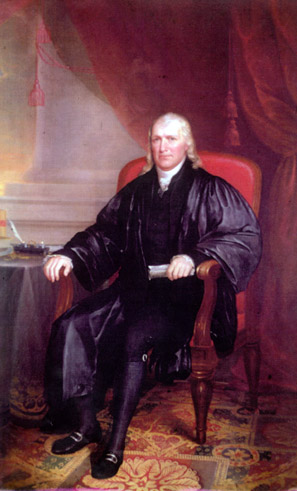
Justice Samuel Chase in his Supreme Court Robe.


Samuel Chase was an obstreperous, intemperate loudmouth with a zest for political controversy, mixed with evidently impious personal behavior, and an occasional streak of hand-in-the-till opportunism.  He also had all the impeccable credentials of an honest-to-God Founding Father--pre-Revolutionary Patriot, Delegate to the Continental Congress, signer of the Declaration of Independence, and as a George Washington appointee to the Supreme Court.  He also became the first and only sitting Supreme Court Justice to be impeached by the House of Representatives.  His trial before the Senate began on November 30, 1804.
Chase was born the only child of an Anglican Priest near Princess Anne, Maryland on April 17, 1744.  He was educated by his father, the Reverend Thomas Chase, from his well-stocked library.  At age 18 he left home to read law with Annapolis attorney  John Hall.  He was admitted to the Bar in 1761 when he was only 20.  Despite his youth he earned the nick-name Old Bacon Face from the other practitioners in the colonial capital.  No explanation for this unusual moniker can be found—or whether it evidenced fond affection or scorn.  Evidently he inspired both.
In May 1762 Chase married Ann Baldwin with whom he sired three sons and four daughters before Ann died in 1776.  But the very same year of his nuptials Chase was expelled from the prestigious  Forensic Club, an Annapolis debating society, for “extremely irregular and indecent” behavior. 
Whatever the scandal in 1762, it did not prevent Chase from being elected to the Maryland General Assembly in 1764 or from being continuously re-elected for terms lasting the next 20 years. 
As tensions between England and her colonies rose over issues of taxation, Chase became a vocal, and intemperate leader of opposition to loyalist members of the Maryland political establishment.  After he published a scathing letter naming prominent men, they replied in ab article in the Maryland Gazette of June 19, 1766 accusing him of being, “a busy, reckless incendiary, a ringleader of mobs, a foul-mouthed and inflaming son of discord and faction, a common disturber of the public tranquility.”  Chase quickly replied in kind accusing the men of “vanity...pride and arrogance… [brought to power by] proprietary influence, court favour, and the wealth and influence of the tools and favourites who infest this city.”
As Chase railed against the Stamp Act and its loyalist apologists as a member of the legislature in Annapolis, he co-founded Anne Arundel County Sons of Liberty.  He was becoming noted as a firebrand in a relatively conservative colony not generally regarded as a hotbed of simmering rebellion like Massachusetts, neighboring Virginia, or the urban center of Philadelphia.
Quite naturally as a leading Patriot and member of the Legislature, Chase served in the Annapolis Convention from 1774 to 1776.  He was elected by the Convention as a delegate to the First Continental Congress and to the Second in 1776.  He was an enthusiastic signer of the Declaration of Independence.  Chase remained in Congress until 1778 when he was accused of  leading involvement in a notorious attempt to corner the flour market, based on his inside information about supply and purchase plans for the Continental Army, privileged information he gathered as a member of Congress.  He was humiliated and his reputation tarnished.
Through the rest of the Revolution, he practiced law and amassed, as much as was possible in those turbulent times, a pleasant fortune.  By the time the war ended memories of his disgrace had faded while his reputation as a shrewd lawyer had risen.  He was appointed in 1784 by the Maryland government to be its agent in dealing with issues of its ownership of stock in the Bank of England.  It was a thorny issue caught up in issues of debt and reparations for the losses of Tories during the war.  In England, Chase did what he could, but also found time to woo the much younger Hannah Kilty, daughter of Berkshire physician.  The couple married that year and he brought her home to Maryland where she gave him two more daughters.
On his return to Maryland, Chase relocated to Baltimore,  an increasingly busy port and a commercial center that made the inland state capital seem like a rustic backwater.  He built a fine house there for his family in 1786 and two years later became Chief Justice of the District Criminal Court for Baltimore.  Retaining that position, he was also made Chief Justice of the Maryland General Court in 1791.
Prosperity and age had modified Chase’s political position, if not his sharp tongue or partisan fervor.  He had been an ardent Anti-federalist during the debates over the adoption of the Constitution.  But he shifted toward the Federalists, especially after panics about domestic unrest like the Whiskey Rebellion and distrust of the French Revolution, scared the daylights out of the propertied elite, a class of which he was now a privileged and honored member.
By 1796 Chase was such a reliable Federalist stalwart the George Washington, probably on advice from Alexander Hamilton, appointed him an Associate Justice of the Supreme Court.
Chase became an object of controversy after the ascension of John Adams to the Presidency and the imposition of the Alien and Sedition Acts during a period of rising tensions with France and support for the revolution there from the rising Democratic-Republican Clubs.  It was the first great legal attack on civil liberties in American history, and Chase was an outspoken supporter of the suppression.  In April 1800, Chase presiding  as Circuit Court judge, as was then the practice for Supreme Court Justices, strongly attacked Thomas Cooper who had been indicted under Acts and was on trial before him. He seemed to take on the air of a prosecutor rather than a judge in the case.

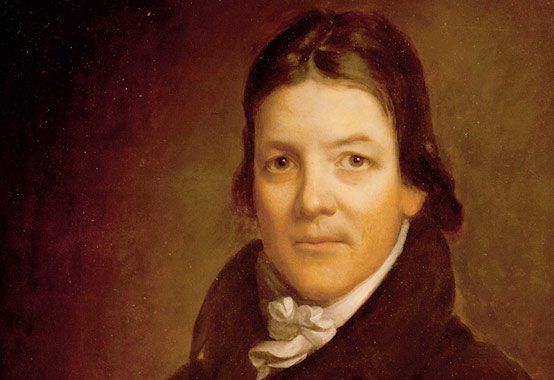
Congressman John Randolph of Roanoke was only 31 years old when he led the prosecution of Justice Chase at the urging of his distant kinsman, Thomas Jefferson.
After Jefferson won a landslide victory in what has been called the Revolution of 1800, the outgoing Federalists hastily passed the Judiciary Act of 1801 which created new layers of lower Federal courts which Adams spent his last hours feverishly filling with Federalists guaranteed lifetime appointments.  Jefferson’s Republican supporters in the new Congress worked quickly to repeal the Act and thus terminate the appointment of the notorious midnight judges. 
In May 1803, Chase denounced the repeal in a charge to a Federal grand jury in Baltimore, saying that it would “take away all security for property and personal liberty, and our Republican constitution will sink into a mobocracy.”
The inflammatory and inappropriate statement incensed Jefferson, who was finding himself beset by the Federalist judiciary.  In exasperation, the president penned a note  to his ally Congressman Joseph Hopper Nicholson of Maryland asking, “Ought the seditious and official attack [by Chase] on the principles of our Constitution . . .to go unpunished?”  This quiet whisper was akin to Henry VIII muttering “will no one rid me of this turbulent Priest?” about Thomas à Becket.
Jefferson’s old friend and kinsman Virginia Congressman John Randolph of Roanoke got the message loud and clear an initiated action against Chase in the House of Representatives.  The heavily Democratic Republican House, with many new members including those not drawn from the traditional caste of the political elite, wasted no time in passing eight Articles of Impeachment citing the justice’s conduct in presiding at two trials and for, “intemperate and inflammatory … peculiarly indecent and unbecoming … highly unwarrantable … highly indecent” remarks while charging the Baltimore grand jury. 
In the case of John Fries, a Revolutionary War officer and hero who had been a leader among the Germans in the Whiskey Rebellion, Chase presided over his second trial which resulted in a sentence of death by hanging.  Chase had been typically immoderate on the bench and in the view of Republicans skewed the verdict and sentence.  Although Fries was ultimately spared and pardoned by John Adams, the case still stirred emotions. 
Chase was also cited for procedural errors and prejudice in the case of radical journalist James T. Callender who was prosecuted under the Sedition Act, fine $200 and served longer in jail than any other defendant charged under its provisions.
The Senate had also fallen into the hands of the Democratic Republican, but by a narrower margin.  Moreover the Senators, who were elected by the state legislatures, were almost to a man members of the traditional governing classes regardless of party affiliation.  A conviction in the upper chamber was far from a sure thing.
The Senate took up the case at the end of November but promptly recessed until the new year.  Oral presentation of evidence and arguments did not begin until they reconvened  early in 1805.  Vice President Aaron Burr presided, reportedly with ability as a lawyer and with admirable impartiality.  Randolph, a noted trial lawyer, presented the case for the House.  Chase’s  defense team naturally argued that the impeachment was politically motivated.  In testimony he personally argued his actions had adhered to precedent, dutifully restrained advocates from improper statements of law, and were motivated by considerations of judicial efficiency.

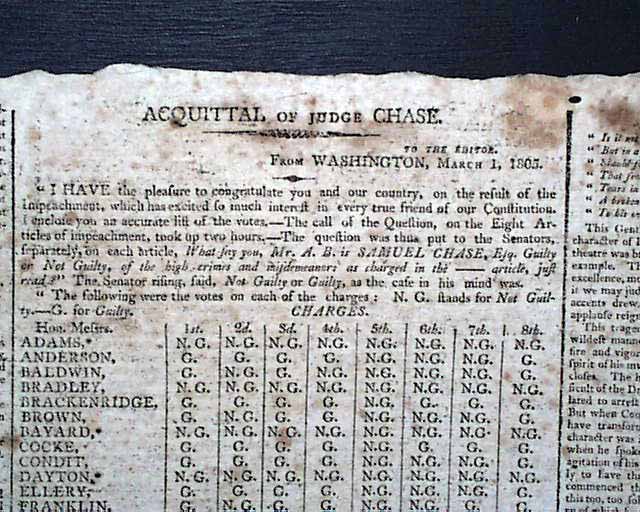
The Colombian Sentinel of Boston reported on the Senate vote in Chase's impeachment rial and featured a chart on how every senator voted on every article.

On March 1 the Senate voted—by large margins on most counts—to acquit Chase on all counts.  Even some Republican Senators who detested him voted for acquittal fearing a bad precedent in removing a justice because of the quality of his work, judicial temperament, or lack of good judgment.   In the future no other Supreme Court justice would be impeached.  Lower court judges would rarely be impeached and tried only for committing actual crimes.
The usually politically astute Jefferson had gambled and lost big time.  The result of his attempt to put a leash on Federalist judges ended up strengthening their position.  Chase would remain a thorn in the President’s side and following the lead of Chief Justice John Marshall would thwart some of his ambitions.
Chase stayed on the bench until he died of a heart attack in Washington on June 19, 1811 at the age of 70.
On the other hand, after Chase justices were more temperate and circumscribed in their comments and rulings and even when acting in highly partisan ways learned to justify their action and couch their opinions in the language of lofty disinterest.
From time to time the parties descended from the Federalists and the Democratic Republicans have both yearned to impeach partisan judges from the other side.  Think of the campaign to impeach Earl Warren which was launched by the John Birch Society and embraced by many conservative Republicans. 
On the other hand many current liberal Democrats clamor for the impeachment of Justice Clarence Thomas for conflict of interest in ruling on health care cases while his wife is employed as a high powered lobbyist for the health care industry and of Justice Antonin Scalia for being a jerk, slavishly partisan, and inconsistent in his rulings depending on whose ox has been gored in the case in front of him.  Thomas could conceivably be impeached if it were found that he materially benefited from ruling he made in cases where his wife was involved with a party before him.  It would be tough to do, but it is imaginable.  Scalia is more directly analogous to old Bacon Face and thus can thank his distant predecessor for covering his ass.