Showing posts with label . Thomas Jefferson. Show all posts

Saturday, February 17, 2024

That Time Aaron Burr Almost Became President

They were supposed to be Democratic Republican running mates but ended up with a tie vote in the Electoral College throwing the race into the House of Representatives.

It was called the Revolution of 1800.  The Democratic-Republican ticket of Thomas Jefferson and Aaron Burr had crushed the re-election hopes of Federalist John Adams sweeping to a popular vote victory of 61.4% to 38.6 and carrying the Electoral College votes of 8 of the 15 states with a total of 73 to 65. 

Yet the election turned into a breathtaking cliff hanger that was finally decided February 17, 1801 when a tied vote in the House of Representatives was finally broken.  Here’s how it happened.  

Federalist incumbent President John Adams was clearly the looser in both the popular vote and the Electoral College but at least his party's electors remembered to withhold one vote to assure that Adams led the ticket.

The Constitution allowed each elector two votes, but only one for President.  It also did not clearly define who was at the top and who was second on the party tickets because it failed to predict the rise of political parties.   Both parties planned to have one elector either abstain from voting for the Vice President or cast a single ballot for an alternative candidate to make sure that the intended candidate would be elected President and the second as vice president.  And one Federalist elector did withhold his vote for Adam’s running mate Charles Pinckney of South Carolina. 

On the Republican side, something went amiss, however, with Jefferson and Burr both tied with 73 votes.  Historians still debate whether Burr had any role in arranging a tie or if he was the beneficiary of a happy—for him—accident. 

At any rate the election was thrown into the House, which was still in the hands of the Federalists.  Many Federalists, for whom Jefferson was a well-established boogey man, opted to cast their votes for Burr, who may—or may not—have encouraged them as he waited in New York. 

Although each Representative had a vote, the majority vote of each states delegation carried the state and each state had one vote.  An absolute majority of the states—9—were required for election.  From February 11 to February 17, the house held 35 votes. Each time the results were the same—8 states for Jefferson, 6 states for Burr, and two state delegations tied and unable to cast any vote. 

Maneuvering and secret negotiations on all sides was intense.  Finally Alexander Hamilton, the leader of the so-called Ultra Federalists who had sabotaged Adams’s chances with a scheme to replace him with Pinckney, chose to speak.  
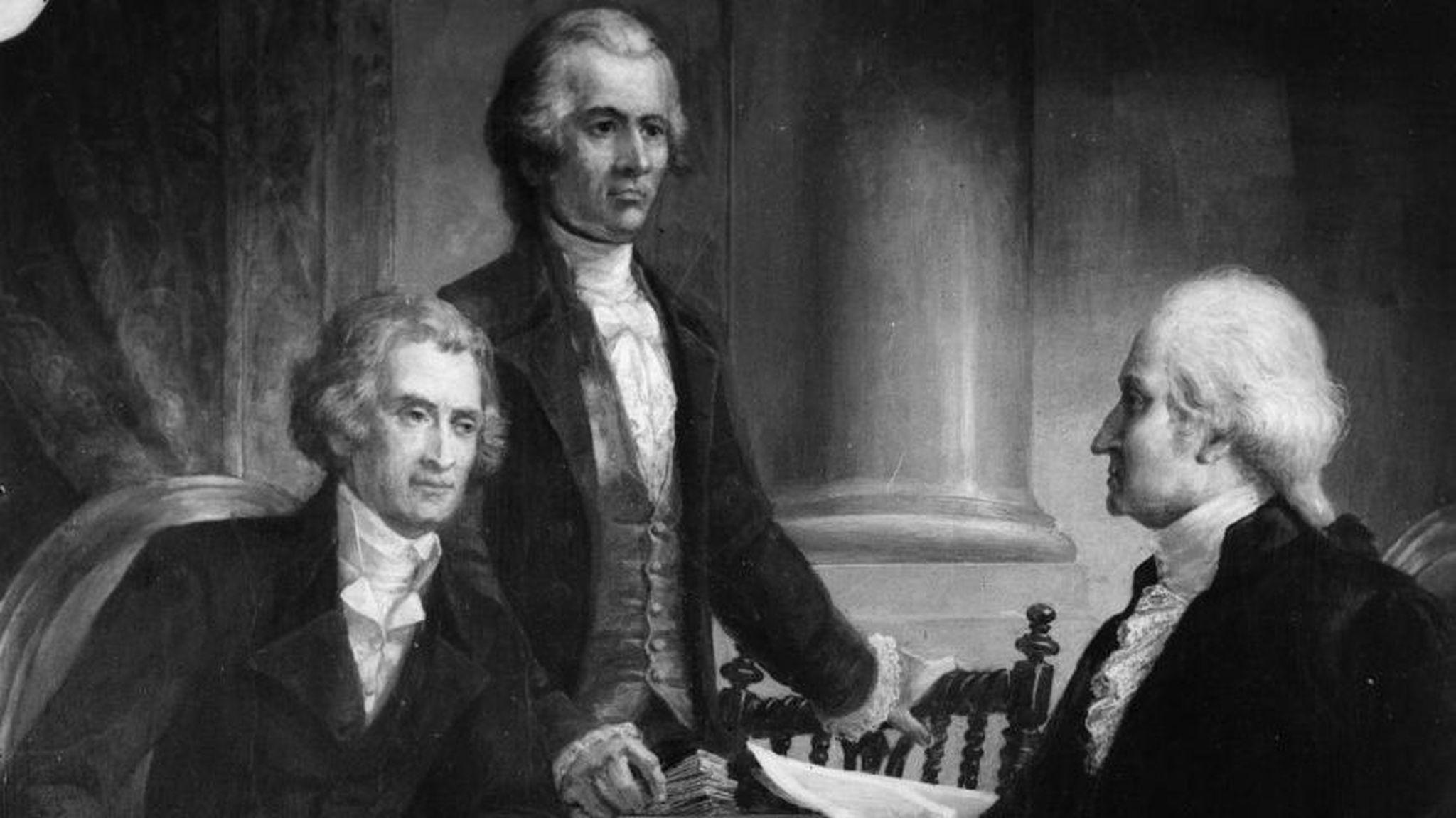
During the Washington administration rivals Secretary of State Thomas Jefferson and Secretary of the Treasury vied for the President's support and affection.  In the end, Hamilton won out and fathered the Federalist Party while Jefferson created the Democratic-Republicans.

Hamilton had been Jefferson’s implacable enemy when they were together in George Washingtons cabinet.  Hamilton was the father of the Federalists as Jefferson was the creator of the Republicans.  They had always been bitter rivals.  Yet Hamilton let it be known that he preferred Jefferson over Burr because “he is by far the less dangerous man,” than the Machiavellian Burr. 

Hamilton’s letters finally had an effect and on ballot number 36 Maryland and Vermont moved from the no result column to Jefferson while Delaware and South Carolina switched from Burr to no result.  Jefferson was finally elected President and Burr, Vice President. 

The Twelfth Amendment, which provided each elector must cast distinct votes for President and Vice President, was initiated and adopted to make sure that such a debacle would never happen again.

Jefferson never trusted and came to detest Burr.  The Vice President, for his part tried to trade his tie-breaking vote in the Senate to the Federalists in exchange for certain favors and became involved in a bizarre plot to seize Texas from the Spanish and create an inland empire with break-away portions of the trans-Allegany West by also wresting control of New Orleans.  But that is yet another tantalizing tale. 

In the end, Burr would revenge himself on his nemesis Hamilton by killing him on the dueling field.  

Vice President Burr avenged himself on Hamilton by killing him in a duel.

After being acquitted of treason in the filibustering affair, the still disgraced Burr lived in Europe and Britain for some years always plotting either a political come-back or a new scheme to seize Texas.  Finally returning to New York, he often used the pseudonym Edwards to hide from his creditors.  After a stroke rendered him paralyzed, Burr died penniless on Staten Island in 1836.

More recently the American public became reacquainted with Burr thanks to being presented as the villain of the Broadway musical sensation Hamilton by Lin-Manuel Miranda.  He would probably have reveled in the attention.


Sunday, February 16, 2020

How Aaron Burr Almost Became President

They were supposed to be Democratic Republican running mates but ended up with a tie vote in the Electoral College throwing the race into the House of Representatives.
It was called the Revolution of 1800.  The Democratic-Republican ticket of Thomas Jefferson and Aaron Burr had crushed the re-election hopes of Federalist John Adams sweeping to a popular vote victory of 61.4% to 38.6 and carrying the Electoral College votes of 8 of the 15 states with a total of 73 to 65.  
Yet the election turned into a breathtaking cliff hanger that was finally decided February 17, 1801 when a tied vote in the House of Representatives was finally broken.  Here’s how it happened.  

Federalist incumbent President John Adams was clearly the looser in both the popular vote and the Electoral College but at least his party's electors remembered to withhold one vote to assure that Adams led the ticket.
The Constitution allowed each elector two votes, but only one for President.  It also did not clearly define who was at the top and who was second on the party tickets because it failed to predict the rise of political parties.   Both parties planned to have one elector either abstain from voting for the Vice President or cast a single ballot for an alternative candidate to make sure that the intended candidate would be elected President and the second as vice president.  And one Federalist elector did withhold his vote for Adam’s running mate Charles Pinckney of South Carolina.  
On the Republican side, something went amiss, however, with Jefferson and Burr both tied with 73 votes.  Historians still debate whether Burr had any role in arranging a tie or if he was the beneficiary of a happy—for him—accident.  
At any rate the election was thrown into the House, which was still in the hands of the Federalists.  Many Federalists, for whom Jefferson was a well-established boogey man, opted to cast their votes for Burr, who may—or may not—have encouraged them as he waited in New York.  
Although each Representative had a vote, the majority vote of each state’s delegation carried the state and each state had one vote.  An absolute majority of the states—9—were required for election.  From February 11 to February 17, the house held 35 votes. Each time the results were the same—8 states for Jefferson, 6 states for Burr, and two state delegations tied and unable to cast any vote.  
Maneuvering and secret negotiations on all sides was intense.  Finally Alexander Hamilton, the leader of the so-called Ultra Federalists who had sabotaged Adams’s chances with a scheme to replace him with Pinckney, chose to speak.  

During the Washington administration rivals Secretary of State Thomas Jefferson and Secretary of the Treasury vied for the President's support and affection.  In the end, Hamilton won out and fathered the Federalist Party while Jefferson created the Democratic-Republicans.
Hamilton had been Jefferson’s implacable enemy when they were together in George Washington’s cabinet.  Hamilton was the father of the Federalists as Jefferson was the creator of the Republicans.  They had always been bitter rivals.  Yet Hamilton let it be known that he preferred Jefferson over Burr because “he is by far the less dangerous man,” than the Machiavellian Burr.  
Hamilton’s letters finally had an effect and on ballot number 36 Maryland and Vermont moved from the no result column to Jefferson while Delaware and South Carolina switched from Burr to no result.  Jefferson was finally elected President and Burr, Vice President.  
The Twelfth Amendment, which provided each elector must cast distinct votes for President and Vice President, was initiated and adopted to make sure that such a debacle would never happen again. 
Jefferson never trusted and came to detest Burr.  The Vice President, for his part tried to trade his tie-breaking vote in the Senate to the Federalists in exchange for certain favors and became involved in a bizarre plot to seize Texas from the Spanish and create an inland empire with break-away portions of the trans-Allegany west by also wresting control of New Orleans.  But that is yet another tantalizing tale.  
In the end, Burr would revenge himself on his nemesis Hamilton by killing him on the dueling field. 

Vice President Burr avenged himself on Hamilton by killing him in a duel.
After being acquitted of treason in the filibustering affair, the still disgraced Burr lived in Europe and Britain for some years always plotting either a political come-back or a new scheme to seize Texas.  Finally returning to New York, he often used the pseudonym Edwards to hide from his creditors.  After a stroke rendered him paralyzed, Burr died penniless on Staten Island in 1836.

More recently the American public became reacquainted with Burr thanks to being presented as the villain of the Broadway musical sensation Hamilton by Lin-Manuel Miranda.  He would probably have reveled in the attention.


Thursday, July 4, 2019

Should Independence Day be Celebrated on the 4th of July?


A scene that never happened--the signing of the Declaration of Independence.  There was no great signing ceremony on July 4th or any other day.  On August 2, 1776 the Delegates to the Continental Congress who were still in Philadelphia stopped by the Pennsylvania State House to add their signatures before they left town.  Those who were already gone added their signatures when they could--weeks, months, and in one case years later.

As we all know today is Independence Day when Americans celebrate the adoption of a resolution by the Continental Congress formally severing ties between the England and her former colonies in 1776. Although we celebrate on July 4th, the date is just one of several that could have been chosen. 

On May 15 Congress adopted a preamble for a resolution offered by Richard Henry Lee of Virginia calling for colonies without a “government sufficient to the exigencies of their affairs” to adopt new governments..  The preamble, written by John Adams, said that “it is necessary that the exercise of every kind of authority under the said crown should be totally suppressed.”  Although the four Middle Colonies voted against it, Adams wrote home that he considered this a virtual declaration of independence.  The same day the Virginia Convention adopted a resolution calling for a dissolving all allegiance to the Crown.  
Virtually forgotten in popular accounts, Virginia delegate Richard Henry Lee offered the underlying resolution for Independence.  The familiar document was an explanation and justification of the act drafted by a special committee.  It was not the legal document accomplishing separation.  Lee's resolution and the votes for and against it were recorded in the official proceedings of Congress.
In keeping with his instructions on June 11 Lee offered a resolution that Congress declare independence, seek foreign alliances, and begin laying the groundwork for a new confederation:

Resolved, that these United Colonies are, and of right ought to be, free and independent States, that they are absolved from all allegiance to the British Crown, and that all political connection between them and the State of Great Britain is, and ought to be, totally dissolved.

As Lee’s resolution was being debated Congress authorized a Committee of Five to draw up a document explaining the action, should it be passed.  The committee consisted of Adams; Benjamin Franklin of Pennsylvania, the delegate with the most international renown and prestige; Thomas Jefferson of Virginia, one of the youngest delegates; Robert R. Livingston of New York, and Roger Sherman of Connecticut.  
The famous committee charged with drafting a justification for Independence. Left to right:  Thomas Jefferson, Roger Sherman, Benjamin Franklin, Robert Livingston, and John Adams.  Jefferson wrote the first draft.  Franklin and Adams were actively involved in editing and fine tuning the document.  Sherman and Livingston are not known to have contributed tot he wordage but were important politically to secure support from their states--especially Livingston whose New York delegation was deadlocked on Independence.
The committee delegated to Jefferson the job of writing a first draft.  He did so over several days.  The committee conferred and recommended some changes, which mortified Jefferson, and then he produced a draft incorporating the edits.  It remained, however, mostly Jefferson’s work. 

The language was sent to Congress on June 28.  The document was tabled until action on Lee’s resolution was completed. On July 1, sitting as a Committee of the Whole with each Colony having one vote, the resolution was approved with 9 yeas, two nays (Pennsylvania and South Carolina), and no vote by New York, whose delegation lacked instructions, and Delaware whose two delegates were split.  
Ceasar Rodney rode hell-for-leather from Delaware to cast his deciding vote in that colony's delegation on June 2 passing Lee's resolution.
On July 2 South Carolina reconsidered and switched its vote to yes and the two most ardent opponents of independence in the Pennsylvania delegation, John Dickinson and Robert Morris, bowing to the inevitable abstained in a caucus of the state’s delegates allowing the delegation to follow Franklin for independence.  Then, dramatically, Caesar Rodney arrived after an epic ride from Delaware to cast a vote breaking the tie in that delegation.  Only New York, then, had not voted for independence.  Adams regarded the July 2 vote as definitively the day of independence.  He wrote home to his wife Abigail:

The Second Day of July 1776, will be the most memorable Epocha, in the History of America. I am apt to believe that it will be celebrated, by succeeding Generations, as the great anniversary Festival. It ought to be commemorated, as the Day of Deliverance by solemn Acts of Devotion to God Almighty. It ought to be solemnized with Pomp and Parade, with Shews, Games, Sports, Guns, Bells, Bonfires and Illuminations from one End of this Continent to the other from this Time forward forever more. You will think me transported with Enthusiasm but I am not. I am well aware of the Toil and Blood and Treasure, that it will cost us to maintain this Declaration, and support and defend these States. Yet through all the Gloom I can see the Rays of ravishing Light and Glory. I can see that the End is more than worth all the Means. And that Posterity will tryumph in that Days Transaction, even altho We should rue it, which I trust in God We shall not.

Congress then took up the wording declaration from of the Committee of Five. On July 3 after spirited debate Congress adopted most of Jefferson’s text except for a lengthy passage critical of the slave trade and some other relatively minor matters of language.  He was bitterly disappointed but the deed was done.  Congress ordered official copies be made for each state and printed copies to be read publicly. These copies were dated July 4 A calligrapher worked on a very fine original document which most delegates signed on August 2 and to which absent delegates appended their signatures weeks, maybe even months later.  There was no grand signing ceremony as enshrined in myth.  
The iconic document on display at the Library of Congress and reproduced in class rooms across the country is one of about three copies made by a calligrapher.  Like the printed copies it was dated July 4 although there was no action by Congress that day.  The Fourth was meant to be the date that the Declaration was to be read publicly for the first time  but the broadsides were not ready from the printer.  The Philadelphia Evening Post ran it on July 6  and it was not until July 8 that Col. John Nixon of the Philadelphia Committee of Safety read it on the steps of the State House.   General George Washington personally read the document to his troops and local citizens in New York City on July 9.
Here are some dates in the associated with marking Independence Day and the Fourth of July:

1776—Philadelphia celebrated with toasts, 13-gun salutes, speeches, fireworks, and parades after the official reading on July 8.

1777—13 guns were fired once in the morning and once in the evening in Bristol, Rhode Island

1778George Washington marked the occasion with double rum ration for the troops. Benjamin Franklin and John Adams held a dinner for fellow Americans in Paris.

1779—The Fourth fell on a Sunday. To keep the Sabbath, observances in many places were held July 5.

1781Massachusetts became the first state whose  legislature to recognize the day as an official occasion.

1791—The first recorded use of the name Independence Day occurred.

1826—former Presidents John Adams and Thomas Jefferson died within an hour of each other on the 50th anniversary of the dated copies of the Declaration

1831—Former President James Monroe died on the Fourth.

1870—Congress made the 4th of July an unpaid holiday for Federal employees.

1884—The Statue of Liberty was presented to the American People in Paris.

1941—Congress made Independence Day a paid Federal holiday.