A centennial edition of the speech that threw down a gauntlet.
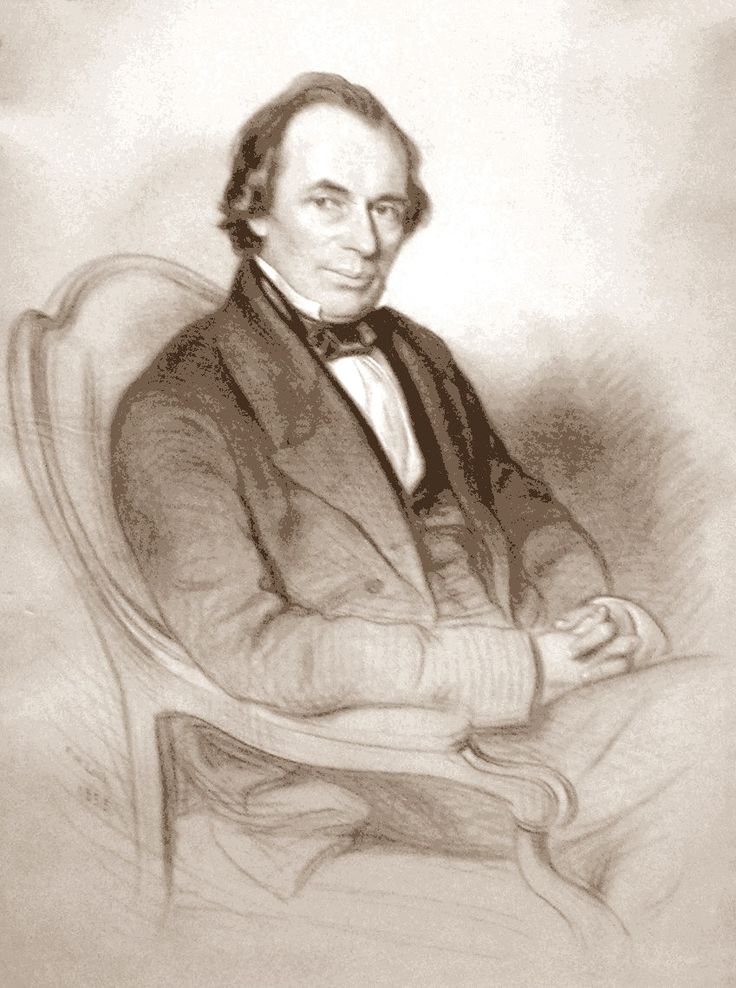
It was a fine Summer Sunday afternoon on July 15, 1838 when fewer than 100 people jammed into a small second floor Divinity Hall chapel at Harvard. The occasion was the commencement ceremony for the latest crop of Harvard Divinity School graduates. There were seven that year, six of whom were in attendance. That was more than enough young men to meet the needs of Unitarian congregations that were clustered mostly in New England. The class selected the main speaker for the day—a youngish former Unitarian minister now making a name for himself as a lecturer, essayist, and poet. His heterodox views were well known, but Harvard authorities probably hoped that he would mute them in deference to his old alma mater and prevailing Unitarian sensibilities.
That Ralph Waldo Emerson did not do.
Instead, he read an indictment of Unitarian worship and preaching, which he charged was disconnected from life and drained of spirituality. He went on to a critique of Christianity in general as practiced. He discounted the miracles of the Bible, and rejected the divinity of Christ, mocking the attention to the person of Jesus as a distraction from his message. He offered novel alternatives to the authority of the Church—the direct experience of the divine. It was a clarion call for what might be called post-Christian religion. There would soon be a name for it—a name Emerson did not particularly like—Transcendentalism.
The young graduates may have been inspired by the challenge Emerson laid before them. Their professors, the worthies of Harvard, the parents of the graduates, the learned clergy of Boston, and both the denominational and public press were united in outrage, especially when Emerson’s Divinity School Address was published. Despite his soaring reputation as America’s most significant intellectual and most original philosopher Emerson would be banned from speaking again at Harvard for more than 30 years.
The leading Unitarian journal, The Christian Examiner dismissed Emerson’s comments as, “…so far as they are intelligible, are utterly distasteful to the instructors of the school, and to Unitarian ministers generally, by whom they are esteemed to be neither good divinity nor good sense.”

Andrews Norton, a professor at Harvard, the recent author of the definitive history of Unitarian thought, and with William Ellery Channing a leading figure in the denomination, led the charge against Emerson and his heresy. The so-called “Unitarian Pope” responded to Emerson in an address the following year to the alumni of the Divinity School at their Commencement reunion. His lecture, the Discourse on the Latest Form of Infidelity, indicted the European philosophers Spinoza, Schleiermacher, Strauss, and Hegel, on whom he blamed transcendental error and refuted Emerson by indirection, without mentioning him or taking explicit issue with his views.
When Emerson’s friend and ally George Ripley answered and refuted Norton in a pamphlet of his own, the controversy erupted on a more personal note and Norton, a daring liberal thinker in his youth, spent most of the rest of his life as a neo-orthodox reactionary to the new theological thinking, and in the process muddied his own reputation.
If the establishment rallied against Emerson and his new-fangled ideas, he had his supporters. Along with Ripley other ministers offered support including Frederic Henry Hedge, who first convened the meeting of what would become known as the Transcendentalist Club, and rising star Theodore Parker who would come to fame as the preacher of his own proto-mega church and as a fiery abolitionist who was also shunned by the closed club of Unitarian ministers. Channing, who occasionally attended Transcendentalist Club meetings, while disagreeing with Emerson on some points, refrained from joining the attack on him.
Emerson also enjoyed the support of the growing salon of intellectuals he gathered around him and who became collectively one of the most significant, if not the most significant, philosophical movements in American history. These included Henry David Thoreau, Bronson Alcott (father of Louisa May), the Peabody Sisters, Orestes Brownson, James Freeman Clarke, William Henry Channing (not to be confused with his near-namesake cousin), Nathaniel Hawthorne, and Margaret Fuller among others. Together they would amplify Emerson’s philosophy and imbed it deeply into American culture.
The young ministers who invited Emerson that day and the generations that followed them would themselves become, more or less, Transcendentalist. Within a generation they supplanted the old establishment and bring Unitarianism itself into conformation with the new ideas. Which is why Emerson later in life could comfortably return to his old faith home and why Harvard, at long last, forgave their most illustrious son and not only invited him back to speak but elected him to the Board of Overseers.

But if the Divinity School Address was simply a revolution in the minor American sect of Unitarianism, it would be, at best, a footnote to history. But its implications reverberated across American culture and resonate today. In fact, they resonate with even more urgency and reflect the values of a growing generation that has defined itself as “spiritual but not religious.” Emerson sounds almost as if he were speaking for them.
So what, exactly, did he say? Here are some samples.
In this refulgent summer, it has been a luxury to draw the breath of life. The grass grows, the buds burst, the meadow is spotted with fire and gold in the tint of flowers. The air is full of birds, and sweet with the breath of the pine, the balm-of-Gilead, and the new hay. Night brings no gloom to the heart with its welcome shade. Through the transparent darkness the stars pour their almost spiritual rays. Man under them seems a young child, and his huge globe a toy. The cool night bathes the world as with a river, and prepares his eyes again for the crimson dawn. The mystery of nature was never displayed more happily. The corn and the wine have been freely dealt to all creatures, and the never-broken silence with which the old bounty goes forward, has not yielded yet one word of explanation. One is constrained to respect the perfection of this world, in which our senses converse. How wide; how rich; what invitation from every property it gives to every faculty of man! In its fruitful soils; in its navigable sea; in its mountains of metal and stone; in its forests of all woods; in its animals; in its chemical ingredients; in the powers and path of light, heat, attraction, and life, it is well worth the pith and heart of great men to subdue and enjoy it. The planters, the mechanics, the inventors, the astronomers, the builders of cities, and the captains, history delights to honor.
But when the mind opens, and reveals the laws which traverse the universe, and make things what they are, then shrinks the great world at once into a mere illustration and fable of this mind. What am I? and What is? asks the human spirit with a curiosity new-kindled, but never to be quenched. Behold these outrunning laws, which our imperfect apprehension can see tend this way and that, but not come full circle. Behold these infinite relations, so like, so unlike; many, yet one. I would study, I would know, I would admire forever. These works of thought have been the entertainments of the human spirit in all ages…
… The perception of this law of laws awakens in the mind a sentiment which we call the religious sentiment, and which makes our highest happiness. Wonderful is its power to charm and to command. It is a mountain air. It is the embalmer of the world. It is myrrh and storax, and chlorine and rosemary. It makes the sky and the hills sublime, and the silent song of the stars is it. By it, is the universe made safe and habitable, not by science or power. Thought may work cold and intransitive in things, and find no end or unity; but the dawn of the sentiment of virtue on the heart, gives and is the assurance that Law is sovereign over all natures; and the worlds, time, space, eternity, do seem to break out into joy.
This sentiment is divine and deifying. It is the beatitude of man. It makes him illimitable. Through it, the soul first knows itself. It corrects the capital mistake of the infant man, who seeks to be great by following the great, and hopes to derive advantages from another, — by showing the fountain of all good to be in himself, and that he, equally with every man, is an inlet into the deeps of Reason. When he says, “I ought;” when love warms him; when he chooses, warned from on high, the good and great deed; then, deep melodies wander through his soul from Supreme Wisdom. Then he can worship, and be enlarged by his worship; for he can never go behind this sentiment. In the sublimest flights of the soul, rectitude is never surmounted, love is never outgrown….
… Jesus Christ belonged to the true race of prophets. He saw with open eye the mystery of the soul. Drawn by its severe harmony, ravished with its beauty, he lived in it, and had his being there. Alone in all history, he estimated the greatness of man. One man was true to what is in you and me. He saw that God incarnates himself in man, and evermore goes forth anew to take possession of his world. He said, in this jubilee of sublime emotion, “I am divine. Through me, God acts; through me, speaks. Would you see God, see me; or, see thee, when thou also thinkest as I now think.” But what a distortion did his doctrine and memory suffer in the same, in the next, and the following ages! There is no doctrine of the Reason which will bear to be taught by the Understanding. The understanding caught this high chant from the poet's lips, and said, in the next age, “This was Jehovah come down out of heaven. I will kill you, if you say he was a man.” The idioms of his language, and the figures of his rhetoric, have usurped the place of his truth; and churches are not built on his principles, but on his tropes. Christianity became a Mythus, as the poetic teaching of Greece and of Egypt, before. He spoke of miracles; for he felt that man's life was a miracle, and all that man doth, and he knew that this daily miracle shines, as the character ascends. But the word Miracle, as pronounced by Christian churches, gives a false impression; it is Monster. It is not one with the blowing clover and the falling rain…
… Historical Christianity has fallen into the error that corrupts all attempts to communicate religion. As it appears to us, and as it has appeared for ages, it is not the doctrine of the soul, but an exaggeration of the personal, the positive, the ritual. It has dwelt, it dwells, with noxious exaggeration about the person of Jesus. The soul knows no persons. It invites every man to expand to the full circle of the universe, and will have no preferences but those of spontaneous love. But by this eastern monarchy of a Christianity, which indolence and fear have built, the friend of man is made the injurer of man. The manner in which his name is surrounded with expressions, which were once sallies of admiration and love, but are now petrified into official titles, kills all generous sympathy and liking. All who hear me, feel, that the language that describes Christ to Europe and America, is not the style of friendship and enthusiasm to a good and noble heart, but is appropriated and formal, — paints a demigod, as the Orientals or the Greeks would describe Osiris or Apollo. Accept the injurious impositions of our early catachetical instruction, and even honesty and self-denial were but splendid sins, if they did not wear the Christian name. One would rather be “A pagan, suckled in a creed outworn,” than to be defrauded of his manly right in coming into nature, and finding not names and places, not land and professions, but even virtue and truth foreclosed and monopolized. You shall not be a man even. You shall not own the world; you shall not dare, and live after the infinite Law that is in you, and in company with the infinite Beauty which heaven and earth reflect to you in all lovely forms; but you must subordinate your nature to Christ's nature; you must accept our interpretations; and take his portrait as the vulgar draw it…
… Whenever the pulpit is usurped by a formalist, then is the worshipper defrauded and disconsolate. We shrink as soon as the prayers begin, which do not uplift, but smite and offend us. We are fain to wrap our cloaks about us, and secure, as best we can, a solitude that hears not. I once heard a preacher who sorely tempted me to say, I would go to church no more. Men go, thought I, where they are wont to go, else had no soul entered the temple in the afternoon. A snow storm was falling around us. The snow storm was real; the preacher merely spectral; and the eye felt the sad contrast in looking at him, and then out of the window behind him, into the beautiful meteor of the snow. He had lived in vain. He had no one word intimating that he had laughed or wept, was married or in love, had been commended, or cheated, or chagrined. If he had ever lived and acted, we were none the wiser for it. The capital secret of his profession, namely, to convert life into truth, he had not learned. Not one fact in all his experience, had he yet imported into his doctrine. This man had ploughed, and planted, and talked, and bought, and sold; he had read books; he had eaten and drunken; his head aches; his heart throbs; he smiles and suffers; yet was there not a surmise, a hint, in all the discourse, that he had ever lived at all. Not a line did he draw out of real history. The true preacher can be known by this, that he deals out to the people his life, — life passed through the fire of thought. But of the bad preacher, it could not be told from his sermon, what age of the world he fell in; whether he had a father or a child; whether he was a freeholder or a pauper; whether he was a citizen or a countryman; or any other fact of his biography. It seemed strange that the people should come to church. It seemed as if their houses were very unentertaining, that they should prefer this thoughtless clamor. It shows that there is a commanding attraction in the moral sentiment, that can lend a faint tint of light to dullness and ignorance, coming in its name and place. The good hearer is sure he has been touched sometimes; is sure there is somewhat to be reached, and some word that can reach it. When he listens to these vain words, he comforts himself by their relation to his remembrance of better hours, and so they clatter and echo unchallenged…
… Let me admonish you, first of all, to go alone; to refuse the good models, even those which are sacred in the imagination of men, and dare to love God without mediator or veil. Friends enough you shall find who will hold up to your emulation Wesleys and Oberlins, Saints and Prophets. Thank God for these good men, but say, “I also am a man.” Imitation cannot go above its model. The imitator dooms himself to hopeless mediocrity. The inventor did it, because it was natural to him, and so in him it has a charm. In the imitator, something else is natural, and he bereaves himself of his own beauty, to come short of another man’s.
Yourself a newborn bard of the Holy Ghost, — cast behind you all conformity, and acquaint men at first hand with Deity. Look to it first and only, that fashion, custom, authority, pleasure, and money, are nothing to you, — are not bandages over your eyes, that you cannot see, — but live with the privilege of the immeasurable mind. Not too anxious to visit periodically all families and each family in your parish connection, — when you meet one of these men or women, be to them a divine man; be to them thought and virtue; let their timid aspirations find in you a friend; let their trampled instincts be genially tempted out in your atmosphere; let their doubts know that you have doubted, and their wonder feel that you have wondered. By trusting your own heart, you shall gain more confidence in other men. For all our penny-wisdom, for all our soul-destroying slavery to habit, it is not to be doubted, that all men have sublime thoughts; that all men value the few real hours of life; they love to be heard; they love to be caught up into the vision of principles. We mark with light in the memory the few interviews we have had, in the dreary years of routine and of sin, with souls that made our souls wiser; that spoke what we thought; that told us what we knew; that gave us leave to be what we only were. Discharge to men the priestly office, and, present or absent, you shall be followed with their love as by an angel…
… I look for the hour when that supreme Beauty, which ravished the souls of those eastern men, and chiefly of those Hebrews, and through their lips spoke oracles to all time, shall speak in the West also. The Hebrew and Greek Scriptures contain immortal sentences, that have been bread of life to millions. But they have no epical integrity; are fragmentary; are not shown in their order to the intellect. I look for the new Teacher, that shall follow so far those shining laws, that he shall see them come full circle; shall see their rounding complete grace; shall see the world to be the mirror of the soul; shall see the identity of the law of gravitation with purity of heart; and shall show that the Ought, that Duty, is one thing with Science, with Beauty, and with Joy.

In reflecting on all of this one lazy Sunday afternoon some years ago, I set down my own thoughts.
Here’s to You, Ralph Waldo
You have reached across time
and found me dozing on an afternoon,
reached your hand down
and shaken me by the toe
until I stir bewildered.
Wake up! you cry,
the world is waiting to be noticed,
the very autumn air vibrant with miracles,
the incessant sun prying into every dark space
for you, if you will see it,
if you will be it!
The deadest of white males,
you have climbed long-limbered
from the pages of a book
splayed open on my desk,
swept your arm wide around the random piles,
half-read volumes,
half-completed projects,
half-lived life that is my study
and demanded I seize my life,
clear my head of every derivation,
even that from the dust of your own mouth,
and speak at last my own revelation.
So, here’s to you Ralph Waldo,
Dreamer,
Darer,
Doer.
—Patrick Murfin
From We Build Temple in the Heart, Skinner House Books, Boston, 2004.