Showing posts with label Joe Hill. Show all posts

Monday, November 17, 2025

In November We Remember--The Pride and Grief of American Labor


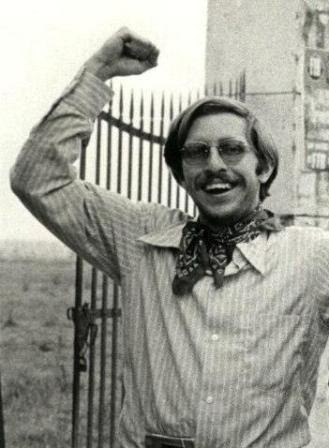
Ralph Chaplin, then the editor of the Industrial Worker, wrote this poem, later set to music.  Pictured is Frank Little, the tough IWW hard rock miners organizer who was lynched in Butte, Montana in 1917.

For many of us November is a melancholy month.  Often slate gray skies silhouette naked trees in a chilling wind.  Death seems at hand.  But so is its handmaiden—remembrance.  After all, the month begins with All Souls/Day of the Dead when the memories of ancestors and loved ones are honored. 

English school children still chant “Remember, Remember the Fifth of November,” now a harmless nursery rhyme about Guy Fawkes and the Gunpowder Plot but was once an annual call to riot and commit mayhem against Catholics not only in Britain but in pre-Revolutionary War New England.  Here in the American Midwest, we are often reminded of the Edmund Fitzgerald, the Great Lakes iron ore freighter that sank with all hands in a gale on Lake Superior on November 10, 1975 and is commemorated in Gordon Lightfoothaunting ballad.  On November 11 Americans celebrate Veterans Day on the anniversary of the Armistice that ended the First World War.  But in Britain and most Commonwealth nations it is a somber Remembrance Day, more akin to our Memorial Day in honoring war dead.

This 2015 cover of the Industrial Worker was in the continuing tradition "In November We Remember" issues.

But the month carries special meaning to the American labor movement.  Beginning in the early 1920’s the Industrial Workers of the World (IWW) began annually commemorating a string of radical and union martyrs under the heading In November We Remember!  Aside from articles in the union press—the Industrial Pioneer and the Industrial Worker—and often local programs and memorials, the month was used to raise funds for the General Defense Committee for the legal defense of persecuted unionists and aid for class war prisoners.

Most often cited in annual observances were the following cases, each with a unique and tragic story.  In each case I will link to a blog post with a full story.

The execution of the Haymarket Martyrs in 1887.

The Haymarket MartyrsOn November 11, 1887 four of the original eight anarchists and unionists charged with murder after a bomb exploded killing several attacking police at a protest rally at Haymarket Square in Chicago on May 4, 1886.  Albert Parsons, August Spies, Adolph Fischer, and George Engel were hung at Cook County Jail.  A fifth defendant, Louis Ling, had committed suicide in jail to deprive the state of executing him.  Their death galvanized the international labor movement and led directly to the establishment of May Day as International Labor Day.


A union funeral for three of the victims of the Everett Massacre.


A memorial marker recently erected by Wobblies and labor history devotees to Wesley Everest, the World War I vet lynched in his Dough Boy  uniform after the Centralia, Washington IWW Hall was attacked by American Legionnaires.

The Centralia Massacre—See my Armistice/Veterans Day post. On November 1l, 1919 Westley Everest, an IWW member and veteran in uniform, was lynched following an attack on the IWW hall in CentraliaWashington by members of a lumbermen’s Citizen Committee and American Legionnaires.

                                                Carlos Cortez made several versions of this hand silk screened Joe Hill poster.

Joe HillLegendary IWW songwriter and footloose agitator Joe Hill (a/k/a Joel Haglund and Joseph Hillstrom) was executed by firing squad in Utah for a murder he could not have committed on this date in 1915.  Many of his songs continue to be printed in new editions of the IWW’s Little Red Song Book and he helped establish a tradition of labor music inherited by Woody Guthrie, Pete Seeger, Utah PhillipsSi Kahn, and others.  He may be best known to the public for I Dreamed I Saw Joe Hill Last Night, a song by Alfred Hayes and Earl Robinson famously recorded by Paul Robeson and Joan Baez.


Mother Jones celebrated her birthday on May 1, 1930 a few months before she died.

Mother Jones—Although not a martyr and directly related to the IWW only through her attendance at its 1905 founding convention, Mary Harris Jones, the Miners Angel, is often included in later versions of this litany.  She died on November 30, 1930 well into her 90’s after more than forty years of tireless activism and hell raising.

Both the IWW and the labor movement also use this month to remember the countless others who have given their lives during the years of more or less open class warfare in the United States and down to this day.

For instance D.J. Alperovitz as part of his massive IWW archive project at the University of Washington has documented the deaths of more than 170 individual associated with the union from its founding to the 1970’s in the file IWW Members Killed Year by Year.  The list includes some bystanders killed when police, militia, or gun thugs shot at strikers and picketers, the unborn babies of women who miscarried due to violencemembers who died in jail often after abuse, and some who were killed in fights or while allegedly committing crimes that may or may not have been related to their membership.


Student and journalist Frank  Terrugi is one of the most recent IWW deaths recorded in D.J. Alperovitz's file IWW Members Killed Year by Year.  He was "went missing" and was executed along with tens of thousands of others after the 1973 Chilean Coup.  His case was among the inspirations for the film Missing starring Jack Lemon and Sissy Spacek.

Among the earliest listed are several members killed in the IWW’s 1909 Press Steel Car Strike in McKees RocksPennsylvania.  Seven members were gunned down and murdered in the Columbine Massacre in 1924 in Colorado when the state Militia opened fire with machine guns on a camp of coal strikers and their families.  Several other strikes had multiple fatalities.  The list also includes Wobs who died in the Baja Rebellion of 1913, Mexican Revolution, in the Soviet Union during and after the Russian Civil War, and while fighting as volunteers in the Spanish Civil War.  The last two listed were student, journalist Frank Terrugi, an IWW member killed in the 1973 Chilean Coup whose story was an inspiration for the film   Missing with Jack Lemon and Sissy Spacek and journalist Frank Gould who disappeared in 1974 while covering the Moro Rebellion in the Philippines.


A WPA mural depicting the Memorial Day Massacre in Chicago.

Of course, we should remember the labor dead beyond the IWW.  A far from comprehensive list would include those killed in the Great Railway Strike of 1877, decades of mine wars in PennsylvaniaWest VirginiaKentuckyIllinois, and Colorado including the Battle of Blair Mountain, the 1919 Steel Strike, and the 1937 Memorial Day Massacre in Chicago.


Saturday, November 16, 2024

Mourning for Wobblies and the Labor Movement—In November We Remember


Ralph Chaplin, then the editor of the Industrial Worker, wrote this poem, later set to music.  Pictured is Frank Little, the tough IWW hard rock miners organizer who was lynched in Butte, Montana in 1917.

For many of us November is a melancholy month.  Often slate gray skies silhouette naked trees in a chilling wind.  Death seems at hand.  But so is its handmaiden—remembrance.  After all, the month begins with All Souls/Day of the Dead when the memories of ancestors and loved ones are honored. 

English school children still chant “Remember, Remember the Fifth of November,” now a harmless nursery rhyme about Guy Fawkes and the Gunpowder Plot but was once an annual call to riot and mayhem against Catholics not only in Britain but in pre-Revolutionary War New England.  Here in the American Midwest, we are often reminded of the Edmund Fitzgerald, the Great Lakes iron ore freighter that sank with all hands in a gale on Lake Superior on November 10, 1975 and is commemorated in Gordon Lightfoots haunting ballad.  On November 11 Americans celebrate Veterans Day on the anniversary of the Armistice that ended the First World War.  But in Britain and most Commonwealth nations it is a somber Remembrance Day, more akin to our Memorial Day in honoring war dead.

This 2015 cover of the Industrial Worker was in the continuing tradition "In November We Remember" issues.

But the month carries special meaning to the American labor movement.  Beginning in the early 1920’s the Industrial Workers of the World (IWW) began annually commemorating a string of radical and union martyrs under the heading In November We Remember!  Aside from articles in the union press—the Industrial Pioneer and the Industrial Worker—and often local programs and memorials, the month was used to raise funds for the General Defense Committee for the legal defense of persecuted unionists and aid for class war prisoners.

Most often cited in annual observances were the following cases, each with a unique and tragic story.  In each case I will link to a blog post with a full story.

The execution of the Haymarket Martyrs in 1887.

The Haymarket MartyrsOn November 11, 1887 four of the original eight anarchists and unionists charged with murder after a bomb exploded killing several attacking police at a protest rally at Haymarket Square in Chicago on May 4, 1886.  Albert Parsons, August Spies, Adolph Fischer, and George Engel were hung at Cook County Jail.  A fifth defendant, Louis Ling, had committed suicide in jail to deprive the state from executing him.  Their death galvanized the international labor movement and led directly to the establishment of May Day as International Labor Day.

A union funeral for three of the victims of the Everett Massacre.

The Everett MassacreThe IWW lost at least 5 dead and 27 injured when Sheriff's deputies and timber industry gun thugs opened fire on the Verona and another boat bringing Seattle Wobblies to Everett, Washington for a free speech fight on November 5, 1916.  About half a dozen other Wobs were missing and presumed drowned after jumping from the ambushed boat to evade the lethal crossfire from shore.

A memorial marker recently erected by Wobblies and labor history devotees to Wesley Everest, the World War I vet lynched in his Dough Boy  uniform after the Centralia, Washington IWW Hall was attacked by American Legionnaires.

The Centralia Massacre—See my Armistice/Veterans Day post. On November 1l, 1919 Westley Everest, an IWW member and veteran in uniform, was lynched following an attack on the IWW hall in Centralia, Washington by members of a lumbermens Citizen Committee and American Legionnaires.

                                    Carlos Cortez made several versions of this hand silk screened Joe Hill poster.

Joe HillLegendary IWW songwriter and footloose agitator Joe Hill (a/k/a Joel Haglund and Joseph Hillstrom) was executed by firing squad in Utah for a murder he could not have committed on this date in 1915.  Many of his songs continue to be printed in new editions of the IWW’s Little Red Song Book and he helped establish a tradition of labor music inherited by Woody Guthrie, Pete Seeger, Utah Phillips, and Si Kahn and others.  He may be best known to the public for I Dreamed I Saw Joe Hill Last Night, a song by Alfred Hayes and Earl Robinson famously recorded by Paul Robeson and Joan Baez.

Mother Jones celebrated her birthday on May 1, 1930 a few months before she died.

Mother Jones—Although not a martyr and directly related to the IWW only through her attendance at its 1905 founding convention, Mary Harris Jones, the miners angel, is often included in later versions of this litany.  She died on November 30, 1930 well into her 90’s after more than forty years of tireless activism and hell raising.

Both the IWW and the labor movement also use this month to remember the countless others who have given their lives during the years of more or less open class warfare in the United States and down to this day.

For instance D.J. Alperovitz as part of his massive IWW archive project at the University of Washington has documented the deaths of more than 170 individual associated with the union from its founding to the 1970’s in the file IWW Members Killed Year by Year.  The list includes some bystanders killed when police, militia, or gun thugs shot at strikers and picketers, the unborn babies of women who miscarried due to violence, members who died in jail often after abuse, and some who were killed in fights or while allegedly committing crimes that may or may not have been related to their membership.

Student and journalist Frank  Terrugi is one of the most recent IWW deaths recorded in D.J. Alperovitz's file IWW Members Killed Year by Year.  He was "went missing" and was executed along with tens of thousands of others after the 1973 Chilean Coup.  His case was among the inspirations for the film Missing starring Jack Lemon and Sissy Spacek.

Among the earliest listed are several members killed in the IWW’s 1909 Press Steel Car Strike in McKees Rocks, Pennsylvania.  Seven members were gunned down and murdered in the Columbine Massacre in 1924 in Colorado when the state Militia opened fire with machine guns on a camp of coal strikers and their families.  Several other strikes had multiple fatalities.  The list also includes Wobs who died in the Baja Rebellion of 1913, Mexican Revolution, in the Soviet Union during and after the Russian Civil War, and while fighting as volunteers in the Spanish Civil War.  The last two listed were student, journalist Frank Terrugi, and IWW member killed in the 1973 Chilean Coup whose story was an inspiration for the film   Missing with Jack Lemon and Sissy Spacek and journalist Frank Gould who disappeared in 1974 while covering the Moro Rebellion in the Philippines.
 

A WPA mural depicting the Memorial Day Massacre in Chicago.

Of course, we should remember the labor dead beyond the IWW.  A far from comprehensive list would include those killed in the Great Railway Strike of 1877, decades of mine wars in Pennsylvania, West Virginia, Kentucky, Illinois, and Colorado including the Battle of Blair Mountain, the 1919 Steel Strike, and the 1937 Memorial Day Massacre in Chicago.

So much to remember….


Saturday, October 5, 2024

Those Warbling Wobblies Are a Singing Union With Little Red Songbooks

A vintage edition of the IWW Songs to Fan the Flames of Discontent a/k/a The Little Red Songbook.  This version featured a cover illustration by Ralph Chaplin based on the poster for the Patterson Pageant in 1913.

There have been at least 38 editions of the working peoples hymnal popularly known as the Little Red Songbook since it appeared in 1909.  Here is the story of those remarkable little books.

The Wobblies—members of the Industrial Workers of the World (IWW)were always part of a singing union.  From the earliest strikes and job actions after the union’s founding in 1905 music was a part of meetings, rallies, marches, and picket lines.  Nowhere was this truer than in the Pacific Northwest for early organizing drives among lumber workers who were often called timber beasts because of their ragged appearance and often near starving conditions. 

Unable to effectively get to remote logging camps, IWW organizers relied on street meetings in cities like Spokane, Washington to protest the job shark hiring agencies that dispatched men to the camps collecting fees from the ax men and employers alike.  They found that songs helped attract crowds for the union’s soapbox orators. When Salvation Army Bands were often sent to drown out the meetings workers would sing the old hymns with new words.

The Spokane local issued a song card featuring four selections in 1906.  The sold for a penny, but most were probably handed out for free at the street meeting.  The card featured already familiar labor songs and one original— Harry Haywire Mac McClintocks Hallelujah, Im a Bum.  McClintock was a former Texas cowboy, harvest worker, and hobo who had become a lumber worker while also working as a musician in saloons.  The song was originally written in the 1890’s but was popular with all sorts of migratory workers.  McClintock also penned another popular Hobo song, The Big Rock Candy Mountain.  

A rare and battered copy of the Songbook's first edition published by the Spokane, Washington IWW local.

The song cards were so successful that the local decided to assemble and sell a small songbook designed to easily fit into a shirt pocket.  It sold for 10¢, not an insignificant sum in those days when a dime could generally buy a meal at Skid Road diners, but not a prohibitive one.  The first edition did not have the now familiar red cover but did have red lettering.  The songbook hit the streets in January of 1909 and was an immediate success. The book’s official title was a mouthfulSongs of the Workers, on the Road, in the Jungles, and in the Shops – Songs to Fan the Flames of Discontent.  Subsequent editions shortened that to Songs of the Workers and/or Songs of the IWW to Fan the Flames of Discontent.  Three editions were printed in Spokane over the next three years and were bound in heavy red stock, giving it the enduring nickname, The Little Red Song Book.  But that title appeared on only two of the subsequent 38 official editions.

Each new songbook added new songs like the labor standards The Red Flag sung to the tune of O Tannenbaum, the global Socialist anthem The Internationale, and the easily adapted Civil War song Hold the Fort.

When the Spokane local was under siege during aftermath the 1909 Free Speech Fight, issuing and printing new editions shifted to Seattle.  It was in an early Seattle edition that Joe Hills song The Preacher and the Slave was published in 1911.  Mac McClintock claimed to be the first to sing it at a street meeting because Hill was too shy to perform publicly.  

                                    Carlos Cortez's linocut poster tribute Wobbly bard and martyr Joe Hill.

Joel Hägglund a/k/a Joseph Hillstrom and Joe Hill was a young Swedish-born itinerate worker who had been involved with the IWW for a few years.  Several of his songs were added to editions of the Songbook including The Tramp, Stung Right, Where the River Frazier Flows, There is Power in a Union, Mr. Block, and Casey Jones Union Scab all of which have become labor standards.  Hill was famously framed on a murder charge in Salt Lake City, Utah.  While being held he was inspired by young IWW orator Elizabeth Gurly Flynn who worked tirelessly on his defense committee and who had visited him in jail to write The Rebel Girl.

After Hill’s execution by firing squad on November 19, 1915 his poem Final Will was included in all subsequent editions of the Songbook.  At least two later versions of the book were officially named Joe Hill Memorial Edition, including one issued by the Cleveland Metal and Machinery Workers Industrial Union 440 in the early 1950’s.  By popular demand later editions have also included I Dreamed I Saw Joe Hill Last Night by Alfred Hayes and Earl Robinson which was popularized by Paul Robeson and Joan Baez, and Phil Ochs long ballad Joe Hill.


Industrial Worker editor Ralph Chaplin wrote the enduring labor anthem Solidarity Forever.

Other notable early additions to the Songbook included Dump the Bosses off Your Back by John Brill.  Industrial Worker editor and commercial artist Ralph Chaplins rousing Solidarity Forever was included in a 1916 edition and has become the leading labor anthem of all time.  Chaplin’s illustrations were also used on the covers of several editions.  The powerful We Have Fed You All for a Thousand Years with words by an “Unknown Proletarian” and music by Rudolph Von Liebich appeared in 1919.

Somewhat surprisingly a song closely associated with the IWW’s 1912 Lawrence Textile Strike did not make it into the Songbook until 1984 although it appeared in the union magazine Industrial Pioneer in 1946.  James Oppenheimers Bread and Roses was first published as a poem in the American Magazine in December of 1911 shortly before the strike.  The mostly women mill workers adopted Bread and Roses as their strike slogan.  It wasn’t until the 1940’s that Carolyn Kohlsatt adapted the song to the melody most Wobblies still sing, although an alternative tune by Mimi Fariña in 1976 is gaining popularity.  In the 1970’s the song became a Womens Liberation anthem as much as a labor one and it has even been included in the Unitarian Universalist hymnal Singing the Living Tradition.

Production of the Songbooks moved to IWW General Headquarters in Chicago and resumed after the great post-World War I Red Scare sent most Wobbly leaders, including Ralph Chaplin, to prison.  The ‘20s saw the appearance of another notable contributor, Matt Valentine Huhta, who signed is contributions T-Bone Slim including The Popular Wobbly, Mysteries Of A Hobo’s Life, and The Lumberjacks Prayer.

Editions of the Songbook have also included labor songs from other sources notably Woody Guthries Union Maid with an updated final verse by Nancy Katz, The Banks are Made of Marble by Lee Rice and popularized by the Almanac Singers with more contemporary lyrics added, Which Side are You On by Florence Resse, and the old British rouser The Black Leg Miner as sung by Billy Brag.

The "double tall" 1995 36th edition featured music from around the world as well as old favorites an music for each song.

In 1995 the union issued an unusual “double tallInternational Edition, one of only two editions to use the words Little Red Songbook on the cover.  In addition to most of the standard songs included more modern music and songs from around the world including songs in Spanish.  It also included for the first and only time the full musical notation of each song.

Wobblies have continued to add new songs and adapted old ones, especially with more gender inclusive language.  Bruce Utah Phillips was the union’s popular balladeer, philosopher, storyteller, and inveterate agitator who died much loved and mourned in 2008.  His contributions to the book included Larimer Street, Starlight on the Rails, and All Used Up.  He also introduced the music from the Songbook to whole new generations.  

Bruce "Utah" Phillips introduced the IWW and its songs to  new generations.

Other newer contributors include Anne Feeney, Scabs and Whatever Happened to the Eight Hour Day; Kathleen Taylor, The LIP Song and Soul Stealers; Goddard Graves, Go I Will Send Thee; Leslie Fish, Babylon Updated and Freedom Road; Carlos Cortez, Outa Work Blues; Darryl Cheney, Where Are We Gonna Work When the Trees Are Gone and Who Bombed Judi Bari; and Tom Morello, Union Song.

Hell, even I made an appearance under the moniker The Irish Cowboy with a rock & roll picket line song Roll the Hours Back and The Dark and Dreary Slum Where I Was Born, a take-off on Woody Guthrie’s Oklahoma Hills.

Rebel Voices was the realization of a long cherished dream to produce a "Little Red Record."

Utah Phillips gathered both touring and Chicago-based member of the IWW’s Entertainment Workers Industrial Union #630 for a concert performance at Holsteins on Lincoln Avenue to record a long dreamed of “Little Red Record.  Released under the title Rebel Voices in 1988 the record included performances by Phillips, Faith Petric, Fred Holstein, Bruce Brackney, Marion Wade, Bob Bovee, Jeff Cahill, Kathleen Taylor, J. B. Freeman, Robin Oye, Eric Glatz, and Mark Ross.  It is still available on CD or by Download.

Almost all of the songs included in the first 36 editions of the Songbook are included in The Big Red Songbook published by Charles H. Kerr & Company.

In 2007 noted folklorist Archie Green published The Big Red Songbook which included 250 songs culled from the various editions of the IWW songbook.  In 2016 a new edition was co-edited by Green, labor historian David Roediger, Franklin Rosemont, and Salvatore Solerno with an introduction by Tom Morello, the Wobbly rocker of Rage Against the Machine and Audioslave, and posthumous afterward by Utah Phillips.