Showing posts with label Rock and Roll Hall of Fame. Show all posts

Sunday, May 31, 2020

Sunshine of Your Love—Murfin Home Confinement Music Festival 2020

Sunshine of Your Love by Cream.

And now in honor of a glorious sunny day hereabouts, something completely different, psychedelic, loud we present Sunshine of Your Love from 1967 by what some consider to be the first rock super group Cream.
The band was formed in 1965 by lead guitarist Eric Clapton formerly with the Yardbirds and John Mayall & the Bluesbreakers; drummer Ginger Baker of The Graham Bond Organisation; and lead singer, bassist, and piano player Jack Bruce also of The Graham Bond and briefly with the Bluesbreakers as well.   Despite their close association Baker and Bruce detested each other and often fought to the edge of physical violence.  The laid-back Clapton got along well with both and facilitated mutual cooperation.

Cream--Ginger Baker, Jack Bruce, and Eric Clapton in 1967.
The band was a stripped down trio and eschewed back-up studio musicians or singers and their first English record producers worried that they would produce enough “sound to fill up the record.”  Boy, were they wrong.
Their first album Fresh Cream included immediate British hits Rollin’ and Tumblin’, Spoonful, and I’m So Glad.
Despite the success because they were so different from other British Invasion groups they were little known in the U.S.  Disc jockey and rock producer Murray the K booked them for the bottom act of a six band bill to play nine dates at the RKO 58th Street Theatre in New York City. for one of his tour packages in 1967, effectively limiting them to one song per set.
Between appearances they recorded their second album Disraeli Gears at Atlantic Studios in New York during May 1967.  Despite a volume of material, the album only took three and a half days to complete and the band’s work visas expired the day of the last session.  Released on November 2, the album was a huge success this time on both sides of the puddle as well as Australia.  And in the wake of that chart-topping success Fresh Cream finally broke out in the U.S.
Sunshine of Your Love which became Cream’s signature anthem and their biggest single hit began as a bass phrase or riff developed by Jack Bruce after being inspired by Jimmy Hendrix.  Clapton and lyricist Pete Brown later contributed to the song while a distinctive tom-tom drum rhythm was developed by Baker and sound engineer Tom Dowd.  It was truly a collaborative effort pulled together in record time.

Bruce, Baker, and Clapton reunited for the first time in 25 years for their Rock and Roll Hall of Fame induction.
The Recording Industry Association of America (RIAA) certified the single gold on September 26, 1968, signifying sales in excess of 1,000,000 copies.  In the US, it became one of the best-selling singles of 1968 and one of the best-selling at the time for the Atlantic group of labels.  In 2004, the song ranked # 65 on Rolling Stone magazine’s list of the 500 Greatest Songs of All Time, in 2005, Q magazine placed it at #19 on its list of the 100 Greatest Guitar Tracks Ever!, and in 2009, VH1 included it at #44 on its list of the Top 100 Hard Rock Songs. The song is on the Rock and Roll Hall of Fame’s list of the 500 Songs That Shaped Rock and Roll.
As for Cream, they were inducted collectively and individually in the Rock and Roll Hall of Fame.  But their shooting star burned out quickly mostly due to the clashes between Baker and Bruce.  After their 1968 album Wheels of Fire the group officially broke up but reunited in 1969 for a final studio album Goodbye after a short farewell tour.  The trio did not perform together again for 25 years when they somewhat reluctantly took the stage together for a performance at the Hall of Fame induction.

Cream lead guitarist Eric Clapton.
Individually Clapton was the most successful post-Cream with Blind Faith, another super group which included Baker, Steve Winwood of Traffic, and Ric Grech of Family.  Then came a stint as lead guitarist for Delaney and Bonnie and Friends, and fronting his own group Derek and the Dominos as well as a very successful solo career. 

Ginger Baker revolutionized rock drumming including being the first to have an extended drum solo in a number the way the Gene Krupa did in big band jazz.
Baker formed his own group Ginger Baker’s Air Force and surprisingly worked on several projects with Bruce despite their continued antagonism.  After less successful efforts he mostly dropped from sight for years to establish a recording studio in Lagos, Nigeria where he recorded African musicians and western artists, most significantly Paul McCarty and Wings for Band on the Run.  After a brief reunion tour with Cream, Baker was mostly inactive on the musical scene while he battled heroin addiction and an array of health issues.  He died on October 6, 2019 at the age of 80 at a hospital in Canterbury after being injured in a home fall and suffering a heart attack requiring surgery.

Bruce was a lead guitarist, singer, and songwriter for Cream and a restless seeker of new musical horizons while battling addiction.
Bruce was considered to be one of the most important and influential bass guitarists of all time. Rolling Stone magazine readers ranked him #eight on their list of 10 Greatest Bass Guitarist Of All Time,  In his post-Cream years he collaborated with several different artists and began to move from hard rock and blues to new forms including jazz and jazz fusion.  He released several critically acclaimed solo and collaboration albums that were not, on the whole, very commercially successful.  As noted he frequently worked with Baker, an association than neither could every really break.  His battles with alcohol and addiction were even more serious and destructive than Clapton’s and Baker’s.  After he finally beat addiction in 2003 he was diagnosed with liver cancer.  In 2003, he underwent a liver transplant, which was almost fatal, as his body initially rejected the new organ. He recovered, and in 2004 re-appeared to perform Sunshine of Your Love at a Rock Legends concert in Germany organized by the singer Mandoki.  He followed that with the Cream reunion concert in 2005.
Bruce died of liver disease on October 25, 2014, in Suffolk, England, at age 71. His funeral was held in London on November 5, 2014 and was attended by Clapton, Baker and noted musicians Phil Manzanera, Gary Brooker, Vernon Reid and Nitin Sawhney among others. Dozens assembled at the Golders Green Crematorium paying a last tribute singing together including Bruce’s best frenemy, Ginger Baker.


Saturday, April 4, 2020

Lean on Me—Murfin Home Confinement Music Festival 2020

Lean on Me by Bill Withers.

Just as his 1972 hit Lean on Me was becoming an anthem for front line health care workers and first responders during the Coronavirus pandemic Bill Withers died on March 30 with his family making the announcement yesterday.  The 81 year old singer and songwriter was not, however, a victim of the bug but succumbed to long standing heart problems.
Withers was a master of smooth soul music that often had an uplifting vibe during the 15 years of his active musical career in the ‘70’s and ‘80’s.
Long before he was a star he was a working class guy, experiences that have led some to call him a Black Bruce Springsteen but his life was even humbler and entailed plenty of dirt under the fingernails. 
He was born on July 4, 1938 as William Harrison Withers Jr.  in the tiny coal mining town of Slab Fork, West Virginia and brought up in nearby Berkley where a stutter made it hard to fit in.  His father died when he was 13 leaving the family in dire financial straits.  Desperate to get out he joined the Navy as soon as he could at age 18 and served a full nine years of active duty.  He was rated as an aircraft mechanic but later joked he spent much of his time installing toilets.
While he was in the Navy Withers became interested in music and taught himself guitar and piano.  He left the Navy in 1965 and relocated to Los Angeles in 1967 to with an eye on a possible music career and because there were plenty of good blue collar jobs to support himself in the meantime un till he could start a music career.  He was a factory hand at several different companies including Douglas Aircraft Corporation, while recording demo tapes with his own money, shopping them around and performing in clubs at night. 

Bill Withers posed with his lunch box at is factory job for his first album which featured the break out hit Ain't No Sunshine.
In 1970 struggling Sussex Records signed him on the basis of those demo tapes and assigned him to work with producer and arranger Booker T. Jones formerly of Booker T. and the MGs at Staxx.  After three recording sessions stretched out over nearly a year Withers’s first album, Just as I Am was released in 1971 with the tracks, Ain’t No Sunshine and Grandma’s Hands as singles. Stephen Stills played lead guitar.  All the while Withers kept punching in at his day job because he believed the music business was a fickle industry The album cover even  pictured him at his job at Weber Aircraft in Burbank holding his lunch box.
When the singles, especially Ain’t No Sunshine which became an instant classic charted and album sales were brisk, Withers finally quit the day job and assembled a band built around members of the Watts 103rd Street Rhythm Band hit the road on tour.  Sunshine earned an RIAA Gold Record for sale of a million records in September of 1971 and the following year won a Grammy Award for Best R&B Song.  Withers was a certified star.

Bill Withers in live performance.
He followed up with a second album, Still Bill which featured the anthem Lean on Me which went to #1 as a single  on the week of July 8, 1972.  His second gold single had confirmed sales  of over three million.  Use Me, another went gold in October.  A month later he recorded Bill Withers, Live at Carnegie Hall.
But trouble lay ahead.  Up to this time Withers and Booker T. had free hands in selecting what they could record.  But Sussex Records was in trouble and disputes with company executive kept his third studio album +/Justments from being released.  When the company folded industry giant Columbia Records swooped in and bought Withers’s contract and his back catalog which enabled the label to re-issue compilations of his work.  But executives refused to allow Withers to record some his new material and leaned on him to add more covers.  A particularly bitter dispute erupted when they pressured him to cover an Elvis Pressley song.  He did an album a year for four years for Columbia, none of which matched his sales at Sussex.  The third album, Menagerie did better than the others had featured the moderate hit Lovely Day which did exceptionally well in Britain.
Fed up with Columbia, Withers spent most of his time after 1977 working in collaboration with other artists on their labels including Just the Two of Us with jazz saxophonist Grover Washington Jr. with which he won his third Grammy in 1980,  Soul Shadows with the Crusaders, and In the Name of Love with Ralph MacDonald, and the album Dreams in Stone with French singer Michel Berger. 
In 1985 he finally completed his contractual obligation to Columbia with a new studio album, Watching You Watching Me, which featured the Top 40-rated R&B single Oh Yeah.  In press interviews Withers complained that two of the first three singles released, were the same songs which were rejected in 1982 and that the label had signed and promoted non-singing actor Mr. T while preventing him from releasing his own music. 
After touring in support of the album with Jennifer Holliday Withers walked away from the music industry and never looked back.  He had lost all interest in the back stabbing and intrigue that were part of the recording end of the business and just plain tired of touring.  Not becoming a success until age 32 meant that in his words he was “socialized as a regular guy” who had a life before show business and could  have an ordinary life again.

Withers with John Legend at his 2005 induction into the Rock and Roll Hall of Fame.
Withers seldom emerged in public, most notably at the At the 30th Annual Grammy Awards in 1988 when he won the Grammy for Best Rhythm & Blues Song Songwriter for the re-recording of  Lean on Me by Club Nouveau, in 2005 when he was inducted into the Songwriters Hall of Fame, and 2015 when he was inducted into the Rock and Roll Hall of Fame.  In that awards program he jammed on stage with Stevie Wonder and John Legend on Lean on Me.
Withers summed up his career—“I’m not a virtuoso, but I was able to write songs that people could identify with. I don’t think I’ve done bad for a guy from Slab Fork, West Virginia.”

Tuesday, March 31, 2020

Bridge Over Troubled Water—Murfin Home Confinement Music Festival

Like a Bridge Over Troubled Water by Simon and Garfunkel.

When it comes to comforting songs Simon & Garfunkel’s  Bridge Over Troubled Water is like snuggling in an easy chair by a fire, wrapped in a soft quilt with an old dog at your feet and a hot toddy in hand.
Paul Simon had been listening to gospel music  especially the Swan Silvertones and their song Mary Don’t You Weep and wanted to include a song on the new studio album that he was working on with Art Garfunkel that reflected the feel of surrender to a loving power if not the style of Black church music.  He was also frankly inspired by the Beatles’ recent song Let it Be.  The melody was simple but soaring and the famous harmony of the two singers was breath taking.
When the duo began work on what would be their fifth and final studio album they were already on divergent paths Garfunkel wanted to explore an acting career and Simon, the composer and lyricist was broadening his musical horizons including a rising interest in world music.  They had been musical partners since high school in Queens, New York and even had a rock and roll hit, Hey School Girl under the name Tom and Jerry.  By 1963 after pursuing solo careers while in college they reunited they became part of the New York folk music scene and signed with Columbia Records. 
Simon & Garfunkel’s debut studio album, Wednesday Morning, 3 A.M., was recorded over three sessions in March 1964 and released in October.  It was not an immediate hit but slowly gained a following largely around Simon’s lyrics which were often called poetry.  If Bob Dylan was the Walt Whitman of folk music, Simon more like two poets he later referenced in a song, Emily Dickinson and Robert Frost. 
In 1965 The Sound of Silence was a surprise single hit and led to an album of the same name in 1965 which made Simon & Garfunkel must hear music in college dorm rooms around the country.  They followed up with other hugely successful albums—Parsley, Sage, Rosemary and Thyme and Bookends.

Art Garfunkel and Paul Simon cutting a vocal track during the recording of A Bridge Over Troubled Water.

In the studio for the new album their complex recording style was disrupted by Garfunkel’s absences for his part in Catch-22 and things were often tense between the two.  But they were producing a masterpiece.  Simon wanted Bridge Over Troubled Waters to be the lead song on the album but Columbia executives, who usually deferred to their prize act wanted something more up tempo that could be a top-forty single.   Simon won out.
Finally released in 1970 the album Bridge over Troubled Water charted in over 11 countries topping the charts in 10 countries, including the US Billboard 200 and the UK Albums Chart. It was the best-selling album in 1970, 1971 and 1972 and was for a while time the best-selling album of all time.  The album and song won a combined 5 Grammies. Troubled Waters and The Boxer we listed in Rolling Stones’ 500 Greatest Songs of All Time and were listed as 51 in the magazine’s 500 Greatest Albums of Time.  Simon & Garfunkel reaped ever possible accolade and award including induction into the Rock & Roll Hall of Fame. 

Paul Simon with fellow Kennedy Center Honorees James Earl Jones, Chita Rivera, James Levine, and Elizabeth Taylor in 2002.
But it was the duo’s swan song.  They parted ways and pursued separate careers.  Their personal relationship became fractured. After more than two decades they reunited for a famous concert in Central Park and periodically since then.  Simon was a recipient of the Kennedy Center Honors in 2002 and continues to release challenging original material.
It A Bridge Over Troubled Water was the perfect song to cap off the turbulent decade of the Vietnam War, street protests, assassinations, and urban rioting, it speaks just as eloquently to us today in the midst of a different crisis.

Sunday, October 18, 2015

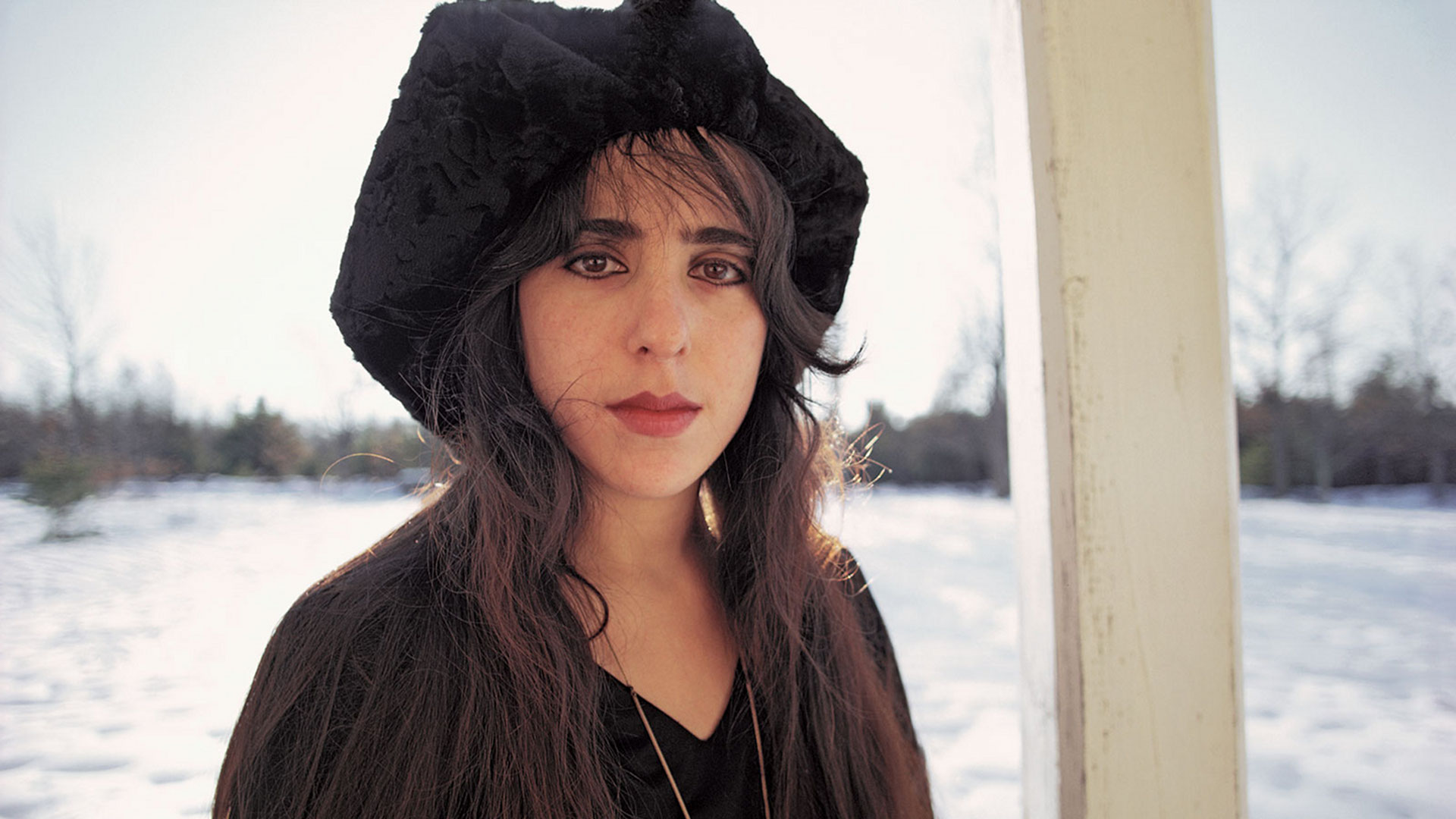
She Gives Me a Thrill and Always Will—Laura Nyro


Back in 2012 to the surprise of many Laura Nyro was inducted into the Rock and Roll Hall of Fame.    It was her third time up for consideration and others in contention included much more famous artists who sold millions more records.   But a dedicated cadre of supporters, including many rock and pop icons, had campaigned relentlessly for the piano playing thrush and songwriter who had been dead for 15 years.
Count me as one of Nyro’s biggest fans.  I already knew her music, but not the composer, through recordings by The 5th Dimension and others when I stumbled on her sophomore album, Eli and the Thirteenth Confession, surely one of the most flawless LPs of all time.  It was totally original, soulful, powerful, lyrical and by turns bluesy, jazzy, folky, and unashamedly pop.  I played the shit out of that record and followed her strange and sometimes troubled career ever after.
Born Laura Nigro on October 18, 1947 in Brooklyn, she was quintessentially a product of that rich and unique urban world.  Her father Luis Nigro, a trumpeter and piano tuner, was Italian and Jewish.  Her mother Gilda was from a Russian Jewish family.   She was a cultured woman with a wide collection of recordings ranging in styles from opera and classical composers like Ravel and Stravinsky to Billy Holiday and other jazz and blues singers.  In the summers the family accompanied Luis to the Catskills where he gigged with resort jazz bands.  Laura was immersed in music and began to pick out tunes on the piano at an early age.  She was writing songs by age 8.
It was a secular household.  Laura’s mother’s family especially was part of the Jewish left.  As a girl she attended Sunday school classes at the New York Society for Ethical Culture whose Humanist and progressive values helped shape her world view. 

Laura and her parents, Gilda and Luis Nigro.

Laura crossed the river to Manhattan to attend the prestigious High School of Art and Music where she found friendship and encouragement from both staff and like minded students.  She continued to absorb various musical styles including the lively folk music scene of Greenwich Village and the infectious pop of the Brill Building tradition.  She particularly admired the harmonies of the popular girl groups she heard on the radio.  She and her high school friends would join the street corner a capella singing popular in the city and busk for change on the subway. 
The protest music of the era influenced her.  She explained, “I was always interested in the social consciousness of certain songs. My mother and grandfather were progressive thinkers, so I felt at home in the peace movement and the women’s movement, and that has influenced my music.”  Nina Simone was a particular influence.  Her songs were already more complex and subtle than the straight forward ballads and broadsides of another favorite, Pete Seeger.
Fresh out of high school changed her professional name to Nyro, after trying out several others.  She was becoming known as a song writer and sold And When I Die to Peter, Paul and Mary for a very respectable $5000.  Always struggling with stage fright, she made her professional performing debut far away from New York City at the Hungry I in San Francisco.
In 1966 two of her father’s music business acquaintances, Artie Mogull and Paul Barry became Laura’s managers.  Her father always denied that he had anything to do with it.  They signed Nyro to a record deal on the Verve Folkways label.  Record producers unsure of Nyro’s piano ability used session pianist Stan Free on most of the cuts.  Released in January 1967 More Than A New Discovery was not an immediate hit, but attracted a cult following.  In 1973 after Nyro was established the album was re-titled First Songs and re-issued with a different song order by her new label, Columbia.
More important, as her managers probably expected, it attracted a virtual stampede of artists eager to record her songs.  It has been compared to a demo.  Among the songs on the album were Wedding Bell Blues, Stoney End, Billy’s Blues as well And When I Die.  

The 5th Dimension scored several big hits with tunes from the young Laura Nyro.

The 5th Dimension struck gold with Nyro’s music—Blowing Away, Wedding Bell Blues, Stoned Soul Picnic, Sweet Blindness, Save The Country and Black Patch.  Other artists recording her songs included Three Dog Night and Maynard Ferguson with Eli’s Coming; Barbra Streisand with Stoney End, Time and Love, and Hands off the Man retiled as Flim Flam Man; and Blood, Sweat and Tears who had a huge hit with And When I Die.
Later that year Nyro made her second major public appearance at the fabled Monterey Pop Festival.  A legend has grown up that it was a failure, possibly due to the insecure artist’s own ambivalence about the performance.  It was not included in the documentary film made there.  Recently re-discovered footage, however, shows that not only did she perform well, but the audience was highly receptive.
Shortly after that show top agent sought to buy her contract.  Mogull and Barry were reluctant to part with their slice of Nyro’s lucrative publishing and she had to file a lawsuit maintaining that she was under-age and taken advantage of.  After ridding herself of her former management, she signed a deal with Greffen that included the creation of a publishing company, Tuna Fish Music, under which the proceeds from her future compositions would be divided equally between them.  The company also soon purchased the publishing rights to her earlier material. A very sweet deal for Geffen, but high demand also paid off for Nyro.
Nyro was seriously considering an offer from Blood, Sweat, and Tears to become the new lead singer following the departure of Al Kooper.  But Geffen had other ideas, bringing her to legendary Columbia producer Clive Davis who signed her as a solo artist.  David Clayton-Thomas became the new voice of the band which then had one of their biggest hits with And When I Die.
In some ways, Nyro might have preferred to be in a band.  She was uncomfortable in the spotlight.  She said her only truly joyful times as a performer was busking with her friends in high school.  

A nearly perfect album, Eli and the Thirteenth Confession from 1968.

But Nyro demanded and got creative control of her albums in her deal with Davis.  The result was her widely acknowledged masterpiece Eli and the Thirteenth Confession released in 1968, one of rock and pop music’s most fertile years.  Although only a moderate hit, reaching No. 189 on Billboard’s Pop Album Chart its underground following was deep and devoted.  Like its predecessor, it was mined by other artists who made hits.  In addition to Eli’s Coming and Stoned Soul Picnic the album included Sweet Blindness, Poverty Train, Emmie, Woman’s Blues, and Confessions.
In 1969 she followed up with her most commercially successful album, which many of her fans also consider her best.  New York Tendaberry was Nyro’s ode to her hometown, haunting, stark and beautiful.  It took more than a year to record because of Nyro’s perfectionism and because her inability to read music or describe clearly what she wanted from the musicians in musical terms they understood made production tedious.  Her close friend Janis Ian was once called to a session with Nyro in tears because she could not get the musicians to understand what she meant when she asked them to “play purple.” Ian was able to translate that as legato—slow and smooth.
Notable tracks included the title number, Save the Country which became a peace movement anthem, Time and Love, and Sweet Lovin’ Baby.   The album ran up to No. 32 on the Pop Album chart.
Nyro’s next album, Christmas and the Beads of Sweat was a departure—recorded with the Swampers, a band from Muscle Shoals and featuring the driving guitar of Duane Allman on some tracks and stripped down solo work with her piano and ethereal harp by avante guarde  jazz artist Alice Coltrane on others.  Despite the schizophrenic duality of the album, many of Nyro’s admirers consider it her most ambitious work.  It was the first of her albums that did not produce a hit for other artists.  Ironically, it was also the first to contain a non original cut, Carol King’s Up On the Roof which became Nyro’s only hit single.  The album peaked in the charts at No. 51.
In 1971 Nyro took a whole new track with her collection of R & B, Soul, and girl group favorites Gonna Take a Miracle recorded in Philadelphia with veteran soul musicians.  Her friend Patti Labelle and her group Labelle sang back-up, or more correctly collaborated as if on a group project.  The result was a stunning, rich, sometimes raw collection.  Nyro’s renditions of Spanish Harlem, Jimmie Mack, Dancing in the Streets, and You’ve Really Got a Hold on Me are now considered classic.  Not only did the album make it to No. 46 on the Pop Chart, but it hit an even higher on No. 41 on the separate Black Albums chart.
The record was very nearly Nyro’s swan song.  At age 24 she announced her retirement from music after its release.  She resented Columbia’s attempts to market her as a celebrity—she refused to do television and was too shy and tongue tied to do the usual rounds of press interviews and radio station drop-ins.  Touring and live performances were always excruciating for her, although in her final tour with the emotional support of Patty Labelle she had done better.  But she knew she could not lean on her again.

Laura Nyro and Jackson Browne in 1970.

After an affair with Jackson Browne in 1970 and ’71, Nyro met and married Vietnam veteran and carpenter David Bianchini.  Together they retreated to rural Massachusetts.  While the 1973 Columbia re-issue of her first album kept her memory fresh for her fans, the emotionally fragile Nyro tried to find a new life.  She discovered, despite her background as a confirmed New Yorker, that she liked the relaxed life of the country.  But her marriage was soon troubled.
In 1975 Nyro took twin blows when her marriage shattered and her beloved mother died at age 46 of ovarian cancer.  Nyro decided to immerse herself once again in music.  She teamed up with Charlie Calello on an album of new material, Smile.  Far more laid back than earlier albums, it had a smooth jazz feel also used and explored Chinese themes and instrumentation on some of the tracks.  It produced no hits but was warmly embraced by her fans and climbed to No. 60 on the Pop Album Chart.
Nyro even agreed to tour with a band in support of the album.  Her performances also included earlier material and a live album was released the next year.
In 1978 She after a becoming pregnant during a brief affair with Indian born Harindra Singh.  Nyro once again left New York City for Danbury, Connecticut where she set up a studio in her home.  The result was Nested, often described as maternal.  More melodic than her last original albums it also contained some of the more political work with which her late career would be identified. 
Despite touring in support of the album while heavily pregnant, the record was a commercial bust.  Columbia withdrew it from circulation and it was unavailable domestically until it was re-issued as a CD in 2008.  Many of her fans have never heard it. 

Laura and her son Gil, named for Gil Scott-Heron.


After completing the tour Nyro’s only son Gil Bianchini was born.  She retreated once again from music for three years to devote herself to him. Gil is now a rapper/hip hop artist know as Gil T who often samples his mother’s work in his pieces.
In the early ‘80’s she began a relationship with painter Maria Desiderio which lasted the rest of her life.
By the time she once again returned to music it was deeply informed by feminism, lesbianism, the ecological movement and a new-found personal peace.  Mother’s Spiritual, released in 1984 represented more than a year of intense work in the studio.  It represented her only original material of the decade.  Despite criticism in some quarters that she had lost her edge and about her overtly political material, the record found a niche audience not only among devoted long time fans, but in the early world of women’s music.  It was her last original album to chart, barely breaking in at No. 189.

Laura on tour in 1988.
Four years later Nyro undertook her first live tour in years with a full band.  Although many of her early hits were played, she wanted to feature her new music.  The concert tour produced a live album released in 1989, Laura: Live at the Bottom Line.  Columbia wanted a new studio album and refused to release it but allowed her to put it out on the minor label Cypress which had no money to promote it.  Nyro had to spend $18,000 of her own money for a quarter page ad in The Rolling Stone.
The album included six new, previously unreleased songs, many of which had a bright, humorous style which took her fans by surprise.  Having quit smoking her voice was in the best shape it had been in years.  But it was not a success.
Discouraged, she returned to Columbia to complete her commitment for two new studio albums.  1993’s Walk the Dog and Light the Light, mix of new material, re-visits of older material and covers was made with a small combo featuring percussionist Nydia “Liberty” Mata, with whom Nyro had collaborated since the mid-1970s and was produced by  Steely Dan producer Gary Katz.  Although highly melodic, it represent Nyro’s  most political work yet including feminist and animal rights songs as well as Broken Rainbow  which was written and recorded for an Oscar-nominated documentary of the same name about the Navaho in 1985.  One again the album was positively reviewed and Nyro even toured with small harmony quartet in club venues in support.  But sales disappointed Columbia.  Although Nyro would work on another album for the company, Angel in the Dark, the label would not release it until after her death.
She toured sporadically, playing clubs and often for women’s audiences.  Two more live albums, one recorded in Japan were released.
In 1996 Nyro was diagnosed with ovarian cancer.  She worked with Columbia on preparing a definitive retrospective as she battled the illness.  Stoned Soul Picnic: The Best of Laura Nyro was released early in 1997 as a two disc CD to glowing reviews and strong sales. 
On April 8, 1997 Laura Nyro died with her lover and son by her side in her Danbury home.  She was 46 years old—the same age that the same killer claimed her mother.
Her death predictably led to a renaissance of interest in her life and work.   A tribute album by 14 female artists or acts was recording and released later that year.  Participants included Phoebe Snow, Jill Sobule, Suzanne Vega, Rosanne Cash, Jane Siberry, Lisa Germano, Sweet Honey in the Rock, and Patty Larkin.
Posthumous releases of her last studio album and live recordings from the early ‘90’s followed as well as various compilations.  Artists continue to cover her songs. 
The fragile body may be gone, but the spirit and the voice lives on.