Showing posts with label Baseball Hall of Fame. Show all posts

Monday, May 11, 2026

An AI Test About Yogi


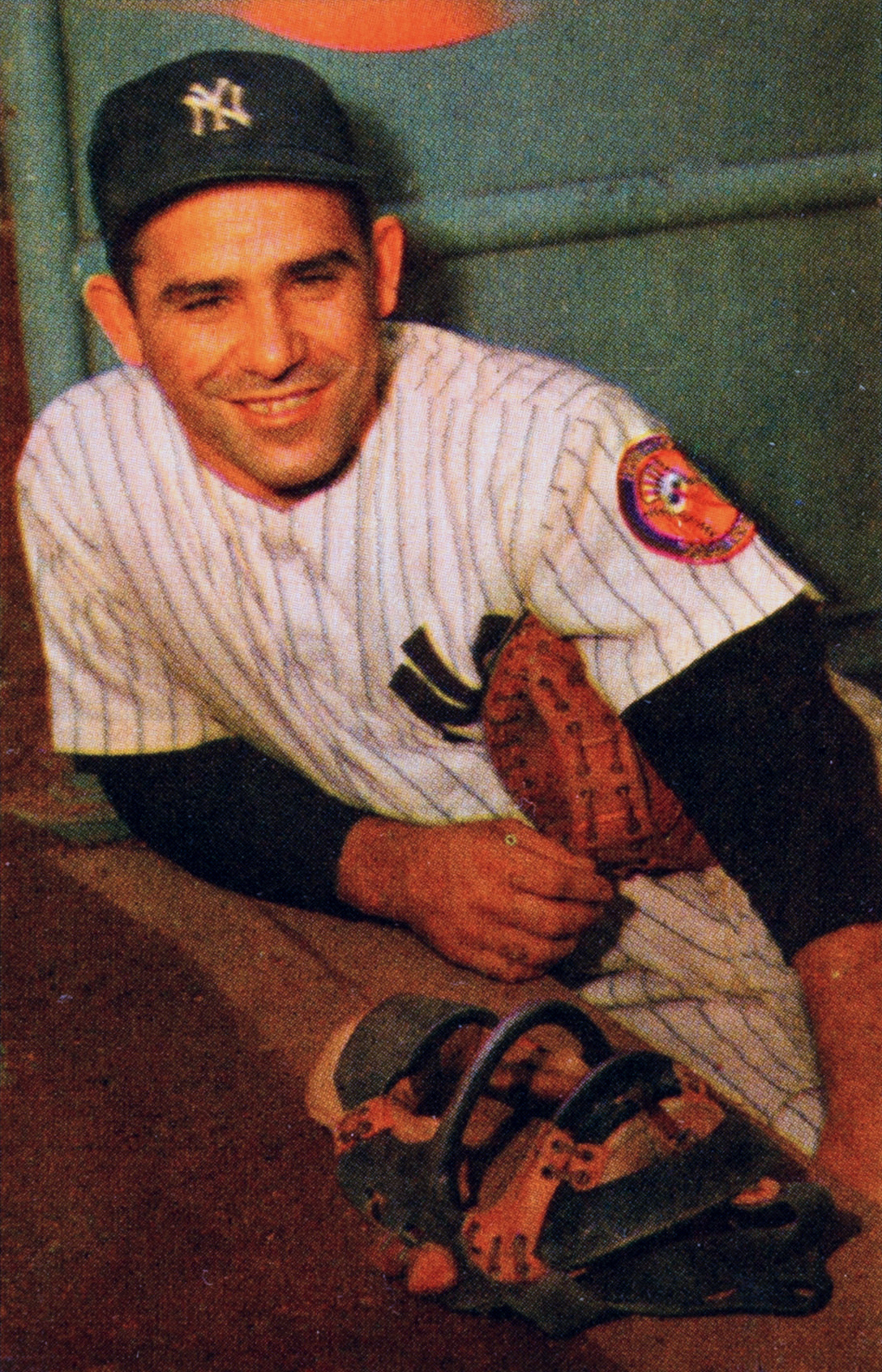
                                                         Yogi Berra in 1953.

Note—Back in 2024 all the buzz was about Artificial Intelligence (AI).  Word was that it would make most of us obsolete--especially writers.  So this as an experiment.  The following blog post on Yogi Berra for his birthday was not written by your reliable scribe but created, including the title, by the  program AI Article Writer 4.0 which is already obsolete.  I did not edit it in any way.  What say you?  Should the Old Man turn over his posts to this electronic gizmo, which undoubtedly contains fewer spelling errors and typos, or should he continue to bang out stuff the old fashion way?

Lawrence Peter “Yogi” Berra was an American professional baseball catcher, coach, and manager. He was born on May 12, 1925, in St. Louis, Missouri. Yogi Berra was one of the most successful and popular baseball players of his era, playing for the New York Yankees and the New York Mets. He played in more World Series games than any other player in history.

Yogi Berra grew up in a working-class family in St. Louis, Missouri. He dropped out of school after the eighth grade to help support his family. In his teens, he played baseball for a local team, and he was eventually signed by the New York Yankees.

                           Young Yogi with aging Babe Ruth at Yankee Stadium.

Berra made his Major League Baseball debut in 1946. He quickly became known for his excellent defensive skills as a catcher and his ability to hit for power. He was a 15-time All-Star and won three American League Most Valuable Player Awards.

Yogi Berra’s impact on the game of baseball cannot be overstated. He was a key player for the New York Yankees during their dynasty years in the 1950s and 1960s, helping them win 10 World Series championships. He was also a successful manager, leading the Yankees and the Mets to the postseason.

Berra was known for his “smart” play on the field. He was an excellent defensive catcher who could read the opposing team’s hitters and pitchers. He was also a great hitter, with a career batting average of .285 and 358 home runs.

Yogi quotes are the inspiration of untold memes.

Yogi Berra was famous for his witticisms and malapropisms. Many of his quotes have become timeless classics. Some of his most famous quotes include:

    It ain’t over ‘til it’s over.

    When you come to a fork in the road, take it.

    It’s like déjà vu all over again.

   I never said most of the things I said.

While some of his quotes may seem nonsensical, they often contain hidden wisdom. For example, “It ain’t over ‘til it’s over” means that anything can happen until the game is over, and you should never give up hope.

Yogi Berra was known for his leadership and coaching style. He was a players’ manager who treated his team like family. He was tough but fair and always had his players’ backs. He was also a great motivator who knew how to get the best out of his players.

Berra’s coaching style was based on his own experience as a player. He knew what it took to win, and he passed that knowledge on to his players. He was also a great communicator who could explain complex concepts in simple terms.

Berra with Yankee's owner George Steinbrenner in has managing years.

Yogi Berra's legacy goes beyond the game of baseball. He was a beloved figure who was known for his kindness, humility, and sense of humor. He was a family man who was devoted to his wife and children.

Berra was also a philanthropist who gave back to his community. He was involved in many charitable organizations, including the Yogi Berra Museum and Learning Center, which is dedicated to promoting the values of respect, perseverance, sportsmanship, and excellence through the lens of baseball.

Yogi Berra’s impact on popular culture cannot be understated. His quotes have become part of the American lexicon, and his name is synonymous with baseball. He has appeared in movies, TV shows, and commercials, and his likeness has been used in advertising and marketing campaigns.
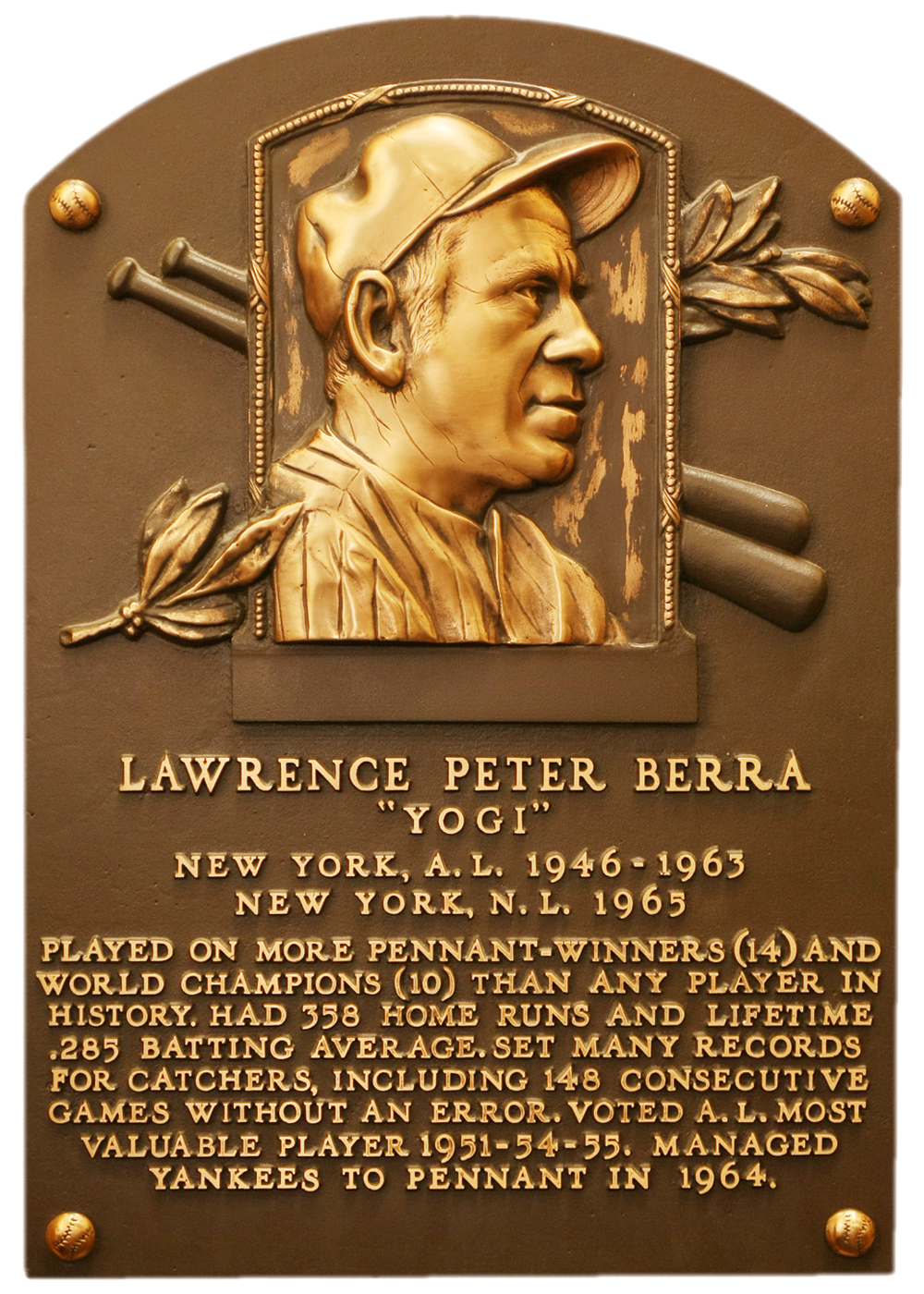
                                        Berra's Baseball Hall of Fame plaque.

Berra was also a cultural icon who represented the values of the American Dream. He was a self-made man who overcame adversity to achieve success. He embodied the spirit of hard work, determination, and perseverance that is so important in American culture.

Yogi Berra’s lessons go beyond the game of baseball. His quotes contain wisdom that can be applied to all areas of life. For example, “If you don’t know where you are going, you’ll end up someplace else” means that you need to have a plan if you want to succeed.

                                                Berra honored on a U.S.P.S. stamp.

Berra's leadership and coaching style also provide valuable lessons for life. He believed in treating people with respect and kindness, and he knew how to motivate and inspire his team. These are qualities that are important in all areas of life, whether you are a coach, a teacher, or a business leader.

Yogi Berra continues to inspire and influence people today. His quotes are still quoted by sports fans and non-sports fans alike, and his legacy lives on through the Yogi Berra Museum and Learning Center. His leadership and coaching style have also inspired many coaches and managers in all areas of life.

Berra's legacy is also a reminder of the importance of hard work, determination, and perseverance. He overcame many obstacles in his life to achieve success, and his story is a testament to the power of the American Dream.

                                Berra's death was big news.

Yogi Berra was a true legend who left a lasting impact on the game of baseball and on popular culture. His famous quotes and his leadership and coaching style have inspired generations of players, coaches, and fans. His legacy is a reminder of the importance of hard work, determination, and perseverance, and his spirit lives on through the Yogi Berra Museum and Learning Center.

P.S--the experiment was never repeated.  

Saturday, May 2, 2026

Black Baseball's Birth, Bloom, and Bust


National Negro Baseball League founder Rube Foster with his Chicago American Giants.

On May 2, 1920, the first game between teams of the brand-new National Negro Baseball League (NNL) was played in Indianapolis.  The league was the brainchild of Rube Foster, a pitcher who had been managing Negro teams, semi-pro and professional since 1907.

The league was formed that February at a meeting held in a Kansas City YMCA.  The charter teams were the Chicago American Giants, Detroit Stars, Kansas City Monarchs, Indianapolis ABCs, St. Louis Giants, Cuban Stars, Dayton Marcos and Chicago Giants.  Foster’s own Chicago American Giants dominated the league in the early years, winning the first four consecutive championships.

Blacks had been playing organized baseball since at least the early 1870s.  Most clubs were amateur or had one or two paid players on the team.  Local and regional leagues came and went.

In the days of virtual apartheid in sports, only a handful of Blacks played on White teams.  Oberlin College players Moses Fleetwood Walker and his brother Welday were signed with the minor league Toledo Blue Stockings and stayed with the club when it moved up to the old American Association, a short-lived Major League in 1884.  A few other players who could pass or who claimed to be Native American or Hispanic also briefly played.

Black and white teams sometimes met in off-season exhibition games.


United States Postal Service first class stamps honoring the Negro Leagues and Rube Foster.

In 1885 the first all-pro Black team, the New York based Cuban American Giants was organized.  It played in local eastern leagues and barnstormed, mainly in the South until it was dissolved after the 1899 season.  Famously, they twice beat white major league teams in exhibitions.

From the turn of the 20th Century to the formation of Foster’s league, Black professional baseball was most famous for barnstorming—touring the country, most small towns, and taking on all comers.

Although the roster of teams changed, the NNL was concentrated mostly in the Midwest and Boarder South.  In 1923 Eastern professional teams organized as the Eastern Colored League (ECL).  From 1923 through ’27 the two leagues held their own World Championships.  The ECL folded in early 1928 but re-emerged with most of the same teams in 1929 as the American Negro League.

Neither league, however, could survive the Depression.  By 1932 both were out of business, although Black minor leagues like the Negro Southern League continued to operate.  Some of the stronger teams in the defunct majors continued to play, reverting to the barnstorming model.

A second league operating as the NNL opened in the 1933 season.  It struggled but climbed back to a major league status.  In 1937 the competing Negro American League (NAL) was formed leading to another annual championship series and All-Star games, known as the East-West Games.  It was in these leagues that legendary Black ball players rose to national prominence.  The level of play was so high that white professional teams began to wish they could recruit from it.  But the color bar seemed insurmountable.

In the 1940s and '50s the Kansas City Monarchs were the dominant team in the Negro Leagues with some of the most legendary stars including some who finally helped break the color barrier to play in MLB.  This is their team in 1942.

In 1947 the NAL absorbed the NNL.  From then on, it was the only remaining Black major league.

When Branch Rickey and the Brooklyn Dodgers finally broke the color line by putting Jackie Robinson on the field in 1947, it spelled eventual doom for Black baseball.  It took a few years, but by the mid-1950’s virtually every Major League team was stocking up on Black players, either from the NAL or signing them directly.  Black fans followed the best players to the Major League parks.  The NAL sputtered out of existence after the 1960 season.


Satchel Paige at his 1971 induction into the Baseball Hall of Fame in Cooperstown, New York.

Several players including Robinson who got their start in the Negro League were enshrined in the Baseball Hall of Fame in Cooperstown, New York.  But it was not until 1972 that the hall inducted a player who spent most for his career in Black baseball—the legendary pitcher Satchel Paige who was brought up to the Majors long past his prime briefly by Bill Veek and the Cleveland Indians.


This diamond at the Negro Leagues Baseball Museum in Kansas City features 12 life size bronze statues of Negro League greats including Satchel Paige, Josh Gibson, Cool Papa Bell, Rube Foster, and Buck O’Neil.

Black baseball got its own shrine in 1990 when the Negro Leagues Baseball Museum was founded.  In 1997 it moved into a permanent home in a complex it shares with the American Jazz Museum at 18th and Vine Streets in Kansas City, Missouri.


Wednesday, September 10, 2025

The First Ever Major League Baseball Grand Slam Came Long Before the Bambino


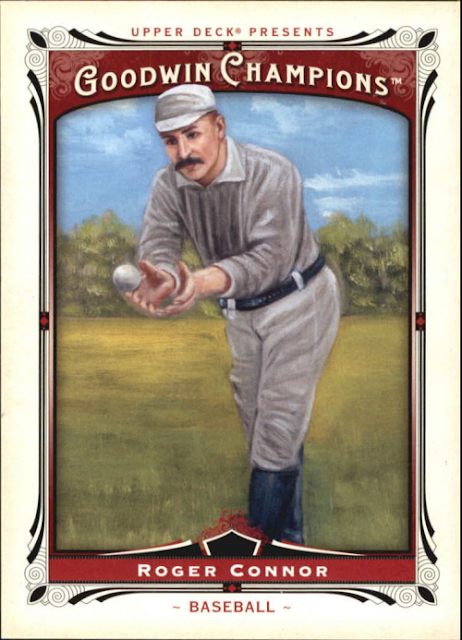
                                        Roger Connor of the Troy Trojans hits the first big league grand slam in 1880. 

In the early years of Major League Baseball home runs were hard to come by.  Ball parks were small, but the ball was dead—much softer with a less elastic core than modern balls.   Bats were heavy slowing down bat speed.  Pitchers had yet to perfect a 90 mile per hour fast ball.  It took a dead eye, prodigious strength, a bit of luck, and usually a tail wind to get a ball over the fences.  Instead of waiting for big innings where sluggers clear the bases, as in the modern game, it was small ball—singles, doubles, stolen bases, daring slides with sharpened spikes high, plus a lot of walks and hit batsmen.

Before there was a Babe Ruth, there was Roger Connor, a towering first baseman—said to be 6’3’’ in an age when men were generally much shorter—who started his career with the Troy, New York Trojans in 1880 at the age of 22. 

Then, as now, there were cash poor teams in small markets who could not afford to pay the kind of stars playing on teams like Chicago White Stockings and clubs in Boston, New York, and Philadelphia.  The Trojans were one of them.  They packed their teams with promising amateurs like Conner, a kid who had played club ball in his hometown of Waterbury, Connecticut.

On September 10, 1881 the Trojans were playing another down-at-the-heels small city team, the Worcester Ruby Legs.  Down three runs in the 9th inning, their cause looked hopeless.  But the plucky team managed to load the bases.  With two outs Connor strode to the plate—and blasted the first grand slam home run in major league history. 

The thrilling storybook ending attracted the attention of the mighty New York Gothams.  By the 1882 season Connor was playing in the Big Apple for one of the National League’s elite teams.  Soon he was the star of the team not only hitting for average and power, but despite his size a lithe and speedy base runner.  Sports writers began to refer to the team as the Giants in his honor.  The nickname stuck.


                                                Connor played first base barehanded in the era before fielding gloves.

In 1886 Connor gained fame for being the first person to hit a homerun entirely out of the Polo Grounds, a ballpark in which it was notoriously hard to hit homers.

In 1890 Connor was part of the revolt against National League owners that resulted in the short lived Players League.  As a member of a team made up of rebellious Giants, he led the new league in home runs with 14, the only time he ever held a single season home run title.  But he was consistent over an 18 year career.  He came in second four times in the National League and amassed a total of career total of 138 homers—a record that stood until Ruth broke it 23 years after Connor’s retirement in 1897.


The towering 6'3" Connor inspired the new nickname for the New York City National League club--the Giants.  He was the beau ideal of a Gilded Age baseball star. 

Ruth actually thought he broke the record when he smashed homer number 132.  Due to incomplete record keeping Connor was then only credited with 131.  Subsequent research shows that the real total was 138.

By the time Connor retired after spending his last seasons with the Philadelphia Phillies and St. Louis Browns, he had racked up an impressive record:  233 triples (still No. 4 on the all-time list after all of these years), 244 stolen bases, National League batting crown in 1885 with a .371 average, in the top ten for batting average 10 times, led the league in doubles ten times and triples 7, batted in 1,321 runs, and had a career average of .317.


                                                       Connor's Hall of Fame plaque. 

After his retirement from the majors, Connor returned to his Waterbury where he managed minor league teams and basked in the admiration of his hometown.  He lived to see Ruth break his career home run record.  He died in Waterbury in 1931 at the age of 73.

In 1976 the great left handed hitter was elected to the Baseball Hall of Fame by the Veterans’ Committee—a fitting tribute for the onetime Home Run King.


Sunday, August 24, 2025

How Pete Rose Hustled Himself Out of Baseball


                                     Charley Hustle making the wrong kind of headlines. 

On August 24, 1989 Pete Rose aka Charlie Hustle was banned from Major League Baseball (MLB) for life for gambling on Cincinnati Reds games while he was manager by an outraged Commissioner of Baseball Bart Giamatti.

Considered a shoo-in for election to the Baseball Hall of Fame on the first ballot, Rose probably doomed his chances for ever being included by for years steadfastly denying gambling on baseball despite mounting evidence, before sheepishly admitting guilt in his autobiography My Prison Without Bars.  


                                                      Rose's rookie card still a hot commodity for collectors in mint condition.

Rose was a hometown product of Cincinnati, born to working class parents in 1941.  The switch hitting right hander’s dream came true when he was called to the Big Show in 1963. In his stellar 23 year career as a player, most of the time with the Reds, Rose hit for a .303 batting average, tallied 4,256 hits including 160 home runs and drove in a total of 1,394 runs.  He was famously aggressive on the base paths despite not being a fast runner and perfected a dangerous head-first slide. 

Among his many honors were Rookie of the Year in the National League in 1963, two Gold Gloves for his sparkling defensive play, three batting titles, 17 All Star Game appearances, and three World Championships with Cincinnati’s legendary Big Red Machine.  After playing for the Philadelphia Phillies and Montreal Expos from 1979 to ’84, controversial Reds owner Marge Schott brought Rose back as a player-manager to finish the ’84 season.  


Rose's signature head-first dive into base made him one of the most exciting players in baseball. 

He played two more years in the combined role before retiring to concentrate on his bench duties.  He was undoubtedly the most popular player in Reds history and one of the most admired in baseball. 

But Rose was an inveterate gambler.  He claimed his regular bets with a major bookie did not include baseball, then after proof surfaced, that he did not bet on games he was part of.  When that claim, too, was disproven, he could only say that he bet for his team, not against it.  


Rose as Reds manager. 

But gambling is the big no-no in Major League Base which was nearly killed by scandals in the 19th Century and again by the Black Sox scandal of 1919.  Baseball ignored a lot of misbehavior, including the nearly murderous attacks of Ty Cobb on fans, regular alcohol abuse by stars like Babe Ruth, and numerous instances of sexual peccadilloes.  It would not, however, forgive gambling. 

After his banishment Rose cut a pathetic figure.  Banned from even setting foot into a ball park, he made his living signing autographs and selling memorabilia.  Even that got him into trouble.  On April 20, 1990, Rose pleaded guilty to two charges of filing false income tax returns for not reporting income from selling autographs and memorabilia, and from horse racing winnings. He was sentenced to five months in the medium security Prison Camp at the United States Penitentiary in Marion, Illinois and fined $50,000. Released on January 7, 1991 after having paid $366,041 in back taxes and interest he was required to perform 1000 hours of community service.  


Rose would sign anything for a buck, including humiliating admissions. 

Rose’s 2004 autobiography was an attempt to both bring in much needed income and rehabilitate his reputation, possibly leading to a lifting of the lifelong ban and eligibility for the Hall of Fame.  Despite the vocal support of many players and some sportswriters, the book failed on the later count.

The steroid scandals of the early 21st Century were used by supporters to argue that Rose, who never used performance enhancing drugs and who played hard his entire career, deserved consideration to be included in the Hall while disgraced players like Mark McGuire, Sammy Sosa, Barry Bonds, and Roger Clemens remained eligible. 

Baseball is officially un-moved by these arguments. After rumors that he was considering lifting the ban surfaced in 2010, Commissioner Bud Selig quickly denied the reports.  Selig’s successor seemed to be no more sympathetic and many of the sportswriters who admired and championed him have retired.  Baseball moved on. 

Rose died still in disgrace on September 30, 2024 in Las Vegas.  The next January his daughter Fawn Rose and Rose family attorney officially filed documents to remove her father from the Permanently Ineligible List.  In February President Donald Trump put his heavy thumb on the scale and posted on Truth Social that he would give Rose a posthumous pardon and criticized MLB and the Baseball Writers Association over Rose’s ban, calling for reinstatement and an induction into the Hall of Fame.  Commissioner Rob Manfred  met with Trump in April and confirmed that Rose and his lifetime ban was among the topics discussed then On May 13 Manfred instituted a change regarding permanent ineligibility, making it so all bans expire after death of the person on the list.  

Reds pay tribute to Pete Rose a day after his reinstatement - LimaOhio.com 

Pete Rose's daughter Fawn addressed the the crowd at packed Great American Ballpark for a ceremony honoring her father and the unveiling of a commemorative plaque the day after his reinstatement.

Rose, like Shoeless Joe Jackson of the Black Sox scandal, can be considered for induction when the Hall of Fame’s Veterans Committee  during the during the 2027 MLB Winter Meetings.  Ironically by then Trump’s support may be more of a drag than a boost if the Orange Menace himself and his MAGA minions are themselves turned out of power and disgraced.

Wanna place a bet on that?