Thursday, April 26, 2012

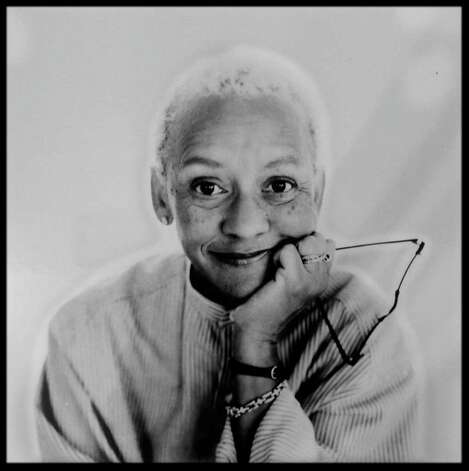
National Poetry Month— Nikki Giovanni 'Balances'


Nikki Giovanni was born in 1943 in Knoxville, Tennessee in a close knit family.  She was inspired by her grandmother, a natural story teller, to explore the use of words.  After growing up in a middle class Black suburb of Columbus, Ohio, she attended Fisk University in Nashville, one of the most prestigious of the historically Black colleges.

At Fisk not only did she find her voice as a poet and writer, but she was immersed in the Civil Rights movement and the growing militancy of emerging Black Power.  She served as editor of the campus literary magazine, participated in the Fisk Writers Workshop, and helped re-build the Fisk chapter of the Student Non-Violent Coordinating Committee (SNCC).  After graduation in turbulent 1968 Giovanni went on to graduate studies at the University of Pennsylvania and Columbia University in New York.

Still an undergraduate Giovanni published her first collection of poetry, Black Feeling, Black Talk in 1967 in response to the assignations of Martin Luther King, Jr., Malcolm X, Medgar Evers, and Robert Kennedy.  A year later she followed up with Black Judgment, an exploration and appreciation of Black militancy.  The two books catapulted her into the front ranks of a new generation of poets and one who had appeal to wider audiences.  A third volume, Re: Creation published in 1970 cemented her place as a leading young black voice.  She was soon embarked on popular readings, often incorporating black music.

Giovanni took a teaching position at Rutgers University and gave birth to her son Thomas.  She worked to help other Black writers find outlets through NikTom, Ltd., a publishing cooperative which published Gwendolyn Brooks, Margaret Walker, Carolyn Rodgers, and Mari Evans.

As Giovnni matured as a poet and woman her interests broadened.  She continued to write in clear, accessible language about her life and experiences, but later work was not as explicitly political as her early efforts.

She also began writing for children and young people beginning with Spin a Soft Black Song in 1971 and continuing through her Caldecott Medal winning Rosa in 2005.

Giovanni was teaching at Virginia Tech in 2007 when the tragic shooting occurred there.  She composed a memorial chant that was recited at the campus memorial service the next day.

She has written dozens of books, including two compilations, and non-fiction work.  Giovanni is among the most honored of contemporary poets having received the NAACP Image Award, the Langston Hughes Award for Distinguished Contributions to Arts and Letters, the Rosa Parks Women of Courage Award, and over twenty honorary degrees from colleges and universities around the country.

Balances

in life
one is always
balancing

like we juggle our mothers
against our fathers

or one teacher
against another
(only to balance our grade average)

3 grains of salt
to one ounce truth

our sweet black essence
or the funky honkies down the street

and lately i’ve begun wondering
if you're trying to tell me something

we used to talk all night
and do things alone together

and i’ve begun

(as a reaction to a feeling)
to balance
the pleasure of loneliness
against the pain
of loving you

—Nikki  Giovanni

Wednesday, April 25, 2012

The Chicago Nine Play their First National League Game

The First Champions of the National League, 1876.

On April 25, 1876 the Chicago professional baseball club known then as the White Stockings played their first game in the infant National League.

The club had been founded in 1870 as the baseball craze swept post-Civil War America.  Like most such teams, it featured mostly local amateurs mixed with a handful of key paid players.  They played all comers including local rival teams, and barnstormed to other cities to play the local favorites.  There were no leagues and the lowliest pick-up teams playing in dusty small towns competed with a handful of elite teams.

On February 2, 1876 the National League of Professional Baseball Clubs was formed at the invitation of The Chicago White Stockings.  Teams also included the Philadelphia Athletics, Boston Red Stockings, Hartford Blue Ducks, Mutual of New York, St. Louis Brown Stockings, Cincinnati Red Stockings, and Louisville Grays.

Over that winter Chicago owner William Hulbert had signed away dissatisfied top players from the dominant teams in the pre-league era, Boston and Cincinnati.  He assembled a virtual all star team including Albert Spaulding, Cap Aaronson, Ross Barnes, and Deacon White.

Spaulding pitched a 4-0 shut out at the old West Side Grounds over the Louisville game in that inaugural contest.  The team would go on to romp to the very first National League Championship with a record of 52-14.

The club became the first professional baseball dynasty winning six National League pennants between 1876 and 1886, five of those under the leadership of Aaronson who became player-manager in 1880.

In the 1890’s when the club had to rebuild under Aaronson with young players, the press hung a new nickname on them—the Colts.  When Spaulding, by then both a sporting goods tycoon and club owner, finally let Aaronson go as manager in 1897, they got a new name the Orphans.

Other informal monikers were tossed around in the newspapers until everybody seemed to settle on the Cubs in 1902 for a new batch young players.  That squad evolved into a second Chicago dynasty with stars like infielders Joe Tinker, Johnny Evers, and Frank Chance and pitcher Mordecai "Three-Finger" Brown which won four pennants and two World Series titles over a five-year span, the last championship in 1908.

After that…well shall we say things tapered off for a few years with occasional rallies to pennants or the status of top contenders with a lot of colorful players thrown in.  I’ll spare you the details.

National Poetry Month—John Lennon—Two Poems

An illustration from John Lennon's In His Own Write.

The other day the subject of poems by people famous for other stuff popped up.  All right, I popped it.  Here is another one, a bloke you may have heard of—John Lennon.

Don’t panic.  Lennon’s shot life is far too well documented for me to revisit the well plowed ground.  If you don’t know he was one of those Beatles who attracted so much attention a few decades past and who seem to never go away.  John said himself—and got in plenty of trouble for it—that the lads were “more famous than Jesus.”

Of course, all song writers and lyricists are in some way poets.  Go far enough back in time and there was no distinction between the two at all.  Certainly John was a very gifted songwriter.  It his partner Paul McCartney had a finer ear for the catch musical hook, John was the master of playful language.

He was also a rebellious working class kid from Liverpool who got what education he could stand as an art student.  Despite blowing off classes he took art of all kinds and self expression very seriously in an extremely frivolous way.  His main passion and outlet might have been music, but he was always bursting with ideas and searching for new ways to express them—in words and quirky art work.

As the Fab Four were touring at the heights of their popularity, Lennon jotted down little prose sketches—prose poems often, snatches of verse, and drawings.  With his great popularity he had no trouble getting them published in two slender volumes.  In His Own Write and A Spaniard in the Works.  They sold almost as well as his records.  I certainly ran out and bought my copies.

The titles were indicative of his playfulness with language.  The pun in the first book title is obvious.  But Americans usually have to be told that a Spaniard is Brit slang for a span wrench—what we call on this side of the water a monkey wrench.

Lennon’s shorter poems owe a debt to William Carlos Williams and more especially e.e. cummings.  His longer ones evoke comparisons to Lewis Carroll and show a familiarity with the deeper playfulness of James Joyce.  His verse was accompanied by line drawings, as spare, economical and whimsical as the words themselves.  James Thurber comes to mind.

After leaving the Beatles and settling into a complicated life with Yoko Ono in New York City, he resumed experimenting with poetry.  His most famous post-Beatle song Imagine was not originally intended to be set to music and has often been anthologized as a poem.

But today, we look back at the youthful Lennon with two nice pieces from his first book.

Good Dog Nigel

Arf, arf, he goes, a merry sight,
Our little hairy friend,
Arf, Arf, upon the lampost bright
Arfing round the bend.
Nice dog! Goo boy,
Waggie tail and beg,
Clever Nigel, jump for joy
Because we're putting you to sleep at three of the clock, Nigel.


I sat belonely

I sat belonely down a tree,
humbled fat and small.
A little lady sing to me
I couldn't see at all.
I'm looking up and at the sky,
to find such wondrous voice.
Puzzly puzzle, wonder why,
I hear but have no choice.
'Speak up, come forth, you ravel me',
I potty menthol shout.
'I know you hiddy by this tree'.
But still she won't come out.
Such softly singing lulled me sleep,
an hour or two or so
I wakeny slow and took a peep
and still no lady show.
Then suddy on a little twig
I thought I see a sight,
A tiny little tiny pig,
that sing with all it's might.
'I thought you were a lady'.
I giggle, - well I may,
To my suprise the lady,
got up - and flew away.

—John Lennon

Tuesday, April 24, 2012

National Poetry Month—Dr. Seuss "Oh, the Places You’ll Go!"—an excerpt


Note:  This was adapted from a post first put up on March 2, 2010.

On March 2, 1904 Theodor Seuss Geisel was born in Springfield, Massachusetts.  As a college student at Dartmouth, he was suspended from extracurricular activities for drinking alcohol but continued to contribute to the campus humor magazine under his mother’s maiden name Seuss.  After he graduated he started using Dr. Seuss as a pen name for a humor column in the popular magazine Judge because he intended to continue his education and become a PhD in literature. 

Marriage ended those plans, but he was already launched on a successful writing career.  In addition to Judge, his work began to appear in Vanity Fair, Life, Liberty, and the top selling magazine of all, The Saturday Evening Post, often accompanied by his own whimsical illustrations. 

He was also an in demand advertising man whose celebrated Flit insecticide magazine ads became a cultural phenomena.   His art work was used by NBC, Standard Oil and other major companies. 

In 1937 he published his first children’s book And to Think That I Saw it on Mulberry Street. 

 But his attention was soon drawn to the rise of European Fascism. He became a regular contributor of fiercely anti-Nazi political cartoons to the left wing New York daily newspaper PM and other publications, including, occasionally, the Industrial Worker.  When the war began he contributed posters to the Treasury Department’s war bond drives and the War Production Board.  

In 1943 he enlisted was made commander of the animation department of the Army Air Corps First Motion Picture Unit.  He made a number of humorous training films in the Private Snafu series and highly regarded propaganda films.  

After the war he and his wife settled in California and he turned to writing and illustrating children’s books full time.  He produced a chain of award winning books from If I Ran the Zoo to How the Grinch Stole Christmas using the trisyllabic meter for his verse that would become his signature. 

 In response to criticism that the bland Dick and Jane readers were boring children to death and driving them away from reading his publisher urged him to write an entertaining book in basic vocabulary.  The result was The Cat in the Hat which used just 220 different words and went on to become the biggest selling book in Random House history.  More Beginner Books followed.  

He gently introduced progressive themes into his books for children including authoritarianism in Yertle the Turtle, racial equality in The Sneeches, environmentalism in The Lorax, and militarism in Butter Battle Book.  In 1974 he parodied his own style in a short piece called Richard Nixon Will You Please Go Now which was reprinted nationally in Art Buchwald’s popular column.  

As he neared the end of his life, he wrote an adult book in his style for children You’re Only Old Once chronicling  an old man’s misadventures in the health care system.  Ted Gissel died after a long illness in San Diego in 1995.  Dr. Seuss is immortal.

Note:  The Seuss estate tightly controls all of his work and does not allow complete poems to be reprinted without hard to get permission well in advance.  However fair use allows the use of excerpts in reviews and articles.  With that in mind, I offer an excerpt from Oh, The Places You’ll Go © 1990 by Theodor S. Geisel and Audrey S. Geisel.

Oh, The Places You’ll Go

“You have brains in your head.
You have feet in your shoes.
You can steer yourself
Any direction you choose.
You’re on your own. And
you know what you know.
And YOU are the guy who’ll decide where to go.”
“You’ll get mixed up,
of course, as you
already know.
You’ll get mixed up
with many strange birds
as you go.
So be sure when you step.
Step with care and great
tact and remember that...
 ...Life’s A Great
Balancing Act.
“And will you succeed?
Yes! You will, indeed!
(98 and ¾ percent guaranteed.)
KID, YOU’LL MOVE
MOUNTAINS!”

—Dr. Seuss


Monday, April 23, 2012

National Poetry Month—William Shakespeare "From you have I been absent in the spring" Sonnet 98

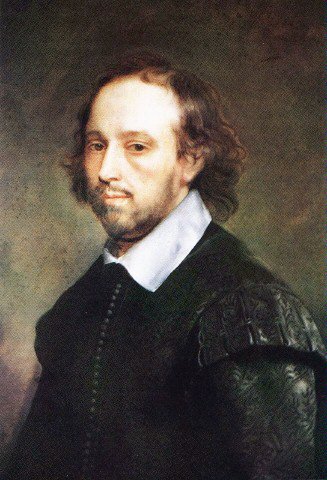
A portrait by Gerard Soest who died in 1588 believed by some to be Shakespeare as a young actor. 

For those who have complained that I have snubbed British poets and classic writers in favor of Americans and moderns, today I give you the classic English writer of all time, William Shakespeare himself.  Are you happy now?

We are taking advantage of the anniversary of the Bard's  death back home in Stratford-upon-Avon on April 23 1616 at the age of almost exactly 52.  I say almost exactly because his birthday is lost, but we know he was Baptized on April 26, 1584.  Since baptisms in such rural villages usually occurred within days of birth, lots of folk think he may have been born on the 23rd as well which would make for a tidy story indeed.  To make matters even more interesting this is also the Feast of St. George—a Greek dragon slayer who morphed into a shining knight on horseback and became the Patron Saint of England.  If Will had written a play about that, it would have been perfect.

Amazingly little is known about Shakespeare’s life.  Which means you will be spared another tedious blow-by-blow of his career.  We do know he was born into a prosperous provincial family.  His father was a successful glover, a career which in the days when both men and women of the better classes wore gauntlets or dancing gloves year around was evidently was quite profitable.  His mother’s family were landowning farmers.  They had a handsome, half timbered home in the village and his father was an alderman.

Will was the third of eight children and the oldest son.  Although no records confirm it, he was almost surely given an education at Kings New School in the village.  Such Grammar Schools offered a rigorous course in Latin grammar and studied from classic Latin texts.  While well short of what the son of a nobleman or prosperous London merchant might receive or the instruction at Oxford or Cambridge, this still would have been a better education than 80 % of the boys in England.

Any chances for further education were squashed when he was 18 and had to enter a rushed marriage with 26 year old Anne Hathaway, who we can assume looked nothing like her modern movie star namesake.  We know it was rushed because the local Vicar read only the first of the three required bans and because six months later daughter Susana was born.  A couple of years later there were twins, Hammet and Judith.  The children were born in February 1585 and their baptism is the last record of Shakespeare’s life in the Village until he returned there in retirement. 

No one is clear on what he did, or how he made a living.  Some surmised that he clerked for his father or tutored the children of the local gentry yet no trace is left behind.

We do know he had a roving eye.  The evidence lies in his Sonnets which include ardent praises of “his coy mistress” and raptures on the beauty of a black haired girl.  Likely this made home life less than idyllic for all concerned.

For whatever reason—an apocryphal  but oft told tale has it that we was escaping a Sheriff’s warrant for poaching a deer on a local gentleman’s estate—sometime between 1685 and 1592 Shakespeare decamped for London.

The latter years finds reference to him as an already established writer dabbling in play writing.  It seems an astonishing career choice with no hint of it is his background.  He was a member and minority owner of a troop of actors known as The Lord Chamberlin’s Men.  Based largely on the success of Shakespeare’s early plays, mostly those known as the Histories, the troop prospered enough that they were able to erect the Globe Theater on the banks of the Thames in 1699.  With three tiers of box seats in circle under a thatched roof and an open, uncovered pit surrounding a thrust stage for the rabble, up to 3000 customers could view a production.  In the winter months the company performed more intimately at the indoor Blackfriars Theatre, converted from a part of a priory, in 1608.

After Elizabeth I died in 1603 theater loving James I gave the company a Royal Patent and afterwards they were known at The King’s Men.

With Shakespeare as their primary playwright the company thrived even bettering companies featuring the work of established, university educated writers like Christopher Marlowe, Robert Greene, and Thomas Nash.  Some of them, Greene in particular did not take well to completion from a cloddish upstart.  

Like Shakespeare, these men began as actors themselves.  But as they met with success they retired from the boards.   Not Shakespeare.  He evidently never stopped acting until he retired from London altogether.  In fact, evidence suggests that he may always have considered himself to be, first and foremost, an actor.  What roles he played is not clear except for surviving cast lists of a couple of play by the company not written by him.  He is thought to have played the ghost of Hamlet’s father.  There is passing reference to him playing “kingly roles.”

In all, Shakespeare is thought to have written about 38 plays, the last few probably in collaboration.  They included the Histories, comedies, tragedies, and the latter romances.  A few of his plays were published in his life time, but probably without his consent.  These were probably loosely transcribed from the audience as there are considerable differences with the canonical versions.  An early form of video piracy, you might say.

From time to time plays, or fragments of plays, pop up that are suggested to be the unknown work of the master.  Just as frequently his claim to this or that play is challenged.  But by far the biggest game in the world of Shakespeare scholarship is denying that he wrote the plays at all.  Several candidates have been suggested and new ones seem to pop up every few years.  Among the suspects have been Francis Bacon, Marlowe who would have had to be so prolific that he could keep two theater companies provided with fodder, and assorted noblemen up to and including members of the Royal family.

I for one don’t buy any of it.  It is all rooted in the deep class bias of the English upper classes, who could never admit that a commoner with a rude education could have the widest vocabulary of any Englishman ever; an encyclopedic knowledge of classic literature, myth, and folklore; a firm grasp on English history and the political sense to write about it in ways that kept his head attached to his torso; plus an unparalleled fluidity of style.  They discount native genius as impossible.  But such great genius, exploding from unexpected sources erupts from time to time in history in all of the arts and sciences.  I, for one, prefer to think that the son of a glover could lay quill to parchment and create say Macbeth.

The success of his plays and the troop made Shakespeare a moderately wealthy man.  He purchased property in London and sent money back home to buy the second grandest house in Stratford, New House.  He ostentatiously generously subscribed to the tithes of the local parish were wagging tongues had probably once gossiped about his sexual offenses.

The original Globe burned down when cannon fired in a production of Henry VII in 1613 ignited the thatched roof.  Although the company rebuilt the theater on the old foundations, the fire may have hastened Shakespeare’s retirement.  So might ill health.

At any rate, he returned to Stratford and the perhaps not so loving arms of his wife not long after.  He died of unknown causes in 1616 leaving the bulk of his estate to his daughter Susanna.  His wife, Anne, was automatically under English law, entitled to a third of the estate, so it might not have been quite as mean as it looked when the bard left her only “his second best bed” in his will.

After his death two of his comrades in the King’s Men arranged for the publication of the famous First Folio of Shakespeare’s plays in 1623.  It contained all but two of the plays now commonly attributed to him.  It also featured a cover woodcut of a balding man with a sharp beard which, in the absence of any verifiable contemporary image, is how we picture him today.

Of course Shakespeare is best remembered for his plays, which are perpetually in production in theaters large and small around the world.  But this is National Poetry Month so today we salute his verse.  Of course there is plenty of memorable and highly quotable poetry in the plays themselves.  But most folks think of the Sonnets, 154 poems written over most of his adult life.  But he had earlier published, with some success two long erotic poems, Venus and Adonis and The Rape of Lucrece while London theaters were closed down during the plague years of 1593 and’94.  Another long poem, The Lover’s Complaint was added as a kind of bonus to the first edition of the Sonnets.

Today we pick from the Sonnets.

From you have I been absent in the spring Sonnet 98

From you have I been absent in the spring,
When proud-pied April, dressed in all his trim,
Hath put a spirit of youth in everything,
That heavy Saturn laughed and leaped with him,
Yet nor the lays of birds, nor the sweet smell
Of different flowers in odor and in hue,
Could make me any summer's story tell,
Or from their proud lap pluck them where they grew.
Nor did I wonder at the lily's white,
Nor praise the deep vermilion in the rose;
They were but sweet, but figures of delight,
Drawn after you, you pattern of all those.
Yet seemed it winter still, and, you away,
As with your shadow I with these did play.

—William Shakespeare