Last Friday night my wife Kathy Brady-Murfin and I took in a
production of the radio play version of It’s A Wonderful Life by the Woodstock Musical Theater Company at the Woodstock Opera House. It
was this year’s fulfillment of a tradition of attending a holiday show during the Christmas Season that began when I gave up working my night job on Friday nights.
We came in full of the Christmas
spirit after taking in the spectacular annual lighting of Woodstock
Square earlier in the evening. And
we had a great time.
The
production had all of the virtues—and
some of the problems—of community theater. We have been attending a lot of very good professional theater in recent years
and even a very good amateur
production can’t be held to the same
standard.
On
the plus side the silver and black art
deco set by designer Barry R. Norton
was spot on and the equal of any static set you could see at any
theater. The costumes by co-producers and
wardrobe maven Kathy Bruhnke—a theater veteran and old personal friend were perfectly authentic 1946. Because this was supposed to be a radio play,
the costumes are for the most part meant to be the actors’ street clothes, not the characters’ clothes. Occasionally a change of hat or cap or the addition of jacket was used as a cue to
a specific character, like the uniform
cap for Burt the Cop.
Director Regina Belt-Daniels chose to open up Joe Landry’s script in a couple
of significant ways. To better mirror a
period radio broadcast she expanded the
role of the announcer and added a close
harmony female quartet to sing a
program theme song, advertising jingles, and a couple of contemporary popular songs a la the Andrews Sisters. She also
greatly expanded the script’s called
for cast of 5 actors, standard for live radio drama in those
days with each actor playing multiple
roles, to 13 including four children, who would have been voiced by an actress. With the exception
of the three leads playing George and Mary Bailey, Mr. Potter and the children, each actor still has
multiple parts, but far fewer than with a 5 person cast. This allows for better differentiation between characters portrayed by actors who may not
have mastered the multiple voices
required of a radio pro. On the other hand the shuffling of all of those actors to the three microphones at the front of the sage was sometimes a tad clumsy.
The
cast, with varying levels of experience
and skill, was necessarily uneven and some had occasional difficulty
reading from a script or quickly picking up cues. The principals
were solid. Mathew Schufreider as George channeled a young James Stewart without opting for imitation of Stewart’s voice and mannerisms. Heidi Allen was appropriately sweet, resolute, and loyal. Robert Wilbrandt, a local siting judge with wide community
theater experience, was a perfectly villainous
Mr. Potter. But for my money the
performance of the night was turned in by little Lia Hyrkas as ZuZu the
only actor to work from memory without a script and who was both perfectly natural and charming.
As
entertaining as the evening was, of course, nothing could make us forget the play’s
source.
Despite
stiff completion from films like Miracle
on 34th Street, A Christmas Story, White Christmas, various versions of
The
Christmas Carrol, and more recent fare like Elf and the Polar
Express, Frank Capra’s 1946
film It’s
A Wonderful Life remains the most
beloved popular holiday movie and still makes lists of the best films of
all time. It was the personal
favorite of its director, its
star James Stewart, and of its leading lady Donna Reed.
Legend has it that the
film was a total failure upon its release. Not
quite so. It opened to strong reviews and good audiences on December 20, 1946. But it faced stiff competition in the
theaters that holiday season—Disney’s Song of the South, The
Best Years of Our Lives, John
Ford’s My Darling Clementine, and
the epic Technicolor western Duel in the Sun among others. Released
just 5 days before Christmas, the film did not have time to build a holiday audience and in those
days interest in Yule flicks faded
as soon as the tree came down, then
generally the day after the holiday or no later than New Year’s Day.
But
the big problem was the cost of the film. The independently produced film was partly financed and released by RKO Studios which
bet on Capra on the strength of his enormously popular pre-war populist hits
at Columbia. He had a relatively
lavish budget which he over ran
the budget spending lavishly on a top cast and on the elaborate Bedford Falls sets. In the end, it cost a $3.8 million—a lot
for black and white comedy/drama—and
just barely recouped the expense in
its first release. The studio didn’t make a dime.
Despite
that disappointment, the film was
recognized for its importance and quality. It was nominated for five Academy Awards including Best Picture, Best Director, and Best Actor and won a technical effects award. It also won Golden Globe and National
Board of Review awards. By no
stretch of the imagination could it be called a failure.
 |
| Frank Capra and James Stewart share a laugh during the filming of the picture's grim suicide scene. |
Capra
had returned from his World War II
service a changed man. Four days
after the attack on Pearl Harbor on
December 7, 1941 he gave up his lucrative career during which he had
experienced unprecedented success
with films like It Happened One Night, Mr. Deeds Goes to Town, Lost Horizons, You Can’t
Take it With You, Mr. Smith Goes to Washington, and Meet
John Doe as well as his presidency
of the Director’s Guild to
enlist in the Army. He was personally tapped by Army
Chief of Staff General George C. Marshal to create and lead his own documentary film unit outside of the
usual Signal Corps authority under Marshall’s
direct command.
As
a result Col. Capra produced and directed or co-directed Why We Fight, seven
feature length documentaries including Prelude to War (1942), The
Nazis Strike (1942), Divide
and Conquer (1943), The
Battle of Britain (1943), The
Battle of Russia (1943), The
Battle of China (1944), and War
Comes to America (1945). The
films were shown to GIs to explain in an understandable way why they were going to war and used unprecedented battle action sequences filmed on all fronts and oceans. Marshal considered them so powerful that they were
release for theatrical showings in the U.S. and Britain. Prelude to War was awarded an Oscar for Best Documentary Feature. Outside
of that feature Capra also made The
Negro Soldier in 1944 and Know Your Enemy: Japan, Here Is Germany, Tunisian Victory, and Two Down and One to Go all in
1945. Capra always considered these
films the most important of his career.
Hollywood
had just been reminded of how popular a film maker Capra was when Arsenic
and Old Lace, which had been hurriedly filmed for Warner Bros. in 1941 starring Cary
Grant, Pricilla Lane, and Raymond
Massey, was finally released after the long run of the Broadway production, was finally released in 1944. Every studio in Hollywood wanted to sign him,
but Capra, who had a bitter and
contentious relationship with his longtime
boss at Columbia Pictures, was
determined never again to be under the
thumb of a studio boss and to
have total creative control over his
pictures.
Capra
and two other directing powerhouses—William Wyler and George Stevens, formed Liberty
Films, The first independent company
of directors since United Artists in
1919 and one of a tiny handful of independent studios like Selznick International Pictures and
Samuel Goldwyn Productions
that aspired to produce A list films in head-to-head completion with the
major studios. With Wyler and
Stevens finishing up their studio commitments, Capra was slated to helm
the first product.
For source material Capra turned to an obscure
short story by magazine editor and Civil War historian
Philip
Van Doren Stern. Stern wrote the story after experiencing a vivid dream obviously
influenced by Charles Dickens’ A
Christmas Carol in 1938. He
tinkered with the tale for a few years before trying unsuccessfully to find a
publisher for it. In 1943 he privately
printed an edition of 200 as The
Greatest Gift which he distributed to friends as Christmas gifts. It finally found magazine placement with a literacy
journal before Good Housekeeping picket
it up for its January 1945 issue as The Man Who Was Never Born.
Somehow
Cary Grant spotted it and expressed interest in doing a film version. His studio, RKO bought the film rights for
$10,000 where several screen writers took unsuccessful cracks at the
story. With Grant moving on to other
projects like I Was a Male War Bride, the studio was more than happy to sell
it to Liberty Pictures for what it had paid and expressed interest in
distributing the film if Capra directed.
Capra
wanted to direct all right. Working with
a team of script writers he whipped the screenplay into shape—something darker than his pre-war films although both Mr. Smith Goes to Washington
and especially Meet John Doe had despairing moments but that ultimately affirmed humanity.
There
was never a doubt about his lead,
the frustrated small town building and loan operator George
Bailey. Although Henry Fonda may have briefly been
considered, the role went to his close friend
James Stewart. Stewart had been the
boyish idealist in Capra’s most successful film, Mr. Smith and been the straight
man beau in the ensemble screwball
comedy You Can’t Take it With
You. A small town boy himself from Indiana, Pennsylvania who had labored
at his father’s Main Street Hardware
Store before making the break
for college and the daring leap from
there to the New York stage. Capra knew he would totally understand his
character.
 |
| Then Major James Stewart with his B-24 crew before a combat mission. War changed the actor. |
Stewart
had also returned from the war deeply changed.
He was visibly aged and much more serious. Although many Hollywood stars served with distinction in the war, none matched
Stewart’s combat record. After being drafted in 1940 as an Army
private after twice being rejected for being underweight, he managed to
talk his way into the Air Corp because he was a licensed pilot. Like other
stars he was first used stateside as
a flying instructor and used in recruiting.
Once again he talked his way into combat in Europe as a B-24 pilot.
He rose rapidly in rank and responsibility and completed
more than 20 official missions becoming
a Squadron and the Group commander. As a staff
officer he assigned himself to
probably twice that many missions which were completed unofficially, including
several in which he led critical raids
or flew dangerous pathfinder missions. He may have flown more combat missions than
any other pilot in the 8th Air Force. Stewart was twice awarded the Distinguished
Flying Cross for actions in combat, the Air Medal with three oak
leaf clusters for campaigns participated in, and the French Croix de Guerre.
He was one of the few men to rise from
private to full colonel in the course of the war. Experiences like that will age and change a
man.
After
taking some time off to decompress from
his harrowing experiences, Capra’s
new film, now re-titled It’s A Wonderful Life marked
Stewart's first return acting. He was deeply unsure of himself and doubted he either could resurrect his acting career of if he wanted to. As a founding
investor in Southwest Airlines
he had seriously considered throwing
everything over to become the infant
airline’s chief pilot. As filming commenced he was suffering
full scale post-traumatic stress syndrome fighting feeling of disorientation, rage, and self-loathing. A large part of his healing was channeling
all of that into his character of George Baily.
Always a fine, natural actor, Stewart was now doing much deeper work
than he had in his pre-war years and it would open the door to more mature
and challenging roles with other
directors like Alfred Hitchcock and Anthony Mann.
Some
were worried that Stewart would not be able to convincingly play the youthful
George Bailey, yearning to “shake the
dust” of the small town off his feet and who instead fall stupidly in love with the sweetly
perfect home town girl. But Stewart
showed an uncanny ability to evoke for audience the shy, stammering youth of his early
films. They literally suspended disbelief
to embrace the middle aged actor as restless
young man. Stewart would continue to
be able to do that even as he aged as he demonstrated
when he played boyish Charles
Lindbergh in The Spirit of St. Louis in 1957 and especially in John Huston’s The Man Who Shot Liberty Valance in 1962 when both he and John Wayne had to recapitulate their youthful archetypes.
If
Stewart was the obvious choice to play George Bailey, Capra’s reliable favorite lead actress Jean Arthur was
a natural choice. She had been paired with Stewart in both of his
previous Capra outings and she was interested
in doing the picture despite having virtually retired from film work after
her Columbia Pictures contract
expired in late 1944. She wanted to work
again with Capra, but was committed to the Broadway production of Born
Yesterday which was in rehearsals
and out of town tryouts. However she succumbed to increasingly
crippling stage fright and dropped
out of that project opening the door for Judy Holiday. But by that
time the part of Mary Bailey had been cast and the film was in production.
 |
| Donna Reed had been the wholesome girl friend pin-up that World War II GI's dreamed of coming home to. Later her devotion to them and her horror at nuclear war would make her a tireless anti-war activists and spokesperson for Another Mother for Peace. |
Capra’s
other favorite actress, Barbara Stanwyck,
had already transitioned into playing middle
age and matronly parts and was considered
too old for the part although she was Arthur’s contemporary. A string of top actresses were considered and
Capra approached and was turned down by Olivia de Havilland, Martha
Scott, Ann Dvorak, and Ginger Rogers mostly because the part
was so small and because, as Rogers said in her memoirs because it was “to
bland.” In the end Capra turned to a younger, rising actress—Donna Reed
who had attracted attention as the brave
nurse in They Were Expendable and as Mickey Rooney’s sister, a wholesome
small town girl, in The Human Comedy. She was also a girl-next-door favorite pin-up
of GIs during the war. This film would make her a real star.
It
seemed like every older character actor
in Hollywood, especially those who played heavies
was considered for sour Old Man
Potter. Edward Arnold who had
appeared in both Mr. Smith and You Can’t Take it With You was one
obvious choice. Others were Charles Bickford, Edgar Buchanan, Louis
Calhern, Victor Jory, Raymond Massey, Vincent Price, and even Thomas Mitchell. Lionel
Barrymore, despite having starred in You
Can’t Take it With You for Capra, was not an immediately obvious
choice. In recent years his screen
persona had largely been avuncular,
kindly men like his Dr. Gillespie in
the successful Dr. Kildare movie franchise.
What finally sold Capra on Barrymore
was his annual radio turns as Scrooge in A Christmas Carrol. Barrymore
could play a mean man, even one with
no hint of a lurking heart of gold.
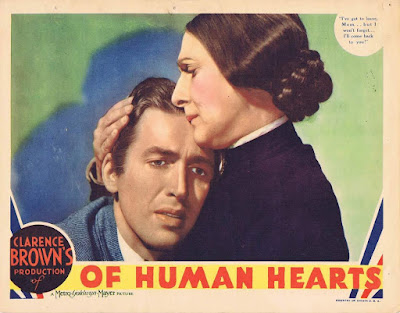 |
| Bulah Bondi has played the long suffering mother of ungrateful James Stewart in the tear-jerker Of Human Hearts. |
Thomas
Mitchel may not have made the cut playing against type as the villain America’s favorite and probably busiest
character actor fit the role of gentle, addled, and pixilated Uncle Billy like a glove. Beulah
Bondi, who by the way was a graduate
of my alma mater, Shimer back when it was a female seminary, was one of the movies’ busiest mothers when she wasn’t playing spinster school teachers. In fact she had already played mother to Stewart’s
ungrateful and neglectful son in the tear
jerker Of Human Hearts and was Ma Smith in Mr. Smith.
 |
| Henry Travers as Angle Second Class Clarence Oddbody. |
Mitchel
was also briefly considered to play Clarence
Oddbody, the Angel Second Class assigned
to George’s case. But the role went to Henry
Travers, a veteran English stage actor who found a second career in American films playing kindly but slightly
befuddled old men. He had received an
Academy Award nomination for his part as the rose-loving gardener in Mrs. Miniver and had just finished The
Bells of St. Mary’s with Bing Crosby and Ingrid Bergman as the unwitting
donor of a new school building.
Silent
film star H. B. Warner, best known
as Jesus Christ in Cecil B. DeMille’s King of Kings, had already appeared in five Capra flicks when he was tapped to play Mr. Growler, the pharmacist who employed twelve year old George Bailey. Several other members of Capra’s informal stock company also had roles.
 |
| Gloria Grahame would go from the soiled dove of It's a Wonderful Life, to the fatal temptress in a parade of film noirs. |
Small
town vamp and fallen woman Violet Bick was played by 23 year old Gloria Grahame near the start of her
film career. She would go on to be the queen of film noir temptresses and
bad girls.
The
rest of the company was sprinkled with interesting
and accomplished performers. Ward
Bond and Frank Faylen played Burt the cop and Ernie the cabdriver—and yes those character names inspired the Sesame
Street puppets. Others of note
include Sheldon Leonard as Nick the Bartender, Moroni Olson as the
voice of the Senior Angel who narrates
George’ life story, and even a brief appearance of Carl “Alfalfa” Switzer as Freddie,
Mary’s annoying high school suitor.
All
in all it was a strong an ensemble cast as was ever assembled.
 |
| More than three blocks long the Bedford Falls set was planted with more than 20 full size oak trees in the boulevard. Technicians won an Oscar for the developing a new kinds of chemical snow for the production. |
If
the film was costly due to the cost of the cast and the sets—especially the
three-block-long downtown Bedford Falls with
75 stores and buildings, the long center boulevard through which a
desperate George ran planted with 30 mature
oak trees, and a separate residential
neighborhood—at least Capra, always an efficient director, was able to
finish principle shooting between April 15, 1946 and July 27, exactly the 90
day schedule.
During
the filming Capra continued to tinker with the script, shooting and then
junking different versions of how George’s little brother Harry fell through the ice and of the famous climatic scene. He scrapped a version with George falling to his knees in prayer as unnecessarily over the top.
The
finished film was an obvious nod to
the Dickens classic that had inspired the original story writer. But where Scrooge was a bad man with a hardened
heart who had to be terrified into
unlocking a kernel of long buried kindness
and letting it flourish, George
Bailey was a deeply frustrated man
who repeatedly makes good choices
when he must but barely contains seething resentment who
must be shown that his own life was
worth living. This was subtle stuff and far beyond the usual black and white morality of most
Hollywood fare. Those who accuse Capra
of over sentimentality in this film or
glossing over the stultifying drabness and rigid conformity of the small town
George always wanted to leave
overlook the real anguish that
underlines it.
It’s
a Wonderful Life went into general release on January 7, 1947 and was 26th out of more than
400 features that year in revenue, one
place ahead of another Christmas film, Miracle on 34th Street which was
released late that year. Not nearly as
bad as legend would have it.
Despite the accolades the film received it might have faded in the public memory.
In subsequent years Miracle on 34th
Street and the 1938 and 1951 versions of A Christmas Carrol usually let the lists of favorite holiday
films. Capra’s work could easily have
sunk to the level of say Christmas in Connecticut, a film admired by movie buffs but below the
radar of casual viewers.
What saved it from that fate was one
of the most spectacular and inexplicable business blunders in film history.
Liberty Pictures went belly-up after completing just two
films, the second being Capra’s State of the Union with Spencer Tracy and Katherine Hepburn. It’s two
movie film library and other assets were purchased by Columbia Picture and then
repeatedly re-sold to a bewildering succession of companies. In 1955 it was bought by a little known investment outfit called M. & A. Alexander which sold the copyright to the original nitrate film elements, music score, and the film rights to the story on The Greatest Gift as well a television
syndication rights to National
Telefilm Associates (NTA), syndication specialist.
In 1974 a nameless functionary at
NTA flubbed the copyright renewal of the film’s visual images and it passed
into public domain. Anyone could broadcast or reproduce the
film on other media without having to pay syndication
fees or royalties on the film, although they did have to pay royalties for
the story and music which remained under protection. Local
TV stations around the country snapped up the gift from heaven that was plopped
in their laps. Many began annual showings,
often multiple showings. In some markets every station aired the
movie. It was almost impossible to get
through a holiday season without seeing the film. Millions
of Americans and multiple
generations saw the film and fell in love.
In the 1980’s with the rapid spread of home VCRs several companies released tapes of the film, many of them very muddy and poor quality. These included colorized versions denounced by both Cara and James Stewart.
In 1993, Republic Pictures, which was a successor to NTA, regained
protection after a prolonged legal
battle relied based on a 1990 a Supreme
Court ruling in Stewart v. Abend, which involved another Stewart film, Rear
Window) to enforce its claim to the copyright. While the film’s
copyright had not been renewed, Republic still owned the film rights to The Greatest Gift protecting its status
as a derivative work still under copyright.
 |
| Is there ever a dry eye in the living room when the bell on the Christmas tree rings and the whole town sings Auld Lang Syne to George and his family? I didn't think so... |
Although the film disappeared from
local television re-broadcasts, since 1996 Paramount,
which now owns the rights to the Republic library, has licensed rights to NBC which
shows the film to wide audiences
twice during each holiday season.
Pull
out the hankies and fill the popcorn bowls. It’s A
Wonderful Life will soon be on your home
flat screen TV again.


.jpg)


