|
| Ruby Murfin in Hibbing, Minnesota, 1937 showing off her new bought-on-time furniture and prosperity for her family. |
Note—We
are not quite finished with Pearl Harbor.
Herewith, a Murfin Memoir story of those days.
Mrs.
Murfin, Ruby to her friends and family, was still in her chenille robe and
slippers lingering over a strong cup of coffee perked on the range and
listening idly to the stock reports from Omaha waiting for some morning music
to come on when she heard the mail man pull up in his rattle-trap Model A truck
and slam the door of the post box by the road.
Eager for some good news in those bleak days—maybe a letter from home or
some Christmas cards.
For
more than a week there had been nothing but talk of war on the radio, down at
the grocery store, at the beauty parlor, even in Church. Her husband Murf had grown sullen and
restless. After years of struggle and
sometimes outright hunger, they were finally set. He had a good job with prospects at the
bank. They just took out a mortgage on a
snug little house. But now Murf, an old
married man of 28 and probably safe from the Draft for at least a while, wanted
to throw it all away and run off to enlist.
Ruby could use some cheer.
So
she rushed out of the house letting the heavy storm door slam after her. It was in the teens and the wind howled down
the mountains to the west and swept the little town on the prairie. A couple of inches of fresh, dry, powdery
snow swirled along the ground, her bare toes in the mule slippers hardly
noticing. She pulled the robe tight around
her and dashed to the road and the mail box on the post, its little red flag up
and signaling there was mail.
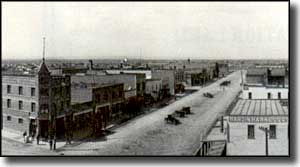 |
| Down town Hardin, Montana, seat of Big Horn County about 1930. It hadn't changed much by '41. |
Inside,
shivering at the table, Ruby poured another cup of coffee and measured a spoon
of sugar into its blackness. She sorted through the small bundle. Yes, some cards. Looked like a letter from little sister
Mildred. A butcher and the telephone
bill. The weekly church bulletin and
something for Murf from the Masons. And…what’s
this!...a squarish pastel blue tissue envelope edge all around with red and
blue stripes…Air Mail! From Oahu…addressed
to her!
She
didn’t know anybody in Hawaii and if it had not been in the news all week would
have had no idea where Oahu was. She
peered at the envelope intently. She
thought she recognized the smoothly looping Palmer method handwriting. Her heart suddenly sank. Her hands trembled. She laid aside the rest of the mail and held
the envelope in her hands for several moments before slitting it open with a
paring knife.
“Dear
Daughter Ruby,” it began. “I know you
have not heard from me for a good long while, but as you see, I’m in Honolulu…”
No
she had not seen him for a long time, nor had she missed him. Sometimes he haunted her nightmare. He had long since abandoned the family or the
family had abandoned him. Six of on,
half a dozen of the other. Good riddance,
either way.
 |
| Mona and Lemuel Mills on their wedding day in 1910. He hardly looked like a monster then. The only picture of him the family kept. |
Lemuel
Mills had been a vicious drunk. Born
into a good family he had wasted once bright prospects and even in the boom
days of the ‘20’s the family had half-starved on a neglected Missouri
farm. And he had beat his wife Mona
terribly and often in his rages and spared not his children including Ruby, the
eldest daughter his discipline. One
summer evening in the park in Kirksville he had caught a glimpse of him raping
a high school class mate in the bushes.
In shame and terror she had said nothing.
It
got so bad that one night Mona packed up the kids while Lem was out on a toot
with his gang of lay-about pals, and fled the whole damn state of Missouri in
his broken down Fliver. The fled to Mona’s
sister Myrtle and her husband Vern’s in in Des Moines. After a while Lem found them there and after
an infusion of corn courage, kicked the front door down blasting his shotgun as
everyone fled out the back door or jumped through widows.
The
Sheriff got him and after a couple of month in the cooler got out with a stern
warning not to be found in town again.
The deputies, friends of Vern, may have thrown him on a freight
train. No one had seen or heard from him
since.
Ruby
went back to Kirksville and married the handsome boy who had courted her in high
school—Will Murfin, the son of the music store manager. She always called him Murf. He worked in the Bank which never re-opened
after FDR’s bank holiday. After that he
could not find good, steady work for years.
They
had to go back to Iowa and move in with Myrtle and Vern again. Murf peddled vacuum cleaners door to door for
a while. No one was buying. He got on here and there as a store clerk for
a while, but it always petered out. It was
not until 1937 that he landed a job as teller in a Hibbing, Minnesota bank,
more than five years into marriage, that they had finally been able to
establish themselves as a married couple on their own in a cozy three room
apartment. Ruby sent pictures home to
Mona proudly posing with bought-on-time Sears furniture and cathedral radio.
That
had led, eventually here to Hardin where Murf was promised that if he worked
hard he could become vice president of the bank in a few years. Not long after settling in Ruby finally
became pregnant. It was a difficult
birth and within two days the baby Murf had already nicknamed Butch was dead
and lay beneath a small stone inscribed “William Infant Son.”
She
had sunk into black depression and Murf went a little wild and crazy, taking to
the mountains with his Mason buddy Hollis Johnson and Yellow Tail, the Chief at
near-by Crow Agency for long hunts. Try
as she might, Ruby could not conceive another child.
They
were just getting back to a semblance of normal when they heard the news about
Pearl Harbor on the radio after Church.
Ruby was frightened. Murf seemed exhilarated.
Now
this letter in her hands brought it all back.
 |
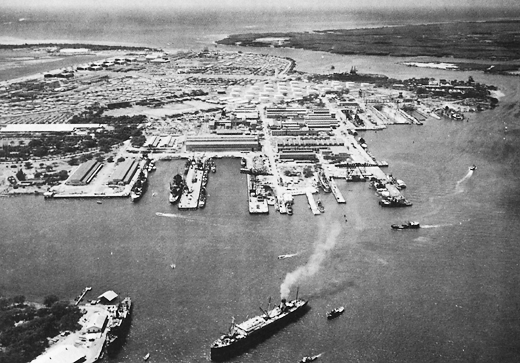
| Hickam Field under attack on December 7, 1941. Somewhere there Lemuel Mills was scrambling for cover. |
It
went on to say that he had taken to working construction on some of the big
projects out west. He ended up in a civilian
construction gang at Hickam Field, living on the base in barracks. That Sunday morning he was sleeping off last
night’s Honolulu binge when he was awaked by explosions and machine gun
chatter. He ran outside and saw the
swooping planes. Dodging strafing runs
he ran to a slit trench and dived in.
After a seeming eternity the noise stopped and he emerged.
“Just
wanted you to know the old man is safe,” he wrote and added a clumsy sentiment
that invited a reply to the hotel address on the envelope.
Weeping,
Ruby, laid the letter down. She never
answered it. That evening she told Murf,
“He thinks this makes him a hero.”
Just
after the New Year Murf was gone to basic training at Camp Grant in
Illinois. Ruby tried to busy herself
with war work in Hardin—organizing scrap drives, bond sales, and knitting
projects with the Ladies Aid. She was
good at it. Always a go-getter and
organizer when presented with a challenge.
It kept her, mostly, from slipping back into the blackness.
She
saw Murf on furlough before he went to the California desert to train with a
Field Hospital. Then he was shipped
out. After a long wait not knowing where
he was going, she got a letter from Cape Town telling her that he was on his
way by ship around Africa and up the Red Sea to Egypt where the hospital would
be attached to the British and Anzacs fighting Rommel.
Ruby
gave up the snug little house in Hardin and moved to Omaha to work in the Boeing
plant with her younger sister Mildred.
Murf came back stateside for Officer Candidate School and they spent
about three months together while he was posted to Ft. Lewis in Washington
State. And then he was gone again into
the green hell of the Pacific War—landings at Leyte in the Philippines, Guam,
and Okinawa.
Late
in ’46 he came back, a changed man. They
lived in Helena and then he opened a sporting goods store and hunting guide
service in West Yellowstone. It went
bust. He went crazy again for a
while. To settle them both down they
adopted twin boys at birth in ’49.
Ruby
never heard from Lemuel again. When her
brother Pearl, now a doctor, got word that he died in Arizona in the ‘70’s, he
went out there to arrange a burial and “make sure the bastard was dead and piss
on his grave.”