Showing posts with label Raleigh North Carolina. Show all posts

Sunday, April 10, 2022

Dorienne Laux on Pumping Gas and Poetry Love—National Poetry Month 2022

Dorienne Laux.

I admit to kind of falling in love with the work of Dorienne Laux despite our differences in gender, and many life experiences.  But we share an experience, as we shall see, her in her youth and me at a much older age and also a heart-on-the-sleeve love of poetry itself.

Laux was born January 10, 1952 in Augusta, Maine in a family of French Canadian ancestry.  She worked as a sanatorium cook, a gas station manager, and a maid before receiving a B.A. in English from Mills College in Oakland, California in1988.  She taught at the University of Oregon and is now a professor at North Carolina State University’s creative writing program, and the MFA in Writing Program at Pacific University.  She is also a contributing editor at The Alaska Quarterly Review, one of the nation’s most influential literary journals.

Her work appeared in American Poetry Review, Five Points, Kenyon Review, Ms., Orion, Ploughshares, Prairie Schooner, Southern Review, TriQuarterly, Zyzzyva. Her work has also appeared in online journals such as Web Del Sol.

Her books include What We Carry in 1994, Facts about the Moon in 2005, and The Book of Men in 2011.

Laux lives in Raleigh, North Carolina with her husband, poet Joseph Millar.  Together they have one daughter.

A female gas jockey in her overalls probably from the 1940s way before Laux's time at the pump.

As a young woman Laux was a female gas pump jockey in the days before pump-your-own.  Much later I spent almost 15 years as a gas station clerk on second and over-night shifts in Crystal Lake.  Although I usually just had to authorize pumps for self-service customers, I did have to go out to lend assistance and for fuel spills.  On more than one occasion, I got my uniforms and shoes soaked with gas. 

Fast Gas

For Richard


Before the days of self service,

when you never had to pump your own gas,

I was the one who did it for you, the girl

who stepped out at the sound of a bell

with a blue rag in my hand, my hair pulled back

in a straight, unlovely ponytail.

This was before automatic shut-offs

and vapor seals, and once, while filling a tank,

I hit a bubble of trapped air and the gas

backed up, came arcing out of the hole

in a bright gold wave and soaked me — face, breasts,

belly and legs. And I had to hurry

back to the booth, the small employee bathroom

with the broken lock, to change my uniform,

peel the gas-soaked cloth from my skin

and wash myself in the sink.

Light-headed, scrubbed raw, I felt

pure and amazed — the way the amber gas

glazed my flesh, the searing,

subterranean pain of it, how my skin

shimmered and ached, glowed

like rainbowed oil on the pavement.

I was twenty. In a few weeks I would fall,

for the first time, in love, that man waiting

patiently in my future like a red leaf

on the sidewalk, the kind of beauty

that asks to be noticed. How was I to know

it would begin this way: every cell of my body

burning with a dangerous beauty, the air around me

a nimbus of light that would carry me

through the days, how when he found me,

weeks later, he would find me like that,

an ordinary woman who could rise

in flame, all he would have to do

is come close and touch me.


Dorienne Laux


This wonderful piece came from Facts about the Moon.


Tonight I Am In Love


Tonight, I am in love with poetry,

with the good words that saved me,

with the men and women who

uncapped their pens and laid the ink

on the blank canvas of the page.


I am shameless in my love; their faces

rising on the smoke and dust at the end

of day, their sullen eyes and crusty hearts,

the murky serum now turned to chalk

along the gone cords of their spines.


I’m reciting the first anonymous lines

that broke night’s thin shell: sonne under wode.

A baby is born us bliss to bring. I have labored

sore and suffered death. Jesus’ wounds so wide.


I am wounded with tenderness for all who labored

in dim rooms with their handful of words,

battering their full hearts against the moon.


They flee from me that sometime did me seek.

Wake, now my love, awake: for it is time.

For God’s sake hold your tongue and let me love!


What can I do but love them? Sore throated

they call from beneath blankets of grass,

through the wind-torn elms, near the river’s

edge, voices shorn of everything but the one

hope, the last question, the first loss, calling


Slow, slow, fresh fount, keep time with my salt tears.

Whenas in silks my Julia goes, calling Why do I

languish thus, drooping and dull as if I were all earth?


Now they are bones, the sweet ones who once

considered a cat, a nightingale, a hare, a lamb,

a fly, who saw a Tyger burning, who passed

five summers and five long winters, passed them

and saved them and gave them away in poems.


They could not have known how I would love them,

worlds fallen from their mortal fingers.

When I cannot see to read or walk alone

along the slough, I will hear you, I will

bring the longing in your voices to rest

against my old, tired heart and call you back.


           Dorienne Laux 

Monday, January 20, 2014

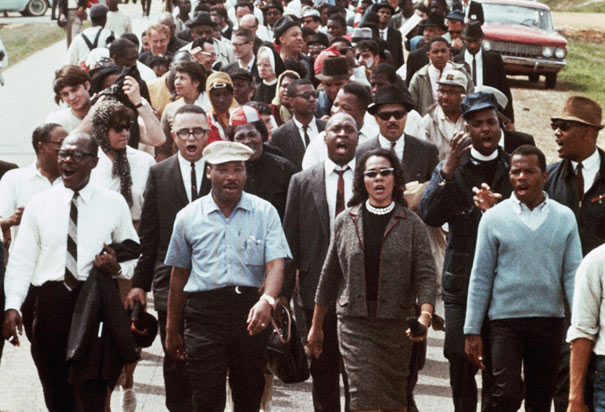
Ranting About Martin Luther King Day Again—And a Call to Action Today


Note:  The same things still stick in my craw, so here it is again.  Share widely—especially with complacent White folks.

Today is the Federal Holiday celebrating the Rev. Dr. Martin Luther King, Jr. He was born on January 12, 1929 and was assasinated on April 4, 1968 in Memphis, Tennessee.  It was a long, hard fought effort to create a federal holiday, following proclamations in several states.  President Ronald Reagan signed the legislation creating the holiday in 1983 and it was first celebrated nationally in 1986.  The senior George Bush moved the date to the third Monday in January. 

Despite the national observance, several states refused to enact state proclamations. After a threatened national economic boycott threatened the Super Bowl in Arizona, the holiday was officially observed in all 50 states for the first time in 2000.

Depending on your state, schools may or may not be open.  It they are you can count on some kind of touchy-feely programming that will assure children that once, long, long ago things weren’t so nice for Black people, but thanks to Dr. King everything is just fine now.  A tremendous amount of time will be spent emphasizing his non-violence and schools now routinely use the occasion as a center piece in their violence prevention programs.  They will also emphasize tolerance of those who are different—which it turns out may be the red-headed kid or the girl with a lisp. 

As laudable as these things are, children are not apt to be told that their grandparents may just have been the ones doing the oppression of Black folk.  Nor are they given any real sense of Dr. King as a truly revolutionary figure willfully defying the power of the state, demanding true systematic change, addressing class inequality, and in time of war leading an opposition to that war.

In cities, towns and villages across much of the country, there will be obligatory civic observations.  These most often take the form of prayer breakfasts, dutifully attended by local dignitaries of all races.  While some local Black preacher may take the occasion to lay out some harsh truths or even demand attention to continuing injustices, everybody will applaud politely.  Politicians will parade to the podium with bromides.  Some one—preferably the precocious son of a Black preacher—will intone words from the I Have a Dream Speech, and at the end maybe everyone will join hands and sing We Shall Over Come.  I bet you have been to just this kind of event.  Hell, I’ve even helped plan and put them on and I am going to one this morning.

There will be nostalgic clips of the March on Washington on the news, maybe a documentary or two on the History Channel and Public Television.

Many of the people who hated Dr. King when he was alive or who are their spiritual descendents will blandly join in the celebrations.  And then they will turn his words against him.  When you hear a plump politico with a honeyed accent quote, as they all love to do, the one phrase from the I Have a Dream speech where he spoke about the little children being judged not on the color of their skins but on the “strength of their characters,” watch out.  That hack is about to use Dr. Kings words to attack that dream.  He will say that now that we have erased statutory discrimination, any lingering program that gives disadvantaged minorities the slightest leg-up is itself discriminatory.  Dr. King would want a perfectly color blind society.  Unspoken is his deep conviction that in such a color blind society, white men will rise like cream and be restored to their rightful place on top of the ladder—as if they had ever really lost it.

Dr. King will also be invoked for his non-violence, which will be translated into passivity.  Law breaking—including the kind the Civil Rights Movement routinely used—will be denounced.  No word will be uttered that Dr. King’s non-violence actually expected to provoke violent opposition and use that response to tweak the conscience of a democratic nation. 

Since Dr. King’s time, police departments have been provided with new arms and tactics.  New “crowd control” methods and security provisions make the kind of marches, sit-ins, and demonstrations led by King either impossible or kept far away from “threatening the safety” of those being protested, as was seen repeatedly in attacks on the Occupy Movement. New restrictions on the press—and when that doesn’t work outright attacks, arrests, and physical intimidation—keeps reporters from fully reporting on acts of civil disobedience so that the public consciousness may be safely left un-tweaked.

A few of years ago, rising to a new level of audacious gall, a senior Pentagon official, in a program marking Dr. King’s birth at the Department of Defense, actually argued that the Nobel Peace Prize winner would “understand” and “approve” of the “work of our soldiers” in Iraq and Afghanistan.

We are told that because Dr. King was a faithful Baptist, he would not today support Gay, lesbian, and transgendered people and that it is a mockery to compare their struggle to the Civil Rights Movement.  The Black church is divided on this—even Dr. King’s children are—but it is hard to imagine his rejection of justice for them.

Likewise some Black leaders will claim, especially in their own communities, that Dr. King fought just for them, that gains he fought for should not be extended to the growing Latino minorities that threaten to displace them as the most “oppressed.”

All of this is possible because nearly 46 years after his death Martin Luther King has been sanitized.  He has been scrubbed clean of the any semblance of actual humanity, any personal foibles or flaws, and midnight doubts or struggles of the soul.  He has become an empty vessel into which can be poured a safe and bland pudding which can placate pesky Blacks with a pat-on-the-head while protecting the status-quo.

Enough!  The real, flesh and blood Dr. King would have none of it. 

Let’s remember him today for who he was, not who the charlatans want to make him out to be.  And let’s remember that as great as he was, he was one man.  Let’s not denigrate the truly historic sacrifices of thousands and thousands of ordinary people who repeatedly literally put their lives on the line—and continue to do so today.  Let’s celebrate him and them by rededicating ourselves to standing up as they did, by putting our bodies, when necessary, on the line to achieve his true dream of an equitable and just society.

A good place to start may be the Mass Moral March in Raleigh, North Carolina coming right up on Saturday February 8 which has been described as the Selma to Montgomery March for this generation.  It is an outgrowth of months of Moral Monday demonstrations and civil disobedience protesting a array of oppressive and discriminatory legislation passed by North Carolina’s ultra-right legislature. 

Led by Reverend William Barber II, President of the North Carolina NAACP dozens of organizations are joining in the effort.  North Carolina Unitarian Universalists have put out a call for UU’s across the nation to join in the effort and they are being supported by the Standing on the Side of Love Campaign.  In their call the ministers wrote:

While we focus now on this one day, we know this is not just one moment.  We hope to form partnerships across the country that will last more than just this day.  We are also asking for your spiritual support in this movement.  Please hold us in your hearts and in the prayers of your congregations. May our children’s children be proud of how we walked on this earth and whom we chose as our spiritual companions.  For we know from the generations before us, there is no time to take a vacation from the struggle for justice.

The march will demand:

    Economic Sustainability, Alleviating Poverty and Expanding Labor Rights for    All

    Fully-Funded Constitutional Public Education

    Healthcare for All, Protecting Medicaid, Medicare, Social Security, and the Affordable Care Act

    Addressing Disparities in the Criminal Justice System

    Protecting and Expanding Voting Rights and Civil Rights

I know most of us cannot make it to Raleigh.  As much as I am aching to go it is unlikely that I will be able to go.  But we can all renew our commitments and bring the fight to where we are.  As the old radicals used to say, la lucha continua….