Showing posts with label Ezra Pound. Show all posts

Tuesday, April 14, 2026

A Little Song by Amy Lowell--National Poetry Month 2026


 Amy Lowell.

Amy Lowell was a member of the brilliant and accomplished extended Lowell Family.  She was born on February 9, 1874 in Brookline, Massachusetts and raised in a refined and sophisticated home which treasured literature.  She had every exception of a full education, but those hopes were cut short when at the age of 17 she had to leave private school to care for her elderly parents.  From then on, she was the steward of her own education.  

In 1902 thunder struck Lowell’s sheltered life in the person of famed actress Eleanora Duce.  Completely stricken by love and admiration, she wrote her first poem to the actress.  Although they met a couple of times, Amy’s love was destined to be unrequited. 

More poems followed and her career as a writer was launched.  In 1909 another actress, Ada Russell, became the love of her life.  They remained happily together until Amy’s death.  She wrote many poems to or about Ada, including Madonna of the Evening Flowers.  At first, she cloaked her romantic feelings, but as time went on, the poems became more openly erotic, most famously her celebration of their first ten years together A Decade. 

After the death of her parents, she purchased their estate and established it as a center for poetry, reigning contentedly there with Ada and her beloved English sheepdogs.  She acted as a patron to many struggling poets, translated the works of others and wrote literary biographies like her two-volume work on John Keats.

Lowell became best known for her sponsorship of the Imagist movement in the United States.  She noted similarities between her own work the English poet Hilda Doolittle (H.D.)  She traveled to Britain and became immersed in the Imagist movement there, returning to the United States to spread the gospel. 


Lowell's literary nemesis Ezra Pound as a fierce young poet.

The eccentric American exile Ezra Pound was the self-proclaimed leader of the movement and bitterly resented Amy’s role in its spread.  Typically, he devoted enormous energy to denouncing her and tagging her American Imagist movement as Amygisme.  The attendant controversy only raised Lowell’s prestige among American poets. 

She was more bothered by criticism of her lesbianism, mannish attire, and even her obesity.  She was especially stung by denunciations the priggish banned-in-Boston crowd, her own Brahman class of Unitarians.  She almost severed relations with her faith tradition over the slights, but instead defiantly endowed a window in her home church upon her death.  She also deeply resented being considered a dilettante because she was a woman and an heiress.  She never lived to see complete acceptance as a poet.  In 1926, a year after her death, she was posthumously awarded the Pulitzer Prize for Poetry for her book What’s O’Clock.


The back cover a posthumous edition of Amy Lowell's Pulitzer Prize winning collection What's O'Clock.

A Little Song

When you, my Dear, are away, away,
How wearily goes the creeping day.
A year drags after morning, and night
Starts another year of candle light.
O Pausing Sun and Lingering Moon!
Grant me, I beg of you, this boon.

Whirl round the earth as never sun
Has his diurnal journey run.
And, Moon, slip past the ladders of air
In a single flash, while your streaming hair
Catches the stars and pulls them down
To shine on some slumbering Chinese town.
O Kindly Sun! Understanding Moon!
Bring evening to crowd the footsteps of noon.

But when that long awaited day
Hangs ripe in the heavens, your voyaging stay.
Be morning, O Sun! with the lark in song,
Be afternoon for ages long.
And, Moon, let you and your lesser lights
Watch over a century of nights.

—Amy Lowell

Saturday, November 15, 2014

Marianne Moore—Mischievous Mistress of Modern Poetry

Marianne Moore as a youthful teacher.


Today is the birthday of one of the most important and creative of 20th Century American poets.  Marianne Moore was born in the St. Louis suburb Kirkwood, Missouri on November 15, 1887.  Her engineer father suffered a nervous breakdown before her birth and was confined to a mental hospital.  Moore never met him.  Her mother, with whom she was virtually inseparable over her life time, brought Moore and her brother into the home of her father, a Presbyterian minister.  It was a close and supportive family environment.  When her grandfather died in 1894, her mother moved the family to Pennsylvania.  But a significant part of Moore remained rooted in that parsonage.  She remained a devout Presbyterian and a loyal Republican her entire life.

The family settled in Carlisle where Moore attended high school at the Metzger Institute, now part of Dickinson College.  In 1905 she entered the prestigious near-by Seven Sisters women’s college Bryn Mawr.  She published her first poetry in the school’s literary magazine.  She credited her love of the biology laboratory with enhancing her attention to detail in description and a fascination with animals, who would become one of her regular subjects. 

After graduation in 1909 Moore attended a local business school to learn stenography, bookkeeping, and other office skills.  From 1911-1915 she taught business classes at the U.S. Industrial Indian School at Carlisle, where she was an admired and respected instructor.  One of her students was the fabulous athlete Jim Thorpe who triggered her life-long admiration for athletes, who also became frequent subjects for her poetry.

In her spare time, Moore was avidly reading the most advanced avant-garde poets—the Imagists whose work she admired and internalized.  By 1915 her poems were appearing in the most important magazines of modern poetry—the Egoist in London edited by Hilda Doolittle (H.D.), Harriet Monroe’s Chicago-based Poetry, and in Others, edited by Alfred Kreymborg.  Many of these poems were observations on other poets and writers including the Palmist King David, Robert Browning, George Bernard Shaw, William Blake, and George Moore.

After concluding the school year at Carlisle, Moore and her mother moved to New Jersey in 1915 to keep house for her brother, by then a Presbyterian minister himself and a Yale graduate student.  After he enlisted for World War I they moved to New York City, largely so that Moore could concentrate on a career as a poet.  The two women lived together until her mother’s death in 1947.  Perhaps because of her dedication to her mother, Moore never married or had a documented serious romance.

But she did not live the life of a recluse.  An expansive, vivacious woman Moore soon had a wide list of friends among the New York literati.  Wallace Stevens, another poet whose outward life as a conventional businessman belied his daring experimentalism as a poet, became a close, lifelong friend.  Others drawn into her orbit included William Carlos Williams.  She was in regular correspondence with H.D., Ezra Pound, and T.S. Eliot in Britain.  Pound, who took pride in being the center of the Imagist movement and a mentor to many poets, became a special friend.  Moore stood by him personally even when she was revolted by his fascination with Benito Mussolini and Italian fascism and scolded him on his cheap anti-Semitism.  She continued to correspond with him when he was imprisoned for his treasonous World War II propaganda broadcasts and visited him in his later years when he was confined to a Washington, D.C. mental hospital.

To support herself and her mother, Moore took a job with the New York Library.  

Memorialized as in mid-career.

In 1921, without Moore’s knowledge H.D. arranged for the publication of a collection based on poems sent to her for consideration in the Egoist.  Moore was displeased with the book Poems.  She did not approve of the selection and yearned to revise or revisit some of the poems—she regularly revisited earlier work throughout he long career.  None the less, the slender volume helped establish Moore’s reputation as a major poet and led to an expanded and more comprehensive American collection under her own editorship, Observations published in 1924. 

Through the 1920’s Moore published highly regarded poetry in many of the most important magazines.  So esteemed was Moore in poetry circles that she was selected to take over the editorship of the Dial, then the preeminent American literary magazine, in 1925 when its editor Scofield Thayer suffered a nervous breakdown.  She continued to edit that publication and mentor young writers much as her friend Pound had done until the magazine finally folded in 1929.

After the stint as editor, Moore supported herself as a freelance writer, critic and poet.  She and her mother moved from Manhattan to Brooklyn, but she remained a central part of the city’s literary life.

In 1931 T.S. Eliot wrote the introduction to her next collection, Selected Poems published in 1935.  Despite the popularity of her poems in leading magazines and her receipt of Poetry’s Helen Haire Levinson Prize in 1933, the book was a sales disappointment.

Despite the setback, Moore continued writing.  She regularly re-edited and re-visited earlier work, including her most famous verse, Poetry.  Her work appeared in both literary and popular magazines including the Kenyon Review, the Nation, the New Republic, the Partisan Review, and the New Yorker.  Collections culled from these submissions were regularly published—The Pangolin and Other Verse in 1936, What Are Years? in 1941, and Nevertheless in 1944.

After receiving a Guggenheim Fellowship for creative writing in 1945 and a $1,000 joint grant from the American Academy of Arts and Letters and the National Institute of Arts and Letters, Moore had the leisure to take her friend W.  H. Auden’s suggestion that she undertake a fresh, creative translation of the French fables by Jean de La Fontaine.  The project consumed her energies for some years and shook her self-confidence when it was initially rejected by her publisher.  The book finally was published in 1955.

Despite the set-back, the 1950’s were very good to Moore.  Her 1951 Collected Poems did some collecting of its own—the Pulitzer Prize, the National Book Award in 1952 and the Bollingen Prize in 1953.  The book sold almost 5,000 copies by 1952—a runaway best seller for poetry.   Moore was becoming ever more a public persona in New York, appearing at readings, social events, baseball games, and boxing matches in a dramatic black cape and tri-corn hat.  She became the friend of successive mayors and sometimes served as a hostess at Gracie Mansion events.

In 1955 Ford Motors executives famously asked Moore to suggest name for a new car that they had under development.  Some poets would have been offended at being “commercialized.”  Not Moore, who believed anything could be poetry if the words were true and compelling.  She took the assignment with relish and eventually submitted 11 suggestions including Resilient Bullet, Ford Silver Sword, Mongoose Civique, Varsity Stroke, Pastelogram, Andante con Moto, and Utopian Turtle Top.  Ford was unamused and called the car the Edsel instead.  Maybe it would have sold better as the Utopian Turtle Top.

Moore shown in 1966 in her late life trademark tri-corn hat with her pal Muhammad Ali for whom she wrote the liner notes for his spoken word album of poetry.

Despite her personal conservatism, she remained devoted to bold, experimental poetry and poets like Allen Ginsberg.

Moore was also passionate about sports, particularly boxing and baseball.  She wrote about both in poetry and in essays.  She became a friend and supporter of young Cassius Clay and was delighted to write the jacket notes for his 1963 Columbia spoken word album I Am the Greatest.  One of her most prized possessions, showed off in a place of honor in her New York apartment was a signed baseball given to her by Mickey Mantle.  In 1968 Moore had the thrill of a lifetime when her beloved New York Yankees invited her to throw out the first pitch of the season.

Unfortunately, Moore suffered a stroke shortly after her Yankee Stadium triumph. Confined largely to home, she continued to try to write through a succession of more strokes but complained that, “nearly every word I write is missing the last letter.”  She died on February 5, 1972 at the age of 84.  Her apartment living room was reassembled and can be viewed at the Rosenbach Museum and Library in Philadelphia.
 

Friday, June 13, 2014

Ignoring Midwestern Geezer, Older White Guy Southerner Tapped as Poet Laureate

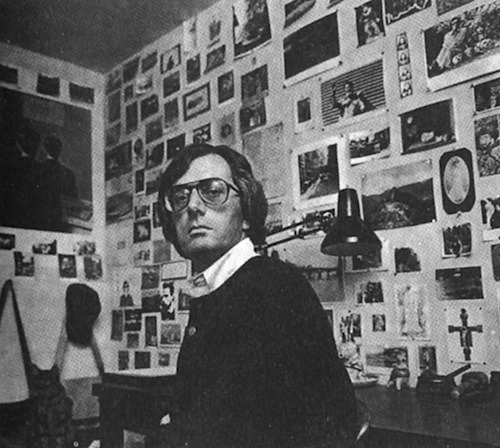
A younger Charles Wright poses in his study the walls of which, by the way, look a lot like mine.  Just sayin'.


Every year, it’s the same goddamned thing.  It’s the day the folks at the Library of Congress announce the appointment of a new Poet Laureate.  I stand by my phone.  Well, OK, Being 2014 my phone is in my shirt pocket, but I stand ready to fish it out at moment’s notice if I don’t accidentally end the call fumbling for it.  But even then, they could call me back.  Just hit re-dial.  And every year someone else gets the nod

You would think that some year they would pick an elderly white guy outsider with a tiny body of work encompassing one skinny collection and assorted electronic ephemera.  But it never happens.  The committee always seems to spend its time reading actual books of poetry and noting stacks of awards and fellowships.

This year they turned to Charles Wright, a 78 year old white Southern poet who has already picked up a National Book Award in 1983 for Country Music: Selected Early Poems and a Pulitzer Prize for Poetry in 1998 for Black Zodiac plus a bushel basket of assorted little magazine awards and academic laurels.

Now I have to be gracious in my role as blogging poetry maven and tell you all about him.  Gritting my teeth though every key-stroke, here goes.

Wright was born on August 28, 1935 in the excessively charmingly named town of Pickwick Dam, Tennessee.  He was evidently weaned on Southern novelists, particularly William Falkner whose brother his mother once dated.  That kind of Kevin Bacon connection can evidently be quite powerful because by high school the young man determined to become the Great American Novelist.  So did I, by the way, fat lot of good it did either of us.

The young man went off to Davidson College in North Carolina, one of the South’s most selective and prestigious private liberal arts institutions.  In addition to his studies, Wright busied himself trying to write that novel.  The result was lush descriptive passages, evocative moods, a deep sense of time and place.  But nothing happened.  Wright discovered that he was, in his own words, “one of the rare Southerners who cannot tell a story.”

Whether motivated by disappointment or the looming threat of the draft, Williams enlisted in the peace time, Cold War Army and spent most of his four years of service in Europe—a kind of a Hemingwayesque expat, except in uniform and expected to occasionally act like a soldier.  While in Italy he picked up a new edition of Ezra Pound’s Selected Poems.  He was gobsmacked.  He had found just the medium for a man of literary bent and lack of narrative sense.  By his own admission he began to gobble up poetry, trying to absorb all he could.

Soon he was writing his own, which naturally owned more than a tip-o’-the-hat to Pounds lush language and sense of place. 

After getting out of the service Wright enrolled at the already famous and well established University of Iowa Writers Workshop where poets and writers were nurtured, produced, and spit out into the academic literary world with the regularity of Fords off an assembly line.  He also got to return to Italy to study on a Fulbright Scholarship.

He started producing chap books and well reviews small press collections in the mid-‘60’s building slowly his own voice out of his study and major influences which included not only Pound and his fellow early 20th Century Imagists and Modernists, but also the more delicate poetry of Chinese Tang Dynasty.  His earliest poems were short and deceptively simple with recurrent symbolism.

With his fifth full-fledged collection, Southern Cross in 1981 he really leapt to the forefront of contemporary poets despite being out of sync with most dominant schools including the Beats, confessional poets, and the politically engaged.  His poems grew longer, more complex, and often dealt with the South and its lingering mystery.  He considers three collections taken together, each a trilogy of shorter books, Country Music, The World of Ten Thousand Things, and Negative Blue, as  his Appalachian Book of the Dead.  Wright said, “All three trilogies do the same thing, and they have essentially the same structure. Past, present, future: yesterday, today, tomorrow.”

In later books, his style would shift again and his focus broaden from his native South.  He returned to shorter poems once again and recurring themes of nature and mortality.  Prolifically he has produced at least one short collection every year.

Like most important American poets, Wright supported himself with an academic career.  from 1966 to 1983, he taught at the University of California, Irvine and was a Chancellor of The Academy of American Poets and Souder Family Professor of English at the University of Virginia in Charlottesville.  You know, Thomas Jefferson’s school.

Retired since 2010 Wright spends his time gobbling up fiction, a passion he denied himself in his years as an active poet fearing that narrative would cloud his mind to the creation of verse.  He is especially fond of the literary crime fiction of the likes of Elmore Leonard.

He spends most of his year in Charlottesville with his wife, where reporters reached him seeking comment on his appointment.  The New York Times reported that he seemed stunned and a little unsure of how he would handle the largely ceremonial post.  Other recent Poet Laureates have undertaken various projects to promote the reading and understanding of poetry.  He said he would take some time to ponder what to do.  He was preparing to take his annual extended summer trip to a remote cabin in northwestern Montana without even a telephone to tie him to the world.

Damn, he is even stealing the state of my birth.

A sample of Wright’s work excerpted from the poem The Appalachian Book of the Dead from Black Zodiac, 1997

Sunday, September Sunday ... Outdoors,

Like an early page from The Appalachian Book of the Dead,  

Sunlight lavishes brilliance on every surface,

Doves settle, surreptitious angels, on tree limb and box branch,  

A crow calls, deep in its own darkness,

Something like water ticks on

Just there, beyond the horizon, just there, steady clock ...


Go in fear of abstractions ...

                                                       Well, possibly. Meanwhile,

They are the strata our bodies rise through, the sere veins  

Our skins rub off on.

It always amazes me
How landscape recalibrates the stations of the dead,
How what we see jacks up
                                                  the odd quotient of what we don’t see,  
How God’s breath reconstitutes our walking up and walking down.  
First glimpse of autumn, stretched tight and snicked, a bad face lift,
Flicks in and flicks out,
                                            a virtual reality.
Time to begin the long division.

—Charles Wright