Showing posts with label Massachusetts. Show all posts

Tuesday, April 14, 2026

A Little Song by Amy Lowell--National Poetry Month 2026


 Amy Lowell.

Amy Lowell was a member of the brilliant and accomplished extended Lowell Family.  She was born on February 9, 1874 in Brookline, Massachusetts and raised in a refined and sophisticated home which treasured literature.  She had every exception of a full education, but those hopes were cut short when at the age of 17 she had to leave private school to care for her elderly parents.  From then on, she was the steward of her own education.  

In 1902 thunder struck Lowell’s sheltered life in the person of famed actress Eleanora Duce.  Completely stricken by love and admiration, she wrote her first poem to the actress.  Although they met a couple of times, Amy’s love was destined to be unrequited. 

More poems followed and her career as a writer was launched.  In 1909 another actress, Ada Russell, became the love of her life.  They remained happily together until Amy’s death.  She wrote many poems to or about Ada, including Madonna of the Evening Flowers.  At first, she cloaked her romantic feelings, but as time went on, the poems became more openly erotic, most famously her celebration of their first ten years together A Decade. 

After the death of her parents, she purchased their estate and established it as a center for poetry, reigning contentedly there with Ada and her beloved English sheepdogs.  She acted as a patron to many struggling poets, translated the works of others and wrote literary biographies like her two-volume work on John Keats.

Lowell became best known for her sponsorship of the Imagist movement in the United States.  She noted similarities between her own work the English poet Hilda Doolittle (H.D.)  She traveled to Britain and became immersed in the Imagist movement there, returning to the United States to spread the gospel. 


Lowell's literary nemesis Ezra Pound as a fierce young poet.

The eccentric American exile Ezra Pound was the self-proclaimed leader of the movement and bitterly resented Amy’s role in its spread.  Typically, he devoted enormous energy to denouncing her and tagging her American Imagist movement as Amygisme.  The attendant controversy only raised Lowell’s prestige among American poets. 

She was more bothered by criticism of her lesbianism, mannish attire, and even her obesity.  She was especially stung by denunciations the priggish banned-in-Boston crowd, her own Brahman class of Unitarians.  She almost severed relations with her faith tradition over the slights, but instead defiantly endowed a window in her home church upon her death.  She also deeply resented being considered a dilettante because she was a woman and an heiress.  She never lived to see complete acceptance as a poet.  In 1926, a year after her death, she was posthumously awarded the Pulitzer Prize for Poetry for her book What’s O’Clock.


The back cover a posthumous edition of Amy Lowell's Pulitzer Prize winning collection What's O'Clock.

A Little Song

When you, my Dear, are away, away,
How wearily goes the creeping day.
A year drags after morning, and night
Starts another year of candle light.
O Pausing Sun and Lingering Moon!
Grant me, I beg of you, this boon.

Whirl round the earth as never sun
Has his diurnal journey run.
And, Moon, slip past the ladders of air
In a single flash, while your streaming hair
Catches the stars and pulls them down
To shine on some slumbering Chinese town.
O Kindly Sun! Understanding Moon!
Bring evening to crowd the footsteps of noon.

But when that long awaited day
Hangs ripe in the heavens, your voyaging stay.
Be morning, O Sun! with the lark in song,
Be afternoon for ages long.
And, Moon, let you and your lesser lights
Watch over a century of nights.

—Amy Lowell

Wednesday, July 18, 2018

The Hillbilly Who Wasn’t—Walter Brennan

Walter Brennan as Stumpy in Howard Hawk's 1959 Rio Bravo with John Wayne and Dean Martin.

Walter Brennan, the most honored character actor in Hollywood history and often cast as a hick, cowboy, and/or a toothless codger, was born on July 25, 1894 in Lynn, Massachusetts.  In real life he was anything but a hick—he was a well educated New Englander with a keen business sense.   
He was one of three children born to lace curtain Irish immigrants and raised in Swampscott.  His father was a successful engineer and inventor.  Young Walter meant to follow in his father’s footsteps by training at Rindge Technical High School in Cambridge.
While still in school, to his family’s disapproval, he became interested in the theater and began to occasionally perform in vaudeville at the age of 15. He continued acting, off and on after graduating, perfecting a comic routine as a stutterer which he would later use in some of his earliest speaking roles in movies as comic relief.
Brennan also took jobs as a bank clerk, and even as a lumberjack.  But prior to enlisting in the Army for World War I, he was back in the theater, touring with a third rate musical company.  
After front line service in France in the Field Artillery, he immigrated to Guatemala where he operated a small pineapple plantation.
In 1920 Brennan married Ruth Wells who stayed by his side until his death 54 years later.  He moved to Los Angeles in the early 1920’s and began speculating, very successfully, in real estate.  He was soon a wealthy man.
But with time on his hands and the acting bug itching, Brennan began working as an extra in pictures and occasionally even as a stunt man.  By late in the decade he was getting small walk on parts as well and sometimes, if rarely, got screen credit.  But he never shied from continuing to take work as an extra, unlike many actors who came to regard that as beneath them.  In fact he would continue to do so well into the 1930’s when he was beginning to get established as an actor.
The Los Angeles real estate bubble burst after the 1929 Stock Market Crash and Brennan was wiped out.  He then had to rely on his film appearances, which he pursued relentlessly.  By the early 30’s he was beginning to establish a persona.  Because of his thinning hair, slender build and the loss of most of his front teeth in a 1933 auto accident, Brennan found himself routinely cast much older than his yearsCompletely un-vain he would work without his dentures if a part required it.  He played an astonishing range of parts, but his appearance got him cast more and more frequently in westerns or as some kind of rustic.
Brennan with the first ever Best Supporting Actor Oscar in 1936 for Come and Get It--the first of three such trophies, so many that the Academy worried that it had become "Brennan's category" and moves were made to keep him from being nominated for even better films yet to come.

In 1936 Brennan got his first co-starring role, billed third after Chester Morris and Lewis Stone in the original version of the western The Three Godfathers. More and more important roles soon came his way.  Later that year he was cast as lumberjack Swan Bostrom in the troubled production of Come and Get It based on Edna Ferber’s novel and directed by Howard Hawks, who was fired, and William Wyler who reluctantly completed the film.  Not a great critical success, it was a hit at the box office.  Brennan was nominated for the first ever Best Supporting Actor Academy Award and walked away with the trophy.
A parade of memorable roles followed and he was awarded the Best Supporting Actor Oscar two more times within the decade, for the race track drama Kentucky with Loretta Young and Richard Greene in 1938 and as Judge Roy Bean with Gary Cooper in 1940’s The Westerner. After the third win, the Academy ended voting privileges for member of the Screen Extras Guild who tended to come out en-mass to vote for the actor who had toiled so long among them. As a result, when Brennan was nominated again the next year for one on his best remembered parts, the preacher/shop keeper who counseled Cooper’s Sergeant York, he failed to take home the statue.
Despite many more memorable parts he was never nominated again.  But his three Oscars tie him with Jack Nicholson for the most awards ever given to a male actor.
He worked frequently with Cooper, who regarded him as his favorite co-star.  Their other films together included The Cowboy and the Lady, Meet John Doe, The Pride of the Yankees and Task Force.
Brennan,, Spencer Tracy, and Robert Young in Northwest Passage

Other memorable films of the late ‘30’s and early ‘40’s included Cecil B. DeMille’s original The Buccaneers; as Muff Potter in The Adventures of Tom Sawyer; as the befuddled professor in They Shall Have Music; and Stanley and Livingston and Northwest Passage both with Spenser Tracy.
By the late 40’s Brennan was aging into the roles he had been playing for a decade and turning in some of his best performances.  In 1944 he played the thirsty side kick to Humphrey Bogart in To Have and to Have Not. Two years later he played one of his few villains as Ike Clayton opposite Henry Fonda in My Darling Clementine.  In 1948 he made his first appearance with John Wayne as his side kick Nadine Groot in Red River. That’s a pretty impressive trifecta of film classics right there.
Brennan with Humphrey  Bogart in To Have and Have Not.


Unlike some leading men, character actor Brennan was able to roll along with a successful and busy career for the rest of his life.  In the ‘50’s he appeared in Along the Great Divide with Kirk Douglas, The Far County with James Stewart, re-teaming with Tracy in Bad Day at Black Rock, with rare top billing in the boy and dog yarn Good Bye, My Lady, and most memorably of all as Stumpy in Howard Hawks’ Rio Bravo with Wayne and Dean Martin.

Always eager to work, Brennan had no qualms about also jumping into the new medium of television.  He appeared regularly in popular anthology programs like The Schlitz Playhouse Ethel Barrymore Presents, Cavalcade of America, Ford Television Theater, Zane Gray Theater, and Colgate Theater.
With Richard Crenna and Kathleen Nolan in the hillbilly sitcom The Real McCoys.


In 1957 Brennan began playing the part for which a generation most remembered him, as Grandpa McCoy on the comedy series The Real McCoys which costarred Richard Crenna.  The show ran for five seasons on CBS and for a final year in 1963 as The McCoys on ABC.  He went on to star in three more TV series—The Tycoon in 1965 in the completely different title role, The Guns of Will Sonnet from ’67-’69, and From Rome With Love in 1971.

All the while he continued to guest star on other TV shows and continue to act in movies, by then playing almost exclusively eccentric old men.  Among his more popular late career roles were in Support Your Local Sheriff with James Garner and the two Over the Hill Gang TV movies.

Brennan also had a late recording career. He recorded two albums of semi-spoken word songs in his old codger persona, The Dutchman’s Gold in 1960 and Old Rivers in ’62.  The title song from the second album climbed to Number 5 on U.S. pop charts.

Brennan made several successful spoken word albums and the singe Old Rivers made it to #5 on the Billboard pop charts,


Active until the end of his life, Brennan’s last film was the forgettable Smoke in the Wind in 1975 which was directed by his son Andy.

Brennan died later that year on September 20 of emphysema at his Oxnard, California home.

In his fifty year career he appeared in 239 known films and television roles and probably appeared in dozens more films as an extra that are unknown. That’s what is called a working actor.


Wednesday, May 18, 2016

Under Siege—Horace Mann’s Public Education Dream


Public Education is under concerted attack on multiple fronts across the United States.  Tea Baggers, Libertarians, religious zealots, money hungry sharpies hustling for-profit schools, old fashion racists and xenophobes, Republican politicians on the make, climate change deniers and the dinosaurs-just-missed-the-Arc crowd, anti-labor crusaders, and the usual I-don’t-wanna-pay-no-stinkin’-taxes crowd combine on wave after wave of attacks on public education and funding on the Federal, state, and local levels.
The attacks come in many forms—promotion of alleged school choice; slashing budgets; demonizing teachers; attacking collective bargaining rights, benefits, and pensions; attacking affirmative action and continued desegregation efforts; attempting to exclude children of undocumented immigrants; banning bi-lingual education; promoting aggressive zero tolerance discipline policies that result in wide-spread suspensions, expulsions, and the school to prison pipe linedismantling special services for the disabled and at-risk students;  micro-managing texts and curricula to exclude certain scientific knowledge and often to encourage out-right lies about evolution, climate change, sexuality, and history.
The attack on public education is not just a far right phenomena.  Leading the charge for Charter Schools, dis-empowering parents at public schools,  and thinly veiled union busting, have been many alleged Democratic educational reformers and politicians eager to get in on the gravy train from the well funded neo-liberal education privitizers and the corporations licking their chops at skimming quick and easy cash from for-profit school.  New York Governor Andrew Cuomo, former Chicago school honcho and Obama administration Education Secretary Arne Duncan are just some of the Democrats pushing Charter Schools, which have no-where lived up to the promices made for them while starving remaining public schools.
 The motivations and tactics of the various players may vary.  But they are united in a single aimdiscredit public education and drive as many students as possible out of the system leaving behind only the poorest who have no other alternatives.  That generally means minorities and other despised populations.  With upper and middle class students stripped away, support for public education will evaporate, funding will further whither until the remnant collapses.
The very wealthy will do what they have always done—provide lavish private education with the best available teachers, equipment, and facilities.  Their children will get a full education—including the scientific knowledge that religious zealots and certain business interests want to deny the rest of the population.  Their children will be able to seamlessly maintain their position of privilege and dominance.
The dwindling middle class will be driven to charter, parochial, or for-profit private academies. Catholic and so-called Christian schools are already well established over much of the country and with potential new pools of students can be established everywhere
True, Catholic parochial school systems have been under pressure, particularly in older urban areas due to out-migration or white flight to the suburbs, increased costs and high tuitions as they have been forced to rely more on lay teachers than religious orders, and on the continuing fallout from waves of sexual abuse scandals.  But many right wing Catholic intellectuals believe that a collapse of the public school system would reverse those losses and accelerate growth in suburban and other areas which were previously underserved by a Catholic education.  

Christian Academies have already supplanted public schools for many middle and upper class children, expecially Whites, across the South leaving behind cash starved public schools jammed with Blacks, Latino and immigrant children, and poor whites.

Meanwhile Christian Academies have already largely supplanted public schools for white students in many areas across the South, effectively re-establishing segregation.  Religious conservatives dream of extending that reach North and West. 
Ideologically driven secular private schools and for-profit operations will be willing to pedal approved versions of the “truth.”  Moderate and liberal families of modest means have few such options.  They will either have to gin up whole new school systems, abandon public education for isolating home schooling as many have already done, or send their children to the traps laid for them.  If they do manage to establish their own schools, look for state and local authorities in the hands of right wing zealots to try to force their preferred curriculum on them.  For these folks choice always means their choice.
Of course, folks are awakening to all of this.  It is not too late to head off catastrophe.  
But maybe it would be good to look back at the origins of the free public education system that empowered generations

Horace Mann, father of American compulsory education and of free public school systems/

On May 18, 1852 Massachusetts became the first state to require education for all children.
Although the Puritans in 1647 established rules that every town maintain a school and levying  fines on parents who failed to enroll children, the law was never really enforced and the Bay State, like others, came to rely on a patchwork of private academies and tutors to serve the needs of its children.  With a high social value placed on reading, writing, and ability to do basic ciphers Massachusetts still had the highest literacy rate among the states. 
But the influx of poor, largely Irish and Catholic immigrants in the 1840’s alarmed authorities in two ways.  First, they feared that an ignorant rabble would be a threat to domestic tranquility and republican virtue.  Second, they feared the parochial schools being established by Catholics would entrench an alien religion in their midst.  
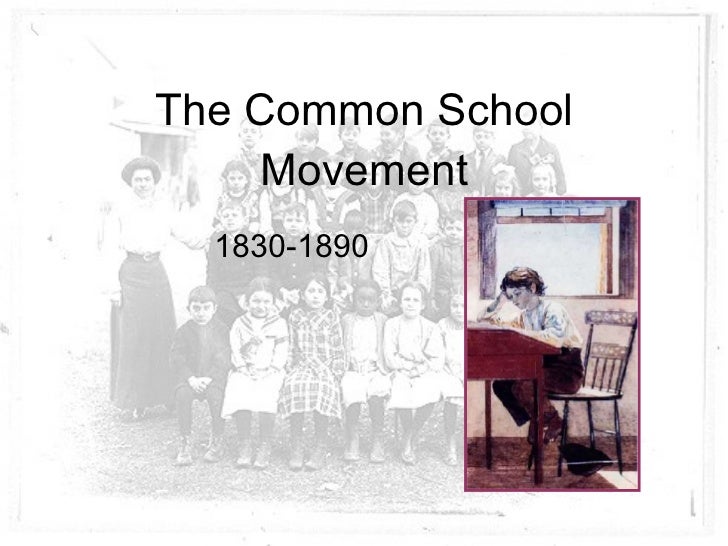
Unitarian social reformer Horace Mann, who was made the first Secretary of the Massachusetts Board of Education in 1837, retired from a successful political career and dedicated himself to working tirelessly to establish a Common School system.  He visited every existing school in the state, established a Normal School system for the training of teachers, instituted reforms where he could, opposed corporal punishment, and constantly wrote and lectured on the need for compulsory public education
In his magazine The Common School Journal he laid out six principlesthat the public should no longer remain ignorant; that such education should be paid for, controlled, and sustained by the public; that education best be provided in schools that embrace children from a variety of backgrounds;  that education must be non-sectarian; that students should be taught by the spirit, methods, and discipline of a free society; and that instruction be provided by well-trained, professional teachers
In 1843 Mann toured Europe at his own expense to inspect educational developments there.  He became enthusiastic for the Prussian System of mandatory public education. 
Although Mann was elected to Congress, taking the seat vacated by the death of John Quincy Adams in 1848, he remained a steadfast booster of public education.  Despite being narrowly defeated for Governor in 1852, Mann was able to finally see his Common School program adopted by the Commonwealth.  
He then left to assume the presidency of Antioch College in Ohio, where he served until his death in 1859. 
Mann did live to see his idea spreadNew York adopted the system in 1854 and it spread slowly over Northern, Mid Western, and Western states.  Resistance was hardest in the South which argued that children were necessary for labor on the farm, and later in the growing textile industry.  
After the Civil War Southern states were also reluctant to adopt a system that would require them to educate Black children
None the less, by 1919 all states had adopted compulsory education rules. 
The new public education systems never did completely supplant either Catholic parochial schools or private academies. Public schools in the 19th Century often followed Mann’s dream of being “non-sectarian” only in that they were not Catholic.  They often acted as a broad transmitter of the dominant Protestant culture which was enshrined in staple texts like McGuffey’s Readers and in regular prayer
The tensions between these public and private systems are still being played out in controversies over school funding and the right wing ideological movement to replace government schools. If Mann failed to establish universal public education, at least he did succeed in compulsory education laws required that all children get some form of instruction.  That made the United States by the mid 20th Century the most universally literate society the world had ever known.
Alas, now many nations, including some considered to be in the Third World have now surpassed the United States in literacy, in no small measure because of the concerted attacks on public education.  And this country now lags virtually every developed country in achievements in math, science, and foreign languages for its public school students and in graduation rates from high school.  As a result this country is rapidly falling behind and losing its world dominance.